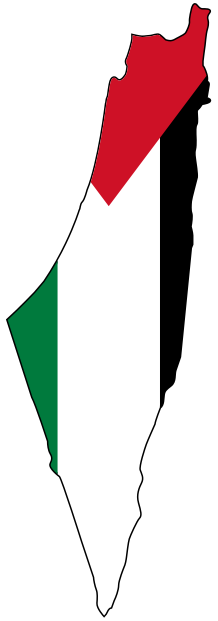
Nablus Massacre 2004: Resistance Leaders Executed in the Old City
From 24 to 27 June 2004, Israeli occupation forces besieged the Old City of Nablus, sealing its entrances with sand barriers and barbed wire. On the evening of 26 June, soldiers blew up the wall of a house in the Old City and threw explosive devices toward a tunnel beneath it, killing six resistance leaders and fighters, among them Nayef Abu Sharkh, commander-in-chief of the Al-Aqsa Martyrs Brigades. The siege’s toll reached nine killed, including a sixteen-year-old child. [1] [2]
The Palestinian Centre for Human Rights described the operation as a continuation of “the policy of extra-judicial execution,” saying occupation forces “extra-judicially executed 7 Palestinians” in breach of international humanitarian law. [1]
The Nablus massacre at a glance
| Item | Details |
|---|---|
| Date | 24–27 June 2004, peaking on the evening of 26 June [1] |
| Place | The Old City of Nablus [1] [2] |
| Perpetrator | Israeli occupation forces that besieged the Old City and sealed its entrances with sand barriers and barbed wire [1] |
| Killed | 9, including a 16-year-old child, and six resistance leaders executed in a tunnel [1] [2] |
| Wounded | At least 14, including six children, in the first days of the siege [1] |
| Characterization | “Extrajudicial execution” of seven Palestinians according to PCHR [1] |
The siege of the Old City
At about 12:30 a.m. on 24 June 2004, occupation forces entered Nablus, besieged the Old City and sealed its entrances, continuing operations until the morning of 27 June. In the first days, 14 Palestinians were wounded, including six children. [1]
On the afternoon of 25 June soldiers killed Mohammad Haitham Fuqaha (18) with a bullet to the chest from less than 70 meters as he threw stones. Shortly before midnight, members of the Salim family looked out from their balcony and soldiers opened fire from less than 50 meters, killing the child Eihab Maher Salim (16) with a bullet to the head, hitting his twin Bahaa in the face, and wounding their father with shrapnel; an ambulance was allowed in only around midnight. [1]
The execution in the tunnel
On the afternoon of 26 June soldiers killed Riad Sa’id Wawdi (35) as he was pursued through the alleys of the Old City. At about 6:15 p.m. they blew up the outer wall of Sa’id Douhul’s house, then threw explosive devices toward a small room; the blast killed six Palestinians in a tunnel beneath it, which the circulated account places in Hosh al-Habbitan. Ambulances were not allowed to reach the scene until 7:05. [1]
Among the six were three of the most prominent resistance leaders in the West Bank: Nayef Abu Sharkh, commander-in-chief of the Al-Aqsa Martyrs Brigades; Fadi Bahti “Sheikh Ibrahim,” leader of Saraya al-Quds; and Jaafar al-Masri, a Qassam Brigades leader. [2] Al Jazeera described the attack as a raid on a basement in the Old City where the fighters were sheltering. [2] The Palestinian Centre for Human Rights considered their killing, along with Riad Wawdi’s, an extrajudicial execution. [1]
The killed
| Name | Age | Notes |
|---|---|---|
| Nayef Fathi Abu Sharkh | 45 | Commander-in-chief of the Al-Aqsa Martyrs Brigades, Balata camp; in the tunnel |
| Fadi Bahti “Sheikh Ibrahim” | 26 | Leader of Saraya al-Quds, from Tulkarm; in the tunnel |
| Jaafar Mohammad al-Masri | 38 | A Qassam Brigades leader; in the tunnel |
| Samir Tariq Akouba | 25 | In the tunnel |
| Omar Mismar | 26 | In the tunnel |
| Wajdi al-Qadumi | 25 | In the tunnel |
| Riad Sa’id Wawdi | 35 | Shot while being pursued through the Old City |
| Mohammad Haitham Fuqaha | 18 | Shot in the chest while throwing stones |
| Eihab Maher Salim | 16 | Child, shot in the head on his family’s balcony |
The Palestinian Centre for Human Rights documented the names of the nine killed, saying the six killed in the tunnel belonged to Fatah, Islamic Jihad and Hamas. [1]
Reactions
The Al-Aqsa Martyrs Brigades vowed in a statement to respond, criticized the Palestinian Authority for failing to prevent the attack, and resistance factions called for a general strike and demonstrations in the West Bank. [2] The circulated account quotes a Brigades leader, “Abu Qusai,” describing the operation as “a hideous Zionist massacre.”
Read about the Zionist massacres against the Palestinian people.
Conclusion
Over three days in June 2004, occupation forces besieged the Old City of Nablus, killing a child on his family’s balcony and a young man throwing stones, then blew up a house and hurled explosives into a tunnel, killing six resistance leaders and fighters from Fatah, Islamic Jihad and Hamas together. The Nablus massacre remains a testament to the policy of extrajudicial execution, and to the shared Palestinian blood spilled in the alleys of the Old City.
Frequently asked questions about the 2004 Nablus massacre
When did the Nablus massacre take place?
During the siege of the Old City of Nablus from 24 to 27 June 2004, peaking on the evening of 26 June.
How many people were killed in the 2004 Nablus massacre?
Nine Palestinians were killed, including a sixteen-year-old child and six resistance leaders and fighters killed in a tunnel.
Who were the leaders killed in the Nablus tunnel?
Nayef Abu Sharkh, commander-in-chief of the Al-Aqsa Martyrs Brigades; Fadi Bahti “Sheikh Ibrahim,” leader of Saraya al-Quds; and Jaafar al-Masri, a Qassam Brigades leader, along with three of their comrades.
How were the fighters in the tunnel killed?
Soldiers blew up the outer wall of a house, then threw explosive devices toward a small room above the tunnel, and the blast killed six.
How did the Palestinian Centre for Human Rights describe the massacre?
It described it as the extrajudicial execution of seven Palestinians, and a continuation of the assassination policy through which the occupation violates international humanitarian law.
Sources and references
Arabic-language sources are listed with translated titles.
More from the archive
 Download Our Palestine App
The whole archive in the palm of your hand: depopulated villages, the Nakba, the massacres and Al-Aqsa — free, with no ads to erase the story.
Comments
No comments yet — be the first to write one.
Add your comment
Name and email are optional. Comments appear after review.