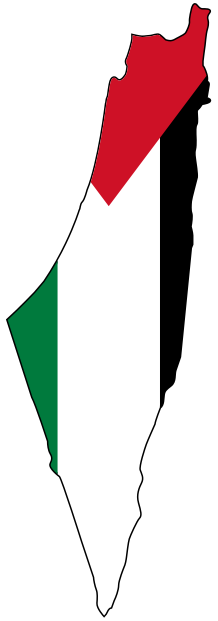
Naji al-Ali: The Son of al-Shajara Who Drew Palestine Through Handala

“I am accused of bias, a charge I do not deny: I am biased toward those who are ‘below.’” With these words Naji al-Ali, a son of the depopulated village of al-Shajara in the Tiberias district, summed up his art and his life. He drew tens of thousands of cartoons about Palestine, the refugees and the regimes, and created “Handala,” the child who turned his back on the world, until he became a symbol of Palestinian identity. He was assassinated in London in 1987. [1] [2] [4]
This article tells the story of Naji al-Ali: from al-Shajara to Ain al-Hilweh camp, from the camp’s walls to the newspapers of Kuwait, Beirut and London, the story of Handala, Fatima and his other characters, his words, and his assassination.
Naji al-Ali at a glance
| Item | Details |
|---|---|
| Full name | Naji Salim Hussein al-Ali [4] |
| Birth | al-Shajara, Tiberias district, around 1937 (the village page on our site gives 1936) [1] [2] [5] |
| Exile | 1948, to south Lebanon, Ain al-Hilweh camp near Sidon [1] [2] |
| First published drawing | al-Hurriyya magazine, issue 88, 25 September 1961, through Ghassan Kanafani [3] |
| First appearance of Handala | 5 June 1969, the Kuwaiti daily al-Siyasa [3] |
| Number of cartoons | About 40,000 according to Al Jazeera; about 14,000 according to the Interactive Encyclopedia [1] [2] |
| Shot | 22 July 1987, London [1] [2] |
| Death | 29 August 1987, after a coma of about five weeks [1] [2] |
| Golden Pen of Freedom | 1988, posthumously, from the World Association of Newspapers [1] |
From al-Shajara to Ain al-Hilweh
Naji al-Ali was born in the village of al-Shajara in the Tiberias district; his exact year of birth is not known, but many sources put it at 1937. [1] [2] [4] In 1948, when he was about ten, Golani forces occupied his village on 6 May, and his family fled to south Lebanon and settled in a tent in Ain al-Hilweh camp near Sidon. [1] [5]
Naji finished primary school in Lebanon but could not continue his education because of poverty, and he learned car mechanics at a vocational school in Tripoli. [2] The Lebanese army detained him several times for his activity in the Arab Nationalist Movement, and he spent his time in prison drawing on the walls. [1] [2] In 1960 he enrolled at the Lebanese Academy of Fine Arts and studied drawing for one year, but the detentions kept him from finishing. [1] [2]


Ghassan Kanafani and the beginning
The writer Ghassan Kanafani launched Naji al-Ali’s career: he visited Ain al-Hilweh camp, saw his drawings on its walls, and published one of them in al-Hurriyya magazine, in issue 88 of 25 September 1961, beginning his career in the press. [3] The Interactive Encyclopedia of the Palestine Question dates Kanafani’s publication of his drawings to 1962. [1]
From Kuwait to Beirut and London
Naji al-Ali lived moving between newspapers and exiles, and at every stop he drew Palestine, the camp and the regimes:
- Kuwait (1963): He moved there through Ghassan Kanafani’s efforts to work as an illustrator for the weekly al-Tali’a. [1] [2]
- Al-Siyasa (1968): After al-Tali’a was temporarily closed, he became the cartoonist of the daily al-Siyasa, where Handala was born in 1969. [1] [3]
- Al-Safir in Beirut (1974): He returned to Beirut to work for al-Safir, staying until 1983 apart from a return to al-Siyasa between 1976 and 1978, and drew the Lebanese civil war, the 1982 Israeli invasion of Lebanon and the Sabra and Shatila massacre. [1] [2] Al Jazeera dates his return to Beirut to 1975. [2]
- Al-Qabas in Kuwait (1983): He joined it in early 1983, and Kuwait expelled him about two years later. [1]
- London (1985): He settled there in October 1985, working for al-Qabas International until his death. [1] [2]
Naji al-Ali spared no one from his criticism—not Israel, not the Arab regimes, not the Palestinian leadership—and so he became a target for many parties. [2]
Handala: the child who turned his back
Handala first appeared on 5 June 1969 in the Kuwaiti daily al-Siyasa as a symbol of the Palestinian, and later became Naji al-Ali’s signature on all his drawings. [3]
- His age: A ten-year-old child, the age at which Naji was forced to leave Palestine; he will not grow older until he returns to his homeland. [1] [4]
- His back and hands: He is usually drawn with his back turned and his hands clasped behind him, rejecting solutions imposed from outside. [1] [4]
- His clothes and feet: He wears patched clothes and walks barefoot, a sign that he belongs to the poor. [4]
- His face: Asked when people would see Handala’s face, Naji al-Ali answered: when Arab dignity is no longer threatened, and when the Arab person regains a sense of freedom and humanity. [4]
After his creator’s assassination, Handala became a symbol of Palestinian identity and steadfastness, and he remains a symbol of the Palestinian cause to this day. [3] [4]
Fatima, the Good Man and the other characters
Alongside Handala, other characters recurred in Naji al-Ali’s cartoons and became part of his language: [3] [4]
- Fatima: The strong Palestinian woman who never compromises, with a clear vision of the cause and its solution. In one cartoon her husband says, weeping, that he will sell himself to any regime to feed his children, and Fatima replies: “May God never forgive you for this deed.” [3] [4]
- The Good Man (Fatima’s husband): The toiling, displaced Palestinian, thin and mustached, with big hands and feet from hard work; a fighter who sometimes breaks. [3] [4]
- The fat man: A legless figure representing the pampered leaderships and the opportunists. [4]
- The Israeli soldier: Long-nosed, usually flustered before children’s stones. [4]
Words of Naji al-Ali
- “I am accused of bias, a charge I do not deny: I am biased toward those who are ‘below.’” [4]
- “The road to Palestine is neither far nor near; it is the distance of revolution.” [4]
- “This is how I understand the struggle: that we stiffen our stature like spears and do not tire.” [4]
- “Whoever wants to write for Palestine, whoever wants to draw for Palestine, must know he is a dead man.” [4]
- “I am not committed to political shops; I am committed to a cause bigger than all these crowds.” [4]
Many believe his drawings were ahead of their time: the First Intifada broke out months after his assassination, and he warned in his cartoons against solutions imposed at the cause’s expense years before the Oslo Accords. [4]
Awards and recognition
- Damascus (1979 and 1980): He won first prize at the Arab Cartoon Exhibition. [1] [2]
- League of Arab Cartoonists (1979): He was elected its secretary general according to the Interactive Encyclopedia, and its president according to Al Jazeera. [1] [2]
- A Japanese newspaper: Ranked him among the ten best-known cartoonists in the world. [2]
- Golden Pen of Freedom (1988): Awarded to him posthumously by the World Association of Newspapers. [1]
The assassination in London
On 22 July 1987 an unknown gunman shot Naji al-Ali in London, near the offices of al-Qabas, hitting him in the head below his right eye. [1] [2] He remained in a coma for about five weeks and died on 29 August 1987, at about fifty years of age. [2]
He was buried in the Brookwood Islamic Cemetery in London, contrary to his wish to be buried in Ain al-Hilweh camp next to his father. [1] [2]
The British investigation did not conclusively establish who was behind the assassination. [1] [2] According to published accounts, British police arrested a young Palestinian named Ismail Hassan Sowan, in whose flat they found weapons; under questioning he said his handlers in Tel Aviv had known of the operation in advance, and Margaret Thatcher’s government closed the Mossad office in London after it refused to cooperate. [4] Accusations have pointed variously at the Mossad and at Arab and Palestinian parties, with no conclusive evidence against any of them. [2] [4]
The village of al-Shajara
- al-Shajara: On the eastern slope of a hill, about 14 km west of Tiberias, with 770 inhabitants in 1945 and 3,754 dunams of land. Golani forces occupied it on 6 May 1948 after fierce fighting; its houses were destroyed, and its people took refuge in Lebanon, Syria, Nazareth and the villages of the Galilee. [5]

Read about Tiberias and its depopulated villages.
Conclusion
Naji al-Ali left al-Shajara a child of ten, and he drew himself as a child of ten who would not grow up until he returned. From the walls of Ain al-Hilweh to the pages of al-Safir and al-Qabas, he stayed biased “toward those who are below,” making peace with neither occupation nor regime. He was assassinated in London and buried far from the camp where he had asked to rest, but Handala still stands on the walls of Palestine and the world, his back turned, waiting to return to al-Shajara.
Frequently asked questions about Naji al-Ali
Who was Naji al-Ali?
A Palestinian cartoonist born in the village of al-Shajara in the Tiberias district around 1937, who fled with his family in 1948 to Ain al-Hilweh camp, worked for newspapers in Kuwait, Beirut and London, created the character Handala, and was assassinated in London in 1987.
What does Handala symbolize?
Handala is a ten-year-old child, the age at which Naji al-Ali left Palestine, who will not grow up until he returns. He turns his back and clasps his hands behind him in rejection of imposed solutions, and wears patched clothes and walks barefoot as a symbol of the poor.
When did Handala first appear?
He first appeared on 5 June 1969 in the Kuwaiti daily al-Siyasa.
Who is Fatima in Naji al-Ali’s cartoons?
The strong Palestinian woman who never compromises and who confronts her husband’s moments of weakness with a clear vision of the cause.
When was Naji al-Ali assassinated, and who killed him?
He was shot in London on 22 July 1987 and died on 29 August 1987; the investigation did not conclusively identify those responsible.
Where is Naji al-Ali buried?
He is buried in the Brookwood Islamic Cemetery in London, contrary to his wish to be buried in Ain al-Hilweh camp next to his father.
Sources and references
Arabic-language sources are listed with translated titles.
- “Naji al-Ali,” Interactive Encyclopedia of the Palestine Question, Institute for Palestine Studies.
- “On the Anniversary of Handala’s Assassination: The Biography of the Palestinian Cause’s Brush, Naji al-Ali,” Al Jazeera Net Encyclopedia.
- “Naji al-Ali: Palestine’s Artist Who Paid with His Life for His Art,” Al Jazeera Documentary, 28 August 2022.
- “The ‘Icon’ of Caricature Naji al-Ali: A Departure with the Taste of ‘Colocynth’,” Arabi21.
- “al-Shajara,” Depopulated Villages section, Palestinina.
Video clips
Photo gallery


More from the archive
 Download Our Palestine App
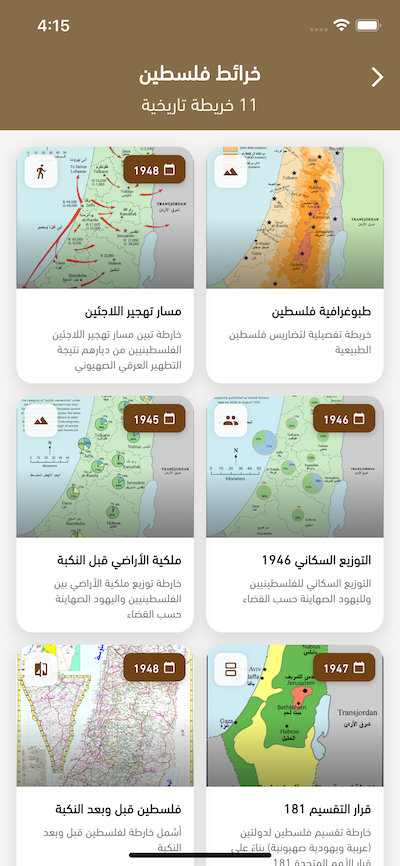
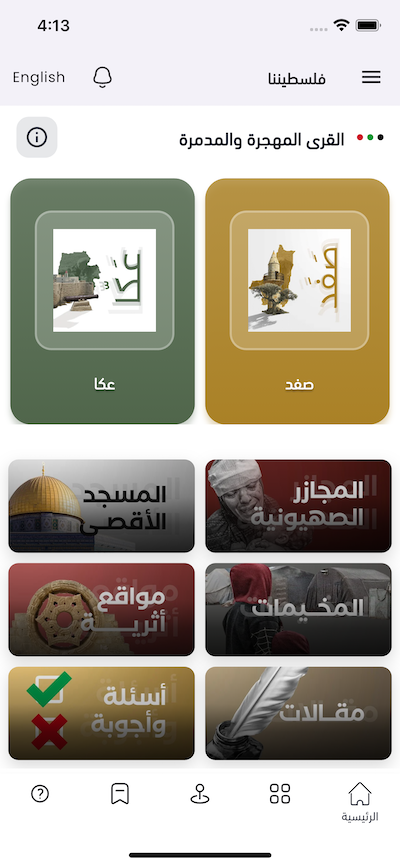
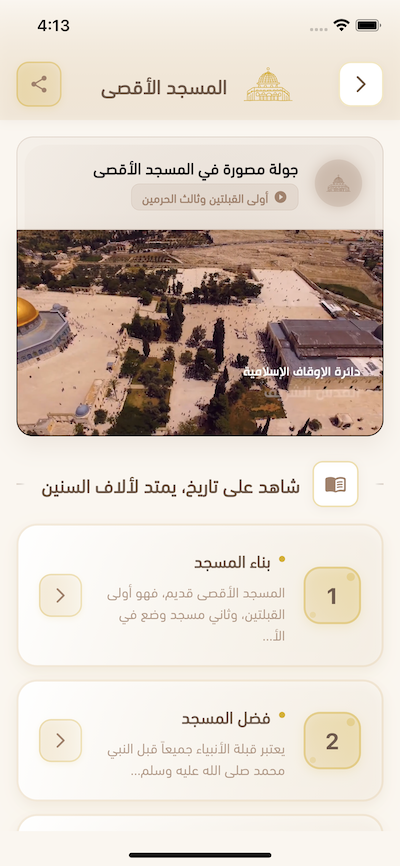
The whole archive in the palm of your hand: depopulated villages, the Nakba, the massacres and Al-Aqsa — free, with no ads to erase the story.
Comments
No comments yet — be the first to write one.
Add your comment
Name and email are optional. Comments appear after review.