Mamoun Mreish: The Western Sector Commander Killed in Athens, 1983
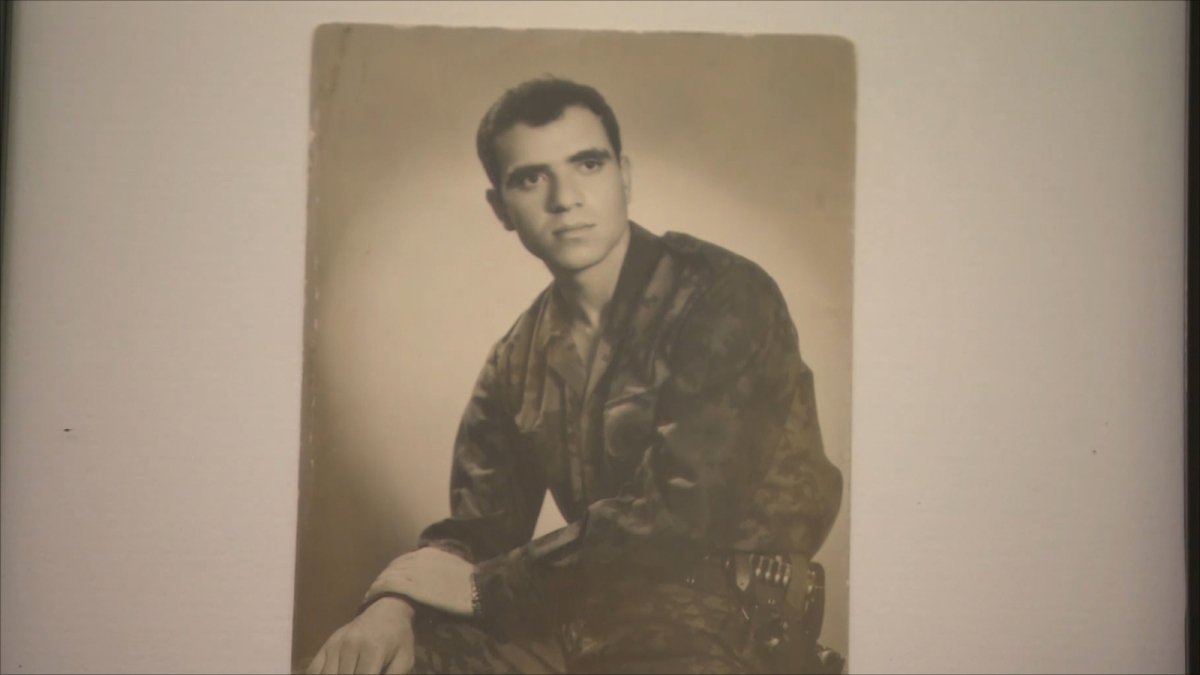
Mamoun Mreish (1948–1983) was a Palestinian fedayeen commander from Hebron, one of the men of Fatah’s “Western Sector” and an aide to Khalil al-Wazir (Abu Jihad), who after the departure from Beirut set up a base for the armed struggle in Greece. On the morning of Saturday 20 August 1983 his car stopped at a traffic light in Athens; a gunman on a motorcycle fired five shots into his head and neck in front of his children, killing him. His son Bashir survived after being wrongly reported killed with him. [1] [2] [3] [4]
This article is part of the series “Assassinated leaders of the Palestinian revolution” and links to the article on Khalil al-Wazir (Abu Jihad).
Who was Mamoun Mreish?
Mamoun Shukri Mreish, also known as “Mamoun al-Saghir,” was a fedayeen officer with the rank of lieutenant-colonel, a cadre of Fatah’s occupied-territories apparatus and close to Abu Jihad [5] [1] [6]. He led operations in the Jordan Valley and the Dead Sea area, ran an operations room in Beirut that recruited fighters to enter the occupied land, and then founded a Western Sector base in Greece [1] [2]. As one comrade says in a documentary about him: “If you don’t know Mamoun Mreish, you don’t know the history of the Palestinian revolution” [7].
Mamoun Mreish at a glance
| Item | Details |
|---|---|
| Full name | Mamoun Shukri Mreish, also known as “Mamoun al-Saghir” [5] [1] [6] |
| Born | 24 March 1948, Hebron [2] [1] [5] |
| Rank | Lieutenant-colonel [5] |
| Roles | Commander in the “Western Sector” and aide to Khalil al-Wazir (Abu Jihad), head of Operations Room No. 3 in Beirut, founder of the Western Sector’s base in Greece [5] [1] [6] |
| Prison | Three years in the desert prison of al-Jafr after September 1970 [2] |
| Assassinated | 20 August 1983, Athens, five shots from a gunman on a motorcycle [3] [1] [2] |
| Family | Children Nihal, Bashar and Bashir [5] [2] |
Timeline
| Year | Event |
|---|---|
| 1948 | Born in Hebron on 24 March [2] [5] |
| 1967 | Joins Fatah after the occupation of the West Bank; leaves for Jordan [5] [2] |
| 1967–1968 | Military course at al-Hama camp in Syria, then advanced training in China [5] [2] |
| 1968–1970 | Operations in the southern sector, especially around the Dead Sea [5] [2] [1] |
| 1970–1974 | Imprisoned in al-Jafr, then expelled from Jordan [2] |
| 1975 | Moves to Beirut and joins Abu Jihad’s Western Sector [1] [2] |
| 1976 | Arrested by Kataeb forces after the attack on Dbayeh camp, later released [5] |
| 1982 | Holds out in the siege of Beirut; survives an assassination attempt in Italy [5] [2] |
| 1982–1983 | Sets up a Western Sector base in Greece [1] |
| 1983 | Assassinated in Athens on 20 August [3] [1] |
From Hebron to Fatah
Mamoun Shukri Mreish was born in Hebron on 24 March 1948, weeks before the Nakba, and studied there through secondary school at al-Hussein Secondary School, where he was among the top students [5] [2] [1]. After the occupation of the West Bank in June 1967 he joined Fatah; pursued by the occupation authorities, he moved to Jerusalem and then to Jordan [5] [2].
In December 1967 he went to Syria for a military course at al-Hama camp, then was chosen for an advanced course, spending nine months in China [5] [2].
Operations in the Jordan Valley and al-Jafr prison
Back in Jordan, Mamoun Mreish worked in the movement’s southern sector, fought dozens of engagements and carried out operations inside the occupied land, especially around the Dead Sea [5] [2] [1]. During the events of September 1970 he was arrested and spent three years in the desert prison of al-Jafr, then was released in 1974 and expelled from Jordan [2].
Beirut: the Western Sector with Abu Jihad
When the Lebanese civil war broke out in 1975 he moved to Beirut and became military commander of Dbayeh camp; on 1 January 1976 Kataeb forces attacked the camp and arrested him, later releasing him [5]. He worked in the “Western Sector” under Khalil al-Wazir (Abu Jihad), within the leadership of the occupied-territories apparatus that directed armed action inside Palestine [1] [2] [6].
The movement sent him to an armour course in Pakistan, where he ranked first, and he trained at a Soviet military academy, then took charge of Operations Room No. 3 in the Burj Abi Haidar area of Beirut, which recruited and prepared fighters to enter the occupied land [5] [2] [1]. He is credited with helping prepare and train for the Dalal al-Mughrabi and Savoy operations [1]. During the Israeli invasion and siege of Beirut in 1982 he was among the first defenders of the city in the operations command [2] [5] [1].
That same year he survived an assassination attempt in Italy, when a truck deliberately rammed his car during a special mission, leaving him seriously injured [5].
The Greece base and naval work
After the resistance left Beirut he moved to Damascus and then Athens, where Abu Jihad tasked him with establishing a Western Sector base in Greece [5] [1] [2]. He set up a Greek shipping company as security cover and, with a small team, bought ships for special missions to Lebanon, Cyprus and Yemen, overseeing arms transfers to several locations [1]. Al-Kofiya recounts that on one mission he reached the port of Umm al-Rashrash (Eilat) disguised as a ship’s assistant captain [1].
The assassination of Mamoun Mreish: Athens, 20 August 1983
On the morning of Saturday 20 August 1983 Mamoun Mreish left his home in Athens with his children. When his car stopped at a traffic light, a gunman on a motorcycle pulled up and fired five shots into his head and neck, killing him [3] [1] [2] [5]. His driver was wounded, his young son was hurt, and a passer-by was injured [1] [2] [5].
Press reports at the time described him as a “prominent PLO official” and a close aide to Khalil al-Wazir, deputy commander of the revolution’s forces [6]. After his killing his family returned to Jordan, where his wife worked in education, as a teacher and then a school principal [8].
Who was behind the assassination?
Accounts differ on who carried out the killing:
- The PLO: its spokesman called the killing “an Israeli act” and rejected a dissident Fatah faction’s claim that another splinter group was behind it [6].
- The Mossad: several Palestinian sources attribute the operation directly to a Mossad hit squad [8] [1] [4].
- The Abu Nidal group with the Mossad: Maj. Gen. Mahmoud al-Natour and the site “Thakirat Watan” hold that the group of Sabri al-Banna (Abu Nidal) carried it out in coordination with Israeli intelligence, at the height of the conflict after the 1983 split from Fatah [5] [2].
The killing came amid a long war the occupation waged on the revolution’s leaders in exile, from the Mossad assassinations in Europe in the 1970s, to Majed Abu Sharar in Rome in 1981, and Abu Jihad in Tunis in 1988.
“This Is My Picture When I Was Dead”: the son who survived
On the day of the assassination the media announced that young Bashir had been killed with his father, but he survived [8] [4]. Bashir Mreish grew up to become a political cartoonist in Jordan, and told his story in the documentary “This Is My Picture When I Was Dead” by Jordanian director Mahmoud al-Massad (2010, 81 minutes), which premiered at the International Documentary Film Festival Amsterdam [4] [8].
The film reconstructs the shooting and follows Bashir as he visits his father’s comrades and talks with his mother about his father’s commitment to the cause, asking what became of the cause father and son were thought to have died for [4].
Conclusion
From Hebron to the Jordan Valley and al-Jafr prison, from the operations room in Beirut to ships in Greek ports, Mamoun Mreish lived the life of a fighter in the shadows, until bullets found him at a traffic light in Athens in front of his children. The son declared dead remained a living witness to the crime, carrying his father’s question to the screen.
Also in this series: Khalil al-Wazir (Abu Jihad), Majed Abu Sharar, Abu Iyad.
Frequently asked questions about Mamoun Mreish
Who was Mamoun Mreish?
A Palestinian fedayeen commander from Hebron, a lieutenant-colonel in Fatah’s Western Sector and an aide to Abu Jihad.
When and where was Mamoun Mreish assassinated?
On 20 August 1983, in Athens, at a traffic light near his home.
How was Mamoun Mreish killed?
A gunman on a motorcycle fired five shots into his head and neck as he sat in his car with his children.
Who killed Mamoun Mreish?
The PLO blamed Israel and Palestinian sources attribute it to the Mossad, while others hold that the Abu Nidal group carried it out in coordination with Israeli intelligence.
What was Mamoun Mreish’s link to Abu Jihad?
He was one of his close aides in the Western Sector, and Abu Jihad tasked him with building a base for the armed struggle in Greece.
What is the film “This Is My Picture When I Was Dead”?
A 2010 documentary by Mahmoud al-Massad about Bashir, Mamoun Mreish’s son, who was wrongly reported killed with his father.
Who were Mamoun Mreish’s children?
Nihal, Bashar and Bashir.
Sources and references
Arabic-language sources are listed with translated titles.
- Mahmoud al-Bolis, “Mamoun Mreish: A Commander from Hebron’s Hawks,” Al-Kofiya TV, 20 August 2026.
- “The Martyr Lt.-Col. Mamoun Mreish,” Thakirat Watan.
- “Ma’moun Meraish Is Assassinated in Athens, 20 August 1983,” Interactive Encyclopedia of the Palestine Question (Institute for Palestine Studies).
- “This Is My Picture When I Was Dead,” film page, International Documentary Film Festival Amsterdam (IDFA).
- “Mamoun Mreish,” Maj. Gen. Mahmoud al-Natour Centres (from his book on the assassinations of Fatah leaders).
- “PLO Denies Fatah Faction Was Behind Athens Killing,” The Christian Science Monitor, 22 August 1983.
- “From Gun to Pen: The Palestinian Revolution Lives,” Jadaliyya.
- “A Film Tells the Story of Leader Mreish’s Assassination in Greece,” An-Najah News Network, 27 March 2017.
More from the archive
 Download Our Palestine App
The whole archive in the palm of your hand: depopulated villages, the Nakba, the massacres and Al-Aqsa — free, with no ads to erase the story.
Comments
No comments yet — be the first to write one.
Add your comment
Name and email are optional. Comments appear after review.