The Battles of Bab al-Wad 1948: Fighters Shut "the Key to Jerusalem" to Zionist Convoys
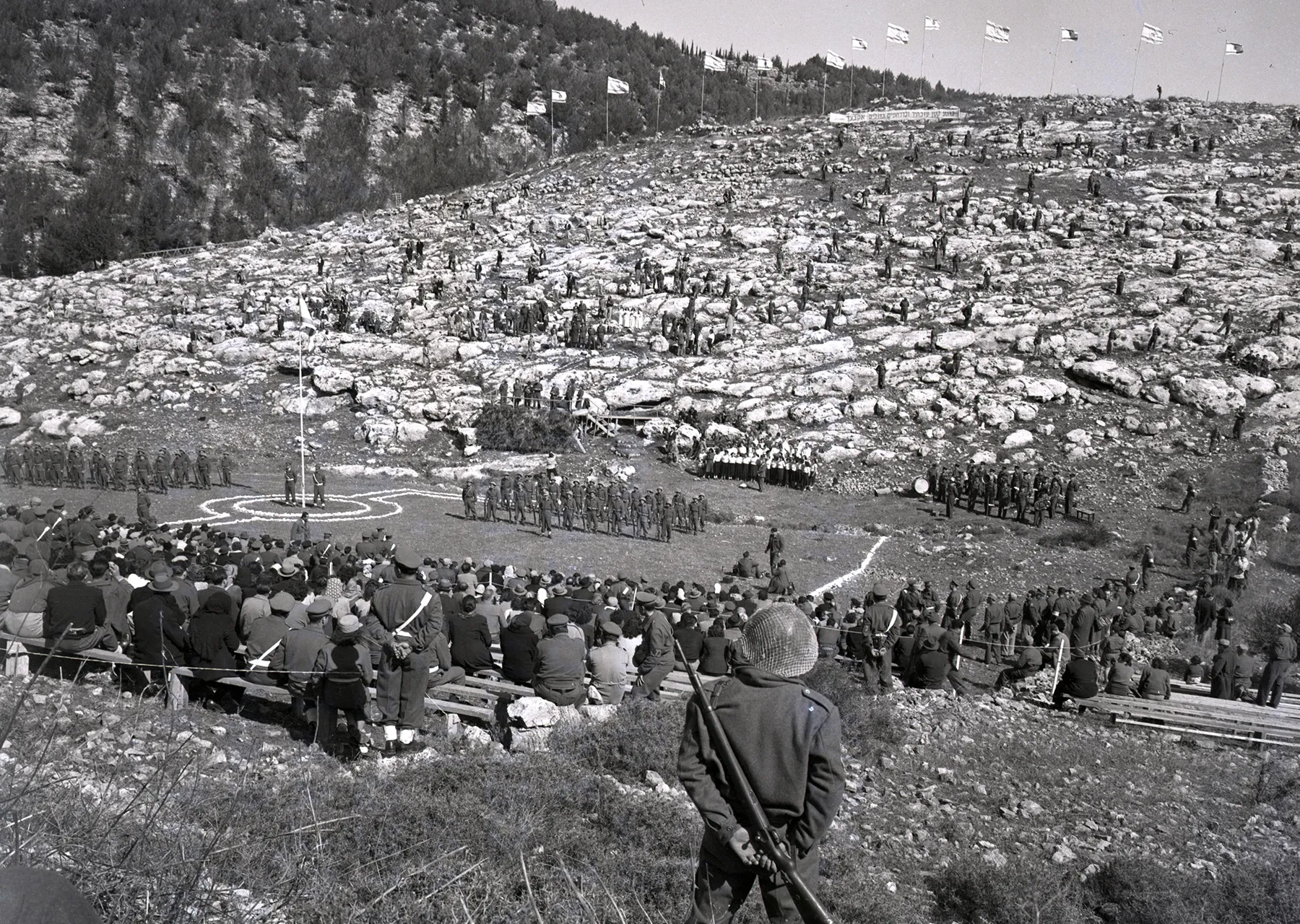
Bab al-Wad (“Gate of the Valley”) is a narrow mountain pass on the Jaffa–Jerusalem road, about 23 kilometres west of Jerusalem, where the road begins its climb into a deep valley flanked by rocky slopes and villages; hence its name, “the key to Jerusalem.” After the partition resolution at the end of 1947 the pass became the scene of a long battle between Palestinian and Arab fighters on one side and, on the other, the Zionist convoys trying to supply the settlers in Jerusalem. [1][2]
From March until mid-May 1948 fighters from the surrounding villages, joined by Sheikh Haroun bin Jazi and his Huwaitat men, within the Holy Jihad forces commanded by Abd al-Qadir al-Husseini, ambushed the convoys, blew up mines under their vehicles and cut the water pipes to the Jewish neighbourhoods, destroying some 60 vehicles in the battle of Deir Ayyub alone, until they handed the position over to the Jordanian army on the night of 15 May 1948. [2][3]
Contents
- At a glance
- The key to Jerusalem
- The fighters
- March: ambushes and the sabotage of the road
- 31 March: the Khulda ambush
- 16 April: the battle of Deir Ayyub
- May: until the handover
- Results
- Differences between the accounts
- Timeline
- Frequently asked questions about the battles of Bab al-Wad
At a glance
| Item | Details |
|---|---|
| Date | March – 15 May 1948 |
| Place | The Bab al-Wad pass on the Jaffa–Jerusalem road, between Latrun, Imwas, Yalu, Deir Ayyub and Beit Mahsir |
| Arab forces | About 300 fighters from the surrounding villages at first, and Sheikh Haroun bin Jazi’s men, within the Holy Jihad forces |
| Commanders | Abd al-Qadir al-Husseini, Sheikh Haroun bin Jazi and Ahmad Zuna |
| Enemy | The Zionist convoys bound for Jerusalem and their armoured cars, under British protection |
| Main battles | The March ambushes, the Khulda ambush (31 March), the battle of Deir Ayyub (16 April), and the May battles |
| Outcome | The Jerusalem road cut again and again, then the position handed to the Jordanian army on the night of 15 May 1948 |
The key to Jerusalem
From Bab al-Wad roads branch off to Jerusalem, Ramla, Beit Jibrin, Artuf, Gaza and Ramallah, and the pass is overlooked by the villages of Imwas, Latrun, Tel al-Jazar, Abu Shusha, Beit Nuba and Yalu, with the Latrun monastery at its southern end and Imwas and Yalu at its northern. Its importance made it a battlefield through the centuries: Saladin fought Richard the Lionheart there, the people of Jerusalem resisted Ibrahim Pasha there in 1834, and Ottomans and British fought there in 1917. [2][1]
In 1948 control of the pass meant control of the supply road between the coast and the settlers in Jerusalem, so the Zionist forces strove to open it and the fighters to keep it shut. [1]
The fighters
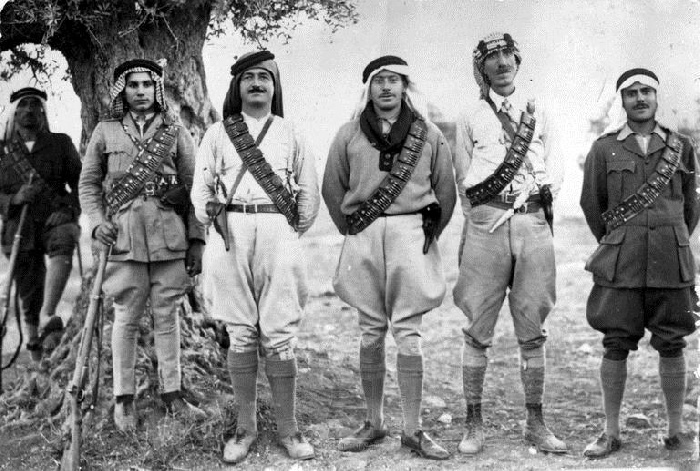
After the partition resolution fighters gathered from the villages of Imwas, Yalu, Deir Ayyub, Beit Nuba, Beit Mahsir, Saris and others, some 300 at first, and joined the Holy Jihad Army under Abd al-Qadir al-Husseini. [1][2]
Among the first to come to Bab al-Wad was Sheikh Haroun bin Jazi, a sheikh of the Huwaitat tribe of Transjordan, born in 1913 in the village of Udhruh near Ma’an, who led a battalion of volunteers, one of the first to enter Palestine after the partition resolution. Haroun fought at Bab al-Wad, Latrun, Beit Qad, Artuf, Khulda, Beit Mahsir, Tel Ras al-Habba, Deir Ayyub and the Yalu hills; at al-Qastal Abd al-Qadir al-Husseini gave him command of the left wing and told him: “Palestine is on your neck, Haroun.” [3][1]
March: ambushes and the sabotage of the road
The fighters sabotaged the road, destroyed the pipes carrying water from Ras al-Ain to the Jewish neighbourhoods of Jerusalem, and attacked the convoys that passed roughly every week, inflicting heavy losses or forcing them to turn back. [1][2]
- 1 March 1948: an attack on a Zionist convoy killed four of its men.
- 12–13 March: mines blown up under Zionist vehicles killed five of their passengers.
- 19 March: an attack on another convoy killed 15.
The fighters blew up more mines under enemy vehicles, clashed with them at Bir al-Hilu and disabled an armoured car. As the siege tightened and supplies ran short, the settlers in Jerusalem appealed to the Mandate authorities, which set up a police fort at Artuf and stationed some 200 British soldiers there to protect the convoys. [2][1]
31 March: the Khulda ambush
On the night of 31 March the Zionist forces tried to seize the hill overlooking Bab al-Wad. The fighters engaged them near the settlement of Khulda; many were killed on both sides, and the fighters drove the Zionist force back to Khulda and captured some of its vehicles. [2][4]
16 April: the battle of Deir Ayyub
On 16 April 1948, a week after Abd al-Qadir al-Husseini was martyred at al-Qastal, fighters led by Ahmad Zuna and Sheikh Haroun bin Jazi attacked a large Zionist convoy of some 250 military vehicles at Deir Ayyub. The battle went on until four in the afternoon; 60 vehicles were destroyed, and the fighters captured 15 more along with a quantity of weapons. [2][4]
The battle came after the Zionist forces had briefly broken through the pass at the start of April, in what they called Operation Nachshon, and seized al-Qastal. [2]
May: until the handover
Major fighting resumed in May: a large battle was fought on 10 May, and on 13 May, WAFA says, some 300 Zionists were killed as the fighters held the position.[2][1]
On the night of 15 May 1948, according to Sheikh Haroun bin Jazi’s memoirs, the fighters handed the Bab al-Wad position over to the Jordanian army, which went on to fight the battles of Latrun. Haroun rejected the truce imposed by the United Nations, seeing it as a trick that gave the Zionists time to arm, and kept on attacking them. [3][2]
Results
The fighters cut the main road to Jerusalem to the Zionist convoys many times, inflicting heavy losses in men and vehicles and capturing vehicles, weapons and ammunition, and the position stayed in their hands until they handed it to the Jordanian army. The Al Jazeera Encyclopedia judges that the battles of Bab al-Wad delayed the fall of Jerusalem to the occupation. [2][1]
Unable to open the pass, the Zionist forces later cut a bypass through the hills known as the “Burma Road,” of limited use. King Abdullah I awarded Haroun bin Jazi the Order of Independence for his bravery at Bab al-Wad; Haroun died in 1979. [1][3]
Differences between the accounts
Sources differ on the dating of the battle’s phases: the al-Qastal section of WAFA’s “Battles of the Nakba” says the Zionist forces broke into Bab al-Wad on the night of 2–3 April, while the Bab al-Wad section says the position stayed in Arab hands until May; most likely the breakthrough was temporary. The available sources also do not give the number of fighters martyred in these battles, and the figures for enemy losses, especially the 300 killed on 13 May, remain unconfirmed by any independent source. [2]
Timeline
| Date | Event |
|---|---|
| Late 1947 | Fighters gather in the villages of Bab al-Wad; Haroun bin Jazi arrives [3] |
| 1 March 1948 | An attack on a Zionist convoy [2] |
| 12–13 March | Mines blown up under Zionist vehicles [2] |
| 19 March | An attack on another convoy [2] |
| 31 March | The Khulda ambush; the attempt on the hill repelled [2] |
| 2–3 April | A temporary Zionist breakthrough; al-Qastal seized [2] |
| 16 April | The battle of Deir Ayyub; 60 vehicles destroyed [2] |
| 10–13 May | Major battles; the fighters hold the position [2] |
| Night of 15 May | The position handed to the Jordanian army [3] |
Frequently asked questions about the battles of Bab al-Wad
Where is Bab al-Wad?
On the Jaffa–Jerusalem road, about 23 kilometres west of Jerusalem, between Latrun, Imwas and Yalu. [1]
Why was it called “the key to Jerusalem”?
Because it is the pass linking the coastal plain to the Jerusalem hills; whoever controls it controls the road to the city. [2][1]
Who led the fighters at Bab al-Wad?
They were part of the Holy Jihad forces under Abd al-Qadir al-Husseini; their leading commanders included Sheikh Haroun bin Jazi and Ahmad Zuna. [2][3]
What was the battle of Deir Ayyub?
An attack on 16 April 1948 on a Zionist convoy of some 250 vehicles, in which 60 were destroyed and 15 captured. [2]
Who was Haroun bin Jazi?
A Huwaitat sheikh born in 1913 in Udhruh near Ma’an, who led a volunteer battalion at Bab al-Wad and Latrun, and died in 1979. [3]
When was Bab al-Wad handed to the Jordanian army?
On the night of 15 May 1948, according to Haroun bin Jazi’s memoirs. [3]
Read also on Palestinuna
Sources and references
- “The Battle of Bab al-Wad: The War That Delayed Israel’s Occupation of Jerusalem,” Al Jazeera Encyclopedia, 12 September 2025 (in Arabic).
- WAFA – Palestinian National Information Centre, “Battles of the Nakba”: “The Battle of Bab al-Wad” (in Arabic).
- “Anniversary of the Death of Haroun bin Jazi, Sheikh of the Mujahideen in Palestine,” Jfra News (in Arabic).
- WAFA – Palestinian National Information Centre, “Battles and Revolts in Palestine” (in Arabic).
More from the archive
The Battles of Radar Hill 1948: The Yarmouk Battalion and Biddu's Fighters Retake the Hill
 Al-Quds (Jerusalem)
Battle of Shu'fat 1948: The Holy Jihad Destroys the Neve Yaakov Convoy North of Jerusalem
Al-Quds (Jerusalem)Battle of Sur Baher 1948: How a Jerusalem Village Held Off Three Settlements
 Download Our Palestine App
The whole archive in the palm of your hand: depopulated villages, the Nakba, the massacres and Al-Aqsa — free, with no ads to erase the story.
Comments
No comments yet — be the first to write one.
Add your comment
Name and email are optional. Comments appear after review.