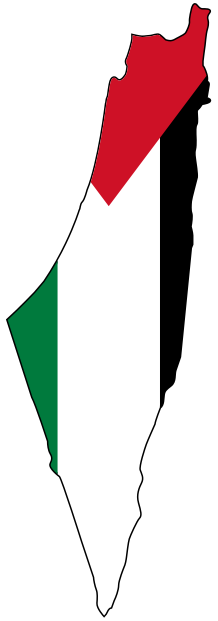
The Battles of al-Malikiyya 1948: A Galilee Gateway Village That Changed Hands Five Times
Al-Malikiyya was a small Palestinian village in the mountains of Upper Galilee, 15.5 kilometres from Safad and less than half a kilometre from the Lebanese border; it had been part of Lebanon until the border was drawn in 1923. Standing at the northern gateway to Galilee, it became in 1948 a battlefield that changed hands at least five times between May and October. Soldiers of the Lebanese army and fighters of the Arab Liberation Army fought side by side there, and Lieutenant Muhammad Zgheib was martyred on its soil, until the Zionist militias occupied it for good at the end of October 1948 and destroyed every one of its houses. [1][2][3]
Contents
- At a glance
- The village
- The May battles
- Lieutenant Muhammad Zgheib
- The recapture in June
- The final occupation and expulsion
- Al-Malikiyya today
- Between the accounts
- Timeline
- Frequently asked questions about the battles of al-Malikiyya
At a glance
| Item | Details |
|---|---|
| Date | 12–15 May, 19–29 May, 6–7 June and late October 1948 |
| Place | Al-Malikiyya, Qadas and the British Malikiyya camp, Safad district |
| Arab forces | The Lebanese army and the Arab Liberation Army (the 2nd Yarmouk Battalion under Adib al-Shishakli and the Badia Regiment under Talib al-Daghestani), with Syrian air support |
| Key commanders | Lieutenant Muhammad Zgheib, Colonel Jamil al-Husami and Fawzi al-Qawuqji |
| Notable martyrs | Lieutenant Muhammad Zgheib, Suleiman al-Mulhim, Said Malak and Ali Faraj |
| Outcome | Al-Malikiyya and Qadas retaken in June and held by the Arabs until late October 1948 |
| Population | About 360 in 1945 and about 418 on the eve of the Nakba |
| Area | 7,328 dunums |
| Settlement on its land | Malkiya (1949) |
The village
Al-Malikiyya stood on the northern slope of a hill at about 675 metres. Its population was 254, in 48 houses, in 1931, about 360 in 1945, and about 418 in 76 houses on the eve of the Nakba. Its families included Bezi, al-Ibrahim, Ayyad and al-Dawoudi. [2][1]
Its lands covered 7,328 dunums, almost all owned by its Arab inhabitants, of which 4,725 were cultivable, with 4,225 under grain and 105 under olives. [2][1]
The May battles
Al-Malikiyya was initially held by the 2nd Yarmouk Battalion of the Arab Liberation Army under Adib al-Shishakli. According to the Palestinian historian Hani al-Hindi, Palmach forces seized it on the night of 12 May 1948, and the Arab forces retook it the following day. [2][1]
On 14–15 May the militias returned and occupied Qadas, the British camp outside al-Malikiyya and the village itself, which was defended by a small force whose Lebanese detachment was commanded by Lieutenant Muhammad Zgheib. Al-Shishakli sent two detachments that, together with a Lebanese army unit, forced the attackers to withdraw with heavy losses, and al-Malikiyya, the camp and Qadas were recovered. [3]
On 19 May an armoured Zionist force advanced and outflanked al-Malikiyya, taking it despite fierce resistance, along with Qadas, and destroying the bridges. [3]
Lieutenant Muhammad Zgheib
At about six in the morning of 15 May 1948 Lieutenant Muhammad Zgheib was hit by two bullets in the chest and head while fighting at al-Malikiyya. According to the memoirs of Maarouf Saad, he refused to be moved from his position, saying that “the Lebanese officer dies before surrendering to the enemy.” He was taken to the hospital in Tyre, where he died, and was buried in his home town of Younine in the Baalbek district on 23 May. [3]
Army commander Fouad Chehab awarded him the Order of the Cedar on 25 May 1948, and he was posthumously promoted to captain; his name became the symbol of the Battle of al-Malikiyya in the memory of the Lebanese army. [3]
The recapture in June
Fawzi al-Qawuqji reorganised his forces, massing a Lebanese battalion with tanks under Colonel Jamil al-Husami, the Badia Regiment under Colonel Talib al-Daghestani, independent companies and two artillery batteries. At 1:30 in the afternoon of 6 June 1948 the attack began, supported by the Syrian air force with reconnaissance and bombing. [3]
Al-Malikiyya was retaken that same day and Qadas the next, and the area was cleared of enemy forces. The village stayed in Arab hands throughout the summer. Among those martyred in the battles of al-Malikiyya whose names the sources preserve were Suleiman al-Mulhim of al-Qurayya in Suwayda, Said Malak of Niha in the Chouf, and Ali Faraj of Baalbek. [3][2][1]
The final occupation and expulsion
At the end of October 1948, as part of the great offensive on Upper Galilee, occupation forces attacked al-Malikiyya from the south under air cover and occupied it for good; those of its people who had returned were driven out, and the militias destroyed every house in the village. [1][2]
The people of al-Malikiyya took refuge in southern Lebanon, settling in Ayta al-Shaab, Kounine and Aynata, in Burj al-Shemali camp and in al-Maashouq; the number of registered refugees from the village reached 2,565 in 1998. [2]
Al-Malikiyya today
All that remains of al-Malikiyya are scattered stones and the walls of demolished houses, a partly standing wall near a spring, and wild mulberry, cactus, fig and eucalyptus trees. In 1949 the settlement of Malkiya was built south-east of the village site on its land, and the site itself became a fenced military zone closed to access. [2][1]
Between the accounts
Dates of the battles: sources differ on the dates the village changed hands: first occupied on the night of 12 May according to Hani al-Hindi, or on 14–15 May according to another account; occupied again on 19 or 29 May; and retaken on 6 or 7 June. [2][1][3]
The death of Muhammad Zgheib: a footnote by Nehme Hamadeh says his wound was not fatal and that he died of an infection in a poorly equipped hospital. [3]
Enemy losses: the available Arab sources give no specific figure for the militias’ losses in the battles of al-Malikiyya. [3]
Timeline
| Date | Event |
|---|---|
| Night of 12 May 1948 | Palmach seizes al-Malikiyya; the Arabs retake it the next day [2] |
| 14–15 May 1948 | Qadas, the camp and al-Malikiyya occupied, then retaken in a counter-attack [3] |
| 15 May 1948 | Lieutenant Muhammad Zgheib wounded and martyred [3] |
| 19 May 1948 | An armoured force outflanks and takes al-Malikiyya [3] |
| 6 June 1948 | The attack under al-Qawuqji, al-Husami and al-Daghestani retakes al-Malikiyya [3] |
| 7 June 1948 | Qadas retaken [3] |
| Late October 1948 | Final occupation of al-Malikiyya and destruction of its houses [1] |
| 1949 | The settlement of Malkiya built on its land [2] |
Frequently asked questions about the battles of al-Malikiyya
Where is al-Malikiyya?
In Upper Galilee, Safad district, 15.5 kilometres from Safad and less than half a kilometre from the Lebanese border. [1]
How many times did al-Malikiyya change hands in 1948?
At least five times between May and October 1948. [1][2]
Who was Muhammad Zgheib?
A Lebanese army lieutenant from Younine in the Baalbek district who led the Lebanese detachment at al-Malikiyya and was martyred on 15 May 1948; he was posthumously promoted to captain. [3]
Who retook al-Malikiyya in June 1948?
Arab Liberation Army and Lebanese army forces under Fawzi al-Qawuqji, with a Lebanese battalion under Jamil al-Husami and the Badia Regiment under Talib al-Daghestani, supported by Syrian aircraft. [3]
Where do the people of al-Malikiyya live today?
In southern Lebanon, in Ayta al-Shaab, Kounine, Aynata, Burj al-Shemali camp and al-Maashouq. [2]
Read also on Palestinuna
Sources and references
- PalQuest, Interactive Encyclopedia of the Palestine Question, Institute for Palestine Studies: “al-Malikiyya”.
- Palestinian Villages Encyclopedia, “al-Malikiyya” (in Arabic).
- Lubib Nasif, “The Battle of al-Malikiyya and its martyrs: Muhammad Zgheib, Suleiman al-Mulhim and Said Malak,” December 2024 (in Arabic).
More from the archive
 Download Our Palestine App
The whole archive in the palm of your hand: depopulated villages, the Nakba, the massacres and Al-Aqsa — free, with no ads to erase the story.
Comments
No comments yet — be the first to write one.
Add your comment
Name and email are optional. Comments appear after review.