The Battle of Beersheba 1948: The Fall of the Naqab's Capital in Breach of the Truce
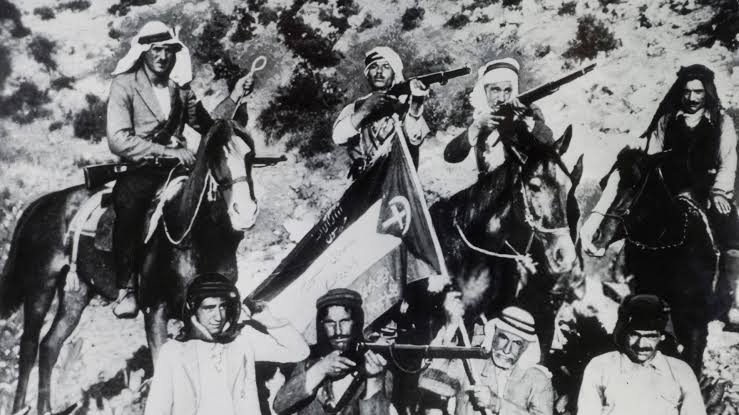
Beersheba, capital of the Naqab and the largest city of southern Palestine, was rebuilt by the Ottomans in the early twentieth century as the centre of a district that stretched to Umm al-Rashrash. On 21 October 1948 it fell to the Zionist militias after three days of aerial bombardment and an assault by some five thousand fighters, against which the city’s people, the Bedouin tribes and Egyptian and Libyan volunteers fought with weapons no match for the attackers’. Its occupation came in open violation of the second truce; its people were then expelled, and its Great Mosque remains a witness, turned into a museum. [1][2][3]
Contents
- At a glance
- The city
- Preparing the defence
- The assault on the city
- The truce violation and the Security Council
- The expulsion
- Between the accounts
- Timeline
- Frequently asked questions about the Battle of Beersheba
At a glance
| Item | Details |
|---|---|
| Date | 18–21 October 1948 |
| Place | The city of Beersheba, capital of the Beersheba district in the Naqab |
| Defenders | A garrison of police and camel corps of about sixty men, Bedouin volunteers under Abdullah Abu Sitta, Egyptian and Libyan volunteers, and the remnant of an Egyptian force |
| Attackers | About five thousand fighters with aircraft and artillery |
| Bombardment | 18–21 October: ten houses destroyed and seven killed |
| Population | 6,461 |
| Outcome | The city fell on 21 October 1948 and most of its people were expelled |
The city
The Ottomans entered Beersheba in 1519 but paid it little attention until about 1900, when they rebuilt it as a district centre with a municipal council, a government house and barracks, and built its Great Mosque between 1900 and 1906. It was the first Palestinian city the British took, on 31 October 1917. [2][3]
The city was the hub of the Naqab tribes, among them the Tarabin, Azazma, Jabarat, Jarawin, Hanajira and Sa’adiyin, and a market for Bedouin from across the south. [2]
Preparing the defence
After Britain announced its intention to withdraw from Palestine, a garrison of police and camel corps about sixty strong was formed in Beersheba, joined by Bedouin volunteers under Abdullah Abu Sitta. After the British withdrawal on 14 May 1948 the militias hurried to seize the key roads in the area, and the Arabs reinforced the garrison with Egyptian and Libyan volunteers. [1]
On 18 May 1948 an Egyptian infantry battalion under the hero Ahmad Abd al-Aziz entered the Beersheba area, before most of it moved on to other fronts, leaving the city with a small garrison. [1]
The assault on the city
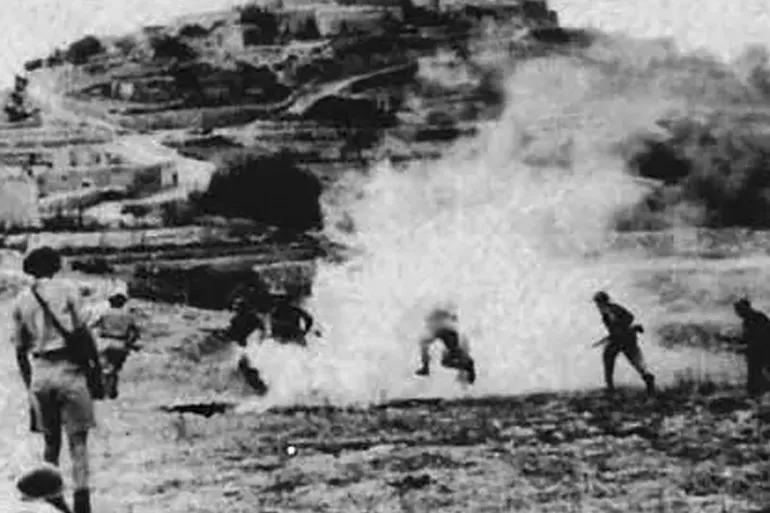
In mid-October 1948, with the second truce in force, the occupation forces launched a broad offensive on the southern front. On 18 October they began bombing Beersheba from the air, and the bombardment went on until 21 October, destroying ten houses, killing seven of its people and spreading terror through the city. The attackers massed some five thousand fighters, with aircraft and artillery, against a small garrison and volunteers. [1]
On 20 October artillery was emplaced to prepare the ground assault from the north and north-west, and at dawn on 21 October the forces stormed the city to crush what resistance remained. The people of Beersheba and its Bedouin resisted, but the clear disparity in military equipment decided the battle, and the city fell the same day. [1][2]
The truce violation and the Security Council
Beersheba was occupied while the second truce was in force. On 4 November 1948 the Security Council adopted Resolution 61, which kept the truce in force and called on the governments concerned to withdraw their forces that had advanced beyond the positions they held on 14 October. The occupation forces did not withdraw from Beersheba, and the city has remained under occupation to this day. [5][3]
The expulsion
The people of Beersheba, numbering 6,461, were driven out by force of arms and killing; some took refuge in Gaza, others in the Jericho camps and later Jordan, and only a few remained in and around the city. [4][3][2]
In 1953 the occupation authorities turned the Great Mosque built by the Ottomans into a museum of the city’s history, so that the mosque built for its people to pray in became a witness to their uprooting. Today some two hundred thousand people live in the city, most of them settlers, while the Bedouin of the Naqab continue to stand fast against the demolition of their villages. [3][2]
Between the accounts
Population: WAFA gives the city’s displaced population as 6,461, while a piece on Al Jazeera Mubasher gives 150,000, apparently covering the tribes of the whole district rather than the city alone. [4][3]
When the mosque became a museum: 1953 by one account, the “early 1950s” by another. [3][2]
Losses on both sides: the available Arab sources give neither the number of defenders martyred nor the attackers’ losses on the day of the assault. [1]
Timeline
| Date | Event |
|---|---|
| 31 October 1917 | Beersheba becomes the first Palestinian city taken by the British [2] |
| 14 May 1948 | British withdrawal; garrison reinforced with Egyptian and Libyan volunteers [1] |
| 18 May 1948 | Ahmad Abd al-Aziz’s battalion enters the Beersheba area [1] |
| 18–21 October 1948 | Aerial bombardment destroys ten houses and kills seven [1] |
| 21 October 1948 | The city is stormed and falls; its people expelled [1] |
| 4 November 1948 | Security Council Resolution 61 calls for withdrawal to 14 October positions [5] |
| 1953 | The Great Mosque turned into a museum [3] |
Frequently asked questions about the Battle of Beersheba
When did Beersheba fall?
On 21 October 1948, after aerial bombardment that began on 18 October. [1][2]
Who defended Beersheba?
A garrison of police and camel corps, Bedouin volunteers under Abdullah Abu Sitta, and Egyptian and Libyan volunteers. [1]
Was the occupation of Beersheba a truce violation?
Yes. It came while the second truce was in force, and Security Council Resolution 61 called for the withdrawal of forces that had advanced after 14 October, but the occupation did not withdraw. [5]
Where did the people of Beersheba go?
To the Gaza Strip, and to the Jericho camps and then Jordan; only a few remained. [3][2]
What became of Beersheba’s Great Mosque?
The occupation authorities turned it into a museum of the city’s history in 1953. [3]
Read also on Palestinuna
Sources and references
- WAFA – Palestinian National Information Centre, “Battles of the Nakba”: “The Battle of Beersheba” (in Arabic).
- Al Jazeera Encyclopedia, “Beersheba: the oldest and largest city of historic Palestine,” 21 November 2014 (in Arabic).
- Ali Fareeh Abu Sa’eleek, “Cities of Palestine, witnesses to history: Beersheba, capital of the Naqab,” Al Jazeera Mubasher, 6 October 2020 (in Arabic).
- WAFA – Palestinian National Information Centre, “Palestinian villages and towns occupied and depopulated in 1948” (in Arabic).
- PalQuest, Institute for Palestine Studies, text of UN Security Council Resolution 61, 4 November 1948 (in Arabic).
More from the archive
 Download Our Palestine App
The whole archive in the palm of your hand: depopulated villages, the Nakba, the massacres and Al-Aqsa — free, with no ads to erase the story.
Comments
No comments yet — be the first to write one.
Add your comment
Name and email are optional. Comments appear after review.