The Hula Massacre, 1948: Lebanese Villagers Executed in Operation Hiram
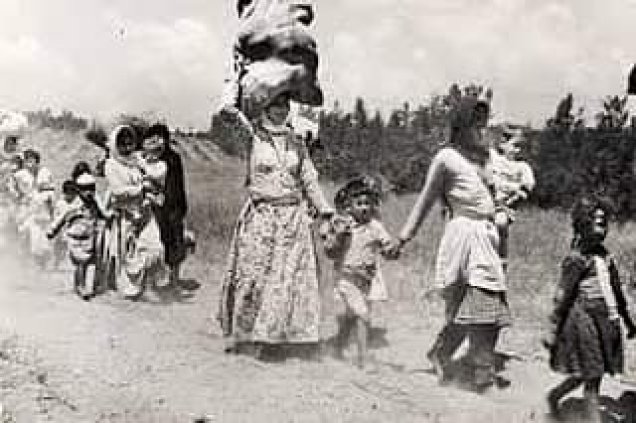
On 31 October and 1 November 1948, in the last days of the Nakba war, soldiers of the Israeli army’s Carmeli Brigade executed dozens of unarmed men in the village of Hula in south Lebanon, after they had surrendered without resistance, and then blew up the houses over their bodies. The death toll ranges from 33, the number for which the company commander was tried, to about 70–80 according to the villagers. [1] [2] [3]
Hula was one of the Lebanese villages the Israeli army occupied in “Operation Hiram” to seize the Upper Galilee, and its massacre became a witness that the crimes of the Nakba did not stop at Palestine’s borders. This article tells the story of the massacre, the trial of its perpetrator that ended in one year and a pardon, and the differences between sources over the figures.
The Hula massacre at a glance
| Item | Details |
|---|---|
| Date | 31 October – 1 November 1948 [3] [4] |
| Place | The village of Hula, south Lebanon, near the border with Palestine [1] |
| Perpetrator | The Israeli army’s Carmeli Brigade, under company commander Shmuel Lahis [3] [2] |
| Context | Operation Hiram to seize the Upper Galilee (29–31 October 1948) [5] |
| Victims | Unarmed men who had surrendered without resistance [3] [2] |
| Killed | 33 according to the indictment; 35–58 according to other sources; about 70–80 according to the villagers [3] [4] [6] [2] |
| Method | Execution by gunfire inside houses, which were then blown up over the bodies [1] [2] [4] |
| Accountability | Lahis was sentenced to seven years in prison, reduced to one year, then pardoned [3] [4] |
Hula: the village on Palestine’s border
Hula is a village in south Lebanon near the border with Palestine, facing what is known as the “Galilee Panhandle,” about 3 kilometers west of the site of the settlement of Manara. [1] [4] At the time it had about 1,500 inhabitants. [6]
It should not be confused with al-Hula, the valley and lake in the Safad district of northern Palestine, despite the similar names and the closeness of the two places.
Hula lived through the 1948 war from its beginning. In May 1948, Zionist infiltrators killed three of its men: Sheikh Abd al-Khaleq Mazraani, Abd Shabib Shreim and Mohammad Yassin. [1] Arab Liberation Army forces were then deployed in the village until they withdrew on 27 October 1948, leaving it exposed. [1] [2]
Operation Hiram: the Galilee and south Lebanon
Between 29 and 31 October 1948, the Israeli army launched “Operation Hiram” to seize what remained of the Upper Galilee, with several brigades including the Carmeli Brigade. That brigade crossed the border into Lebanon, occupied about 15 Lebanese villages and reached the Litani River. [5]
The operation saw a series of massacres in the villages of the Galilee, among them the Safsaf massacre, the Eilaboun massacre, and the Saliha massacre, in which between 60 and 94 people were killed. [5] In the same period came the Majd al-Krum massacre and the Arab al-Mawasi massacre. Hula was an extension of this series beyond Palestine’s borders.
The massacre: two days of executions
According to Lebanese accounts, the Israeli force entered Hula on 31 October 1948 disguised in the dress of the Arab Liberation Army, with the keffiyeh and agal, and some villagers welcomed it, believing it was an Arab force come to replace the one that had withdrawn. [1] [2] Most of the inhabitants had fled, while about 60 villagers stayed and surrendered without resistance. [3] The Lebanese Army Magazine states that the force detained 85 young and elderly men, along with women and children. [1]
The men were separated from the women and children and divided into three groups, each locked in a house. They were then executed after being forced to raise their hands with their faces to the walls, and the three houses were blown up over them. [1] [2]
Israeli military court documents published in 2021 reveal that the killing took place over two consecutive days: 18 villagers were killed on 31 October 1948, and 15 more the following day. [3] Describing the second execution, the verdict states that company commander Shmuel Lahis ordered 15 men taken out of the house where they were held and led to an isolated house away from the village cemetery, where he lined them up in a room facing the wall, then opened fire on them with a Sten gun, emptying two magazines into them. After they fell he checked the bodies, and when he saw signs of life in some of them he fired additional shots. [3]
As for the women and children, the Lebanese Army Magazine says they nearly met the same fate but for the intervention of United Nations observers. [1]
Survivors and their testimony
Among the few who survived the executions was Hussein Mohammad Zaher Rizk, who died in 2005. Rizk was one of 18 young men taken away together; he was wounded and escaped along with Mohammad al-Sheikh Abd Suleiman. As-Safir quoted him as saying, “We were 18 young men,” and that the soldiers ordered them to turn their faces to the wall before opening fire. [6]
The trial of Shmuel Lahis
Shmuel Lahis, a company commander in the Carmeli Brigade, was the only combatant tried for murder in Operation Hiram. [3] He was arrested and tried before a special military court, where he argued that the crime had taken place outside Israel’s borders; the argument was rejected. [4]
Lahis was convicted and sentenced to seven years in prison, but the appeals court reduced the sentence to one year; [3] he was released in 1950 and received a retroactive presidential amnesty in 1955. [4] He then became a lawyer, and in 1978 he was appointed director-general of the Jewish Agency. [4] [2]
So ended the only trial of Operation Hiram: dozens of unarmed men were killed, and their killer served one year before becoming a senior official of the Zionist establishment.
How many were killed?
Sources differ widely over the number killed in the Hula massacre:
| Source | Number |
|---|---|
| The indictment against Lahis | 33 (18 on the first day and 15 on the second) [3] |
| Other sources | 35–58 [4] [5] |
| As-Safir | About 70 men [6] |
| Villagers’ estimates (Al-Quds) | 70–80 [2] |
| Lebanese Army Magazine | 85 detained, the men among them executed [1] |
Part of this difference stems from the fact that the court considered only the cases attributed to Lahis himself, and that the exact number was never officially documented at the time. [6] The list of martyrs on the memorial in Hula contains about 100 names, but it also includes women and children killed in other attacks on the village. [2]
After the massacre
After the massacre, the villagers who remained fled to the woods and neighboring villages, then took refuge in the Dbayeh area east of Beirut, where they lived for about five months in tin shacks. [1] [2] On 23 March 1949, after the armistice agreement between Lebanon and Israel, the Israeli army withdrew, and the villagers returned to find their village razed to the ground. [1]
After the liberation of south Lebanon in 2000, Hula’s municipality erected a memorial to the massacre’s martyrs, whose burial ground is known among the villagers as the “Martyrs’ Cemetery.” [6] During the Israeli assault on Lebanon in 2024, Israeli soldiers defaced the memorial. [4]
Read about the Zionist massacres against the Palestinian people, the Safsaf massacre and the Eilaboun massacre.
Conclusion
The Hula massacre was not an isolated incident but an extension of the Operation Hiram massacres in the villages of the Galilee, carried across the border with the army into south Lebanon. Men who surrendered without a fight were killed over two days with their faces to the walls, and the houses were blown up over them. The only trial that took place ended in one year and a pardon, leaving Hula as a witness that the crimes of 1948 knew neither borders nor accountability.
Frequently asked questions about the Hula massacre
When did the Hula massacre take place?
It took place on 31 October and 1 November 1948, during Operation Hiram in the last days of the Nakba war.
Where is the village of Hula?
Hula is a village in south Lebanon near the border with Palestine, facing the Galilee Panhandle. It is not al-Hula, the valley and lake in the Safad district of Palestine.
Who carried out the Hula massacre?
It was carried out by soldiers of the Israeli army’s Carmeli Brigade, and company commander Shmuel Lahis alone was tried for murder.
How many people were killed in the Hula massacre?
Figures vary: 33 according to the indictment against Lahis, 35–58 according to other sources, and about 70–80 according to the villagers.
What happened to Shmuel Lahis?
He was sentenced to seven years in prison, reduced on appeal to one year; he was released in 1950, pardoned in 1955, and appointed director-general of the Jewish Agency in 1978.
Sources and references
Arabic-language sources are listed with translated titles.
- Retired Brig. Gen. Dr. Yassin Suwaid, “Zionist Terrorism: Hula as a Model,” Lebanese Army Magazine, no. 394, April 2018.
- “Lebanon’s Hula: A Memory of Massacres from the 1948 Nakba to the Current Aggression,” Al-Quds, 14 May 2026.
- “Palestine: Declassified Documents Reveal Details of Israeli 1948 Massacres,” TRT World.
- “Hula massacre,” English Wikipedia (for comparison).
- “Operation Hiram,” English Wikipedia (for comparison).
- Kamel Jaber, “Hula Remembers Its Massacre: Lest We Forget,” As-Safir, 1 November 2013 (republished on Khiam.com).
More from the archive
 Download Our Palestine App
The whole archive in the palm of your hand: depopulated villages, the Nakba, the massacres and Al-Aqsa — free, with no ads to erase the story.

Comments
No comments yet — be the first to write one.
Add your comment
Name and email are optional. Comments appear after review.