The Sycamore Tree and the Russian Museum in Jericho
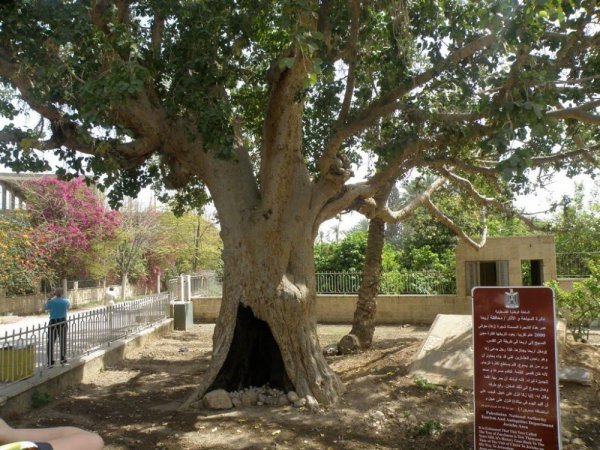
The Sycamore Tree and the Russian Museum in Jericho: Zacchaeus's Tree and the Archaeological Park
The Sycamore Tree, or Tree of Zacchaeus, is an ancient tree in the heart of Jericho, estimated to be more than 2,000 years old. Christian tradition holds that it is the tree the tax collector Zacchaeus climbed to see Jesus as he passed through Jericho on his way to Jerusalem, as told in the Gospel of Luke. Today the tree stands within the Russian Museum and Park Complex, opened in 2011 on land owned by Russia since the 19th century, which houses a museum of Jericho's Byzantine and Greek antiquities and photographs of Russian pilgrims, a park, and the remains of a Byzantine church uncovered in excavations in 2010. This guide covers the story of the tree and the history and exhibits of the complex.
Quick facts
| Arabic name | شجرة الجميزة والمتحف الروسي – أريحا |
|---|---|
| Location | Al-Jummayza Square, central Jericho |
| Age of the tree | More than 2,000 years, by estimate |
| Tradition | The tree Zacchaeus climbed to see Jesus (Luke 19) |
| Land area | About 105 dunams |
| Land purchased | 1880 |
| Russian ownership recognised | 2008 |
| Excavations | June–September 2010, Palestinian-Russian team |
| Museum opened | January 2011 |
| Opening hours | Monday–Saturday, 9:00 a.m.–5:00 p.m. |
The Sycamore Tree and the story of Zacchaeus
The Gospel of Luke (19:1–10) tells how Zacchaeus, the chief tax collector of Jericho, wanted to see Jesus as he passed through the town, but being short he could not see him over the crowd, so he climbed a sycamore tree. When Jesus reached the spot he looked up and said: "Zacchaeus, hurry and come down, for I must stay at your house today." Zacchaeus welcomed him into his home, repented and gave half his possessions to the poor. Christian tradition places this story at the ancient sycamore in central Jericho, estimated to be more than 2,000 years old. Russian experts examined it and found it in good condition after care and pruning; it still puts out new branches despite its slow growth. The sycamore fig has been known to the people of Jericho and the Jordan Valley since ancient times, and its fruit is edible.
Location
The tree and the Russian complex stand on al-Jummayza (Sycamore) Square in central Jericho, a city in the Jordan Valley about 250 metres below sea level, close to Tell al-Sultan, Ain al-Sultan, the Monastery of the Temptation (Deir Quruntul) and Hisham's Palace.
History of the land
- 1880: the Russian mission purchased the land, which became the property of the Imperial Orthodox Palestine Society.
- After 1917: following the Russian Revolution the land passed to the Russian mission in Jerusalem and then to the Russian government, and lay neglected for decades, with only four graves bearing the names of Russian women and some ruins remaining.
- 2008: the Palestinian National Authority formally recognised Russia's ownership of the land, which was handed to the Imperial Orthodox Palestine Society.
- 2010: construction of the Russian Museum and Park Complex began, as a joint project of the Jericho municipality and the Russian embassy with Russian funding, and the tree was incorporated into the complex.
- January 2011: the museum was inaugurated in the presence of the then Russian president and the Palestinian presidency.
The 2010 excavations and the Byzantine church
Between June and September 2010, a Palestinian-Russian team carried out salvage excavations on the site before construction, uncovering remains from the Roman, Byzantine and Umayyad periods, most notably a Byzantine church. These remains are now displayed in the complex's park, bearing witness to the depth of settlement in Jericho through the ages.
The Russian Museum and its exhibits
The museum has two main galleries: the first for the Byzantine and Greek antiquities uncovered on the site, arranged chronologically, including Greek royal coins, Byzantine columns and ceramic and stone objects; the second for early 20th-century photographs of Russian pilgrims in the Holy Land. Its walls are decorated with reconstructed Byzantine mosaics, and it displays replicas of pieces from the Hermitage Museum in Russia. A large park surrounds the museum, with the tree at its centre.
Jericho: the oldest city in the world
Jericho is one of the oldest continuously inhabited cities in the world: the earliest traces of settlement at Tell al-Sultan go back some 10,000 years, and UNESCO inscribed "Ancient Jericho / Tell es-Sultan" on the World Heritage List in 2023. The city holds landmarks from many eras, from the Monastery of the Temptation on the Mount of Temptation to the Umayyad Hisham's Palace, and it was the first city handed over to the Palestinian National Authority in 1994. Nearby lie the Aqabat Jabr and Ain al-Sultan camps of refugees expelled in 1948.
The complex today (2026)
The complex receives visitors from Monday to Saturday, and the tree remains one of the main stops for pilgrims and tourists in Jericho, alongside Tell al-Sultan, Hisham's Palace and the Monastery of the Temptation. Tourism in Jericho and the West Bank has fallen sharply since the genocidal war on Gaza, because of the checkpoints and movement restrictions imposed by Israeli forces.
Frequently asked questions
Where is the Sycamore Tree in Jericho?
On al-Jummayza Square in central Jericho, inside the Russian Museum and Park Complex.
What is the story of the Tree of Zacchaeus?
The Gospel of Luke tells how Zacchaeus, the chief tax collector of Jericho, climbed a sycamore tree to see Jesus because he was short, and Jesus called him down and stayed at his house.
How old is the Sycamore Tree?
It is estimated to be more than 2,000 years old.
When did the Russian Museum in Jericho open?
In January 2011, after being built in 2010 on land owned by Russia since 1880.
What does the Russian Museum contain?
Byzantine and Greek antiquities from the site, coins, columns, pottery, mosaics, photographs of Russian pilgrims, and the remains of a Byzantine church in the park.
Conclusion
In the heart of Jericho, the oldest city in the world, the sycamore of Zacchaeus has stood for more than two thousand years, a witness to a Gospel story and to a city where civilisations have followed one another. Around it, the Russian Museum, its park and the remains of its Byzantine church tell another chapter of Jericho's rich history.
More from the archive
 Download Our Palestine App
The whole archive in the palm of your hand: depopulated villages, the Nakba, the massacres and Al-Aqsa — free, with no ads to erase the story.

Comments
No comments yet — be the first to write one.
Add your comment
Name and email are optional. Comments appear after review.