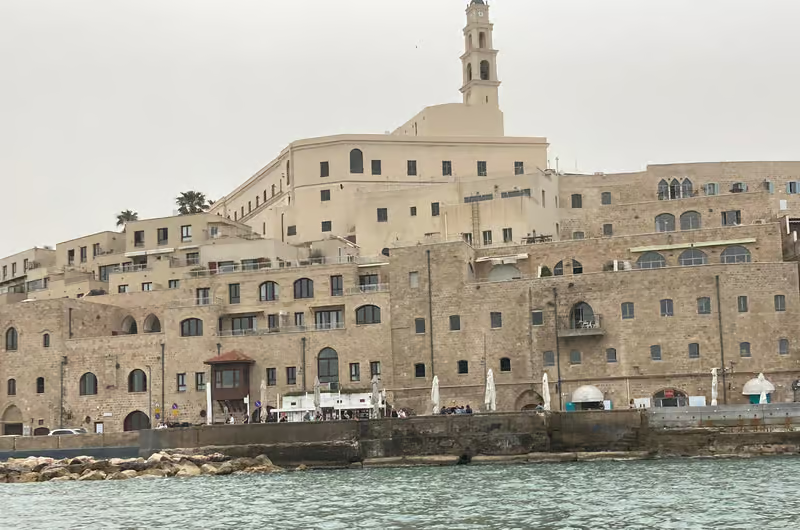
Hassan Bek Mosque in Jaffa

Hassan Bek Mosque in Jaffa
Hassan Bek Mosque in Jaffa: The Last Witness to al-Manshiyya
Hassan Bek Mosque (also pronounced Hassan Bey) is a historic mosque from the late Ottoman period in Palestine, standing in the north of Jaffa on the Mediterranean shore, in the al-Manshiyya quarter. It was built between 1914 and 1916 and named after Jaffa's Ottoman governor, Hassan Bek al-Jabi al-Dimashqi. Today it is the only Arab and Islamic architectural monument left of al-Manshiyya, after the occupation authorities demolished the entire quarter following the Nakba. The mosque lay abandoned and neglected for decades after 1948 and survived a plan to demolish it and turn it into a shopping centre, until Jaffa's people restored it and reopened it for prayer in 1988. Yet it still suffers repeated attacks, and the Israeli authorities ban the call to prayer there. This guide covers the mosque's history, architecture and resilience.
Quick facts
| Arabic name | جامع حسن بك – يافا |
|---|---|
| Other names | Hassan Bey Mosque |
| Location | Al-Manshiyya quarter, northern Jaffa, on the seafront |
| Built | Between 1914 and 1916, according to most sources |
| Builder | Hassan Bek al-Jabi al-Dimashqi, Ottoman governor of Jaffa |
| Style | Ottoman, in white limestone |
| Features | A single dome and a fluted cylindrical minaret |
| Reopened | 1988, after restoration by Jaffa's Islamic Council |
| Call to prayer | Banned by the Israeli authorities |
| Status | The only Arab monument left of al-Manshiyya |
The name and builder
The mosque bears the name of its builder, Hassan Bek al-Jabi al-Dimashqi, who governed Jaffa in the late Ottoman period during the First World War and carried out several building projects in the city. Sources differ on its date: most place it between 1914 and 1916, while others give 1906.
Location and al-Manshiyya
The mosque stands in the al-Manshiyya quarter in the north of Jaffa, on the Mediterranean shore. Al-Manshiyya was one of Jaffa's largest and liveliest quarters, stretching along the coast north of the old city. In the Nakba of 1948 its people were expelled, and the occupation authorities then demolished the entire quarter, leaving only Hassan Bek Mosque, which became the sole Arab and Islamic architectural witness to the quarter amid the towers, hotels and roads built on its ruins and annexed to the Tel Aviv municipality.
Architectural style
The mosque was built in the Ottoman style with a distinctive character, using white limestone instead of the yellow stone long familiar in the region. It consists of a square prayer hall crowned by a single dome, and a single minaret, cylindrical and fluted, which contrasts beautifully with the square prayer hall. It was once adorned with marble columns, decorated doors and rare stained-glass windows.
The mosque after the Nakba
After Jaffa fell and most of its people were expelled in May 1948, Hassan Bek Mosque lay abandoned and neglected for many years: its marble columns and decorated doors were stolen, its windows and minaret damaged, and it was used as a horse stable and later as a shelter for vagrants and drug users, while the Palestinians who remained in Jaffa were barred from caring for it.
The battle to save the mosque
- Late 1970s – early 1980s: a real-estate development project was suddenly announced for the area, under which the mosque would be demolished and turned into a shopping centre; the most serious attempt to demolish it came from the municipality in 1981. But the project provoked a storm of protest led by the Palestinians of Jaffa and inside the Green Line and activists from Jerusalem, backed by peace and human rights groups, and it was cancelled, with the mosque returned to the management of Jaffa's Muslims.
- Shortly after the handover: the mosque's minaret collapsed overnight; official investigations described the collapse as an accident, while Jaffa's people accused Jewish extremists of deliberate sabotage. Jaffa's people rebuilt the minaret with financial support from the governments of Jordan and Saudi Arabia to the mosque's administration.
- 1988: Jaffa's elected Islamic Council completed the restoration and reopened the mosque for prayer, and since then the five daily prayers and Friday prayers have been held there.
Attacks on the mosque
Since the Nakba, Hassan Bek Mosque has suffered some twenty attacks and arson attempts, most notably:
- 2000–2001: the mosque was stoned and its glass windows smashed; thousands of extremist Jewish demonstrators surrounded it on all sides chanting against the worshippers, pelting it with stones and Molotov cocktails, injuring dozens of worshippers and attacking their cars in the mosque car park. These attacks led young men from Jaffa to stay in the mosque around the clock to guard it.
- 2004: extremists stoned the mosque during dawn prayers, breaking a window and injuring several worshippers, and on 26 December 2004 they threw Molotov cocktails that burned one of its windows.
- August 2005: a man and his wife threw a pig's head wrapped in a keffiyeh, with racist writing, into the mosque courtyard.
- 2007: a Jewish extremist broke into the mosque, smashed its security cameras and tried to set it on fire; the mosque guards caught him at the last moment as he poured petrol inside. Police described him as "mentally ill", a claim Jaffa's people rejected.
- 5 March 2008: Jewish extremists broke into part of the mosque, vandalised its contents and smashed the flower vases decorating its courtyards.
- 8 July 2021: unknown assailants smashed the glass of the western door and the mosque's rare stained-glass windows before dawn; Jaffa's national and Islamic bodies held the police fully responsible, since no one had been arrested for previous attacks.
This comes within a wider pattern of desecration of Palestinian holy sites inside the Green Line, where mosques and Palestinian monuments have been turned into bars, nightclubs, animal pens and warehouses, as in al-Abbasiyya east of Jaffa, Caesarea, Ein Hawd and the Red Mosque in Safad.
The mosque today (2026)
Hassan Bek Mosque remains open for prayer, guarded by Jaffa's people themselves, while the Israeli authorities ban the call to prayer there. The battle over the adhan is escalating in Arab towns: on 1 July 2026 the Knesset passed in a preliminary reading a "Muezzin Law" banning the call to prayer over loudspeakers without prior permission. With its white minaret overlooking the sea, the mosque remains the last witness to the Arab quarter of al-Manshiyya and a symbol of Jaffa's people's steadfastness in their city.
Frequently asked questions
Where is Hassan Bek Mosque?
In the al-Manshiyya quarter in the north of Jaffa, on the Mediterranean shore.
When was Hassan Bek Mosque built?
Between 1914 and 1916 according to most sources, in the late Ottoman period.
Why is it called Hassan Bek Mosque?
After its builder, Hassan Bek al-Jabi al-Dimashqi, the Ottoman governor of Jaffa.
What remains of al-Manshiyya?
Only Hassan Bek Mosque, after the occupation authorities demolished the entire quarter following the Nakba.
Is the call to prayer raised at Hassan Bek Mosque?
No. The Israeli authorities ban the call to prayer there, although the five daily prayers and Friday prayers have been held since it reopened in 1988.
Conclusion
On the Jaffa shore, where al-Manshiyya once teemed with life, Hassan Bek Mosque stands alone among the towers built on the quarter's ruins. It survived demolition, vandalism and arson thanks to Jaffa's people, who guarded it with their own bodies, and it still bears witness that Arab Jaffa endures, its silent minaret awaiting the day the call to prayer rises from it again.
Photo gallery


More from the archive


 Download Our Palestine App
The whole archive in the palm of your hand: depopulated villages, the Nakba, the massacres and Al-Aqsa — free, with no ads to erase the story.
Comments
No comments yet — be the first to write one.
Add your comment
Name and email are optional. Comments appear after review.