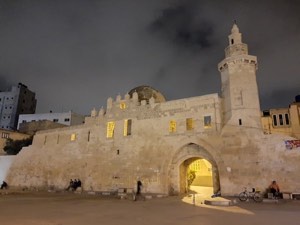
The Great Mosque of Beersheba

The Great Mosque of Beersheba: An Ottoman Mosque Closed to Worshippers Since 1948
The Great Mosque of Beersheba (al-Masjid al-Kabir in Bir al-Sabi') stands in the old city of Beersheba, the capital of the Naqab (Negev). It was built in 1906 by the Ottoman authorities, with half of its cost paid by the Bedouin sheikhs of the Naqab, as the main mosque of the new town and its Bedouin hinterland. After Beersheba was occupied in October 1948 and its Arab inhabitants were expelled, the mosque was turned into a court and prison, then a museum, then left empty. Despite a long legal battle, Muslims have been barred from praying in it for more than 75 years, while the building has been used for exhibitions and even proposed for a wine festival. This guide covers its history, architecture and the struggle to reopen it.
Quick facts
| Arabic name | مسجد بئر السبع الكبير |
|---|---|
| Location | Old city of Beersheba, the Naqab (Negev) |
| Built | 1906, by the Ottoman authorities |
| Funding | Half paid by the Bedouin sheikhs of the Naqab |
| Use as a mosque | 1906–1948 |
| After 1948 | Court and prison until 1953; museum until 1991; then empty |
| Petition | Filed August 2002 to reopen it for prayer |
| Court ruling | 22 June 2011: a museum of "Islamic culture", not a place of prayer |
| Neighbours | Ottoman Governor's House (1906), now the Negev Museum of Art |
| Prayer | Barred to Muslims since 1948 |
Ottoman Beersheba
Bir al-Sabi' (Beersheba) was founded by the Ottomans around 1900 as an administrative centre for the Bedouin tribes of the Naqab, on an ancient site with wells that gave the place its name. The Ottomans laid it out on a grid and built a government house (saraya), the Governor's House, a school, a railway station and the Great Mosque, while the Bedouin sheikhs helped fund and settle the new town. On 31 October 1917 British and Australian forces took Beersheba from the Ottomans in a battle that opened the way to the conquest of Palestine.
History of the mosque
The mosque was built in 1906 as the main place of worship for the Muslims of Beersheba and the Bedouin of the Naqab. The Bedouin sheikhs paid for half of its construction, and it served as a mosque for 42 years, until 1948. It was the religious heart of the town, where the tribes gathered for Friday prayers and feast days.
Architecture
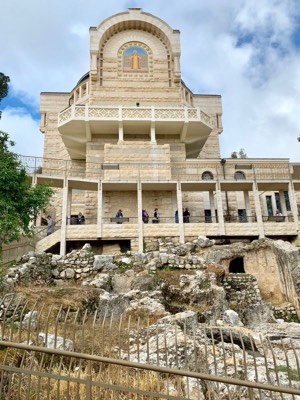
The mosque is a late-Ottoman building of local stone, with a prayer hall, a mihrab facing the qibla and a tall, slender minaret that was once the landmark of Beersheba's skyline. It stands close to the Ottoman Governor's House, forming part of the small administrative quarter that the Ottomans built at the town's founding.
Beersheba and the Nakba
In the 1940s Beersheba was a small Arab town of several thousand inhabitants and the market and administrative centre for tens of thousands of Bedouin in the Naqab. On 21 October 1948, during the operation known as "Yoav", Israeli forces captured the town, and its Arab inhabitants were expelled. Most of the Bedouin of the Naqab were driven out to Gaza, the West Bank, Jordan and Sinai. Those who remained were concentrated under military rule in a restricted zone east of the city, where many of their villages are still "unrecognised" and face demolition.
From mosque to prison and museum
- 1948–1953: the mosque was used as a court and a prison.
- 1953–1991: it was turned into a museum.
- 1991: the museum closed and its exhibits were removed. The building was left empty, neglected and unprotected.
- Throughout: Muslims in Beersheba and the Naqab repeatedly asked to pray in it and were refused.
The legal battle (2002–2011)
- August 2002: the legal centre Adalah petitioned the Israeli Supreme Court on behalf of Bedouin and Islamic organisations of the Naqab and 23 Arab residents of Beersheba to reopen the mosque for prayer.
- 22 June 2011: the court rejected the municipality's plan to turn the building into a general museum, but instead of reopening it for prayer, it ordered it to become a museum of "Islamic culture". One justice criticised the municipality's claim that prayer would disturb public order, and another called the remedy "scant" compared with what the petitioners had asked for.
- December 2011: the municipality opened a general exhibition on the history of Beersheba in the mosque, which Adalah said violated the ruling.
- September 2012: a plan to hold a wine festival in the mosque's courtyard was dropped after mass protests by the Arabs of the Naqab, who set up a protest tent and prayer space opposite the mosque.
- February 2013: the municipality held a photo exhibition inside the mosque, again over the objections of the Muslim community.
The mosque today (2026)
The mosque remains closed to prayer. The building is used by the municipality for exhibitions as part of the museum complex around the old Governor's House, described in different sources as a museum of archaeology or of Islamic and Near Eastern cultures. Meanwhile, the city's thousands of Muslim residents and students, and the Bedouin who come to Beersheba for work and services, still have no mosque in the city centre. For the Arabs of the Naqab, the closed mosque has become a symbol of the Nakba and of the continuing denial of their history in the city their grandparents helped build.
Frequently asked questions
When was the Great Mosque of Beersheba built?
In 1906, by the Ottoman authorities, with half of the cost paid by the Bedouin sheikhs of the Naqab.
Can Muslims pray in the Beersheba mosque?
No. Muslims have been barred from praying in it since 1948, and a 2011 court ruling ordered it to become a museum rather than reopen as a mosque.
What was the mosque used for after 1948?
A court and prison until 1953, a museum until 1991, then it was left empty. Since 2011 it has been used for exhibitions.
What did the Israeli Supreme Court decide in 2011?
On 22 June 2011 it rejected using the building as a general museum and ordered it to become a museum of Islamic culture, but did not reopen it for prayer.
What happened to Beersheba in 1948?
Israeli forces captured the town on 21 October 1948, its Arab inhabitants were expelled, and most of the Bedouin of the Naqab were driven out.
Conclusion
Built by the Ottomans and the Bedouin of the Naqab at the founding of Beersheba, the Great Mosque has not heard a call to prayer for more than three quarters of a century. Its silent minaret over the old city is a reminder of the people who built it and were driven out in 1948, and of a community that still asks for the right to pray in it.
More from the archive

 Download Our Palestine App
The whole archive in the palm of your hand: depopulated villages, the Nakba, the massacres and Al-Aqsa — free, with no ads to erase the story.
Comments
No comments yet — be the first to write one.
Add your comment
Name and email are optional. Comments appear after review.