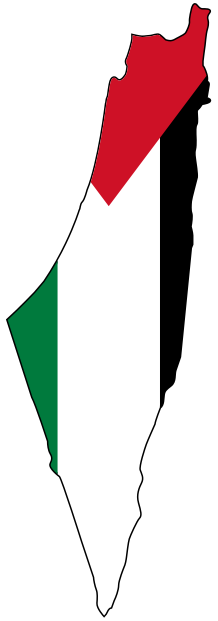
Abda in the Naqab:

Abda in the Naqab: The Town of the Nabataean King Obodas on the Incense Route
Abda, known today as "Avdat National Park", is an ancient Nabataean town on a hill in the central Naqab (Negev) desert south of Beersheba, named after the Nabataean king Obodas, who was deified after his death. It grew up as a Nabataean station on the Incense Route between southern Arabia and Gaza and became a town with temples on its summit; in the Byzantine period its upper town was fortified and two large churches were built there, and it prospered from vineyards, until it was abandoned in the early 7th century. In 2005 UNESCO inscribed it on the World Heritage List as part of the "Incense Route – Desert Cities in the Negev". This guide covers the town's history and remains.
Quick facts
| Arabic name | عبدة – النقب |
|---|---|
| Arabic place name | Abda |
| Location | Central Naqab desert, south of Beersheba |
| Name | After the Nabataean king Obodas |
| Nabataean settlement | At least from the early 1st century CE |
| Temples | On the acropolis, most likely including one to Obodas-Zeus |
| Roman annexation | 106 CE |
| Byzantine period | Fortified acropolis and two churches, late 5th – early 6th century |
| Abandoned | Early 7th century CE, before 634 |
| World Heritage | 2005, as part of the "Incense Route – Desert Cities in the Negev" |
The name
The town bore the name of the Nabataean king Obodas, who was deified after his death and worshipped there, and was known in Greek and Roman sources as "Oboda", while the Arabs of the Naqab preserved its name as "Abda". The Israeli establishment has imposed a Hebrew name on the site, part of a policy of replacing the Arabic names of the Naqab's landmarks.
Location
Abda stands on a hill in the central Naqab desert, south of Beersheba, on the Incense Route that crossed the Naqab from Petra, the Nabataean capital in Jordan, westwards to the port of Gaza. From its high position it overlooked the route and the surrounding wadis.
History through the ages
- Early 1st century CE: the Nabataeans settled the town, which bore the name of their deified king Obodas, and built temples to their gods on its summit, most likely including one to Obodas-Zeus.
- 106 CE: the Roman emperor Trajan annexed the Nabataean kingdom, making the area part of the province of Arabia Petraea, and a Roman military camp was built outside the town.
- Late 5th – early 6th century (Byzantine period): the upper town was reshaped, the acropolis fortified and two large churches built on a terrace there.
- 541–618 CE: tombstones from this period show that life continued in the town.
- Early 7th century: the town was abandoned before the Islamic conquest of 634; from the way its buildings collapsed, scholars believe earthquakes caused its decline.
The acropolis: temples and churches
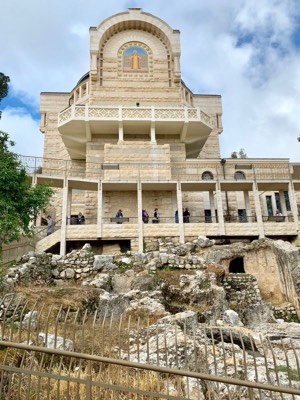
On the hilltop stands the acropolis, which in the Nabataean and Roman periods held temples to the Nabataean gods, most likely including one to Obodas-Zeus. In the Byzantine period the upper town was reshaped: the acropolis was fortified, and two large churches were built on a terrace there, whose ruins remain among the site's main landmarks. Tombstones dated between 541 and 618 show that life continued in the town into the early 7th century.
Farming and wine in the desert
Besides the incense trade, a major source of income for the Nabataean kingdom, Abda's economy rested on farming: five wine presses found in the town show that it was surrounded by vineyards, a testament to its inhabitants' skill in farming the desert and harvesting rainwater.
World Heritage
In 2005 UNESCO inscribed the "Incense Route – Desert Cities in the Negev" on the World Heritage List under criteria (iii) and (v), comprising the four Nabataean towns of al-Khalasa, Kurnub, Abda and al-Sbeita, four fortresses and two caravanserais, stretching about 100 km from near the Jordanian border to al-Khalasa. The route carried frankincense and myrrh from Yemen and Oman to the Mediterranean ports, flourishing from the 3rd century BCE to the 2nd century CE.
The Naqab and its people
After the Nabataean towns were abandoned, the Naqab remained the home of Arab Bedouin tribes who preserved the Arabic names of its sites such as Abda, Kurnub, al-Sbeita and al-Khalasa. In October 1948 Zionist militias occupied Beersheba and expelled its people, and tens of thousands of Naqab Bedouin were expelled, while tens of thousands of them live today in villages Israel refuses to recognise.
The site today (2026)
Abda is managed today as a "national park" under a Hebrew name and presented to visitors without reference to the Naqab's Arab history, though it is a town built by the Arab Nabataeans whose name the Naqab Bedouin preserved for centuries. With its temples, churches and wine presses, the site remains a witness to an ancient Arab civilisation in the heart of the desert.
Frequently asked questions
Where is Abda?
On a hill in the central Naqab desert, south of Beersheba.
Why is it called Abda?
After the Nabataean king Obodas, who was deified after his death and worshipped there.
When was Abda founded?
The Nabataeans settled it on the Incense Route, with traces of their settlement going back at least to the early 1st century CE.
What are Abda's main remains?
The acropolis with its Nabataean and Roman temples and Byzantine fortifications, the two large churches, the Roman camp and the wine presses.
Is Abda a World Heritage site?
Yes, since 2005, as part of the "Incense Route – Desert Cities in the Negev" with al-Khalasa, Kurnub and al-Sbeita.
Conclusion
On a hill in the heart of the Naqab, where Nabataean caravans laden with frankincense and myrrh rested, Abda grew up bearing its king's name, then flourished with vineyards and churches. Its Arabic name, preserved by the Naqab Bedouin, remains a witness to an Arab land whose people's bond with it has never been broken, from the Nabataeans to today.
More from the archive


 Download Our Palestine App
The whole archive in the palm of your hand: depopulated villages, the Nakba, the massacres and Al-Aqsa — free, with no ads to erase the story.
Comments
No comments yet — be the first to write one.
Add your comment
Name and email are optional. Comments appear after review.