Mampsis (Kurnub) in the Naqab
Mampsis (Kurnub) in the Naqab: A Nabataean Town on the Incense Route
Mampsis, or Kurnub as the Arabs of the Naqab call it, is an ancient Nabataean town in the Naqab (Negev) desert south-east of Beersheba. It was one of the four major towns on the Incense Route that carried frankincense and myrrh from southern Arabia, Yemen and Oman, to the Mediterranean port of Gaza. It prospered from agriculture and the breeding of Arabian horses, holds the remains of Byzantine churches, an inn, a bathhouse and a water system, and was abandoned in the 6th century CE. In 2005 UNESCO inscribed it on the World Heritage List as part of the "Incense Route – Desert Cities in the Negev". This guide covers the town's history, remains and significance.
Quick facts
| Arabic name | مامبسيس (كُرنُب) – النقب |
|---|---|
| Arabic place name | Kurnub |
| Location | Naqab desert, south-east of Beersheba |
| Builders | The Nabataeans |
| Role | One of the four major towns on the Incense Route |
| Incense Route's heyday | 3rd century BCE to 2nd century CE |
| Economy | Agriculture, Arabian horse breeding and trade |
| Main remains | Byzantine churches, inn, bathhouse, water system |
| Abandoned | 6th century CE |
| World Heritage | 2005, as part of the "Incense Route – Desert Cities in the Negev" |
The name
The town was known in Greek and Roman sources as "Mampsis", while the Arabs of the Naqab preserved the name "Kurnub" for the site, still in use centuries after the town was abandoned. The Israeli establishment has imposed a Hebrew name on the site, part of a policy of replacing the Arabic names of the Naqab's landmarks.
Location
The town lies in the Naqab desert south-east of Beersheba, on a plateau overlooking a wadi, on the northern parallel branch of the Incense Route that crossed the Naqab from the east, near Jordan, westwards towards Gaza. The World Heritage property stretches about 100 km across the Naqab, from near the Jordanian border to al-Khalasa.
The Nabataeans and the Incense Route
The Nabataeans, the Arab people whose capital was Petra in Jordan, controlled the Incense Route, a caravan network of more than two thousand kilometres carrying frankincense and myrrh from southern Arabia, Yemen and Oman, across the desert to the Mediterranean ports, chief among them Gaza. On this route through the Naqab the Nabataeans built four major towns: al-Khalasa, Kurnub (Mampsis), Abda and al-Sbeita, along with fortresses and caravanserais. The trade flourished from the 3rd century BCE to the 2nd century CE.
History of the town
- Nabataean period: Kurnub arose as a Nabataean town on the Incense Route, growing rich from trade, Arabian horse breeding and agriculture.
- Roman period: after Rome annexed the Nabataean kingdom in the early 2nd century CE, the town remained a commercial and agricultural centre.
- Byzantine period: Christianity spread through the Naqab, and churches were built in the town whose remains still stand.
- 6th century CE: the town was finally abandoned.
The remains
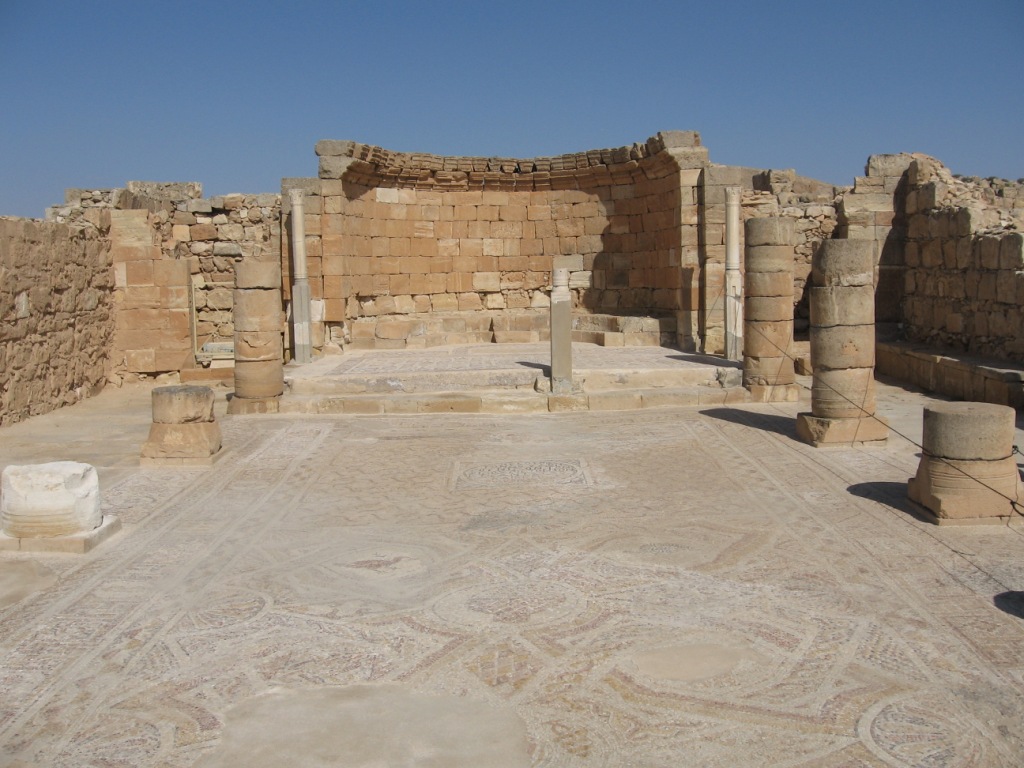
Kurnub holds extensive remains of Byzantine churches, a caravan inn, a bathhouse, residential and public buildings, and a water system for collecting and storing rain and floodwater, revealing the Nabataeans' skill in living and farming in the heart of the desert. Its solid stone houses bear witness to the wealth of its people, who made their fortunes from trade and horse breeding.
World Heritage
In 2005 UNESCO inscribed the "Incense Route – Desert Cities in the Negev" on the World Heritage List under criteria (iii) and (v), comprising the four Nabataean towns of al-Khalasa, Kurnub, Abda and al-Sbeita, four fortresses and two caravanserais, over 6,655 hectares. The property is linked to Petra, the Nabataean capital in Jordan, itself on the list.
The Naqab and its people
After the Nabataean towns were abandoned, the Naqab remained the home of Arab Bedouin tribes who lived there for centuries, herding and farming, and preserved the Arabic names of its sites such as Kurnub, Abda, al-Sbeita and al-Khalasa. In October 1948 Zionist militias occupied Beersheba and expelled its people, and tens of thousands of Naqab Bedouin were expelled to Jordan, Gaza and Sinai, while those who remained were confined to a closed zone. Tens of thousands of Naqab Bedouin still live today in villages Israel refuses to recognise, subject to repeated demolitions.
The site today (2026)
Kurnub is managed today as an archaeological and tourist site under a Hebrew name, presented to visitors without reference to the Naqab's Arab history and the Bedouin who preserved its name for centuries. While the Nabataean towns are celebrated as World Heritage, the homes of the descendants of the Naqab's Arab inhabitants are demolished in unrecognised villages a few kilometres away.
Frequently asked questions
Where is Mampsis?
In the Naqab desert south-east of Beersheba.
What is the Arabic name of Mampsis?
Kurnub, the name preserved for the site by the Arabs of the Naqab.
Who built Mampsis?
The Nabataeans, the Arab people whose capital was Petra and who controlled the Incense Route.
What was the Incense Route?
A caravan network that carried frankincense and myrrh from southern Arabia to the Mediterranean ports, chief among them Gaza, flourishing from the 3rd century BCE to the 2nd century CE.
Is Mampsis a World Heritage site?
Yes, since 2005, as part of the "Incense Route – Desert Cities in the Negev" with al-Khalasa, Abda and al-Sbeita.
Conclusion
In the heart of the Naqab, where Nabataean caravans passed laden with frankincense and myrrh on their way to Gaza, the ruins of Kurnub bear witness to an Arab civilisation that knew how to farm the desert, breed horses and build churches. Its Arabic name, preserved by the Naqab Bedouin for centuries, remains a witness to a land whose Arab people's bond with it has never been broken.
More from the archive


 Download Our Palestine App
The whole archive in the palm of your hand: depopulated villages, the Nakba, the massacres and Al-Aqsa — free, with no ads to erase the story.
Comments
No comments yet — be the first to write one.
Add your comment
Name and email are optional. Comments appear after review.