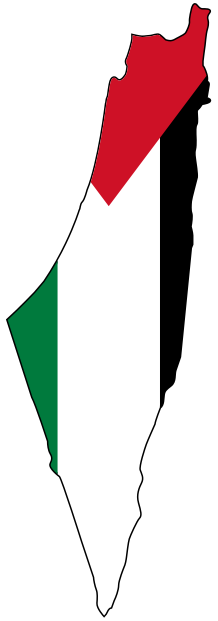
Safad Citadel

Safad Citadel: The Galilee Fortress Liberated by al-Zahir Baybars
Safad Citadel crowns the hill at the centre of the city of Safad, capital of the Upper Galilee, overlooking northern Palestine and the road to Damascus. Built by the Crusaders in the 12th century, it was liberated by Saladin in 1188 and later returned to the Franks, until the Mamluk Sultan al-Zahir Baybars besieged and liberated it in 664 AH (1266 CE). He rebuilt it and made it, in the words of the historian Ibn Shaddad, "among the finest and most impregnable of fortresses". In May 1948 Safad fell to Zionist militias and all its Arab inhabitants were expelled, and the citadel's ruins remain a witness to an Arab city emptied of its people. This guide covers the citadel's history and architecture and the story of its city.
Quick facts
| Arabic name | قلعة صفد |
|---|---|
| Location | Hilltop at the centre of Safad, Upper Galilee |
| First built | By the Crusaders (Knights Templar); 495 AH according to Ibn Shaddad, about 1140 CE according to other sources |
| Saladin's liberation | 584 AH (1188 CE) |
| Handed to the Franks | 638 AH (1240 CE), by al-Salih Ismail, ruler of Damascus |
| Liberated by Baybars | Shawwal 664 AH (1266 CE), after a siege begun on 8 Ramadan |
| Mamluk rebuilding | 665 AH: towers, outer bailey, mosque, markets, khans and baths |
| Importance | Overlooks northern Galilee and the Damascus road; a station on the pigeon post between Damascus and Egypt |
| Fall of Safad | May 1948, with the expulsion of all its Arab inhabitants |
| Condition | Ruins on the hilltop |
Location
The citadel stands on the summit of the hill around which the city of Safad grew, in the Upper Galilee in northern Palestine. Ibn Shaddad, writing in the 13th century, describes it as "a strong fortress on a mountain surrounded by mountains and valleys", and says the site was originally a hill with a prosperous village below it. From its position it commands northern Galilee and the road to Damascus, which gave it its major role in the Crusader wars.
Crusader construction and Saladin's liberation
- Construction: Ibn Shaddad records that the Knights Templar built the fortress in 495 AH, while Al Jazeera and Arabic Post state that the Crusaders occupied Safad in 1140 CE and built its citadel. It became a military centre of the Templars, the second most powerful of the Frankish orders in the Levant.
- Saladin (584 AH / 1188 CE): Sultan Saladin took it "after a hard siege, under terms of safe conduct", and granted it to Sa'd al-Din Mas'ud ibn Tamirak, and after him to his son.
- Dismantling (617 AH): after the Franks captured Damietta, the fortress was dismantled for fear it could not be held, as were the walls of Jerusalem.
- Handed to the Franks (638 AH / 1240 CE): al-Salih Ismail, the Ayyubid ruler of Damascus, ceded Safad, Shaqif and other places to the Franks in return for their alliance, and they rebuilt the fortress with his help. Ibn Shaddad relates that the Muslim prisoners held there plotted to rise against them, and when the plan was discovered the Franks slaughtered them in Acre "to the last man".
The siege of Baybars and the liberation of Safad (1266)
On 8 Ramadan 664 AH (June 1266 CE) the Mamluk Sultan al-Zahir Rukn al-Din Baybars arrived at Safad, bringing catapults from Damascus, Banias and Ajlun. The siege lasted more than five weeks. Catapults and wooden siege engines were used, along with naphtha throwers and stone throwers, while sappers mined the walls, and Baybars himself joined the work and went in with the sappers. On 15 Shawwal the outer bailey fell and the Templars asked for terms. Baybars granted safe conduct on condition that they carry no weapons or money and did not destroy the citadel's stores. Ibn Shaddad relates that when they came out their followers were searched and found to be carrying valuables, and Baybars punished them for breaking the terms. The liberation of Safad was a heavy blow to the Frankish states on the coast and was followed by a truce with the Hospitallers.
The citadel in the Mamluk period
Baybars did not demolish the citadel, as he did with others, but ordered it preserved. The following year (665 AH) he returned with craftsmen and personally took part in repairing the damage. Ibn Shaddad says he "rebuilt the outer bailey and built towers, markets, khans and baths in it, so that through what he added it became among the finest and most impregnable of fortresses". Baybars had inscriptions carved on its walls recording his campaigns against the Crusaders and his titles. He built a mosque inside the citadel and another in the suburb outside its walls, and requested a garrison from Damascus, assigning it 80,000 dirhams a month. The Red Mosque in the city is also attributed to Baybars. Under the Mamluks Safad became one of the provinces of Syria and a station on the pigeon post route between Damascus and Egypt.
The Ottoman period and the earthquakes
Under the Ottomans Safad remained the centre of a sanjak in Galilee. In the 18th century it came within the Galilee over which Zahir al-Umar al-Zaydani extended his control between roughly 1710 and 1750. Two devastating earthquakes struck the city: that of 1759, which killed hundreds of its people, and that of 1837, the worst in its history, which killed about 2,000 people and destroyed many of its buildings. What remains of the citadel today is a field of ruins on the hilltop.
Safad and the Nakba (1948)
On the eve of the Nakba between 9,500 and 12,000 Arabs lived in Safad, according to different sources, and its district had 53,620 people in 69 villages in 1945. After the British withdrew from the city on 16 April 1948 its Arab residents controlled most of it, but attacks by Zionist militias continued from mid-April to early May. After street-to-street fighting that followed the fall of Haifa, the city fell in May 1948 (Arabic Post gives 12 May), and all its Arab inhabitants were expelled by force of arms. Their homes were not demolished but were taken over by settlers, and 61 settlements were built on the ruins of the district's depopulated villages.
Judaisation then reached the city's Islamic landmarks. According to Al Jazeera, the Red Mosque attributed to Baybars was turned into a nightclub and filming venue, the Yunisi Mosque into an art gallery, the Ghar Mosque into a church and the Juqandari Mosque in the Kurdish quarter into a synagogue. The Ain al-Zaytun Mosque became a barn and storeroom, and the Sheikh Isa Mosque was demolished in 1988, all but its minaret, while Muslims are barred from praying in the city's mosques.
The citadel today (2026)
All that remains of Safad Citadel today are ruins and broken walls on the hilltop, surrounded by a city whose original inhabitants no longer live there. Safad's expelled families and their descendants live in refugee camps in Syria and Lebanon and across the diaspora. The citadel is presented to visitors through a narrative that ignores its Arab and Islamic history, the Baybars who rebuilt it, and the city whose people were expelled in 1948. For Safad's refugees its ruins remain a symbol of their city and a testament to their right of return.
Frequently asked questions
Who built Safad Citadel?
The Crusaders, specifically the Knights Templar, built it in the 12th century. The Mamluk Sultan al-Zahir Baybars rebuilt and fortified it after liberating it in 1266 CE.
When did Baybars liberate Safad Citadel?
In Shawwal 664 AH (1266 CE), after a siege that began on 8 Ramadan and lasted more than five weeks.
Why was Safad Citadel important?
It commands northern Galilee and the road to Damascus. It was a military centre of the Knights Templar, and under the Mamluks it became an impregnable fortress and a station on the pigeon post between Damascus and Egypt.
When did Safad fall in 1948?
In May 1948, after attacks that began in mid-April. All its Arab inhabitants, numbering between 9,500 and 12,000, were expelled.
What is the condition of Safad Citadel today?
Only ruins and broken walls remain on the hilltop at the centre of the city, while Safad's expelled people live in refugee camps and the diaspora.
Conclusion
From a Templar stronghold to a Mamluk citadel "among the finest and most impregnable of fortresses", Safad Citadel carried the history of Galilee for centuries. Today its ruins stand above a city emptied of its people in 1948, waiting, as Safad's refugees wait in their camps, for the day of return.
More from the archive

 Download Our Palestine App
The whole archive in the palm of your hand: depopulated villages, the Nakba, the massacres and Al-Aqsa — free, with no ads to erase the story.
Comments
No comments yet — be the first to write one.
Add your comment
Name and email are optional. Comments appear after review.