
Acre Citadel and Prison
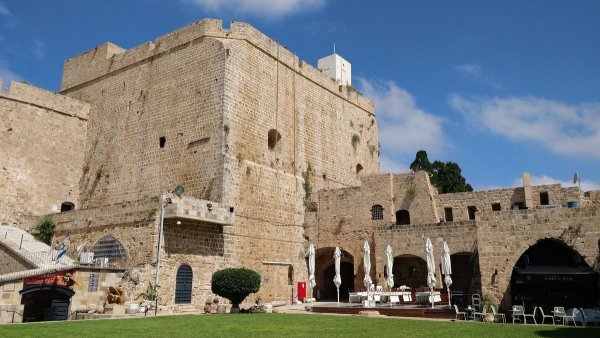
Acre Citadel and Prison: From al-Jazzar's Fortress to the Gallows of Red Tuesday
Acre Citadel is a massive Ottoman fortress in the Old City of Acre (Akka), built over Crusader remains in the 18th century in the time of Zahir al-Umar al-Zaydani and then Ahmad Pasha al-Jazzar, part of the fortifications that repelled Napoleon's siege in 1799. Under the British Mandate it became Acre Prison, the most notorious prison in Palestine. There, on 17 June 1930, the three martyrs Fuad Hijazi, Muhammad Jamjoum and Ata al-Zir were executed, on the day Palestinians remember as "Red Tuesday", immortalised in the song "Min Sijn Akka Tal'at Janaza" ("From Acre Prison a Funeral Came Out"). This guide covers the citadel, its prison, its martyrs and its condition today.
Quick facts
| Arabic name | قلعة عكا / سجن عكا |
|---|---|
| Location | Old City of Acre, near the northern wall |
| Period | Ottoman, 18th century, over Crusader remains |
| Associated with | Zahir al-Umar al-Zaydani and Ahmad Pasha al-Jazzar |
| Napoleon's siege | 1799; he failed to breach Acre's walls |
| Prison | British Mandate central prison in the north, 1918–1948 |
| Red Tuesday | 17 June 1930: execution of Fuad Hijazi, Muhammad Jamjoum and Ata al-Zir |
| Song | "Min Sijn Akka Tal'at Janaza", by the poet Nuh Ibrahim |
| World Heritage | Old City of Acre on the UNESCO list since 2001 |
| Today | A museum run by the occupation authorities |
Location
The citadel stands in the Old City of Acre on Palestine's northern coast, near the city's northern wall and close to the al-Jazzar Mosque and the old markets. The Old City is ringed by Acre's famous walls and their nine towers, among them Burj Karim, Burj al-Sultan and Burj al-Kumandar.
History of the citadel
- Crusader period: the Franks occupied Acre in 1104 CE and made it their main port, until the Mamluk Sultan al-Ashraf Khalil liberated it in 1291. The Ottoman citadel stands over remains from that era.
- Zahir al-Umar (18th century): Zahir al-Umar al-Zaydani entered Acre in 1744 and became its governor in 1750. He fortified it with a wall and towers and made it the capital of his rule in Galilee.
- Ahmad Pasha al-Jazzar: his successor al-Jazzar expanded the fortifications and built the "Jazzar Wall" about 15 metres from the inner wall, along with the al-Jazzar Mosque. In this period the citadel took on its massive form.
- 19th century: the citadel served as an Ottoman barracks and prison. Bahá'u'lláh, founder of the Bahá'í Faith, was imprisoned there in 1868 after his exile to Acre.
- 1918–1948: the British Mandate turned it into a central prison.
Acre defeats Napoleon (1799)
In 1799, after occupying Egypt and the coast of Jaffa, Napoleon Bonaparte laid a long siege to Acre and bombarded it, attempting to storm its walls seven times. He failed, thanks to the steadfastness of the city and its governor al-Jazzar and to fortifications mounting some 250 cannons, while plague ravaged his army. He withdrew, and is credited with the words: "My dreams were shattered on your walls, Acre; farewell, never to meet again."
Acre Prison under the Mandate
Britain occupied Acre in 1918, and its forces used the citadel as a prison for Palestinian detainees throughout the first half of the 20th century. Acre Prison, together with the Jerusalem Central Prison (al-Maskubiyya), was where death sentences were carried out. The prison became notorious after the Buraq Uprising of 1929, and was later filled with detainees during the 1936–1939 revolt, when the Mandate authorities carried out 148 death sentences under emergency laws. Among those executed was Sheikh Farhan al-Sa'di, one of the revolt's leaders, hanged at the age of eighty on 24 November 1937, during Ramadan.
Red Tuesday (17 June 1930)
After the Buraq Uprising of August 1929, which broke out in defence of the Buraq Wall in Jerusalem, the Mandate authorities arrested hundreds of Palestinians and sentenced 26 of them to death. Twenty-three sentences were commuted to life imprisonment, but three remained: Fuad Hijazi, Muhammad Jamjoum and Ata al-Zir.
On Tuesday 17 June 1930 (21 Muharram 1349 AH) the sentence was carried out in the citadel prison in Acre, in three consecutive hours: Fuad Hijazi at eight, Ata al-Zir at nine and Muhammad Jamjoum at ten. That is how the day came to be called "Red Tuesday". It is told that Jamjoum asked to be executed first, and that Ata al-Zir asked to be hanged without chains; when refused, he broke his shackles and walked to the gallows with his head held high. The British refused to hand over their bodies for fear of protests, and they were buried inside the prison for forty days before being moved to the Islamic cemetery in Acre. Anger swept Palestine, as mosques called out and church bells rang.
The day before their execution the three wrote a final letter calling on the Arab nation not to forget their blood, to remain united and "not to sell a single inch to the adversaries", and asking that their graves bear the words: "Complete independence or death; in the name of the Arabs we live, and in the name of the Arabs we die." Palestinian prisoners in occupation jails still commemorate Red Tuesday every year.
"From Acre Prison": the song and the memory
The Palestinian folk poet Nuh Ibrahim immortalised the execution of the three martyrs in the poem "Min Sijn Akka Tal'at Janaza" ("From Acre Prison a Funeral Came Out"), which became one of the best-known Palestinian national songs, passed down through the generations and performed again by Palestinian bands decades later. Through it, the name of Acre Prison became synonymous in Palestinian memory with sacrifice in the face of colonialism.
Acre and the Nakba
The 1946 census recorded 13,560 inhabitants in Acre, including 10,930 Muslims and 2,490 Christians, while its Jewish residents numbered no more than 50. On 17 May 1948, three days after the declaration of the State of Israel, the city fell to Haganah forces and most of its people were expelled, while some remained in the Old City. By 2010 Palestinians made up only 35% of the city's population, as settlement in it grew.
The citadel today (2026)
After the Mandate ended, the Israeli authorities turned the prison into a museum open to the public, focused on the story of prisoners from Zionist organisations during the Mandate. In Palestinian memory, however, Acre Prison remains the place where Hijazi, Jamjoum, al-Zir, al-Sa'di and their comrades were martyred. That memory has returned to the fore: on 30 March 2026, the 50th anniversary of Land Day, the Knesset passed by 62 votes to 48 a law imposing death by hanging on Palestinians convicted of killing Israelis, which does not apply to Israelis who kill Palestinians, in what critics describe as institutionalised discrimination. Almost a century after the Acre gallows, the noose once again threatens Palestinian prisoners.
Frequently asked questions
Who built Acre Citadel?
The citadel was built in the Ottoman period in the 18th century over Crusader remains, in the time of Zahir al-Umar al-Zaydani, who fortified Acre, and then Ahmad Pasha al-Jazzar, who expanded its fortifications.
What is Red Tuesday?
17 June 1930, when the British Mandate authorities executed the martyrs Fuad Hijazi, Muhammad Jamjoum and Ata al-Zir in Acre Prison in three consecutive hours, after their part in the Buraq Uprising.
Who wrote the song "From Acre Prison a Funeral Came Out"?
The Palestinian folk poet Nuh Ibrahim, who wrote it as an elegy for the three martyrs. It became one of the best-known Palestinian national songs.
Did Napoleon fail to take Acre?
Yes. He besieged it in 1799 and tried to storm its walls seven times, but failed and withdrew thanks to the city's steadfastness and fortifications.
What is Acre Prison today?
The Israeli authorities turned it into a museum focused on the story of prisoners from Zionist organisations, while in Palestinian memory it remains the place where the heroes of Red Tuesday were martyred.
Conclusion
From a fortress that repelled Napoleon to a prison where the colonial power raised its gallows, Acre Citadel has carried the history of the city and the struggle of Palestine. The song "From Acre Prison a Funeral Came Out" still echoes almost a century later, a testament that the three martyrs who urged that not an inch of the homeland be sold remain alive in the memory of their people.
More from the archive
 Download Our Palestine App
The whole archive in the palm of your hand: depopulated villages, the Nakba, the massacres and Al-Aqsa — free, with no ads to erase the story.
Download Our Palestine App
The whole archive in the palm of your hand: depopulated villages, the Nakba, the massacres and Al-Aqsa — free, with no ads to erase the story.



Comments
No comments yet — be the first to write one.
Add your comment
Name and email are optional. Comments appear after review.