
The al-Jazzar Mosque
The al-Jazzar Mosque
The al-Jazzar Mosque in Acre: History, Architecture, the Ahmadiyya Library and the Mosque After 1948
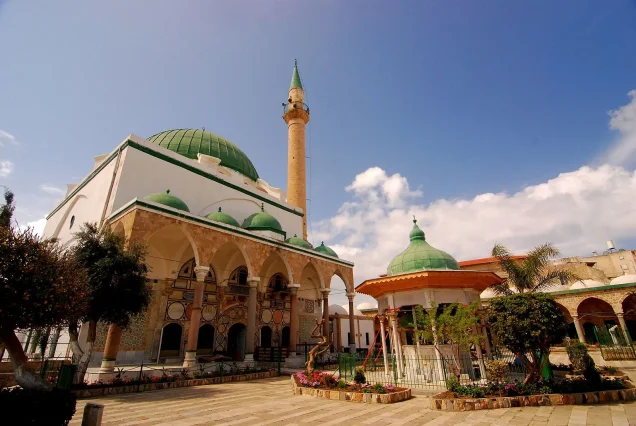
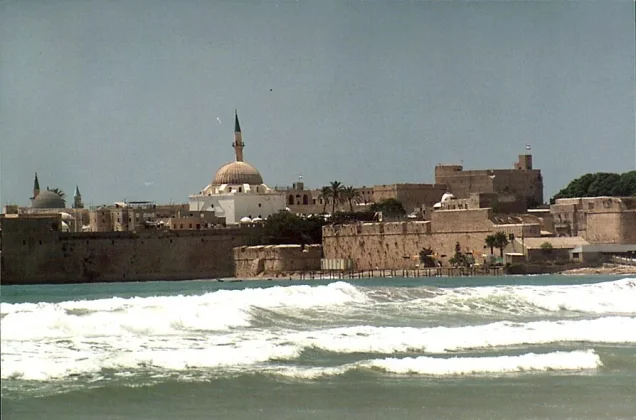
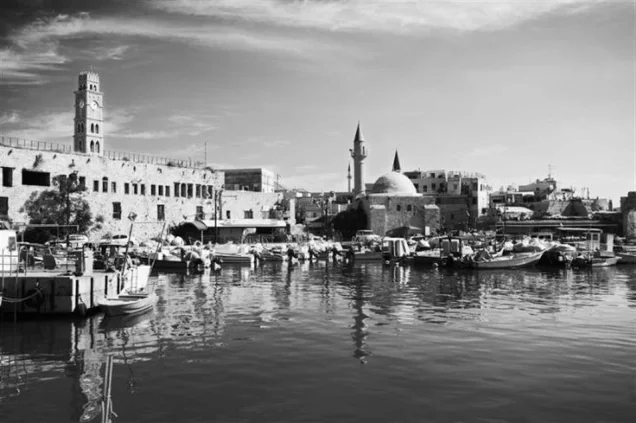
The al-Jazzar Mosque (Jami' al-Jazzar), at the northern entrance of the Old City of Acre ('Akka), is one of the largest and most important mosques in northern Palestine. The Ottoman governor Ahmad Pasha al-Jazzar built it in 1781–1782 in the style of the great mosques of Istanbul, with a green dome, a slender minaret and a courtyard of cypresses and palms, using marble and granite from the ruins of Caesarea and Atlit. The complex housed the Ahmadiyya school and library, and it still keeps a relic said to be hair from the Prophet's beard. After the occupation of Palestine in 1948 its school was closed and its endowments taken out of Muslim hands. This guide covers its history, architecture, landmarks and situation today.
Quick Facts About the al-Jazzar Mosque
| Arabic name | جامع الجزار / مسجد الجزار |
|---|---|
| Location | Northern edge of the Old City of Acre, Palestine |
| Built by | Ahmad Pasha al-Jazzar, Ottoman governor of Sidon and Acre |
| Built | |
| Style | Ottoman, with Byzantine and Persian influences |
| Area | About 4 dunums |
| Dome | Green, about 10 m in diameter, clad in lead |
| Complex | Ahmadiyya school, Ahmadiyya library, sabil, tombs of al-Jazzar and Sulayman Pasha |
| Relic | Hair attributed to the Prophet Muhammad, shown on the 27th night of Ramadan |
| UNESCO | Part of the Old City of Acre, World Heritage Site since 2001 |
Origin of the Name
The mosque is named after its builder, Ahmad Pasha al-Jazzar. "Al-Jazzar" means "the butcher", a nickname he earned for his harshness towards his enemies.
Location
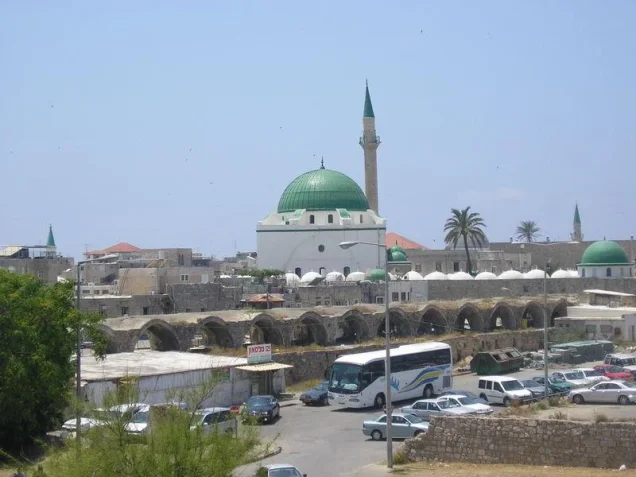
The mosque stands at the northern entrance of the Old City of Acre, on the edge of the walled city, close to the White Market and the Citadel. It was built over earlier prayer houses and Crusader-era buildings, and some sources say it stands on the site of an earlier mosque built after the Arab conquest.
History of the Mosque
- 1781–1782: Ahmad Pasha al-Jazzar, who had made Acre his capital, built the mosque near the city's commercial centre. He drew up the plans and supervised the work himself, employing skilled masons.
- 1786: Al-Jazzar established a large endowment (waqf) for the mosque and its school and library, the largest endowment in Acre's history.
- 1799: Napoleon Bonaparte besieged Acre and failed to take it; his bombardment damaged the mosque and its buildings, which were restored in the early 19th century.
- 1804 and 1819: Al-Jazzar died in 1804 and was buried beside the mosque, followed in 1819 by his successor Sulayman Pasha.
- 1821: A lightning strike brought down part of the original minaret.
- 1831–1832: During the Egyptian campaign, the library was looted and the courtyard used as an army camp.
- Late Ottoman period: Sultan Abdul Hamid II built a green-domed sabil in the courtyard and gave the mosque a relic of the Prophet's hair.
- British Mandate: Acre had about 12,360 inhabitants in 1945. The British paid little attention to historic buildings, while schools in the city grew to 13.
Who Was Ahmad Pasha al-Jazzar?
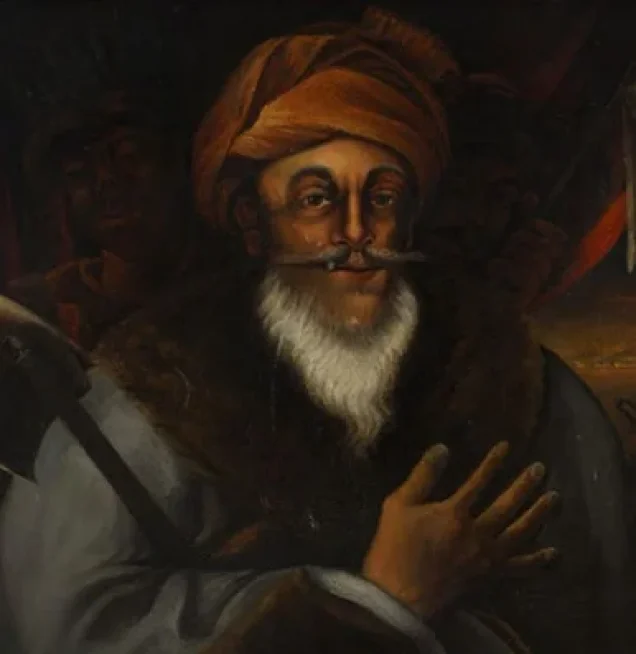
Ahmad Pasha al-Jazzar was born in Bosnia, a devout Muslim and a soldier. He earned the name "al-Jazzar" for his brutality towards his enemies, and was said to tour the city with a portable gallows to punish criminals on the spot. After helping the Ottoman Sultan subdue Zahir al-Umar, he became governor of the Sidon province in 1776, made Acre his seat, and was later also appointed governor of Damascus. He fortified Acre's walls, and in 1799 his defence of the city defeated Napoleon's siege.
Architecture
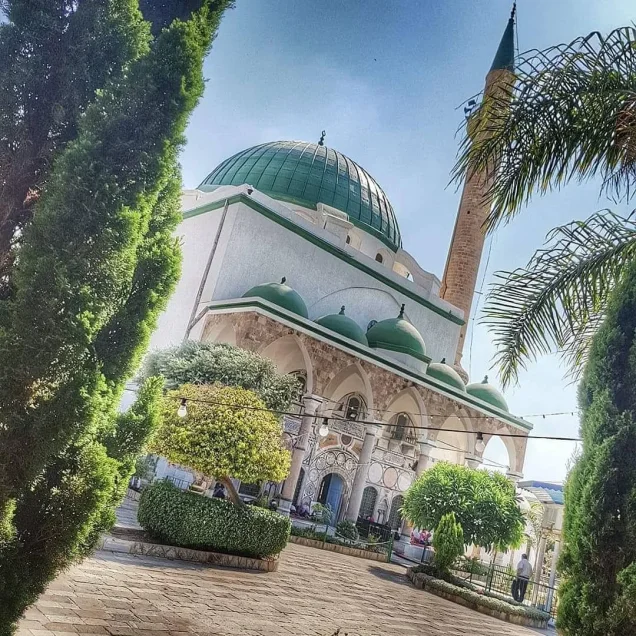
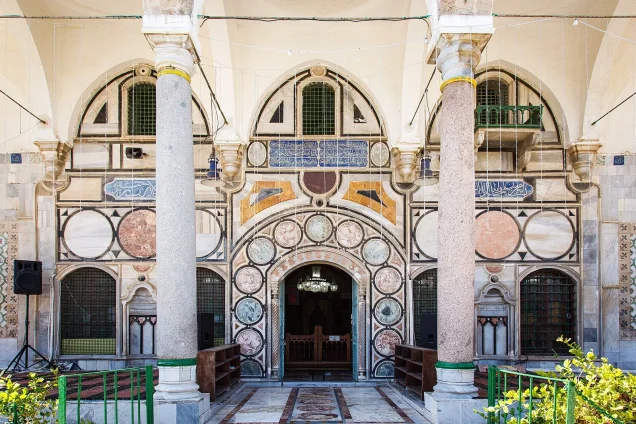
Covering about 4 dunums, the mosque is a fine example of Ottoman architecture, modelled on the mosques of Istanbul and blending Byzantine and Persian elements. Its marble and granite columns and stones were brought from the ruins of Caesarea and Atlit and from medieval Acre.
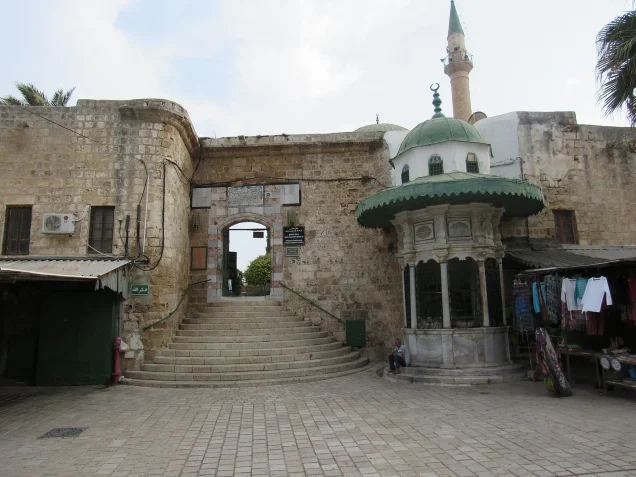
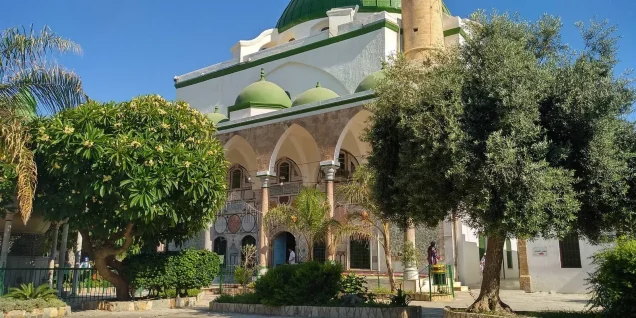
At the entrance stands a sabil built by al-Jazzar and restored by Sulayman Pasha. A flight of steps leads up to a wide courtyard, partly paved, shaded by old cypress and palm trees. In the centre of the courtyard stands a building with a green dome, near a water well and a sundial on its western side; here al-Jazzar is buried, beside his successor Sulayman Pasha.
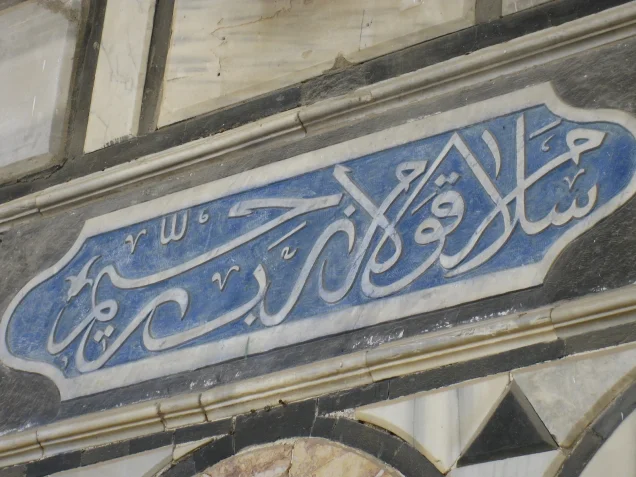
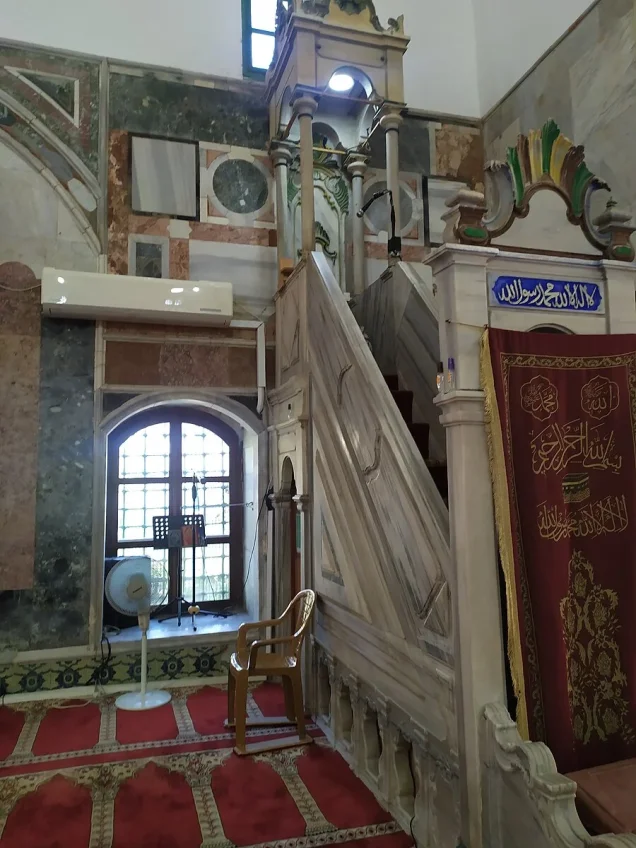
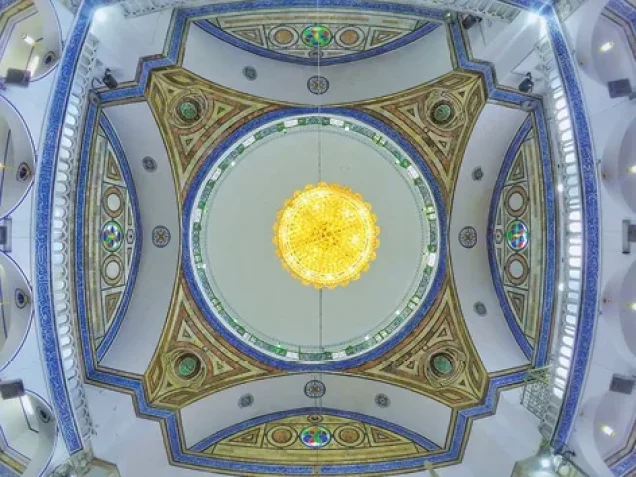
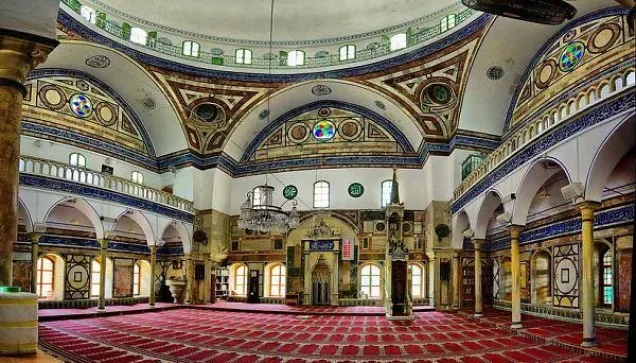
The prayer hall has four side arcades and a façade with seven windows, each topped by a white marble panel carved with Qur'anic verses and religious phrases in colours dominated by blue. The interior walls are painted in blue and brown, the floor is laid with marble panels of many shapes and colours, and the hall is furnished with Persian carpets. There are two doors, one to the prayer hall and one to the minaret, and a large upper gallery (sudda) for women's prayer. The semicircular green dome, about 10 metres across, is clad in lead to keep out damp. The slender minaret is reached by a spiral staircase; sources give its number of steps as 72 or 124.
The Mosque Complex: School, Library and Sabil
A large arcade surrounds the central courtyard. Until 1948 it housed the Ahmadiyya School in its south-eastern corner and the Ahmadiyya Library in its north-eastern corner, and small rooms around the courtyard lodged students and pilgrims.
- The Ahmadiyya School: It taught the Qur'an and the Islamic sciences, including jurisprudence, hadith and exegesis, and was one of the best-known religious schools of the Ottoman era. It continued its work until 1948.
- The Ahmadiyya Library: Part of al-Jazzar's 1786 endowment, it held manuscripts on religion, Arabic language and literature, logic, mathematics and Sufism, and welcomed Christian as well as Muslim visitors. A 1983 catalogue documented about 90 manuscripts. In 2010 a project funded by the Endangered Archives Programme digitised 53 manuscripts, from the 14th to the 20th century, totalling nearly 18,000 pages, with copies held at the British Library.
- The sabil and ablution fountain: Al-Jazzar's sabil once held hanging copper cups. The ablution fountain in the middle of the courtyard, facing the mosque's entrance, is made of nine marble circles. The courtyard also has a sundial that told the time by day, and a water tank fed by the Kabri aqueduct, which supplied Acre until 1948.
The Relic of the Prophet's Hair
The mosque keeps a lock of hair said to be from the beard of the Prophet Muhammad, a gift from the Ottoman Sultan Abdul Hamid II to Sheikh As'ad al-Shuqayri, a member of the Ottoman parliament. It is kept in a glass cabinet in the women's gallery and shown to worshippers only once a year, on the 27th night of Ramadan (Laylat al-Qadr). It was once paraded through Acre on Eid al-Fitr.
The Poem Over the Entrance
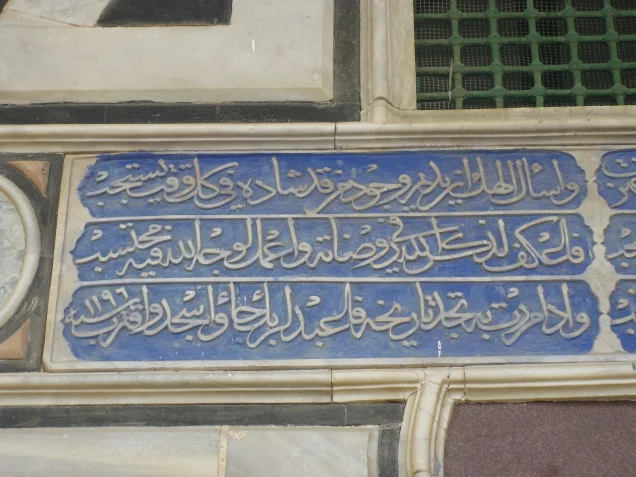
Above the entrance of the mosque, built some 245 years ago, six lines of poetry are inlaid in blue marble. Their meaning, author and purpose long puzzled local people. In translation, they urge the visitor to come early to "the finest mosque, which gathered all beauty", to pray for the vizier Ahmad who built it, to devote himself to remembering God within it, and to recite al-Fatiha for its founder. The last line, "worship your Lord, come, prostrate and draw near", encodes the date of construction in the traditional abjad numbering.
According to local accounts, the poem was written by the judge Sheikh Yusuf ibn Ahmad al-Rimawi al-Hashimi, addressing his son Sheikh Ahmad on the eve of his succeeding him as judge. The father urges his son to come early to the al-Jazzar Mosque to take up his post and judge between people, and to pray for its builder; the poem then praises al-Jazzar and ends by urging sincerity in work and gratitude to God, a reminder that judges fear God and that judgment is a heavy trust.
The Mosque After 1948
Israeli forces occupied Acre in May 1948, and most of its Arab inhabitants were driven out. Jewish immigrants were settled in the city, which grew outside its historic walls with new neighbourhoods to the east, north and north-east and an industrial zone to the south-east. Acre was split in two: the historic walled city, where the remaining Palestinians were concentrated, home to its mosques, and the new city outside the walls.
The Ahmadiyya School was closed by order of the Israeli authorities in 1948, and its scholars and preachers dispersed. Bullets from the fighting damaged the dome. The mosque and its endowments were placed under a board of trustees appointed under Israeli law, and Palestinian sources accuse the authorities of leasing endowment properties for long periods at low rents and of transferring houses in the Old City to Jewish associations and investors. The dome was re-clad in lead in 1994, and local Islamic institutions have worked to restore the mosque and revive its educational role.
The Mosque Today (2026)
The al-Jazzar Mosque remains Acre's main Friday mosque and one of the most visited sites in its Old City, drawing worshippers and tourists alike. The Palestinians of Acre, citizens of Israel, continue to struggle over control of the city's Islamic endowments and against housing pressures in the Old City, where some mosques remain closed by the authorities. The library still holds its manuscripts on the premises.
Legal Protection and UNESCO
In 2001 UNESCO inscribed the Old City of Acre, including the al-Jazzar Mosque, on the World Heritage List as an outstanding example of a historic Ottoman walled town with Crusader remains. Islamic endowments are protected by the principles of international law on cultural and religious property, including the 1954 Hague Convention.
Frequently Asked Questions About the al-Jazzar Mosque
Where is the al-Jazzar Mosque?
At the northern entrance of the Old City of Acre ('Akka) in northern Palestine.
Who built the al-Jazzar Mosque and when?
The Ottoman governor Ahmad Pasha al-Jazzar built it in 1781–1782, in the style of the mosques of Istanbul.
Why is it called al-Jazzar?
It is named after its builder, Ahmad Pasha, nicknamed al-Jazzar ("the butcher") for his harshness towards his enemies.
What relic is kept in the al-Jazzar Mosque?
A lock of hair said to be from the Prophet Muhammad's beard, a gift from Sultan Abdul Hamid II, shown to worshippers once a year on the 27th night of Ramadan.
What happened to the mosque after 1948?
Israeli authorities closed its Ahmadiyya School, and the mosque and its endowments were placed under a board of trustees appointed under Israeli law. The mosque remains active and is part of Acre's UNESCO World Heritage Old City.
Conclusion
Built by a feared governor who turned back Napoleon, the al-Jazzar Mosque has crowned the northern gate of Acre for more than two centuries. Its green dome, its school, its library and its blue-marble poem tell of a city that was a centre of learning and power. Since 1948 its school has fallen silent and its endowments have been taken from its community, yet its call to prayer still rises over the walls of Acre.
Photo gallery
More from the archive
 Download Our Palestine App
The whole archive in the palm of your hand: depopulated villages, the Nakba, the massacres and Al-Aqsa — free, with no ads to erase the story.
Download Our Palestine App
The whole archive in the palm of your hand: depopulated villages, the Nakba, the massacres and Al-Aqsa — free, with no ads to erase the story.



Comments
No comments yet — be the first to write one.
Add your comment
Name and email are optional. Comments appear after review.