
The Tomb of the Virgin Mary
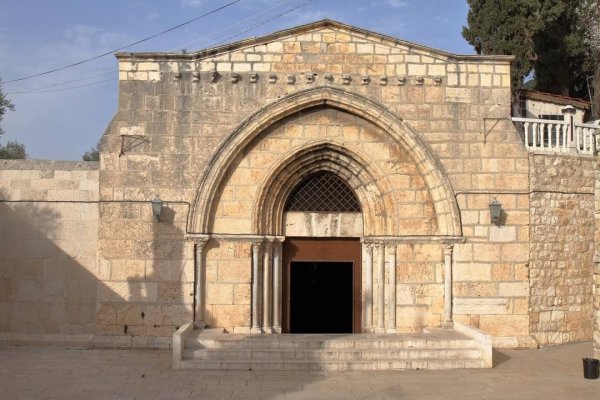
The Tomb of the Virgin Mary in Jerusalem: History, Traditions and the Church at the Foot of the Mount of Olives
The Tomb of the Virgin Mary, or the Church of the Sepulchre of Saint Mary, lies in the Kidron Valley at the foot of the Mount of Olives, just outside the walls of Jerusalem's Old City near Gethsemane. Built around an ancient rock-cut tomb, it is venerated by Eastern Christians as the place where Mary, mother of Jesus, was buried before her Dormition and Assumption, and Muslims, too, honoured it, leaving a prayer niche inside. Its sunken church, reached by a long descending staircase, has survived from the Crusader period, when Saladin spared its crypt in 1187. Today it is held by the Greek Orthodox and Armenian churches. This guide covers its history, architecture, religious significance and situation today.
Quick Facts About the Tomb of the Virgin Mary
| Arabic name | قبر السيدة العذراء / كنيسة قبر مريم |
|---|---|
| Location | Kidron Valley, foot of the Mount of Olives, near Gethsemane, East Jerusalem |
| Type | Church built around a rock-cut tomb |
| First church | 5th century, by Patriarch Juvenal of Jerusalem |
| Current building | Crusader crypt church, around 1130; upper church destroyed 1187 |
| Access | A wide staircase of about 48 steps descending to the crypt |
| Owners | Greek Orthodox and Armenian Apostolic churches |
| Other rights | Syriac, Coptic and Ethiopian churches; a Muslim mihrab remains |
| Main feast | Dormition of the Virgin, 15 August (28 August in the Julian calendar) |
| UNESCO | Part of "Old City of Jerusalem and its Walls" area, World Heritage in Danger |
The Name and the Tradition
The church takes its name from the tomb at its heart, which Christian tradition, especially in the Eastern churches, holds to be the burial place of the Virgin Mary. According to this tradition, Mary died a natural death in Jerusalem, known as the Dormition ("falling asleep"), was buried by the apostles in the Valley of Jehoshaphat, and on the third day was taken up body and soul into heaven, the Assumption. Another tradition places her final years and death in Ephesus, but the Jerusalem tomb has been venerated since at least the 5th century.
Location
The tomb lies in the Kidron Valley, also called the Valley of Jehoshaphat, at the foot of the Mount of Olives in East Jerusalem, a short walk from the Lions' Gate (Bab al-Asbat) of the Old City. It stands beside the Grotto of Gethsemane and near the Church of All Nations, at a low point of the valley, which is why its entrance lies below the level of the surrounding road.
History Through the Ages
- Ancient tomb: The tomb is cut into the rock in the style of 1st-century Jerusalem burials, and excavations in 1972 reported an ancient cemetery around it.
- Byzantine period: A church was built over the tomb in the 5th century by Juvenal, Patriarch of Jerusalem. It may have been damaged in the Persian invasion of 614, though pilgrims describe it standing around 670.
- Crusader period: By 1130 the Benedictines had rebuilt it as the Abbey of Saint Mary of the Valley of Jehoshaphat. Queen Melisende of Jerusalem was buried there in 1161.
- Ayyubid period: After Saladin liberated Jerusalem in 1187, he destroyed the upper church and used its stones for the city's walls, but he spared the crypt with Mary's tomb out of Muslim reverence for her, removing its Christian images.
- Mamluk and Ottoman periods: The Franciscans held the church from the 14th century, until in 1757 the Greek Orthodox and Armenians took possession, an arrangement confirmed by the Ottoman authorities and enshrined in the Status Quo of 1852.
Architecture: A Church Below the Ground
Above ground, only a small Crusader façade with a pointed arch remains, set in a sunken courtyard. Through it, a wide staircase of about 48 steps descends into the dim, cross-shaped crypt church, partly cut into the rock and partly built of masonry. Halfway down are two chapels: on the east, the chapel of Saints Joachim and Anne, Mary's parents, originally built for the tomb of Queen Melisende, and on the west, the chapel of Saint Joseph. At the bottom, in the eastern arm, stands the edicule, a small stone chamber enclosing the rock-cut bench where tradition says Mary's body was laid. Hundreds of oil lamps and icons, including the revered icon of the Panagia Ierosolymitissa, hang in the darkness, and Greek, Armenian and Syriac altars surround the tomb. To the south of the tomb is a mihrab, a Muslim prayer niche.
Religious Significance for Christians and Muslims
For Eastern Christians the tomb is one of the holiest sites in Jerusalem, and the Feast of the Dormition is celebrated here every August with a solemn procession carrying the icon of the Virgin from the Patriarchate in the Old City down to the tomb, where it remains for several days. Mary also holds a unique place in Islam: the Qur'an names a surah after her (Surat Maryam) and honours her above all women. Muslims long visited the tomb and prayed there, which is why Saladin preserved it and why a mihrab still stands inside, a sign of shared reverence in the Holy City.
Ownership and the Status Quo
Under the Ottoman Status Quo, which governs the holy places of Jerusalem, the church belongs to the Greek Orthodox Church and the Armenian Apostolic Church, while the Syriac, Coptic and Ethiopian churches hold lesser rights to altars and worship times. The Franciscans, who lost the church in 1757, kept the neighbouring Grotto of Gethsemane. Muslims no longer hold ownership rights, but the mihrab remains from the time when they did.
Under Occupation Since 1967
Since Israel occupied East Jerusalem in 1967, the Christian holy places of the city have lived under occupation. Church leaders in Jerusalem have repeatedly warned of growing pressure on the Christian presence: attacks by extremists on clergy and church property, restrictions on the access of Palestinian Christians from the West Bank and Gaza to their holy sites, tax and property disputes, and settler projects around the Old City, including in the Kidron Valley and nearby Silwan. In March 2023 a man attacked clergy during a service at the tomb itself, according to church statements and media reports, one of a series of attacks on churches in the city that year.
The Church Today (2026)
The church remains open for worship and visits, and its annual Dormition procession continued in August 2026, when the icon of the Virgin was again carried through the Old City to the tomb. But the number of pilgrims has fallen sharply since the genocide war on Gaza began in October 2023, Palestinian Christians from the West Bank need Israeli permits to reach Jerusalem, and the Christian community of the Holy City continues to shrink under the pressures of occupation.
UNESCO and Legal Protection
The Old City of Jerusalem and its Walls were inscribed on the UNESCO World Heritage List in 1981 and on the List of World Heritage in Danger in 1982. The UN considers East Jerusalem occupied territory, and the Fourth Geneva Convention and the 1954 Hague Convention for the Protection of Cultural Property require the occupying power to respect its holy places, while the Status Quo governs the rights of the churches.
Frequently Asked Questions About the Tomb of the Virgin Mary
Where is the Tomb of the Virgin Mary?
In the Kidron Valley at the foot of the Mount of Olives, near Gethsemane and the Lions' Gate of Jerusalem's Old City.
Is Mary really buried in Jerusalem?
Eastern Christian tradition holds that Mary was buried here before her Assumption into heaven, and the tomb has been venerated since at least the 5th century. Another tradition links her last years to Ephesus.
Who owns the Tomb of the Virgin Mary?
The Greek Orthodox and Armenian Apostolic churches, under the Status Quo, with the Syriac, Coptic and Ethiopian churches holding lesser rights.
Why is there a mihrab in the Tomb of the Virgin Mary?
Because Muslims, who honour Mary in the Qur'an, long prayed at the tomb. Saladin spared the crypt in 1187 out of reverence for her, and a Muslim prayer niche remains inside.
Why is the church below ground level?
It lies at a low point of the Kidron Valley, and only the crypt of the Crusader church survived after Saladin removed the upper church in 1187. Visitors descend about 48 steps to reach the tomb.
Conclusion
At the foot of the Mount of Olives, a stairway leads down into the candlelit darkness where tradition places the tomb of the Virgin Mary. Built by a Byzantine patriarch, rebuilt by Crusaders and spared by Saladin, the church carries in its stones the story of Jerusalem's faiths, Christian and Muslim alike, honouring the same mother. Under occupation, it remains a quiet witness to the deep roots of Palestine's Christians in their Holy City.
More from the archive
 Download Our Palestine App
The whole archive in the palm of your hand: depopulated villages, the Nakba, the massacres and Al-Aqsa — free, with no ads to erase the story.
Download Our Palestine App
The whole archive in the palm of your hand: depopulated villages, the Nakba, the massacres and Al-Aqsa — free, with no ads to erase the story.



Comments
No comments yet — be the first to write one.
Add your comment
Name and email are optional. Comments appear after review.