
Sbeineh Refugee Camp
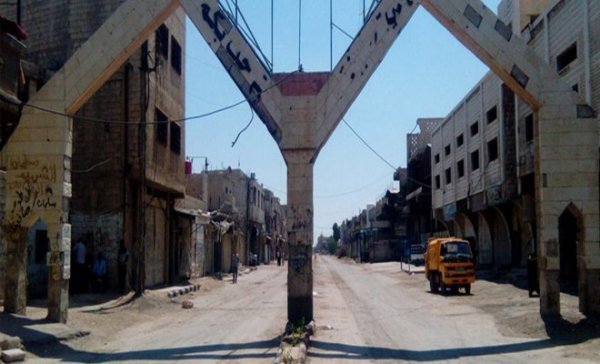
Sbeineh Refugee Camp in Syria: History, Villages of Origin, Displacement and Return
Sbeineh Camp lies beside the town of Sbeineh, about 14 km south of Damascus on the road to Daraa. Palestinian families from the Hula Valley and the Tiberias district began arriving in , among them the people of al-Khalisa, al-Salihiyya, al-Mallaha, Kafr Sabt, al-Shajara and Ma'dhar, and the camp later received those displaced in 1967. Before the war it was home to about 22,600–25,000 refugees on just 0.03 km². Fighting in 2012–2013 forced all its residents out on 7 October 2013, and the camp stayed closed for almost four years until return began in August 2017. This guide covers its history, origins, population, the war years and its situation today.
Quick Facts About Sbeineh Camp
| Arabic name | مخيم سبينة |
|---|---|
| Country | Syria |
| Location | Beside Sbeineh town, about 14 km south of Damascus, Rif Dimashq Governorate |
| Year established | (UNRWA); officially organised as a camp in 1968 |
| Area | About 0.03 km² (about 27,000 m²) |
| Pre-war population | About 22,600 registered refugees (UNRWA 2013); about 25,000 by other UNRWA figures |
| Displacement | All residents left on 7 October 2013; camp closed until 30 August 2017 |
| Returnees | More than 16,000 by 2021 |
| Origin of residents | The Hula Valley (Safed district) and the Tiberias district, plus 1967 displaced |
| UNRWA services | 6 schools in 3 buildings, a health centre, food distribution and community centres |
The Nakba: Why Sbeineh Camp Exists
Sbeineh Camp was born from the Nakba (Arabic for "catastrophe"): the mass expulsion of Palestinians during the occupation of Palestine in . Roughly 750,000 Palestinians were driven from their homes. In the far north, the villages of the Hula Valley and the hills around Tiberias were emptied, and hundreds of families crossed into Syria. Some of them, many from families of Algerian (Maghrebi) origin long settled in the Galilee, were given tents on farmland south of Damascus.
The camp's people were displaced again in later years: Arab tribes from the demilitarised border zone in the 1950s, and families from the Golan and the remaining Hula villages during the occupation of the Golan Heights in 1967, joined them in Sbeineh.
The Right of Return
The right of return is the central demand of Sbeineh's refugees. It rests on several foundations in international law:
- UN General Assembly Resolution 194 (), paragraph 11, resolved that refugees wishing to return to their homes and live at peace with their neighbours should be permitted to do so at the earliest practicable date, and that compensation should be paid to those choosing not to return and for loss of or damage to property.
- The Universal Declaration of Human Rights (Article 13) affirms everyone's right to leave any country, including their own, and to return to it.
- UN General Assembly Resolution 3236 () reaffirmed the "inalienable right" of Palestinians to return to their homes and property.
History of the Camp
From tents to rooms (1948–1972)
The first families arrived in 1948 and were given tents by UNRWA on land of olive groves and pasture beside Sbeineh. The camp was officially organised in 1968, after the arrival of those displaced in 1967. In 1972, UNRWA began building concrete rooms, and the same year it built the camp's six schools. Families later added kitchens, bathrooms and extra rooms, and the camp was connected to water and electricity.
A camp of fighters and workers
As industry grew around Sbeineh, the camp found itself in the middle of a busy industrial zone, and its people became factory workers, labourers and teachers. Several families of the camp gave martyrs to the Palestinian revolution between 1966 and 1974, and nearly every Palestinian faction opened an office there.
War and Displacement (2012–2017)
At the end of 2012, armed clashes reached Sbeineh, damaging homes and infrastructure. UNRWA's schools in the camp closed in December 2012. As fighting intensified, all residents left the camp on . The camp then stayed closed to civilians for almost four years, while its families were scattered across Damascus and its countryside, and some left Syria altogether. By the time return was allowed, many homes had been completely destroyed and others badly damaged, and rubble filled the camp's alleys.
The Return (2017 onward)
- 18 July 2017: UNRWA carried out a needs assessment mission in the camp.
- 30 August 2017: civilians were officially allowed to return.
- 10 September 2017: UNRWA began trucking water to returnees.
- 15 October 2017: two of the six UNRWA schools, Salhiyeh Boys' and Safouriyeh Girls', reopened after a four-year closure, with about 500 pupils.
- November 2017: about 2,500 families had entered the camp.
- February 2018: about 4,500 refugees (1,370 families) had returned permanently, and up to 3,000 families had entered intending to return. The health centre, community centre and food distribution centre remained closed pending repairs.
- 2021: more than 16,000 refugees had returned, with about 4,000 more living in the surrounding area.
UNRWA, together with the Syrian government and the General Authority for Palestine Arab Refugees, carried out rubble removal and restored the electricity, water and sewage networks.
The Current Situation (2025–2026)
Most of Sbeineh's families are back, but the camp still bears the scars of the war: some homes remain destroyed, and families repair what they can at their own expense. After the fall of the former regime in December 2024, Palestinians in Syria faced a new phase of uncertainty alongside Syria's economic crisis. Poverty, unemployment and inflation are high; water shortages persist, with residents buying water from tankers; and social problems such as child labour, early marriage and school dropout have risen. UNRWA's financial crisis has limited its ability to expand services, even as the camp's needs remain great.
Origin of the Name
The camp takes its name from the neighbouring Syrian town of Sbeineh (also spelled al-Sabinah), in the western Ghouta south-west of Damascus.
Location and Geography
Sbeineh Camp lies about 14 km south of Damascus on the road to Daraa, in the Rif Dimashq Governorate. It is bounded by the UNRWA schools street to the east, Mu'adh ibn Jabal Mosque street to the west, the main transport road to the north and Camp Street to the south. The old Hejaz Railway passes to the west. Nearby towns include Darayya, Sayyida Zaynab, Ashrafiyat Sahnaya and Hajar al-Aswad.
Area
The camp covers about 0.03 km² (about 27,000 m²), land leased by Syria's General Authority for Palestine Arab Refugees. With more than 20,000 people on this small plot before the war, it was one of the most crowded camps in Syria.
Villages of Origin
Sbeineh's refugees come mainly from the north of Palestine, and many belong to families of Algerian (Maghrebi) origin:
- Safed district (the Hula Valley): Al-Khalisa, Al-Salihiyya, Al-Mallaha, Jahula, al-Zuq (al-Fawqani and al-Tahtani), Khiyam al-Walid, Al-Dawwara, Al-Qudayriyya, Al-Zanghariyya, and the Bedouin of Arab al-Shamalina and Arab al-Zubayd
- Tiberias district: Kafr Sabt, Al-Shajara, Ma'dhar, Al-Samakiyya and the Bedouin of Ghuwayr Abu Shusha
- Displaced in the 1950s and 1967: the Akrad al-Baqqara and Akrad al-Ghannama tribes from the demilitarised zone, the al-Tallawiya tribe from the Buteiha area, and Syrians displaced from the occupied Golan
The names of the camp's UNRWA schools, such as Salhiyeh, Safouriyeh, Balad al-Sheikh, Ma'dhar, al-Jura and Farada, keep the names of Palestinian villages alive.
Population and Demographics
| Year | Population | Source |
|---|---|---|
| 1995 | About 7,303 | Encyclopedia of Palestinian Camps |
| 1999 | 15,860 registered refugees | UNRWA |
| 2006 | 18,513 | UNRWA |
| 2009 | 21,150 (about 4,915 families) | UNRWA |
| Before 2012 | About 22,600–25,000 (about 8,000 families) | UNRWA |
| October 2013 – August 2017 | No residents: camp closed | UNRWA |
| February 2018 | About 4,500 returnees (1,370 families) | UNRWA |
| 2021 | More than 16,000 returnees | Encyclopedia of Palestinian Camps |
Note: Registered refugees are not the same as residents. Many families registered in Sbeineh have not returned, living elsewhere in Syria or abroad, while about 4,000 refugees live in the area around the camp.
Housing and Infrastructure
The camp is a dense maze of narrow alleys and multi-storey buildings. For decades it had no piped water network: residents relied on wells that dried up during droughts, and on a single water tank for the whole camp, rebuilt in 2010. They often buy water of poor quality from tankers and drinking water from mobile vendors. UNRWA has long described water and sanitation as the camp's biggest problem. Parts of the lighting network are broken, roads are potholed and the sewage network needs expansion. Pollution from nearby factories, especially plastics plants, adds to residents' health concerns.
Economic Situation
Many residents work in the factories of the surrounding industrial zone, making glass, cables, carpets, biscuits and plastics. Others are day labourers or seasonal farm workers, and some work as teachers, engineers and doctors. Many women work as domestic workers in Damascus. Unemployment and poverty are high, and have worsened since the war.
Health Situation
Before the war, the UNRWA health centre, renovated in 2010, saw about 250 patients a day, with paediatric, maternal, dental and laboratory services, though specialists and medicines were in short supply. The Palestine Red Crescent runs a low-cost clinic, and three Syrian Ministry of Health dispensaries provide free care. Hereditary blood disorders such as thalassaemia and sickle-cell anaemia are common, especially among families from the Hula villages. After the war, UNRWA served returnees through a mobile clinic and a temporary health point until the health centre could be repaired.
Education
UNRWA runs six schools in three buildings, built in 1972 and renovated in 2010. Before the war they taught about 3,936 pupils; in 2021–2022, more than 3,584 children were enrolled, on double shifts in classes of 45 to more than 50. High failure and dropout rates and teacher shortages remain challenges. Secondary students attend four Syrian government schools in Sbeineh.
Frequently Asked Questions About Sbeineh Camp
Where is Sbeineh camp located?
Beside the town of Sbeineh, about 14 km south of Damascus on the road to Daraa, in Syria's Rif Dimashq Governorate.
What happened to Sbeineh camp during the Syrian war?
Clashes reached the camp at the end of 2012, and all its residents left on 7 October 2013. It stayed closed to civilians for almost four years, with many homes destroyed.
When did residents return to Sbeineh?
Return was officially allowed on 30 August 2017. By 2021, more than 16,000 refugees had returned.
Where do Sbeineh's refugees come from?
Mainly from the Hula Valley villages of the Safed district, such as al-Khalisa, al-Salihiyya, al-Mallaha and Jahula, and from Tiberias villages such as Kafr Sabt, al-Shajara and Ma'dhar, as well as those displaced in 1967.
What is the biggest problem in Sbeineh camp?
Water and sanitation: the camp has long lacked a reliable piped water network, and residents often buy water from tankers.
Conclusion
Sbeineh began as tents among olive trees for the people of the Hula Valley and the hills of Tiberias. It grew into a crowded camp of workers in an industrial zone, was emptied by war in 2013 and stood silent for four years. Its people came back to rebuild, as their parents once built from nothing, and they still carry the names of al-Khalisa, al-Salihiyya and Kafr Sabt, and the hope of returning to them.
More from the archive


 Download Our Palestine App
The whole archive in the palm of your hand: depopulated villages, the Nakba, the massacres and Al-Aqsa — free, with no ads to erase the story.
Download Our Palestine App
The whole archive in the palm of your hand: depopulated villages, the Nakba, the massacres and Al-Aqsa — free, with no ads to erase the story.



Comments
No comments yet — be the first to write one.
Add your comment
Name and email are optional. Comments appear after review.
Social and Political Life
Social life in Sbeineh is shaped by its tribal and family structure: disputes are settled by elders, and weddings and funerals are community events. Almost every Palestinian faction has an office in the camp, and several run charitable and sports activities. The camp has no official sports club, and young people play football in the fields nearby. UNRWA runs a community development centre and social work services.