
Jabalia Refugee Camp
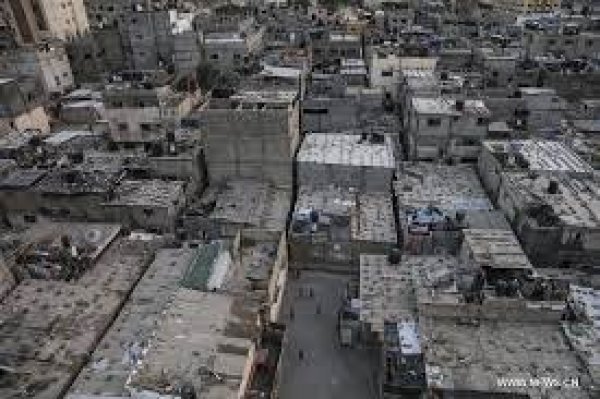
Jabalia Refugee Camp
Jabalia Refugee Camp: History, Population, the Genocide in Gaza and the Right of Return
Jabalia Camp is the largest Palestine refugee camp in the Gaza Strip. Established in in the north of the Strip for refugees driven from Jaffa, Lydda, Ramla, Isdud, Beersheba and the villages of southern Palestine during the occupation of Palestine, it grew into one of the most densely populated places on earth, home to more than 116,000 registered refugees. It is where the First Intifada began in 1987. Since October 2023, Jabalia has been one of the places most devastated by the genocide in Gaza, with repeated sieges, mass killings and the destruction of most of the camp. This guide covers its history, origins, population, living conditions and current situation.
Quick Facts About Jabalia Camp
| Country / Region | Palestine, northern Gaza Strip |
|---|---|
| Governorate | North Gaza |
| Year established | |
| Area | About 1.4 km² (1,400 dunums) |
| Registered refugees | 116,011 (UNRWA, ), the largest camp in the Gaza Strip |
| Original population | About 35,000 refugees in 5,587 families |
| UNRWA installations (before October 2023) | 32, including 26 schools in 16 buildings, 3 health centres, a food distribution centre and a library |
| Origin of residents | Jaffa, Lydda, Ramla, Isdud, Beersheba and villages of southern Palestine |
| Known as | The birthplace of the First Intifada (December 1987) |
| Current status | Largely destroyed since October 2023; parts of the camp lie behind the Israeli-controlled "Yellow Line" as of 2026 |
Note: UNRWA counts refer to refugees registered in the camp, not necessarily the number of people living there at any given time.
The Nakba: Why Jabalia Camp Exists
The story of Jabalia begins with the Nakba (Arabic for "catastrophe"): the mass expulsion of Palestinians during the occupation of Palestine in . Roughly 750,000 Palestinians were driven from their homes, and hundreds of towns and villages were emptied and later destroyed or resettled.
About 200,000 refugees poured into the narrow Gaza Strip, almost tripling its population. Many came from the coastal towns and villages of southern Palestine, from Jaffa down to Isdud and Majdal, and from Lydda, Ramla and the Beersheba region. Around 35,000 of them settled on sandy land next to the village of Jabalia, in the north of the Strip, which became Jabalia Camp.
The Right of Return
The right of return is the central demand of Jabalia's refugees. It rests on several foundations in international law:
- UN General Assembly Resolution 194 (), paragraph 11, resolved that refugees wishing to return to their homes and live at peace with their neighbours should be permitted to do so at the earliest practicable date, and that compensation should be paid to those choosing not to return and for loss of or damage to property.
- The Universal Declaration of Human Rights (Article 13) affirms everyone's right to leave any country, including their own, and to return to it.
- UN General Assembly Resolution 3236 () reaffirmed the "inalienable right" of Palestinians to return to their homes and property.
From Jabalia, the lands of the depopulated villages lie only a few kilometres to the north and east, across the fence. For three generations, the camp's people have lived within sight of the places they were forced to leave, and many still keep the keys and deeds of their family homes.
History of the Camp
Founding (1948–1950)
Refugees began settling at Jabalia immediately after the Nakba. Before UNRWA existed, relief was organised by the Quakers (Society of Friends), who distributed tents to the refugees. UNRWA took over in 1950, following UN General Assembly Resolution 302 of December 1949. Over the following years, tents were replaced by small concrete-block shelters, which families later expanded upward as they grew.
Egyptian administration and occupation (1948–1993)
From 1948 to 1967 the Gaza Strip was under Egyptian administration. With the occupation of the West Bank and Gaza Strip in , Jabalia came under Israeli military rule. As the camp closest to the Erez crossing, it supplied many of the Gazan workers who crossed daily to work inside the 1948 territories.
The First Intifada (1987)
Jabalia is known as the birthplace of the First Intifada. In December 1987, after a collision near Erez killed four workers from the camp, protests erupted in Jabalia and quickly spread across the Gaza Strip and the West Bank, becoming the popular uprising known as the "Intifada of the Stones".
Siege and repeated wars (2000–2023)
During the Second Intifada and after the blockade imposed on Gaza in 2007, Jabalia was repeatedly targeted in Israeli military operations, including the wars of 2008–2009, 2012, 2014 and 2021. The blockade sharply restricted movement through Erez, destroying the camp's main source of work and making most families dependent on UNRWA food aid.
Jabalia and the Genocide in Gaza (2023 onward)
Since October 2023, Jabalia has been at the heart of the genocide in Gaza. In September 2025, the UN Independent International Commission of Inquiry concluded that Israel has committed genocide against Palestinians in Gaza, finding that four of the five acts defined in the 1948 Genocide Convention had been committed. A genocide case brought by South Africa against Israel is also before the International Court of Justice. Israel rejects these findings.
Mass killings and sieges
- October 2023: on 31 October, an Israeli airstrike on a residential block in the camp left hundreds of people killed and wounded, one of the deadliest single strikes of the war at that time. Further strikes on the camp followed in the days after.
- Late 2023 and May 2024: Israeli ground forces invaded the camp, destroying homes, markets and infrastructure.
- October 2024 to January 2025: a months-long siege and military operation in northern Gaza focused on Jabalia, cutting off food, water and medical care. Around 4,000 people were reported killed during this operation, according to Gaza's health ministry.
Return to ruins
When a ceasefire took effect on 19 January 2025, tens of thousands of displaced residents walked back to Jabalia, only to find entire neighbourhoods reduced to rubble. Many built makeshift shelters from tarpaulins and debris on the ruins of their homes. The war resumed in March 2025.
The "Yellow Line" (2025–2026)
After the ceasefire agreement of October 2025, Israeli forces withdrew to a boundary known as the "Yellow Line", behind which Palestinians are barred from returning. By mid-2026, this line had been pushed deep into Jabalia Camp, crossing Salah al-Din Street and al-Sikka Street to reach the central areas of the camp. Families from these areas remain displaced, many living in tents in western Gaza or in al-Mawasi, and shelling and gunfire near the line have continued to kill and injure residents. In June 2026, an airstrike hit the yard of a UN school in Jabalia Camp that was sheltering displaced families.
For the people of Jabalia, these events are a second Nakba: the grandchildren of the refugees of 1948 have again been killed, starved, bombed out of their homes and displaced.
Origin of the Name "Jabalia"
The camp takes its name from the neighbouring Palestinian town of Jabalia, on whose lands it was built. In English the name is also spelled Jabaliya or Jabaliyah; in Arabic it is مخيم جباليا.
Location and Geography
Jabalia Camp lies in the North Gaza Governorate, north of Gaza City. Key features of its location:
- It borders the towns of Jabalia and al-Nazla to the west and south, and Beit Lahia to the north, with citrus groves (before the war) to the east.
- It lies about 1 km from the main Gaza road (Salah al-Din Street).
- It is the closest camp to the Erez (Beit Hanoun) crossing at the northern edge of the Gaza Strip.
The camp lies on the coastal plain at low elevation, with a Mediterranean climate of mild, rainy winters and hot, humid summers.
Area and Land
The camp covers only about 1.4 square kilometres. With more than 116,000 registered refugees before the war, it was one of the most densely populated places in the world. Overcrowding meant shelters were built very close together, with almost no recreational or social space.
Places of Origin
Most of Jabalia's refugees came from towns and villages in southern Palestine, depopulated during the occupation of Palestine in 1948, including:
- Jaffa and its villages
- Lydda (al-Lid) and Ramla
- Isdud and other villages of the Gaza district
- Beersheba and the Naqab
The memory of these places is kept alive through family names, neighbourhood names, oral history and annual commemorations of Nakba Day (15 May).
Population and Demographics
| Year | Population | Source |
|---|---|---|
| 1948–1950 | About 35,000 refugees | Encyclopedia of Palestinian Camps |
| 2002 | 103,646 registered refugees | UNRWA |
| 2017 | 49,462 residents inside the camp boundaries | Palestinian Central Bureau of Statistics (PCBS) |
| 2023 | 116,011 registered refugees | UNRWA |
| 2023–2026 | Population repeatedly displaced; tens of thousands killed, injured or missing across Gaza | UN agencies |
The difference between UNRWA and PCBS figures reflects different methods: UNRWA counts refugees registered to the camp, many of whom live in the surrounding urban area, while the PCBS counts people resident inside the camp's official boundaries.
Housing and Infrastructure
Before October 2023, overcrowding and a lack of living space defined the camp. Families added extra floors to their shelters, often without proper design, and many lived in substandard conditions. Electricity cuts, contaminated water (about 90% of the water was unfit for drinking) and a shortage of construction materials under the blockade were constant problems.
Since 2023, most of the camp's homes, roads, water wells, sewage networks and public buildings have been destroyed or severely damaged. Residents who remain live in damaged buildings, tents or shelters made from rubble, with almost no cement or building materials allowed into Gaza.
Health Situation
Before the genocide, three UNRWA health centres (two inside the camp and one in the nearby Saftawi area) provided primary health care, and the Kamal Adwan and Indonesian hospitals in northern Gaza served the area.
Key health challenges since 2023
- Mass casualties from bombardment and ground operations
- Collapse of the health system in northern Gaza, as hospitals were besieged, attacked and forced out of service
- Famine and malnutrition, especially during the siege of the north
- Disease caused by contaminated water, destroyed sewage systems and overcrowded shelters
- Severe trauma, especially among children who have lost family members and homes
Economic Situation
Before 2000, tens of thousands of Gazans, many from Jabalia, crossed Erez daily to work. The restrictions imposed from 2000 and the blockade from 2007 destroyed this source of income, and unemployment rose dramatically. A population that had been largely self-sufficient became heavily dependent on UNRWA food assistance.
Since 2023, the camp's economy has been almost entirely destroyed: markets, shops, workshops and farmland have been razed, and nearly all families depend on humanitarian aid, which has itself been severely restricted.
Education
Before October 2023, UNRWA ran 26 schools in 16 school buildings in Jabalia, ten of them operating in double shifts because of overcrowding, as well as a public library. Education was highly valued, and the camp produced many teachers, doctors and engineers.
Since 2023, schools have been used as shelters for displaced families, and many have been bombed or destroyed. Children in Jabalia, as across Gaza, have lost years of education.
Frequently Asked Questions About Jabalia Camp
Where is Jabalia refugee camp located?
Jabalia Camp is in the North Gaza Governorate, north of Gaza City, next to the towns of Jabalia, al-Nazla and Beit Lahia, and close to the Erez crossing.
Is Jabalia the largest refugee camp in Gaza?
Yes. With 116,011 registered refugees in 2023 on about 1.4 square kilometres, Jabalia is the largest of the eight refugee camps in the Gaza Strip.
When was Jabalia camp established?
It was established in 1948, after the Nakba, for about 35,000 refugees from southern Palestine. UNRWA took responsibility for it in 1950.
Why is Jabalia associated with the First Intifada?
The First Intifada began in Jabalia in December 1987, after four workers from the camp were killed in a collision near Erez, sparking protests that spread across Gaza and the West Bank.
What happened to Jabalia camp since October 2023?
Jabalia has been one of the places most devastated by the genocide in Gaza, with mass-casualty strikes, repeated ground invasions, a months-long siege in 2024–2025 and the destruction of most of the camp. As of 2026, parts of the camp lie behind the Israeli-controlled "Yellow Line".
Where do Jabalia's refugees come from?
Mainly from Jaffa, Lydda, Ramla, Isdud, Beersheba and other towns and villages of southern Palestine depopulated in 1948.
Conclusion
Jabalia Camp was born from the Nakba of 1948 and grew into the largest camp in Gaza, the birthplace of the First Intifada and a symbol of Palestinian steadfastness. Since 2023, it has endured some of the worst destruction of the genocide in Gaza, and its people have been killed, starved and displaced once again. Yet those who survive continue to return to the ruins, to rebuild with their own hands, and to hold onto the right of return to the homes their families lost in 1948.
More from the archive
 Download Our Palestine App
The whole archive in the palm of your hand: depopulated villages, the Nakba, the massacres and Al-Aqsa — free, with no ads to erase the story.
Download Our Palestine App
The whole archive in the palm of your hand: depopulated villages, the Nakba, the massacres and Al-Aqsa — free, with no ads to erase the story.



Comments
No comments yet — be the first to write one.
Add your comment
Name and email are optional. Comments appear after review.
Social Situation
Jabalia was known for its strong sense of community, large extended families and active political, cultural and sports life. It has long been seen as a symbol of Palestinian resistance and steadfastness.
The genocide has torn this social fabric apart: entire families have been wiped out, survivors have been displaced again and again, and neighbourhoods that held generations of shared memory have been erased.