Jaffa Before the Nakba: City of Newspapers, Cinemas, Cafés and Clubs
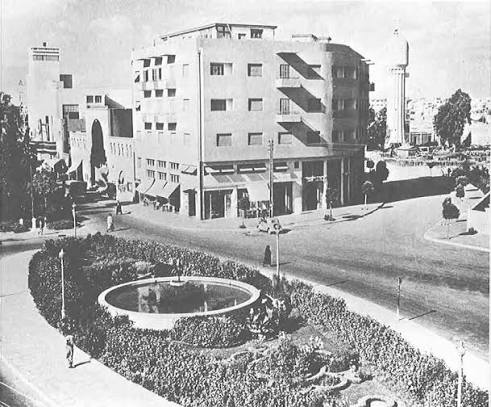
Before the 1948 Nakba, Jaffa was the largest Arab city in Palestine and its cultural capital. Some 50 newspapers and magazines were published there, dozens of printing presses operated, cinemas and theaters flourished, and one of its sons counted 75 cafés. Umm Kulthum and Asmahan sang on the stage of the Alhambra cinema, and the city's clubs played football before thousands of spectators. [1] [3] Then the city fell in May 1948, and of some 120,000 people in Jaffa and its villages, only about 4,000 remained. [2]
This article tells the story of daily life in the "Bride of the Sea" before the Nakba: its streets and neighborhoods, its newspapers and presses, its cinemas and cafés, its clubs and associations, and what happened to it in 1948.
Jaffa Before the Nakba at a Glance
| Item | Details |
|---|---|
| Population | Over 80,000 Palestinians in the city and about 40,000 in the surrounding villages and towns [2] |
| Newspapers | About 50 newspapers and magazines between 1910 and 1948 [1] |
| Presses and publishers | About 38 between 1918 and 1948 [1] |
| Cafés | 75, according to a count by Ali al-Bawwab [1] |
| Cinemas | Alhambra, Nabil, Apollo, al-Sharq, al-Rashid, Farouk and others [1] |
| Leading clubs | Orthodox Youth Club (1924) and Islamic Sports Club (1926) [1] |
| Fall of the city | May 1948, after a siege of more than two months [2] |
| Who remained | About 4,000 out of 120,000 [2] |
From Walled Town to Modern City
Until the mid-nineteenth century, Jaffa was a walled town divided into quarters such as al-Qal'a, al-Naqib, al-Tabiya and the Christian, Greek and Armenian quarters. In 1874 the walls were torn down entirely, and their stones were used to build al-Helwa Street in 1875. [1]
New neighborhoods grew outside the walls, beginning with the sakanat settled by orchard workers, such as Sakanat al-Ajami, al-Manshiyya, Irshid, al-Jabaliyya and al-Ghazazwa. [1] Al-Jabaliyya was settled by people from Jabalia near Gaza, and the Rashid quarter by many who came from the Egyptian town of Rashid (Rosetta), most of them fishermen. [3]

New routes tied Jaffa to the interior: the Jaffa–Jerusalem road opened in 1868, and work on the Jaffa–Jerusalem railway began in 1890. A modern lighthouse was built at the port in 1864. [1]
Capital of the Palestinian Press
Jaffa was the cradle of Palestinian journalism, and most of the country's newspapers and magazines were published there. [5] Its first newspaper was al-Taraqqi in 1907, followed by al-Asma'i (1908), al-I'tidal and al-Hurriyya (1910), and the weekly al-Akhbar (1911). [1]
In 1911, Issa al-Issa and Yousef al-Issa founded Filastin, which became the country's best-known newspaper. It was published until the Nakba, then resumed in 1950 in Jerusalem and later in Amman. [1] On the eve of the Nakba, Jaffa had three Arabic dailies: Filastin, al-Difa' and al-Sha'b. [3]
Between 1910 and the Nakba, about 50 newspapers and magazines appeared in the city, and some 38 printing presses and publishers operated there between 1918 and 1948. None survived 1948. [1]
The Near East Arab Broadcasting Station
During World War II, the British moved the Near East Arabic radio station to Jaffa, where it broadcast from 1941 to 1948. [2] It operated from the al-Jabaliyya quarter in the south of the city. [3]
Cinemas and Theaters
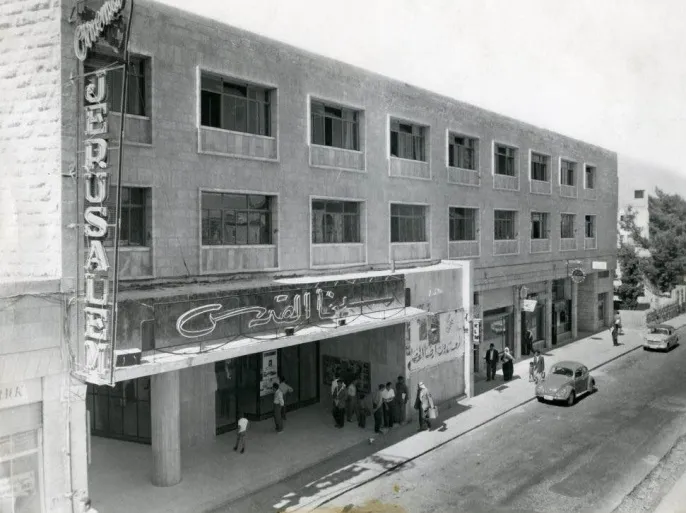
Jaffa had many cinemas, among them the Alhambra, Nabil, Apollo, al-Sharq, al-Rashid, Farouk, al-Salhi, al-Tobji, Fanqal and Aden. [1] The Alhambra on Jamal Pasha Street was the grandest, with a façade of black Italian marble and velvet seats. [3]

Umm Kulthum and Asmahan sang on the Alhambra's stage. [3] The Egyptian actor Youssef Wahbi also visited Jaffa, and some of the city's families would rent the cinema and invite him there. [6]

Alongside the cinemas, the city had several theaters, including al-Zarafiyya, the Qahwat al-Bannour theater, the Parisiana, the al-Halawani café theater, and the stages of the Sports Club and the Arab Club. [1]
75 Cafés and Nightspots
The café was the heart of social life in Jaffa, where newspapers were read and the affairs of the day debated. Ali al-Bawwab counted 75 cafés in the city before the Nakba. [1]
Jaffa also had well-known nightspots, including al-Zarifiyya on Clock Square, Abu Shakoush, the Parisiana, al-Dalu, Ghantous and Taj Mahal. [1]
Clubs and Sports
Sports and cultural clubs were important centers of city life, the best known being the Orthodox Club and the Islamic Club. [2]
- Orthodox Youth Club: founded in 1924; its football team won the Palestine club championship. [1]
- Islamic Sports Club: founded in 1926; it built a pitch near the Qishla, then, with the municipality, a large stadium at Ard al-Bassa holding 10,000 spectators. [1]
- Other clubs: the Young Men's Muslim Association, the Arab Club, the Students' Club, the Olympic Club, the Literary Forum and dozens more. [1]
At the national level, the Palestine Sports Federation was founded in April 1931 and formed a national football team. [4]
Women's Associations
Several women's associations were active in Jaffa, including the Orthodox Women's Society, the Women's Solidarity Society, the Arab Ladies' Society, the National Women's Society and the Arab Women's League. [1]
Schools and Libraries
Jaffa had government and private schools, among them the Orthodox College near the Arqatanji hill. [1] In the early nineteenth century, the city's governor Muhammad Abu Nabbut founded a library and school at the Great Mosque, endowing it with the revenue of seven mills. [1]

Jaffa, the Sea and the Oranges
Jaffa was not only a city of culture but a city of the sea and the orchards. Its oranges were Palestine's most famous product worldwide, and its port was the main sea gateway to central and southern Palestine. Every summer, its people went out to the Nabi Rubin festival on the sands south of the city. [1]

Life in the city was not without hardship before the Nakba. In the summer of 1936, during the Great Palestinian Revolt, the British Mandate authorities demolished large parts of the Old City. Read more in our article The Destruction of Jaffa.
The Nakba: The Fall of the Bride of the Sea
After the UN partition resolution of November 1947, Jaffa endured a siege of more than two months until it fell on 13–14 May 1948, on the eve of Israel's declaration of statehood. [2]
- Expulsion: of some 120,000 people in the city and its villages, only about 4,000 remained. [2]
- The ghetto: those who remained were confined to the Ajami quarter, fenced with barbed wire and placed under military rule until 1966. [2] [5]
- Property: the 1950 Absentees' Property Law allowed the seizure of Palestinian property. [2]
- The city: in 1950 Jaffa was annexed to the Tel Aviv municipality under the name "Tel Aviv–Jaffa." [5]
- Culture: of the cinemas, only the Alhambra building survived, and nothing remained of the Arab printing presses and publishers. [1]
Today more than 20,000 Palestinians live in Jaffa, many of them facing the threat of demolition and eviction. [2]
Read more on our site: Jaffa and its depopulated villages, fishing before the Nakba, Jaffa oranges before the Nakba, and the Nabi Rubin festival.
Conclusion
Before the Nakba, Jaffa was a vibrant modern city: reading newspapers in its cafés, watching films in its cinemas, cheering its clubs in its stadiums, exporting its oranges to the world and going out to the sea every summer. In May 1948, Palestine lost its most modern and open city, and Jaffa remains in its people's memory as the "Bride of the Sea," awaiting their return.
Frequently Asked Questions About Jaffa Before the Nakba
What was Jaffa's population before the Nakba?
Under the British Mandate, Jaffa had over 80,000 Palestinian residents, plus about 40,000 in the surrounding villages and towns. After its fall in 1948, only about 4,000 remained.
Why was Jaffa called Palestine's cultural capital?
Because it was the center of Palestinian journalism and printing: about 50 newspapers and magazines were published there between 1910 and 1948, and some 38 printing presses and publishers operated, alongside many cinemas, theaters, clubs and associations.
What were Jaffa's best-known newspapers before the Nakba?
The best known was Filastin, founded by Issa al-Issa and Yousef al-Issa in 1911, along with al-Difa' and al-Sha'b. Jaffa's first newspaper was al-Taraqqi, in 1907.
What was the Alhambra cinema in Jaffa?
The Alhambra was Jaffa's grandest cinema, on Jamal Pasha Street, with a façade of black Italian marble and velvet seats. Umm Kulthum and Asmahan sang on its stage, and it is the only cinema whose building survived the Nakba.
When did Jaffa fall in 1948?
Jaffa fell on 13–14 May 1948, after a siege of more than two months, on the eve of Israel's declaration of statehood. Those who remained were confined to the Ajami quarter under military rule until 1966.
What were Jaffa's best-known clubs before the Nakba?
The Orthodox Youth Club, founded in 1924, whose football team won the Palestine club championship, and the Islamic Sports Club, founded in 1926, which built a 10,000-seat stadium with the municipality.
Sources and References
Arabic-language sources are listed with translated titles.
- Mahmoud Yazbak, "Jaffa Before the Nakba: A City Bursting With Life," Journal of Palestine Studies (Arabic edition), no. 93, 2013.
- Sami Abu Shehadeh and Fadi Abu Shbeitah, "Jaffa: From Glory to Ethnic Cleansing," Haq al-Awda, BADIL Resource Center (Arabic).
- "Palestinian Jaffa Was a Cradle of Journalism and Culture Before the Nakba," Arabi21, 2020 (Arabic).
- Ahmed Saif al-Nasr, "What Was Life Like in Palestine Before the Nakba?," Noon Post, May 13, 2024 (Arabic).
- Encyclopedia, "Jaffa," Al Jazeera Net, 2014 (Arabic).
- Palestine Remembered: "Youssef Wahbi in Jaffa," testimony of Azmi El Bawwab.
More from the archive
 Download Our Palestine App
The whole archive in the palm of your hand: depopulated villages, the Nakba, the massacres and Al-Aqsa — free, with no ads to erase the story.
Comments
No comments yet — be the first to write one.
Add your comment
Name and email are optional. Comments appear after review.