Trains and Ports in Palestine Before the Nakba: Railways and Haifa Port
Palestine has known the train since September 26, 1892, when the first train arrived in Jerusalem from Jaffa. In 1905 the Haifa–Daraa branch of the Hejaz Railway opened, turning Haifa into a transport hub linking Palestine with Damascus, the Hejaz and Egypt, and in 1933 its port became the largest in the country. [1] [2] [6]
Before the Nakba, a Palestinian could take the train from Jerusalem to Cairo or the bus from Haifa to Beirut, Damascus and Baghdad, ship oranges from Jaffa port, and fly from Lydda airport. Then the Nakba cut all these routes. This article tells the story of transport in Palestine before 1948, and of the people who worked in it.
Transport in Palestine Before 1948: A Timeline
| Year | Event |
|---|---|
| 1864 | A modern lighthouse is built at Jaffa port [4] |
| 1868 | The carriage road between Jaffa and Jerusalem opens [4] |
| 1892 | The Jaffa–Jerusalem railway opens, the first railway in Palestine [2] [3] |
| 1905 | The Haifa–Daraa branch of the Hejaz Railway opens [1] |
| 1908 | The first car enters Jerusalem [3] |
| 1918 | The British line from Qantara in Egypt reaches Lydda, then Haifa [1] |
| 1923 | Railway workers form a committee in Haifa, and the Haifa–Beirut bus line begins [5] [7] |
| 1925 | The Palestine Arab Workers' Society is announced in Haifa [5] |
| 1933 | Haifa's deep-water port basins are completed [6] |
| 1936–1937 | Lydda airport opens [8] |
| 1946 | Railway workers strike for four days [1] |
| 1948 | Haifa, Jaffa and Lydda fall, and cross-border train and bus lines are cut [6] [9] |
The Jaffa–Jerusalem Railway
Before the train, people traveled from Jaffa to Jerusalem on animals or by carriage. The carriage road between the two cities opened in 1868, and by the 1880s 30 to 40 carriages traveled it every day. [4]
In 1888 the Ottoman state granted a concession for a railway between Jaffa and Jerusalem, and a French company carried out the project. On September 26, 1892, the first train arrived at Jerusalem station from Jaffa, on the first railway in Palestine. [2] [3]
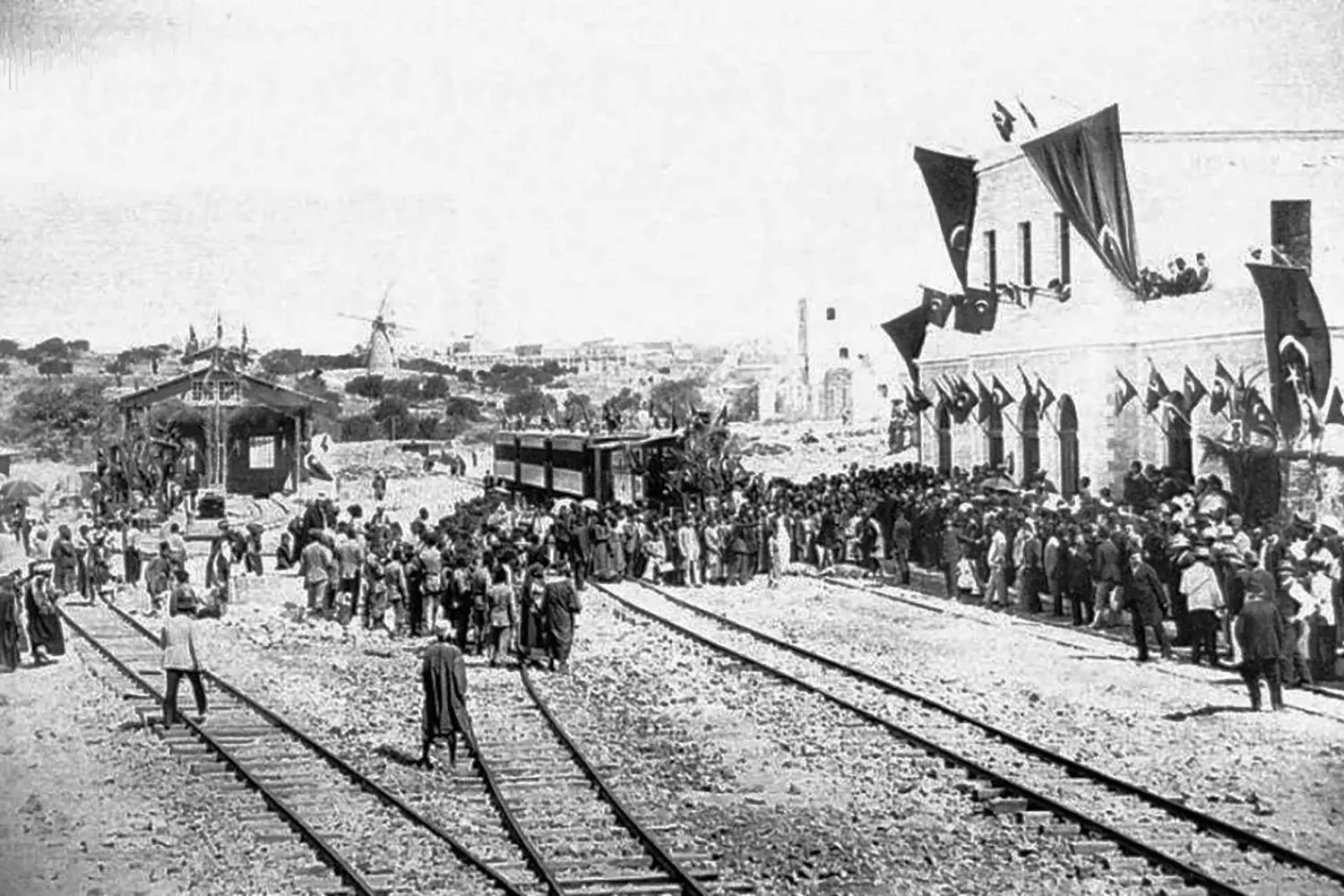
The line had eight planned stations: Jaffa, Lydda, Ramla, Sejed, Deir Aban, Battir, al-Walaja and Jerusalem; the al-Walaja station was never completed. The train made one trip a day in each direction: it left Jerusalem at 7:15 a.m. and reached Jaffa at 11:00 a.m., then left Jaffa at 2:20 p.m. and reached Jerusalem at 6:00 p.m. A first-class ticket cost four dollars, and a second-class ticket 33 cents. [2]
The line served European Christian pilgrims and trade, but the historian Johnny Mansour argues that the Zionist project was its main beneficiary, through the settlements built along its route. [2] During the 1936 revolt, Palestinian fighters targeted the line with mines and attacks on locomotives, especially those carrying British munitions. [2]
The Haifa–Daraa Line: Palestine on the Hejaz Railway
The Hejaz Railway was Sultan Abdul Hamid II's project to link Istanbul with the holy cities of the Hejaz. Work began in 1900, and the Damascus–Medina section was completed in 1908. [1]
From Daraa in the Hauran, a branch about 161 kilometers long ran to Haifa. It officially opened in October 1905 (on October 15 according to Mansour Jween, and on October 4 according to other sources). [1] [10] Its purposes were:
- To carry Muslim pilgrims to the Hejaz through the port of Haifa.
- To open an export route for Hauran's wheat and produce through Haifa instead of Beirut.
- To reduce French influence, since the French controlled the Beirut–Damascus line. [1]
The line transformed Haifa. The city became the headquarters of the Hejaz Railway administration, and the railway was its largest employer between 1903 and 1908, earning Haifa the nickname "Umm al-Amal" (Mother of Work). Its population grew from about 6,000 in 1880 to about 15,000 in 1905 and about 23,000 in 1914. Its customs revenues rose sharply, while Acre's trade declined. [1]
The Rail Network Under the Mandate
During the First World War the British built a standard-gauge line from Qantara in Egypt, which reached Lydda and then Haifa on December 23, 1918. [1] Lydda became the railway junction where the Jaffa–Jerusalem line met the coastal line running from Egypt to Haifa.
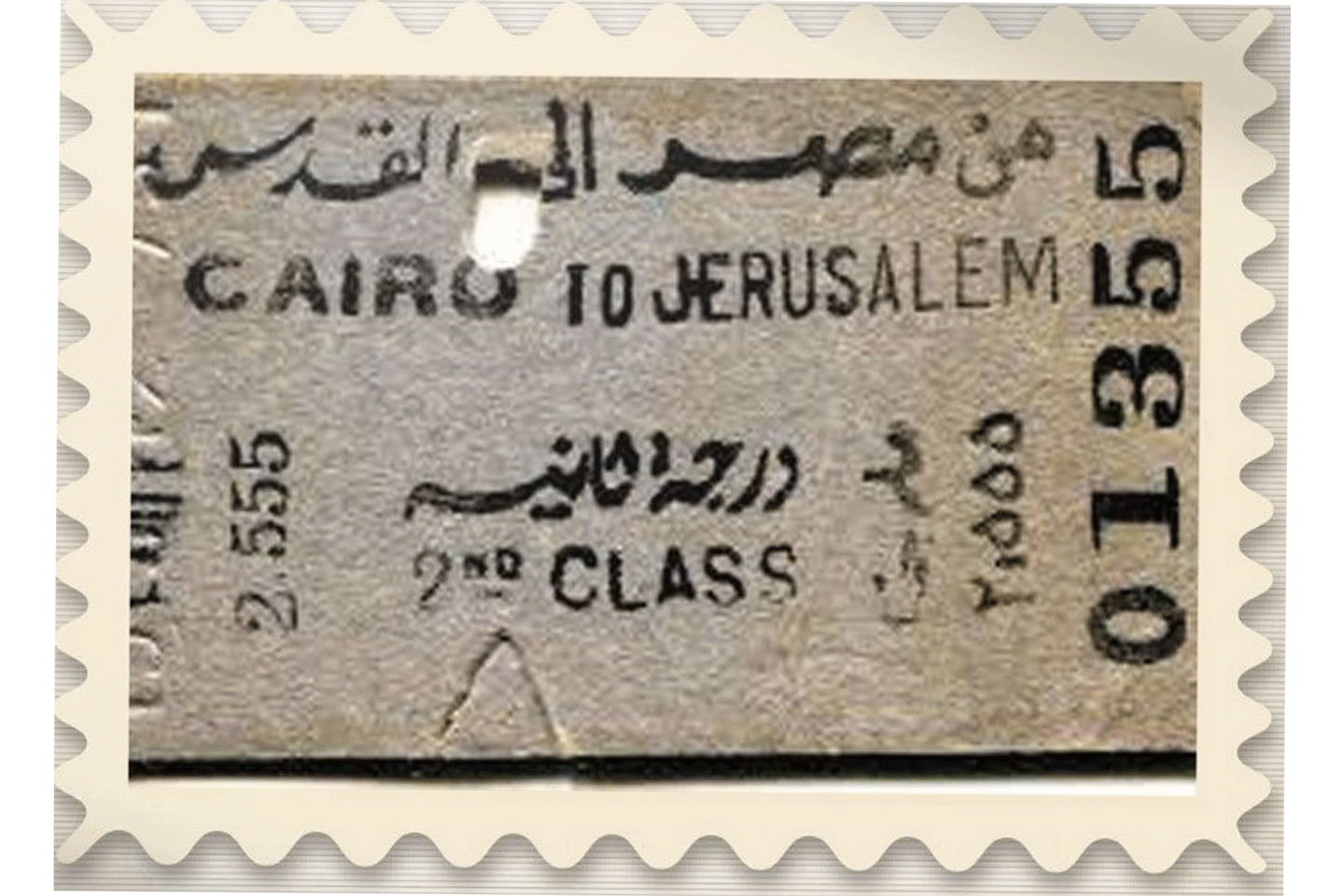
Under the Mandate, a Palestinian could take the train from Jerusalem to Cairo. Archives preserve a second-class ticket from Cairo to Jerusalem dated 1942. [3]
Haifa's Railway Workers
The railway was one of the largest employers in Palestine, with about 7,500 workers and staff under the Mandate. But Arab workers earned roughly a third to a half less than their Jewish colleagues. [1]
The Arab labor movement in Palestine grew out of Haifa station and its workshops. In 1923, railway workers in Haifa formed the Fraternal Committee of Palestine Railway Workers, led by Abd al-Hamid Haimour. In 1925 Arab workers left the union led by Jewish workers, and on March 21, 1925, the Palestine Arab Workers' Society was announced, with its headquarters in Haifa. [5]
In 1946 the railway workers went on a four-day strike over wages and working conditions, and the administration accepted most of their demands, including higher wages and health insurance. [1] Sami Taha, leader of the Arab Workers' Society, was one of the most prominent figures of the labor movement until he was assassinated in Haifa on September 11, 1947. [5]
Rashid al-Hajj Ibrahim also worked for the Haifa railway before becoming one of the city's national leaders. [6]
Jaffa Port and Haifa Port
Jaffa Port
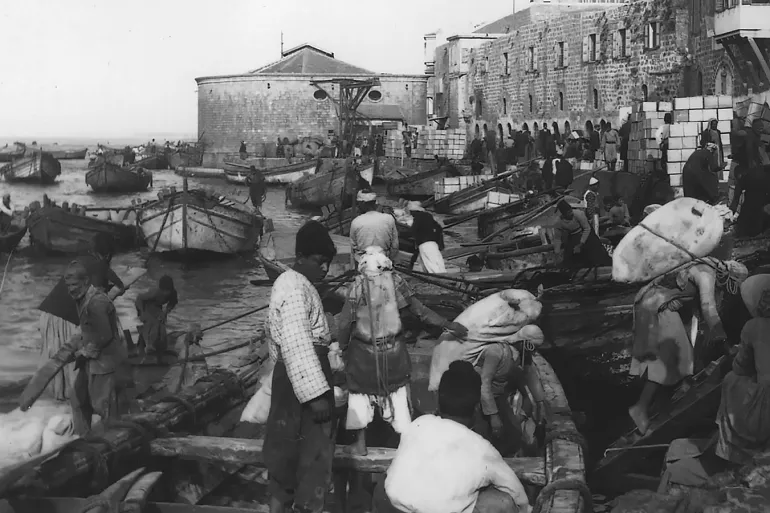
Jaffa was Palestine's oldest and best-known port, but it was not a deep-water harbor. Large ships anchored far out at sea, and small boats (feluccas) carried goods and passengers between the quay and the ships. In 1864 a French company built a modern lighthouse for the port, and in 1875 a local association bought a small steam tug in Marseille to help the ships. [4]
Jaffa oranges went out to the world through this port: exports rose from about 260,000 crates in 1895 to about 1.5 million crates in the 1913/1914 season, about 80% of them from Arab-owned orchards. [4] Read: Jaffa Oranges Before the Nakba.
Haifa Port
The Ottomans judged Haifa's old harbor inadequate and commissioned the German engineer Meissner Pasha to design a new port near the end of the Hejaz line. [1] The British later built a modern port whose deep basins for large ships were completed in 1933. In 1934 the oil pipeline from Kirkuk in Iraq reached it, and the Haifa refinery began operating. [1] [6]
With the railway, the port and the oil all in one place, Haifa had been Palestine's largest working-class city since the 1920s. [6] Read also: Palestinian Industries Before the Nakba.
Lydda and Qalandia Airports
In the 1920s the Mandate authorities built a military airfield at Qalandia, north of Jerusalem. [3] In 1936–1937 the Wilhelma airport opened near Lydda; it later became known as Lydda airport and served as Palestine's international airport. [8]
Roads, Carriages and Buses
The first car entered Jerusalem in 1908. By the 1930s, buses and shared taxis ran regular services linking Jerusalem with nearby towns and villages, and the bus station stood near Jaffa Gate, outside the Old City walls. [3]
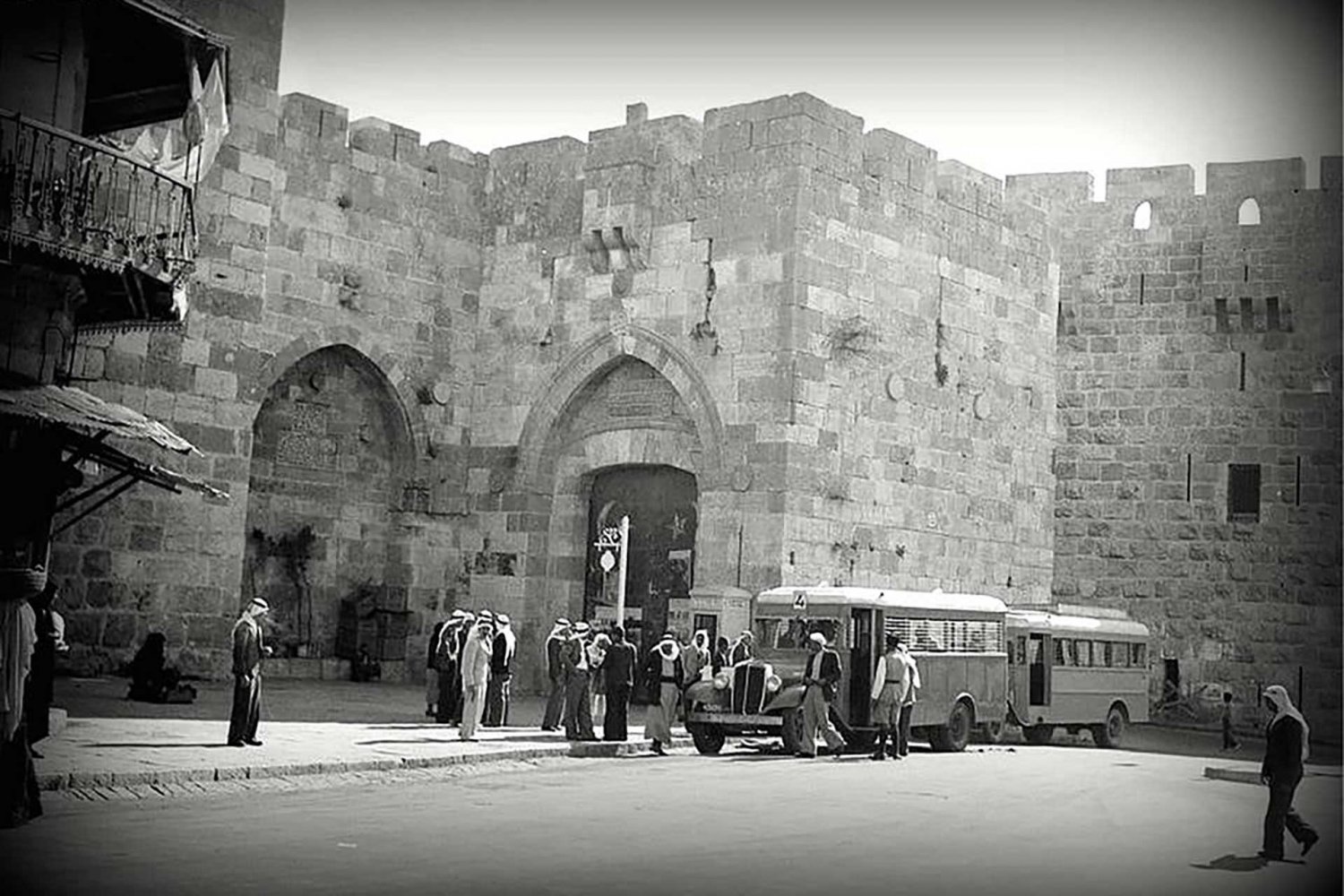
Buses did not stop at Palestine's borders:
- To Cairo: the Arab Transport and Trade Company ran a bus from Jerusalem to Cairo with stops in Jaffa and Gaza. [3]
- To Beirut, Damascus and Baghdad: from 1923 the Nairn Transport Company ran buses between Haifa and Beirut, and linked Haifa and Beirut with Damascus, Baghdad, Amman and Jerusalem. [7]
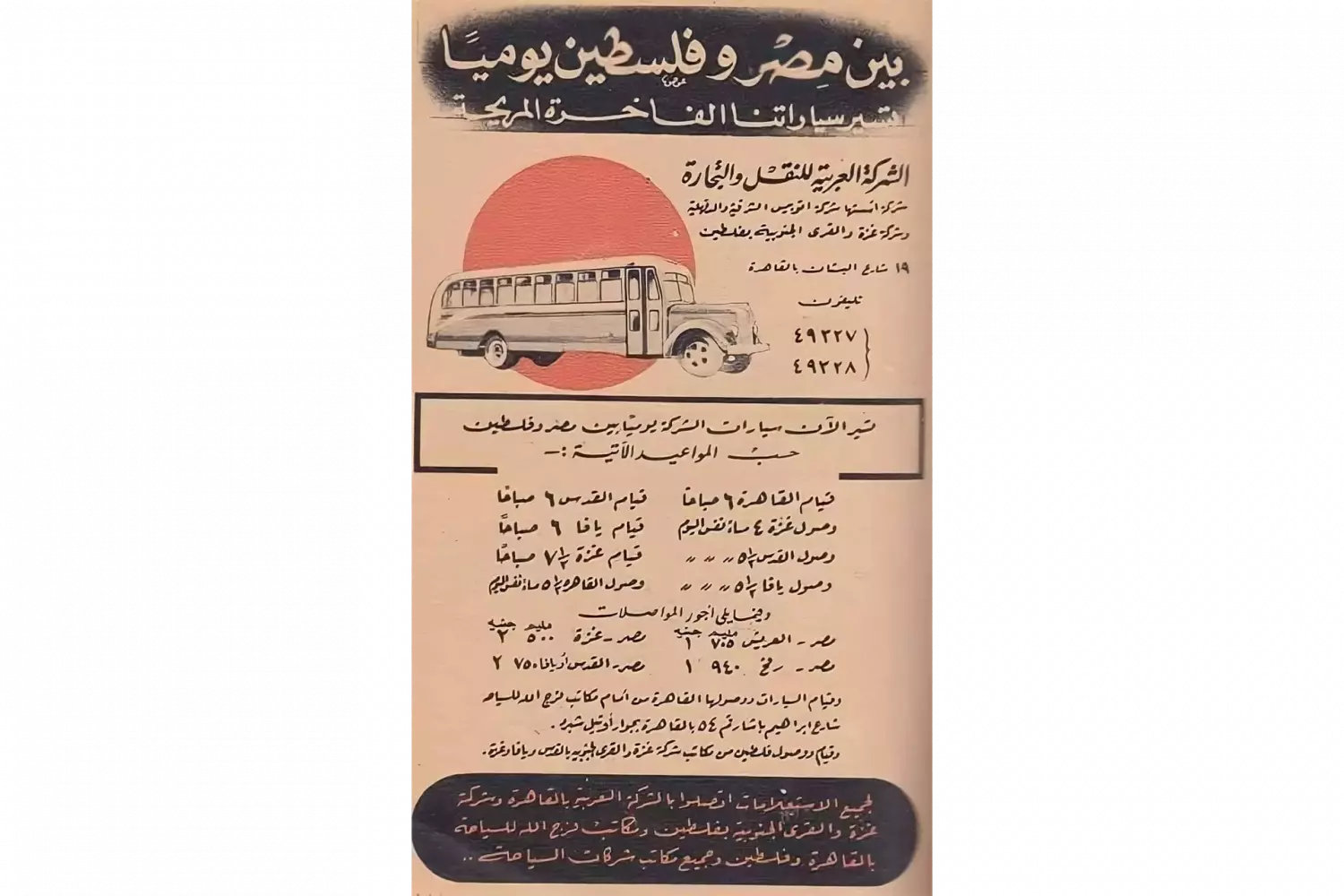
Before 1948, Palestinians traveled freely from Jerusalem to Jaffa, Haifa, Nablus and Gaza, and on to neighboring Arab countries. [3]
The Nakba: Severed Routes
In 1948 Palestine's transport hubs fell one after another: Haifa, the city of the railway and the port, on April 22, 1948 [6]; then Jaffa in May; then Lydda, the railway junction and site of the airport, in July during Operation Dani. [9]
Railway and port workers were scattered, and workers from the surrounding villages left Haifa in the last weeks before it fell. [6] The lines that linked Palestine to its neighbors were cut: the train no longer ran from Haifa to Daraa and Damascus, nor the bus from Jerusalem to Cairo or from Haifa to Beirut. [3] [7] Israel seized the Palestinian homes along the Jaffa–Jerusalem line under what it calls the "Absentees' Property" law. [2]
Read more on our site: Jaffa Before the Nakba, Fishing Before the Nakba, Jaffa Oranges Before the Nakba and the city of Jaffa.
Conclusion
Before the Nakba, Palestine was a country open to its surroundings: trains ran through it from Cairo to Haifa and from Haifa to Damascus, oranges left its ports, and its people rode buses between Jerusalem and Beirut. The workers of Haifa's railway and ports helped build the country's first Arab labor movement. In 1948 these routes were cut, and the old stations remain as witnesses to a country that was once connected to the world around it.
Frequently Asked Questions About Trains and Ports in Palestine Before the Nakba
When did the first train arrive in Palestine?
The first train arrived in Jerusalem from Jaffa on September 26, 1892, on Palestine's first railway, built by a French company under an Ottoman concession granted in 1888.
What was the Haifa–Daraa line?
A branch of the Hejaz Railway about 161 kilometers long, opened in October 1905, which linked Haifa port to Daraa in the Hauran and from there to Damascus and the Hejaz.
How long did the train journey from Jaffa to Jerusalem take?
The journey took about three and three-quarter hours: the train left Jerusalem at 7:15 a.m. and reached Jaffa at 11:00 a.m.
When was the modern port of Haifa built?
Haifa port's deep basins for large ships were completed in 1933, and the oil pipeline from Kirkuk reached it in 1934.
When did Lydda airport open?
The British Mandate authorities opened it in 1936–1937 as Wilhelma airport. It later became known as Lydda airport and served as Palestine's international airport.
Could people travel from Palestine to Egypt and Lebanon before 1948?
Yes. Trains ran from Jerusalem to Cairo, and buses linked Jerusalem with Cairo via Jaffa and Gaza, and Haifa with Beirut, Damascus and Baghdad.
Sources and References
Arabic-language sources are listed with translated titles.
- Mansour Jween, "The Role of the Hejaz Railway in the Development of Haifa," Journal of Palestine Studies (Arabic edition), vol. 17, no. 65, 2006.
- Aseel al-Jundi, "132 Years Old: What You Don't Know About the Jaffa–Jerusalem Railway," Al Jazeera Net, October 30, 2020 (Arabic).
- "Lost Routes: How Travel In and Around Jerusalem Was Fractured," Jerusalem Story, August 6, 2025.
- Mahmoud Yazbak, "Jaffa Before the Nakba: A City Bursting With Life," Journal of Palestine Studies (Arabic edition), no. 93, 2013.
- "Palestinian Trade Unionism, 1920–1948," Interactive Encyclopedia of the Palestine Question, Institute for Palestine Studies.
- Ali Habib Allah, "Haifa and the Road to Its Nakba in the Memoirs of Rashid al-Hajj Ibrahim," Noon Post, May 10, 2024 (Arabic).
- "Haifa-Beirut Bus 'Revived' to Mark 73rd Anniversary of City's Fall," The New Arab, April 23, 2021.
- "Lydda," Encyclopedia, Al Jazeera Net, 2014 (Arabic).
- Hiba Jamal, "Lydda: Maps and Memories That the Occupation's Crimes Cannot Erase," Noon Post, June 23, 2021 (Arabic).
- "A Tour of the Stations of the Daraa–Haifa Railway," Jadaliyya (Arabic).
More from the archive
 Download Our Palestine App
The whole archive in the palm of your hand: depopulated villages, the Nakba, the massacres and Al-Aqsa — free, with no ads to erase the story.

Comments
No comments yet — be the first to write one.
Add your comment
Name and email are optional. Comments appear after review.