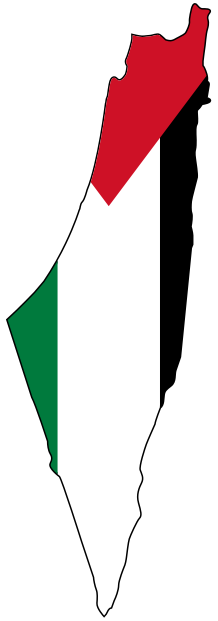
West Jerusalem Before the Nakba: Qatamon, Talbiyeh and Baq’a
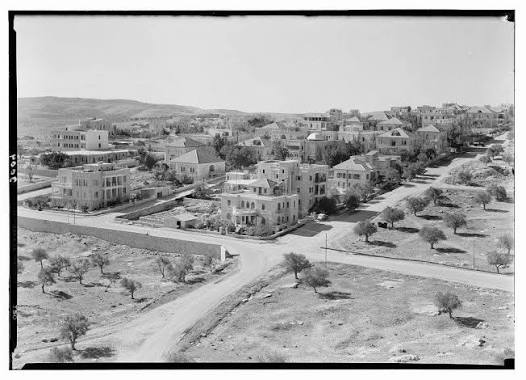
West Jerusalem was not Jewish before 1948. In the new neighborhoods outside the walls, such as Qatamon, Talbiyeh, Baq'a and Musrara, tens of thousands of Palestinians lived in stone houses they had built themselves. In 1948 about 45,000 Palestinians were driven out of these neighborhoods, and only about 200 remained. [1]
This article tells the story of the new city that Jerusalemites built: how they moved out of the Old City into modern neighborhoods, how they lived there, how their neighborhoods fell one after another in 1948, and who moved into their homes. For Jerusalem's general history and depopulated villages, see our Jerusalem city page.
West Jerusalem Before the Nakba in Numbers
| Item | Figure |
|---|---|
| Palestinians driven out of the new city in 1948 | About 45,000 [1] |
| Palestinians driven out of the surrounding villages | 28,256 [1] |
| Palestinians who remained in the new city | About 200 [1] |
| Depopulated villages around Jerusalem | 40 villages and towns, 55% of them completely destroyed [1] |
| Share of the 1947 Jerusalem municipal area occupied and annexed | 84.12% [1] |
| Families in Qatamon before the Nakba | About 200 families [4] |
Beyond the Walls: The Birth of the New City
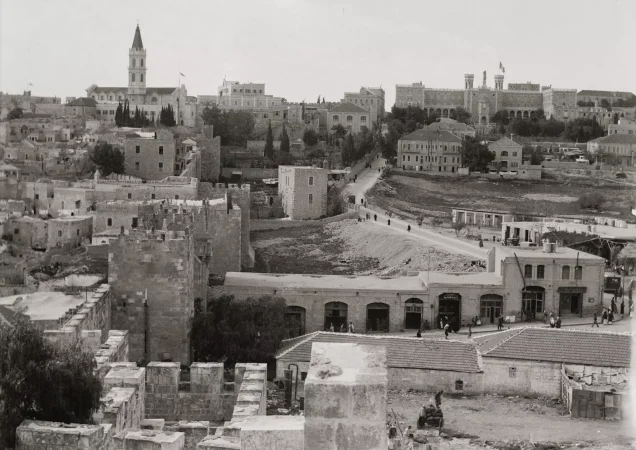
From the late Ottoman period, well-off Jerusalem families began leaving the crowded Old City and building stone houses on the hills to its west and south. New neighborhoods arose, among them Upper and Lower Baq'a, Talbiyeh, Qatamon, Mamilla, Musrara and Abu Tor, alongside the German and Greek Colonies. [2]
There was no "East" and "West" Jerusalem then: the new city grew naturally out of the Old City, and Palestinians built and developed its neighborhoods and lived a cosmopolitan urban life there. [1] A small Jewish minority lived in some of the adjacent neighborhoods. [2]
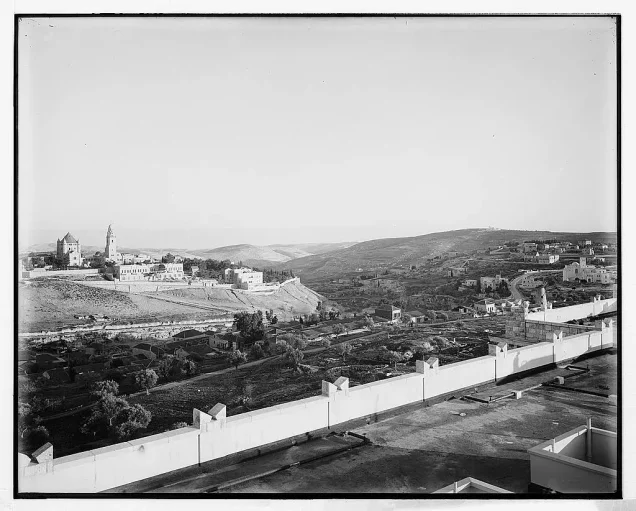
Qatamon
Qatamon was founded in the mid-1890s on about 157 dunams, and some 200 families lived there before the Nakba. It sits on a ridge overlooking Upper and Lower Baq'a, crowned by an old monastery, Deir al-Qatamon (the Monastery of St. Simeon); whoever held it controlled the west and south of the city. [4]
Qatamon was home to the educator Khalil Sakakini, whose house became a kindergarten after the Nakba. [2] It was also home to the Semiramis Hotel, which became a symbol of the beginning of the neighborhood's fall.
Talbiyeh
Talbiyeh was built between 1920 and 1930 on land bought from the Greek Orthodox Patriarchate. Most of its first residents were well-off Christian Jerusalem families, who built elegant houses surrounded by trees and rose gardens. [3]
Its families included the Salameh, Tarsha, Sanouno, Bishara, Shukri al-Jamal, Tawfiq Canaan and Elias al-Jallad families. [3] Among its best-known houses:
- The Constantine Salameh villa (1930–1935): one of the most luxurious houses in Jerusalem, designed by a French architect. Its owner lived there until 1948 and then left for Lebanon; it became the Belgian consulate. [3] [7]
- The Villa Harun al-Rashid (1926): a two-story house with arches and a front garden built by Hanna Ibrahim Bisharat; after the Nakba, Golda Meir lived there. [3]
- The Tarsha family house: became the Spanish consulate. [2] [3]
- The Tawfiq Canaan house: became the Jasmine Hotel during the Mandate. [3]
The thinker Edward Said was also born into a family that lived in Talbiyeh before the Nakba. [2]
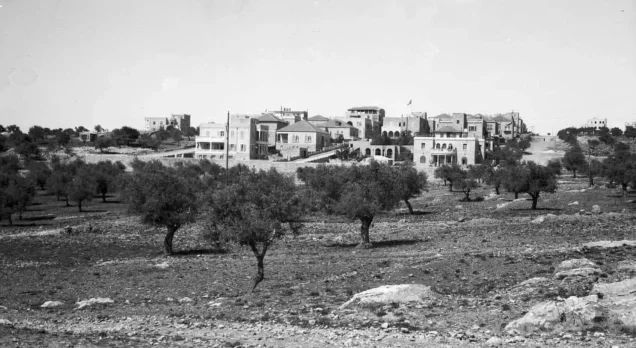
Baq'a, Musrara and Other Neighborhoods
- Upper and Lower Baq'a: among the largest Arab neighborhoods in the southwest of the city, including the Namamreh quarter, to whose growth the book Jerusalem 1948 devotes an appendix. [6]
- Musrara: a neighborhood just outside the walls near Damascus Gate. [2]
- Mamilla and Abu Tor: among the neighborhoods into which the city expanded beyond the walls. [2]
- The lands of Lifta: the new city spread onto the lands of the village of Lifta, where Arab houses near today's central bus station still bear Arabic inscriptions and Quranic verses. [7]
The Houses: Stone, Arches and Gardens
Well-off families in these neighborhoods built stone mansions blending Islamic and modern styles. Arches were their signature, and their gardens held lemon, pomegranate and jasmine trees. They were designed by foreign and Palestinian architects, built by masons and stonecutters from Bethlehem, and their stone came from the quarries of Deir Yassin. [2]
Some facades still carry marble plaques on which their owners inscribed phrases such as "This is from the grace of my Lord." [2]
1948: The Fall of the Neighborhoods
The Semiramis Hotel Bombing
On the night of January 5, 1948, the Haganah blew up the Semiramis Hotel in Qatamon. Eight of its members arrived in two cars and detonated a small charge at the entrance, then a large one in the lower floors. Twenty-six civilians were killed, most of them from the Abu Suwwan family, along with Egyptian workers and the Spanish vice-consul, Manuel Salazar, and more than 20 were wounded. After the bombing, Qatamon's residents began to leave. [5]
The Battle of Qatamon
On April 22, 1948, the Arab National Committee in Jerusalem ordered women, children and the elderly evacuated from the western neighborhoods. Between April 27 and 29, Palmach forces launched successive attacks on Qatamon, with the fighting centered on the Monastery of St. Simeon. The neighborhood was defended by fighters of the Holy Jihad Army led by Ibrahim Abu Dayyeh, who had formed a group of 130 men, only 15 of whom were left at the end. Thirty-five fighters were killed between April 27 and 29, and the neighborhood fell on May 2, 1948. [4]
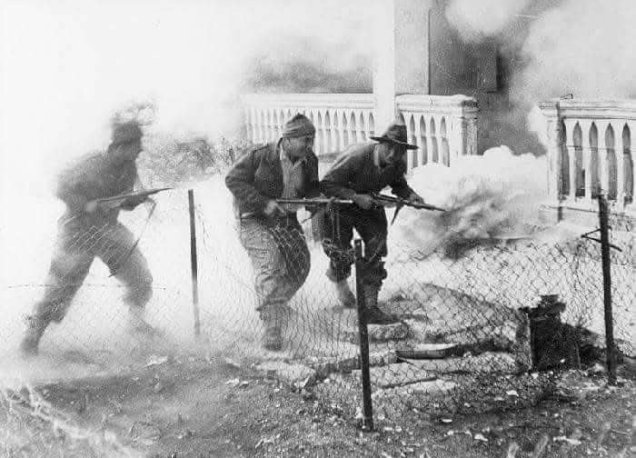
The UN mediator Folke Bernadotte wrote that many of those who delayed leaving were "deprived of everything." [4]
After the Nakba: Who Lives in Our Homes?
- Expulsion: about 45,000 Palestinians were driven out of the new city and 28,256 from the surrounding villages. Only about 200 Palestinians remained, confined for two and a half years in a military "security zone" in Lower Baq'a. [1]
- Looting: the houses were looted and emptied, including their libraries. [2] They were then rented to settlers at low prices and eventually became theirs. [4]
- Absentees' Property: families, including the Salameh family, lost their homes under the "Absentees' Property" law. [3]
- New residents: the houses were taken over by academics, writers, lawyers, doctors and senior officials, and Hebrew University faculty sought them out for their proximity to the Terra Sancta building. [2] [3]
- Names: Talbiyeh's streets were renamed after foreigners who served the Zionist project, such as Wingate. [3]
- Today: Arab houses have become consulates and Israeli institutions, and Talbiyeh now houses the Israeli prime minister's residence and the Jerusalem Theatre. [2] [3]
Read more on our site: Jerusalem and its depopulated villages, Education in Palestine Before the Nakba, Cinema and Theatre in Palestine Before the Nakba and Jaffa Before the Nakba.
Conclusion
The houses of Qatamon, Talbiyeh and Baq'a still stand with their stone, arches and gardens, but their owners cannot return to them. Many of them live today just a few kilometers away in East Jerusalem, or in exile. These houses are living testimony that West Jerusalem is a Palestinian city built by its people, and taken from them in 1948.
Frequently Asked Questions About West Jerusalem Before the Nakba
Was West Jerusalem Arab before 1948?
Yes. It had large Palestinian neighborhoods such as Qatamon, Talbiyeh, Baq'a and Musrara. About 45,000 Palestinians were driven out of them in 1948, and only about 200 remained.
When did Qatamon fall?
After fighting around the Monastery of St. Simeon between April 27 and May 1, 1948, Qatamon fell on May 2, 1948.
What was the Semiramis Hotel bombing?
A bombing carried out by the Haganah at the Semiramis Hotel in Qatamon on the night of January 5, 1948. It killed 26 civilians, most of them from the Abu Suwwan family, and residents began to leave the neighborhood.
Who built Talbiyeh?
Well-off Christian Jerusalem families, including the Salameh family, built it between 1920 and 1930 on land bought from the Greek Orthodox Patriarchate.
What happened to Palestinian homes in West Jerusalem?
They were looted after 1948, then seized by Israel under the Absentees' Property law. Israeli academics and officials moved in, and some became consulates and official institutions.
Where was Edward Said born?
The Palestinian thinker Edward Said was born in Jerusalem, and his family lived in Talbiyeh before the Nakba.
Sources and References
Arabic-language sources are listed with translated titles.
- "West Side Story," Jerusalem Story.
- Wadie Awawdeh, "The Houses of West Jerusalem Bear Witness to Its Identity," Al Jazeera Net, March 30, 2016 (Arabic).
- "Talbiyeh: Home of Historic Landmarks and Consulates in Jerusalem," Encyclopedia, Al Jazeera Net, August 25, 2024 (Arabic).
- "The Battle of Qatamon in Jerusalem: When Fighters Declared 'The Zionists Will Pass Only Over Our Bodies'," Encyclopedia, Al Jazeera Net, October 6, 2024 (Arabic).
- "The Semiramis Hotel Bombing Massacre in Jerusalem, 1948," Encyclopedia, Al Jazeera Net, October 7, 2024 (Arabic).
- Salim Tamari (ed.), Jerusalem 1948: The Arab Neighbourhoods and Their Fate in the War, Institute for Palestine Studies and Badil, 2002.
- "In Pictures: The Beauty and Elegance of Jerusalem's Buildings Before the Nakba," Al Jazeera Net, May 15, 2024 (Arabic).
More from the archive
 Download Our Palestine App
The whole archive in the palm of your hand: depopulated villages, the Nakba, the massacres and Al-Aqsa — free, with no ads to erase the story.
Comments
No comments yet — be the first to write one.
Add your comment
Name and email are optional. Comments appear after review.