Palestinian Women Prisoners: From Sadhij Nassar to Zakia Shmout
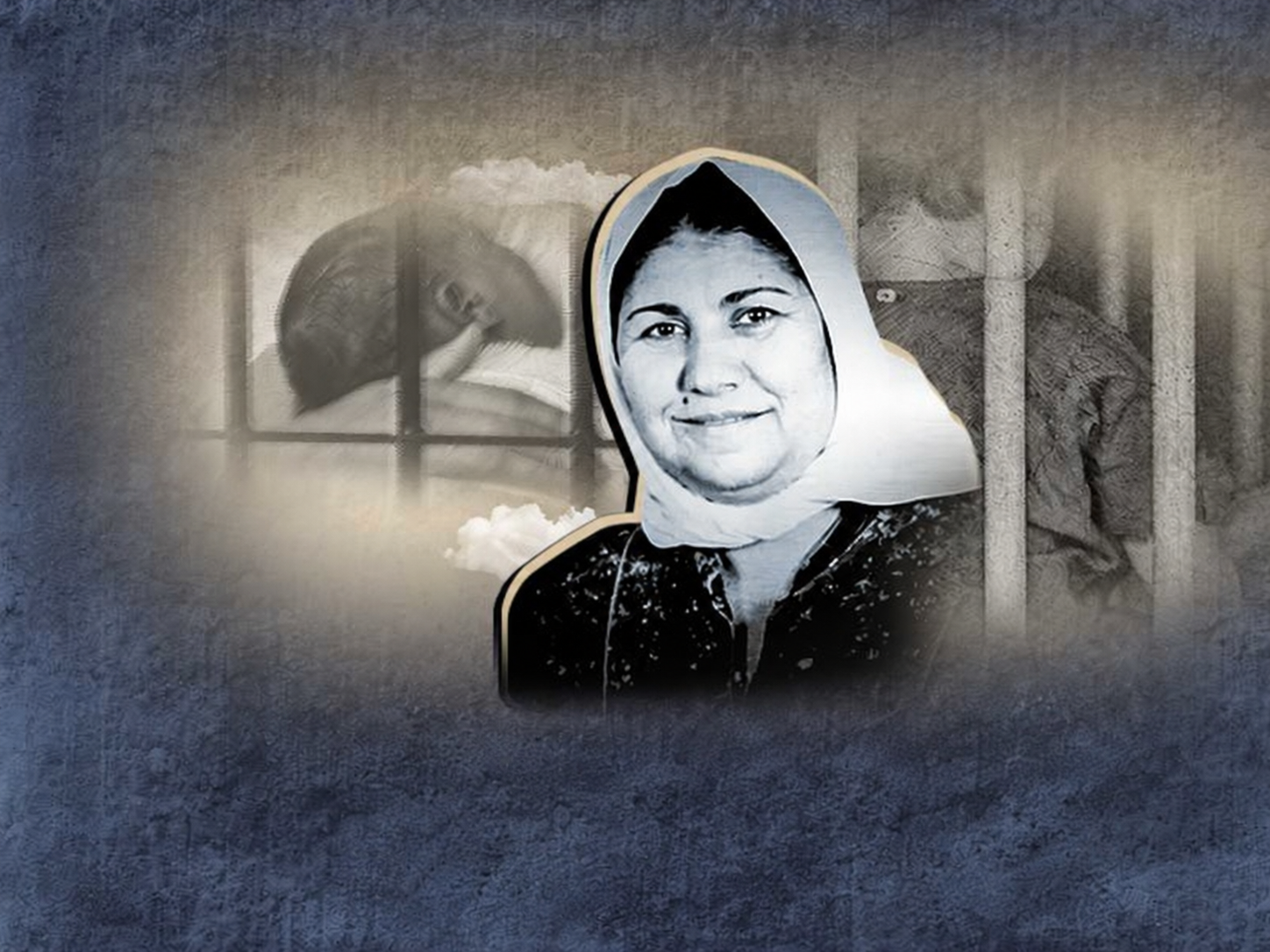
In late 1938, the British Mandate authorities arrested the journalist Sadhij Nassar of Haifa, making her the first Palestinian woman detained for her national activity. More than thirty years later, another daughter of Haifa, Zakia Shmout, gave birth alone in an Israeli prison cell. Between them and after them, thousands of Palestinian women passed through prisons, and the woman prisoner became part of the story of Palestine. [2] [7]
This article tells the history of Palestinian women prisoners from the Mandate to today: from the Bethlehem detention camp to Damon prison; from Fatima Barnawi, Aisha Odeh and Zakia Shmout to Lina Jarbouni, Israa Jaabis and Khalida Jarrar; from young girls to mothers who gave birth in shackles; along with hunger strikes, prisoner exchanges and conditions of detention.
Palestinian women prisoners at a glance
| Item | Details |
|---|---|
| First woman detained by the Mandate for national activity | Sadhij Nassar, Haifa, 1938 [2] |
| First woman prisoner after the 1967 occupation | Fatima Barnawi, October 1967 [6] [25] |
| First Palestinian woman to give birth in an Israeli prison | Zakia Shmout, 18 February 1972 [7] |
| Women arrested between 1967 and 2010 | About 15,000 [6] |
| Women arrested in the First Intifada | More than 3,000 [6] [19] |
| Women arrested in the Second Intifada | About 1,500 [19] |
| Youngest woman prisoner | Dima al-Wawi, aged 12, 2016 [22] |
| Longest time served by a woman prisoner (as of 2017) | Lina Jarbouni, 15 years [15] |
| Women released in the January 2025 exchange | 90 [21] |
| Women prisoners in Damon prison (July 2026) | About 90 [17] |
In Mandate prisons: Sadhij Nassar
The story of Palestinian women prisoners began under the British Mandate, as women entered political life in the streets. During the 1936 revolt, women in Haifa were arrested for enforcing the strike against shops that broke it, women in Jaffa were arrested for breaking the curfew, and on 29 July 1936 police attacked women demonstrators in Acre, wounded young girls and arrested one of the participants. [1] At the same time, women stood behind the male detainees: they carried food and clothing to the Acre detention camp, demanded the detainees’ release, and protested death sentences. [1]
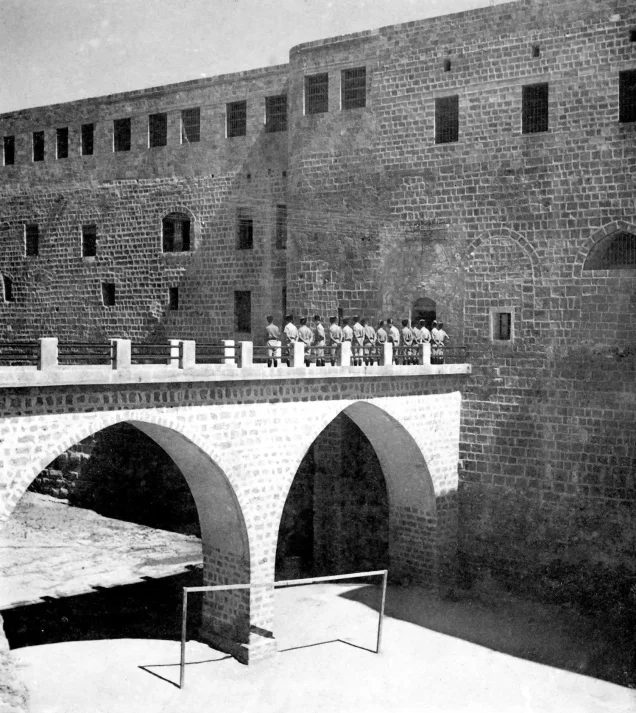
In late 1938, the British arrested Sadhij Nassar, a journalist at the newspaper al-Karmel and founder of the Arab Women’s Union in Haifa, on charges of supplying the revolt with weapons. She spent eleven months in the Bethlehem detention camp, the first Palestinian woman detained by the Mandate authorities for her national activity. [2] [3] Months before her arrest, she had been elected secretary of the bureau of the Eastern Women’s Conference for the Defense of Palestine in Cairo. [2] After the Nakba she took refuge in Lebanon and then Syria, and died in Damascus. [2]
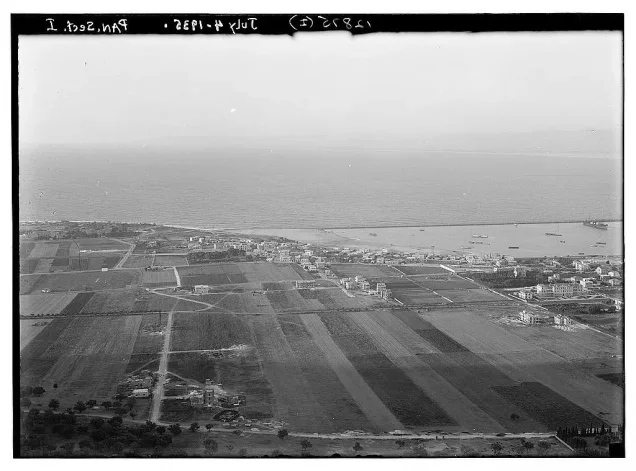
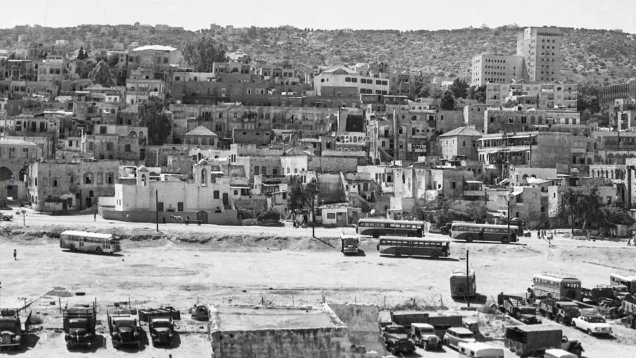
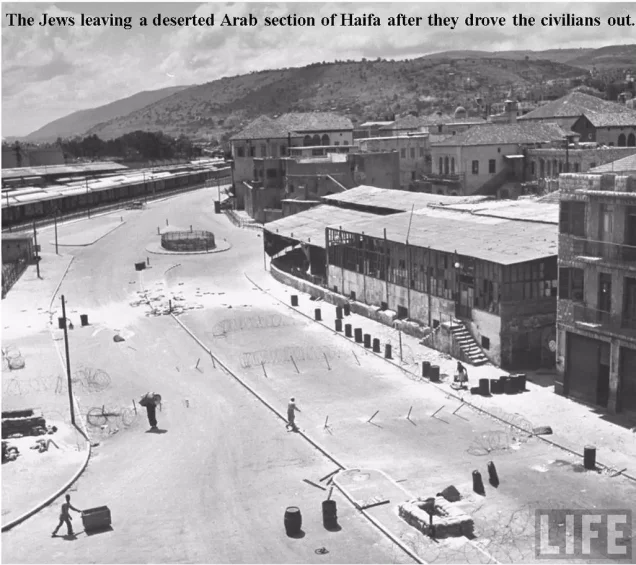
Read about Haifa and its depopulated villages and Acre and its depopulated villages.
Fatima Barnawi: the first woman prisoner after 1967
Fatima Barnawi was born in Jerusalem in 1939 to a father of Nigerian origin and a Jordanian-Palestinian mother. [4] She was among the first women members of Fatah in the West Bank. [25] Months after the occupation of Jerusalem in 1967, she placed a bag of explosives in the Zion Cinema in Jerusalem; a guard found it minutes before it was due to go off. She was arrested in October 1967, becoming the first Palestinian woman prisoner after the occupation. [6] [25] A military court sentenced her to life imprisonment. [5] [25]
She spent about ten years in prison before she was released and deported to Lebanon, where she worked as a nurse in the ranks of the revolution. [4] [5] [25] After the Oslo Accords, Yasser Arafat tasked her with founding the Palestinian Women’s Police, and she returned to the Gaza Strip in 1994 to lead it. She received the Star of Military Honor in 2005. [4] [25] She died in Cairo in November 2022 at the age of 83, having said before her death: “I’ve never regretted what I did.” [4] [25]
Aisha Odeh: from interrogation to writing
Aisha Odeh was born in 1944 in Deir Jarir near Ramallah, and Israeli forces arrested her on 1 March 1969. [23] On 21 December 1970, a military court in Lydda sentenced her to two life terms plus ten years. [23] She spent ten years in prisons and interrogation centers until she was freed in the “Seagull” exchange on 14 March 1979 and deported to Jordan; she returned to Ramallah only on 24 November 1994. [10] [23]
After her return, she turned her experience into literature: in Dreams of Freedom (2004) she wrote about the interrogation she endured right after her arrest, and in The Price of the Sun (2012) about her years in captivity from 1969 to 1979; between them she published the collection A Different Day (2007). [23] In 2015 she received the Ibn Rushd Prize for Freedom of Thought, and she became one of the leading voices documenting women prisoners’ experience in their own words. [23]
Zakia Shmout: a daughter of Haifa and a birth in a cell
Zakia Shmout, from Haifa, joined the armed struggle in 1968 and was credited with seven operations. [9] She was arrested in the early 1970s while pregnant, together with her husband Mahmoud Masoud, and members of her family were later arrested too. [7] The military court sentenced her to several life terms, which sources put at twelve, and she was subjected to harsh torture. [7] [8]
On 18 February 1972, she gave birth alone in her solitary cell, and fellow prisoners cut the umbilical cord. She was the first Palestinian woman to give birth inside Israeli prisons. [7] [8] She named the baby “Nadia,” after the Moroccan fighter Nadia Bradley, who had carried out an operation in Tel Aviv. [7]
Her name was present in exchange negotiations: one account says Yasser Arafat halted a prisoner exchange because the occupation refused to free her. [7] She was released in an exchange in the 1980s, after more than ten years in prison. She then moved with her husband to Tunisia and, after the raid on the PLO headquarters in Hammam Chott, to Algeria, where her daughters joined her while her sons stayed in occupied Palestine; her youngest daughter, Maryam, was born in exile. [7] She died at the Ain Naadja military hospital in Algiers on 16 September 2014, aged 69, and was buried in Zeralda. [7]
Women prisoners’ hunger strikes
Women prisoners were not silent recipients of prison; they fought battles inside it to defend their dignity and rights:
- The 1970 Neve Tirtza strike: Women prisoners in Neve Tirtza prison in Ramla held a hunger strike that lasted nine days. [13] [14]
- The 2001 strike: Women in Neve Tirtza held another strike that lasted eight days, known as the “Neve Tirtza strike.” [13] [14]
- Women’s demands in the 2017 strike: The demands of the 2017 prisoners’ strike included meeting the needs of women prisoners, such as separate transport and visits without a barrier. [14]
- Representation: Women prisoners had representatives who spoke for them before the prison administration, among them Lina Jarbouni. [15]
- Resisting measures: Objecting to searches or night raids can lead to solitary confinement or the loss of visits, canteen access or yard time, yet women prisoners keep protesting. [20]
Women prisoners in the First Intifada
The First Intifada of 1987 brought the largest wave of arrests of women in the history of the occupation, with more than 3,000 women detained. [6] [19] Women took to the streets in demonstrations and confrontations and organized popular committees, and arresting them became part of the effort to crush the uprising. Among the prisoners of that period was Umaima al-Agha, who was arrested in April 1993 while pregnant and gave birth to her daughter Haneen in captivity. [8]
Women prisoners in the Second Intifada
During the al-Aqsa Intifada, which began on 28 September 2000, official and human rights bodies recorded about 100,000 arrests, including about 1,500 women. [19] Several women received heavy sentences, and others faced medical neglect, such as Rania Jabarin, who developed cancer in detention and was released in 2009 after her health deteriorated, having served three and a half years. [19] In that period many women gave birth in prison, as the section on motherhood shows. [8]
Lina Jarbouni: dean of the women prisoners
Lina Jarbouni was born on 1 November 1974 in Arraba al-Battuf in the Galilee, one of the Palestinians inside the 1948 lands. She was arrested on 18 April 2002 on charges of helping resistance factions and sentenced to 17 years, of which she served 15, the longest time served by a Palestinian woman prisoner until her release on 16 April 2017. She became known as the “dean of the women prisoners.” [15] [19]
She was the women prisoners’ representative before the prison administration, shielding them from its measures, and she organized courses for them in Hebrew, embroidery and sewing, turning years of prison into years of learning and organizing. [15] Her story is a reminder that women prisoners did not come only from the West Bank and Gaza, but also from the Galilee, the Triangle and the Naqab.
Girl prisoners
During the popular uprising that began in October 2015, many girls were arrested. In April 2017 there were 57 women prisoners, including 13 minors and 19 mothers. [19] Among the girl prisoners:
- Dima al-Wawi: Aged 12, she was arrested on 9 February 2016, and her lawyer called her “the youngest prisoner in Palestinian history.” She was released on 24 April 2016 after two months, with a fine of 8,000 shekels. [22]
- Tasneem Halabi: Aged 15, she was arrested in April 2015 with her friend Natali Shoukha (14) at a checkpoint west of Ramallah after soldiers shot and wounded Natali, and she was sentenced to a year and a half. [19]
- Manar al-Shweiki: Aged 16, from Silwan in Jerusalem, she was arrested on 6 December 2015 after leaving school, on the claim that a knife was found in her bag, and was sentenced on 9 January 2017 to six years. [19]
- Nourhan Awwad: Aged 17, she was sentenced on 23 November 2016 to 13 and a half years after an incident in Jerusalem in which her cousin Hadeel Awwad was killed. [19]
In May 2026, two girls were among the women held in Damon prison. [24]
Motherhood behind bars
After Zakia Shmout, other women gave birth in prison, often with their hands shackled to the bed. [8] The prison service gives a mother a cruel choice: send her baby out of prison, or keep the child with her until the age of two, when it is taken from her. [8] In November 2021, eight of the 34 women in Damon were mothers. [20]
- Majda al-Salayma: Gave birth in prison and was released in the 1985 exchange. [8]
- Umaima al-Agha: Arrested in April 1993 while two months pregnant, she learned of her pregnancy only after being moved to prison, and her hands were tied to the bed during labor. Her daughter Haneen stayed with her for two years before the Red Cross returned her to the family. [8]
- Mirvat Taha: Gave birth to her son Wael on 8 February 2003 in Neve Tirtza prison, where she and her baby suffered from shortages of milk, diapers and medical care; she left prison with him after about three years. [6] [8]
- Manal Ghanem: Gave birth in 2003; her son was taken from her at the age of two and a half, and afterwards she saw him through glass during visits. [8]
- Khawla Zeitawi: Was allowed to keep her daughter Ghada, under two, with her in Telmond prison. [6]
- Samar Sbeih: From Tulkarm, she was arrested three months pregnant and gave birth to her son Baraa in April 2006 by caesarean section while shackled: “I underwent a caesarean while shackled.” [8]
- Fatima al-Zaq: From Gaza, she was arrested in 2007 at the Beit Hanoun (Erez) crossing while two months pregnant, was harshly interrogated for 18 days without knowing she was pregnant, and gave birth to her son Yusuf in prison with one hand cuffed to the bed. [8]
- Other mothers: Intisar al-Qaq, Samiha Hamdan, Samiha Taya and Aisha al-Kurd also gave birth in prison. [8]
In May 2026, three women in the early months of pregnancy were among the prisoners in Damon. [24]
Interrogation, the bosta and prison conditions
A woman prisoner’s journey usually begins with a night raid on her home, followed by interrogation, then transfers between courts and prisons. The prisoners’ testimonies reveal recurring features of this journey:
- Interrogation and isolation: Women prisoners face harsh interrogation and solitary confinement; those held in isolation describe leaving their cell for one hour every 24 hours, shackled hand and foot. [19]
- The bosta: A closed iron vehicle that takes prisoners to courts and prisons. Its trips start around 3 a.m. and can last until 11 p.m., with one meal and no toilet. [19] A trip can exceed 12 hours without food or water. [20] Fawaz Shaloudi, a lawyer with the Palestinian Prisoners’ Club, calls the bosta “the main problem” and says members of the “Nahshon” unit assault and insult the women during transfers. [19]
- Night raids and cameras: Guards raid the women’s rooms after midnight for counts and searches, and cameras cover the yard and corridors, violating their privacy. [19] [20]
- Denial of visits: Bushra al-Tawil, for example, was denied a meeting with her detained father, even though Israeli law allows it. [19]
- Medical neglect: Such as Rania Jabarin, who developed cancer in captivity, and Israa Jaabis, whose necessary operations were labeled “cosmetic.” [19] [20]
Women’s prisons: from Neve Tirtza to Damon
Over the decades, Palestinian women prisoners have been moved between several prisons:
- The Bethlehem detention camp: Under the Mandate, where Sadhij Nassar was held for eleven months. [2]
- Neve Tirtza: In Ramla, the scene of the women’s strikes of 1970 and 2001 and of Mirvat Taha’s birth in 2003. [6] [13]
- Telmond and HaSharon: Many women were held in both, and HaSharon was described as the military prison designated for Palestinian women; it later became a transit and search point for them. [6] [19] [24]
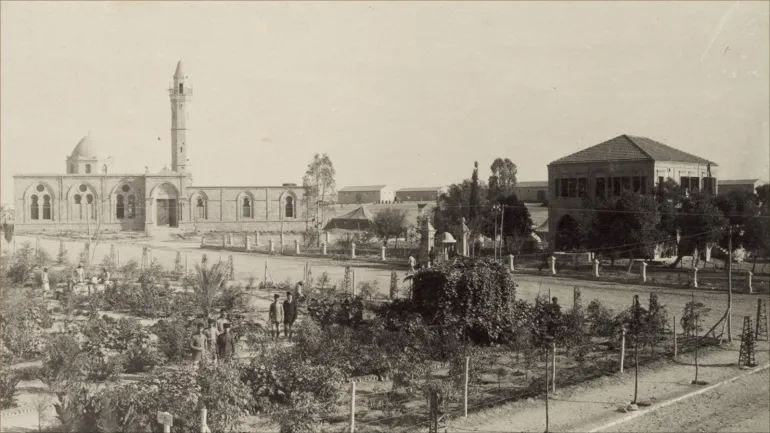
- Damon: On Mount Carmel near Haifa, in a building from the British Mandate period that was used to store tobacco because of its humidity and cold. It was closed and then reopened in 2015 to hold women prisoners. Its cells are small and cold, and its yard is surrounded by bars and mesh, with mesh overhead too. [20]
- Ofer: West of Ramallah, where women are held for interrogation, and from which Khalida Jarrar was released in 2025. [19] [21]
Ironically, Damon, today’s prison for women, stands on the same Mount Carmel above the city from which Sadhij Nassar and Zakia Shmout came.
Israa Jaabis: burns and prison
On 11 October 2015, a gas cylinder exploded in Israa Jaabis’s car near the al-Za’im checkpoint between Jerusalem and Jericho. She suffered burns over 65% of her body, was then arrested and charged with carrying out a deliberate bombing, and was sentenced to 11 years in prison. [16] Of her treatment in prison she said: “During my treatment in the occupation’s prison, I was treated as a terrorist, not as an injured person.” [16] The prison service refused the operations she needed, calling them “cosmetic.” [20] She was released in the truce exchange of November 2023. [16]
Administrative detention: Khalida Jarrar
Administrative detention is detention by military order without an indictment, for renewable six-month periods, based on a “secret file” that neither the detainee nor her lawyer may see. [21] Many women are held this way; most of the women in Damon in 2026 were held on “incitement” charges or in administrative detention. [24]
Among the best known is Khalida Jarrar, a leader in the Popular Front, a former parliamentarian and an advocate for women prisoners. She was arrested at her home in Ramallah on 26 December 2023, her detention was converted to administrative detention, and she spent six months in solitary confinement, leaving it the day before her release on 20 January 2025. [21] After her release she said: “Conditions had never been this harsh,” and “We were beaten in a deliberate attempt to humiliate and degrade us.” [21]
Women prisoners in prisoner exchanges
Prisoner exchanges were a main door to freedom for women prisoners, especially those serving life sentences:
- The “Seagull” exchange (14 March 1979): Twelve Palestinian women were freed, among them Aisha Odeh, who was deported to Jordan. [11] [23]
- The exchanges of the 1980s: Zakia Shmout was freed, and Majda al-Salayma was freed in the “Galilee” exchange (20 May 1985). [7] [8] [11]
- The “video” exchange (October 2009): Twenty women prisoners from the West Bank and Gaza Strip were freed. [11]
- The “Wafa al-Ahrar” exchange (October 2011): Twenty-seven women were freed, some of them deported to Gaza and elsewhere, while other women, Lina Jarbouni among them, were left out of the deal. [12] [15]
- The humanitarian truce exchange (November 2023): Its first phase provided for the release of 150 Palestinian women and children, among them Israa Jaabis. [11] [16]
- The ceasefire agreement (January 2025): Its first phase freed 90 women and one child, among them Khalida Jarrar. [21]
Women prisoners today
In October 2026, the Palestinian Prisoners’ Club estimated the number of prisoners in Israeli prisons at about 9,400. [18] Most women prisoners are held in Damon prison, which held about 90 women in July 2026. [17]
In March and April 2026, the Prisoners’ Club documented ten suppression operations in Damon targeting 88 women: beatings while they lay on the ground with their hands tied behind their backs; overcrowding of up to ten women per room, most sleeping on the floor; the isolation of at least six women; starvation that cost one woman about 30 kg; strip searches the Club described as “humiliating and degrading”; and two women with cancer held without treatment. [24] In July 2026, the Commission of Detainees’ and Ex-Detainees’ Affairs described their conditions as “harsh conditions marked by oppression, hunger and humiliation,” reporting that one woman lost about 14 kg in four months and that pregnant women were held in rooms under 24-hour camera surveillance. [17]
Conclusion
From the Bethlehem detention camp where Sadhij Nassar was held in 1938, to the cell where Zakia Shmout gave birth in 1972, to Damon prison on Mount Carmel today, the Palestinian woman prisoner has borne witness that prison has made no distinction between man and woman, or between girl and mother. And women prisoners have gone on writing, striking, giving birth and teaching inside prison, from Aisha Odeh’s books to Lina Jarbouni’s courses, until their story became a chapter in the story of Palestine itself.
Frequently asked questions about Palestinian women prisoners
Who was the first Palestinian woman prisoner?
Under the Mandate, Sadhij Nassar was the first Palestinian woman detained for her national activity, in 1938. After the 1967 occupation, Fatima Barnawi was the first Palestinian woman prisoner, arrested in October 1967.
Who was Zakia Shmout?
A fighter from Haifa who joined the armed struggle in 1968, was arrested in the early 1970s, and gave birth to her daughter Nadia in her cell on 18 February 1972, the first Palestinian woman prisoner to give birth in an Israeli prison. She died in Algeria in 2014.
Who is Aisha Odeh?
A former prisoner and writer from Deir Jarir near Ramallah who was arrested in 1969, freed in the 1979 exchange, and wrote about her experience in Dreams of Freedom and The Price of the Sun.
How many Palestinian women have been arrested since 1967?
In 2010, the Ministry of Prisoners’ Affairs estimated that about 15,000 Palestinian women had been arrested since 1967, more than 3,000 of them in the First Intifada and about 1,500 in the Second Intifada.
Who is the youngest Palestinian woman prisoner?
Dima al-Wawi, who was arrested in 2016 at the age of twelve; her lawyer called her the youngest prisoner in Palestinian history.
Who is the dean of the Palestinian women prisoners?
Lina Jarbouni of Arraba al-Battuf, who spent 15 years in prison between 2002 and 2017 and represented the women prisoners before the prison administration.
What is the bosta?
A closed iron vehicle that takes male and female prisoners to courts and prisons; its trips can run from dawn until night without adequate food or a toilet.
Where are Palestinian women prisoners held today?
Most are held in Damon prison on Mount Carmel, which held about 90 women in July 2026, in conditions the Commission of Detainees’ Affairs described as harsh.
Can a woman prisoner keep her child with her?
A child may stay with an imprisoned mother until the age of two, after which it is taken from her and handed to the family.
Sources and references
Arabic-language sources are listed with translated titles.
- Ellen Fleischmann, “The Emergence of the Palestinian Women’s Movement, 1929–39,” Journal of Palestine Studies, vol. 29, no. 3, Spring 2000.
- “Sadhij Nassar,” Interactive Encyclopedia of the Palestine Question, Institute for Palestine Studies.
- Tuqa al-Ani, “Immortal Names: Palestinian Women and the Struggle against Occupation,” Noon Post, 23 July 2021.
- “A Rebellious National Figure: Official and Popular Mourning for Fatima al-Barnawi, First Woman Prisoner of the Contemporary Palestinian Revolution,” Al Jazeera Net, 4 November 2022.
- Page on Fatima Barnawi, Institute for Palestine Studies.
- Zeinab Khalil Odeh, “15,000 Palestinian Women Prisoners Arrested,” Diwan al-Arab, 8 March 2010, citing a report by the Ministry of Prisoners’ and Ex-Prisoners’ Affairs.
- Nabil al-Sahli, “Zakia Shmout and the Search for ‘Umm Masoud’: The First Palestinian Woman Prisoner to Give Birth in the Occupation’s Prisons,” Al-Quds Al-Arabi, 18 April 2021.
- Maha Shahwan, “‘Hands and Feet Shackled’: On Giving Birth in the Occupation’s Prisons,” Noon Post, 30 August 2021.
- Maha Shahwan, “How Did Palestinian Women Fighters Face the Horrors of the Nakba?” Noon Post, 5 May 2023.
- Khulood Fawarneh Sirriyeh, “Honoring the Fighter Aisha Odeh,” Diwan al-Arab, 24 July 2017.
- “Hamas Seeks to ‘Empty the Prisons’: The 10 Most Prominent Prisoner Exchanges between the Resistance and the Occupation,” Arabi Post, 22 November 2023.
- Diaa al-Kahlout, “A Call to Free the Remaining Women Prisoners,” Al Jazeera Net, 19 October 2011.
- Yousef Sami, “Defiance and Strike: Palestine’s Prisoners Wage a New Battle for Freedom,” Noon Post, 8 March 2023.
- “The Main Strikes and Demands of the Palestinian Prisoners’ Movement,” Al Jazeera Net, 17 April 2017.
- “Lina Jarbouni: Dean of the Palestinian Women Prisoners,” Al Jazeera Net, 16 April 2017.
- Asil al-Jundi, “Freed Prisoner Israa Jaabis to Al Jazeera Net: My Burns Are Deep and Visible, and the Story of My Pain Goes On,” Al Jazeera Net, 29 November 2023.
- “Prisoners’ Commission: Women Prisoners in ‘Damon’ Suffer Oppression, Hunger and Humiliation,” Raya News Agency, 20 July 2026.
- “Prisoners’ Club: About 9,400 Prisoners in Occupation Prisons amid Escalating Torture and Medical Neglect,” Donia al-Watan, 14 October 2026.
- “Palestine’s Women Prisoners: Human Suffering inside the Occupation’s Prisons,” Al Jazeera Net, 17 April 2017.
- Aziza Nofal, “A Solidarity Campaign: Palestinian Women Prisoners in Cycles of Violence and Deprivation,” Al Jazeera Net, 25 November 2021.
- “Khalida Jarrar: We Were Beaten, and Israel Does Not Treat Prisoners as Human Beings,” Al Jazeera Net, citing Anadolu Agency, 21 January 2025.
- “Youngest Palestinian Woman Prisoner Released after Two Months in an Israeli Prison,” Al-Quds Al-Arabi, 24 April 2016.
- “Aisha Odeh,” Ibn Rushd Prize for Freedom of Thought 2015, Ibn Rushd Fund.
- Report on testimonies of women prisoners in Damon prison, citing the Palestinian Prisoners’ Club, Euronews Arabic, 11 May 2026.
- “Fatima Barnawi, Founder of Palestinian Women’s Police and Veteran Prisoner, Dies at 83,” Middle East Eye, November 2022.
More from the archive
 Download Our Palestine App
The whole archive in the palm of your hand: depopulated villages, the Nakba, the massacres and Al-Aqsa — free, with no ads to erase the story.
Comments
No comments yet — be the first to write one.
Add your comment
Name and email are optional. Comments appear after review.