Ali Hassan Salameh, the "Red Prince": Life and 1979 Assassination
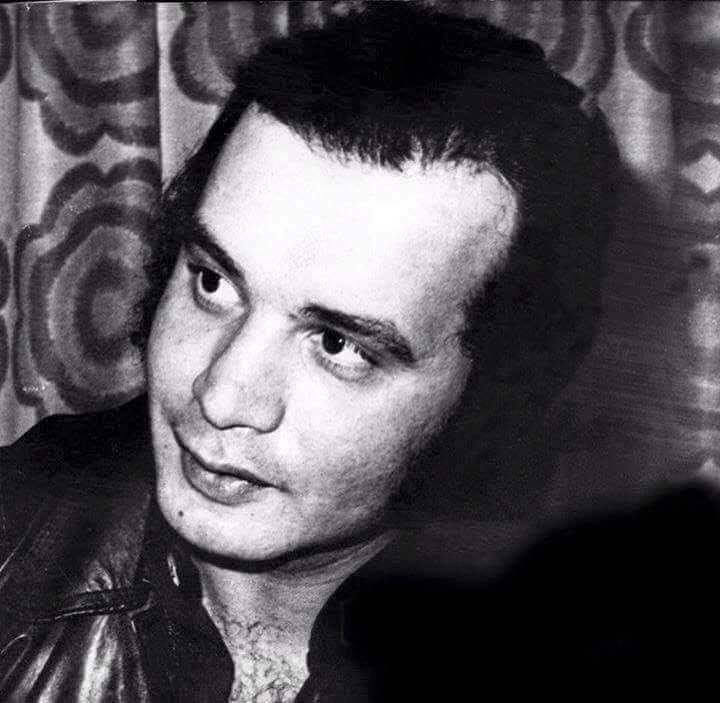
Ali Hassan Salameh, “Abu Hassan” (1940/1941–1979), was a Palestinian security chief, son of commander Hassan Salameh, founder of Force 17 to protect Yasser Arafat, and the man the occupation placed at the top of its assassination list and dubbed “the Red Prince.” The Mossad hunted him for seven years, killed an innocent waiter in Norway in his place, and finally assassinated him with a car bomb in Beirut on 22 January 1979, together with eight of his bodyguards and passers-by. [1] [2] [3] [4]
This is the sixth article in the series “Assassinated leaders of the Palestinian revolution,” after the articles on Abu Iyad, Abu Jihad, Ghassan Kanafani, the Verdun operation and Majed Abu Sharar.
Who was Ali Hassan Salameh?
Ali Hassan Salameh was one of the Palestinian revolution’s leading security men: deputy head of the Rasd, Fatah’s intelligence service, head of Yasser Arafat’s security and founder of Force 17 to protect him [1] [5] [2]. He exposed Mossad agents in the Arab world, especially in Lebanon, and built ties with Western intelligence services [2] [5]. The occupation accused him of involvement in the 1972 Munich operation and pursued him for years until it killed him [3] [1].
Ali Hassan Salameh at a glance
| Item | Details |
|---|---|
| Name | Ali Hassan Salameh, “Abu Hassan” [2] [1] |
| Nickname | “The Red Prince,” coined by Golda Meir [2] [1] |
| Born | 1 April 1940/1941; family from the village of Qula, Lydda district [2] [1] [4] |
| Father | Commander Hassan Salameh, a leader of the 1936 revolt and the Holy Jihad Army [1] [5] |
| Roles | Deputy head of the Rasd intelligence service, head of Arafat’s security, founder of Force 17 [1] [5] [4] |
| Wife | Georgina Rizk, Lebanese Miss Universe (married 1978) [1] [2] |
| Assassinated | 22 January 1979, Madame Curie Street, Beirut, by a car bomb [2] [4] [3] |
| Others killed | Four of his bodyguards and four passers-by [3] [4] |
| Buried | Martyrs’ Cemetery, Beirut [4] |
Timeline
| Year | Event |
|---|---|
| 1940/1941 | Born; family from Qula, Lydda district [2] [1] |
| 1948 | His father Hassan Salameh killed at the battle of Ras al-Ain [5] |
| 1963 | Commerce degree from Cairo University; joins Fatah [1] [4] |
| 1965 | Heads the Palestine Students’ Union in Kuwait [1] [2] |
| 1968 | Security course in Cairo, then deputy head of the Rasd [1] [2] |
| 1970 | Head of Arafat’s security; leaves Jordan with him [1] [5] |
| 1970s | Founds Force 17 in Lebanon [1] [4] |
| 1973 | The Lillehammer killing in Norway [3] [1] |
| 1974 | Secures Arafat’s appearance at the UN [3] |
| 1978 | Marries Georgina Rizk [1] |
| 1979 | Assassinated in Beirut on 22 January [2] [4] |
Son of commander Hassan Salameh
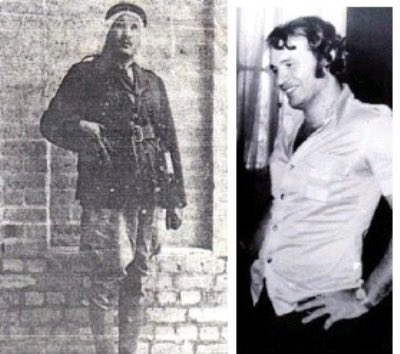
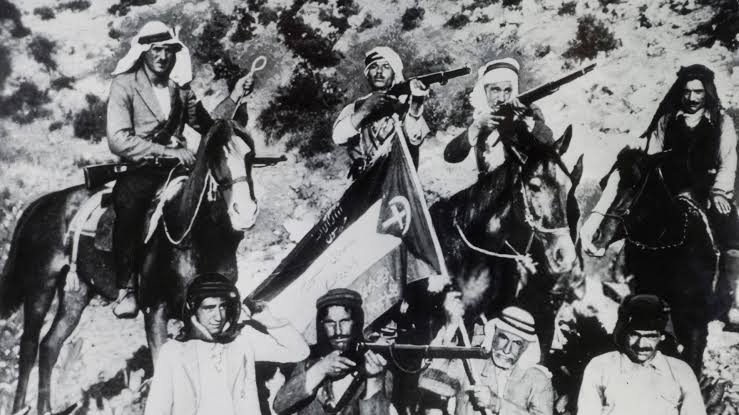
Ali Hassan Salameh’s family came from the village of Qula in the Lydda district [2] [1]. His father, Sheikh Hassan Salameh, was one of the leading commanders of the 1936–1939 revolt, led a sector of the Holy Jihad Army and was a comrade of Abd al-Qadir al-Husseini [2] [5]. The father had left Palestine for Iraq in 1939, so some sources say Ali was born there on 1 April 1941, while others say he was born in Qula in 1940 [5] [1] [2] [4]. His father was killed commanding at the battle of Ras al-Ain in the 1948 war; the boy barely knew him and grew up on other people’s stories of him [5].
After the Nakba the family briefly took refuge in Lebanon, then returned to Ramallah, where Ali finished secondary school [1] [4].
From Cairo to Fatah and the Rasd
Ali studied languages in Switzerland, lived in Germany, then earned a commerce degree from Cairo University in 1963 [1] [4]. That year Fatah’s founders visited him and invited him to join, and he did [1] [5]. In 1964 he moved to Kuwait, and in 1965 headed the Palestine Students’ Union there and the PLO’s popular organisation department [1] [2].
After the 1967 defeat he was sent on a security course in Cairo in 1968, then became deputy head of the central Rasd, Fatah’s intelligence service, based in Amman [1] [5] [2]. He is credited with exposing several Mossad agents in the region, among them the spy Amina al-Mufti [2].
Founder of Force 17 and Arafat’s guardian
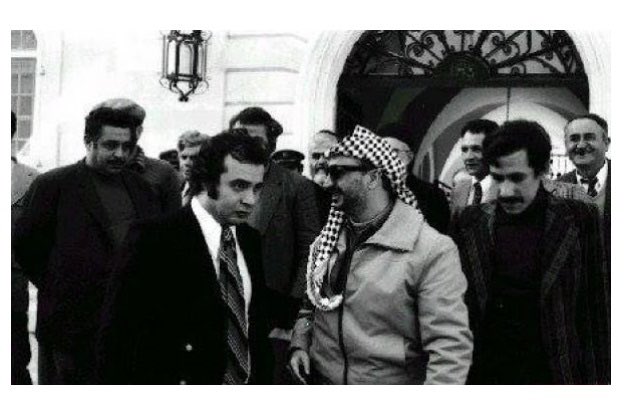
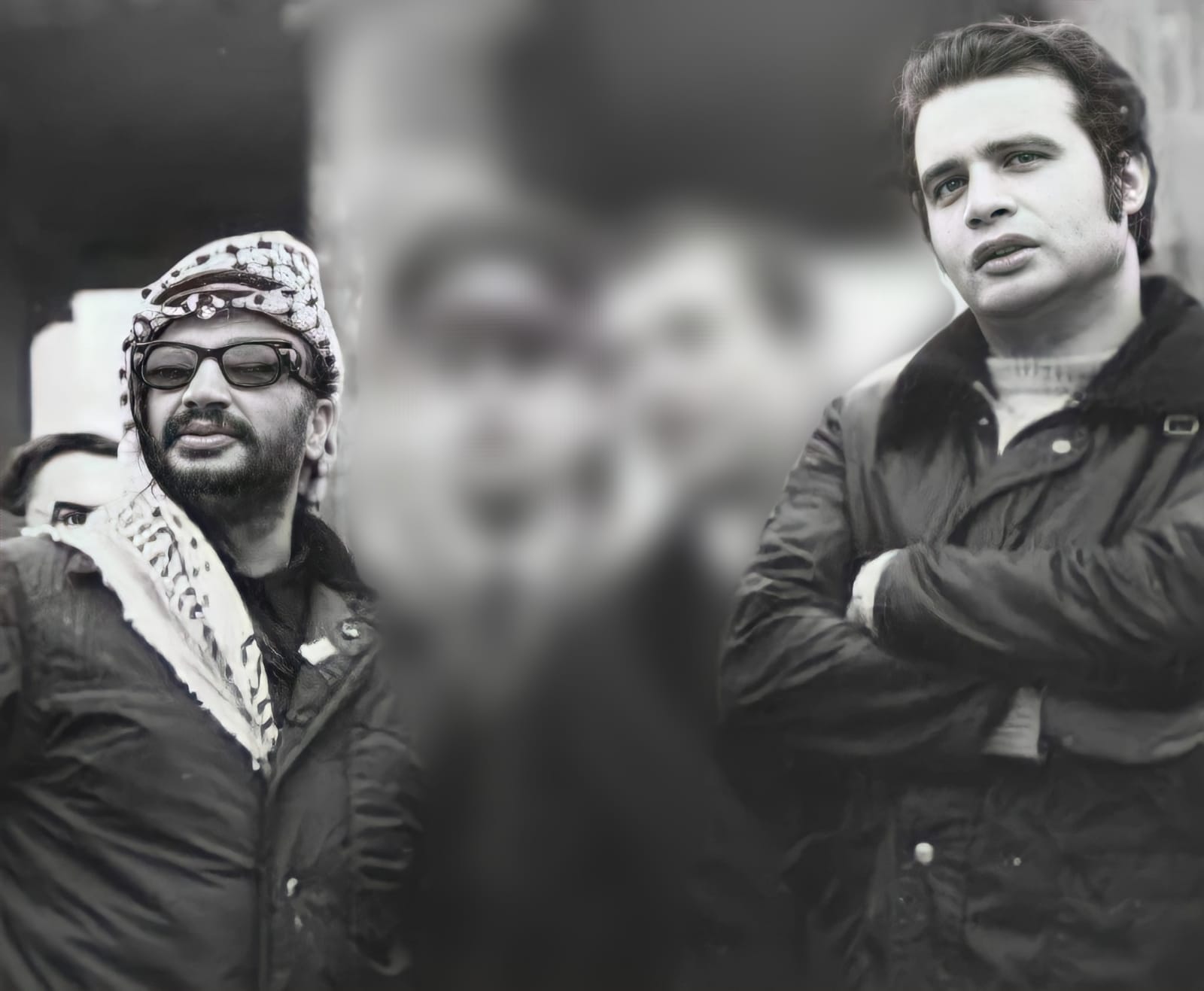
In September 1970 Ali Hassan Salameh was responsible for Yasser Arafat’s security and left Jordan with him [1] [5]. After the revolution’s leadership moved to Lebanon he founded Force 17, which first protected Arafat and later became one of the main Palestinian security services [1] [4].
In Lebanon he worked to keep the PLO on good terms with all parties, helped secure Arafat’s appearance at the UN podium in New York in November 1974, and helped evacuate US citizens from Beirut in 1975 [5] [3]. He opened channels with Western intelligence services, including the CIA [1] [5] [3].
The “Red Prince”: top of the Mossad’s list
The occupation’s prime minister Golda Meir dubbed him “the Red Prince” and put him at the top of the assassination list after the Munich operation of September 1972 [1] [2]. The occupation accuses him of helping found the “Black September” organisation and planning Munich, while Abu Daoud, one of those responsible for the operation, denied in his 1999 memoirs that Salameh planned it [5] [1].
After Munich the Mossad waged a broad campaign of assassinations in Europe that killed 13 Palestinian figures [5], part of the same war that killed Ghassan Kanafani and the leaders in the Verdun operation.
The Lillehammer killing, 1973
On 21 July 1973 a Mossad team in the Norwegian town of Lillehammer, believing it had found Ali Hassan Salameh, shot dead Moroccan waiter Ahmed Bouchikhi, an innocent man, [3] [1]. The mistake was exposed, several Mossad agents were arrested and a diplomatic crisis erupted [4] [5]. The killing was stark proof that the Israeli assassination campaign did not shrink from killing innocents.
The intelligence war
The confrontation between Ali Hassan Salameh and the Mossad was not one-sided. According to WAFA, from 1970 he led special operations against Israeli intelligence from Lebanon, and was credited with the parcel bombs sent from Amsterdam to Mossad agents in Europe, among them a Mossad officer in London [2]. WAFA also credits him with exposing Mossad agents in the Arab world, especially Lebanon, and dismantling spy networks [2].
The Mossad, for its part, tried to kill him several times before succeeding; Al-Ahram says the final operation followed five failed attempts [6] [2]. Al-Hadatha notes that his link to the operations attributed to him was never proven, and that he is legally innocent of them [4].
The assassination of Ali Hassan Salameh: Beirut, 22 January 1979
In 1978 Ali Hassan Salameh married Georgina Rizk of Lebanon, a former Miss Universe; he had earlier married Nishrawan Sharif Mansour, with whom he had two sons, Hassan and Osama [1] [2]. That same year a woman carrying a British passport in the name of “Erika Chambers” arrived in Beirut under cover of charity work, rented a flat overlooking the route he took daily and monitored his movements [1] [4] [5]. He had been warned of a plan to kill him but refused to change his routine [5].
At about 3:35 pm on Monday 22 January 1979, as his convoy turned from the Verdun area onto Madame Curie Street, a Volkswagen packed with about 100 kilograms of explosives was detonated by remote control [4] [3]. He was taken to the American University of Beirut hospital and died on the operating table [4] [1]. Four of his bodyguards and four passers-by were killed with him, including a British nurse named Susan Wareham, and at least 16 others were wounded [3] [4] [7]. His wife Georgina was pregnant when he was killed [1].
On 24 January 1979 Yasser Arafat and some 20,000 Palestinians followed his funeral, and he was buried in the Martyrs’ Cemetery in Beirut [4].
Videos
“Political Crime: Ali Hassan Salameh” (in Arabic) [8]
“Hunting the Red Prince: Ali Hassan Salameh” [9]
Al Jazeera English’s film “Israel’s Hunt for the Red Prince” can be watched on its website [10].
Conclusion
The son of a commander killed in 1948 became the guardian of the revolution’s leader and its watchful eye. The occupation not only hunted him for seven years; it killed an innocent waiter in Norway on the way, then blew up a busy Beirut street to reach him. The assassination of Ali Hassan Salameh is one link in a long chain targeting the Palestinian people’s leaders everywhere.
Also in this series: Abu Iyad, Abu Jihad, Ghassan Kanafani, the Verdun operation, Majed Abu Sharar.
Frequently asked questions about Ali Hassan Salameh
Who was Ali Hassan Salameh?
A Palestinian security chief, son of commander Hassan Salameh and founder of Force 17 to protect Yasser Arafat, assassinated by the Mossad in Beirut in 1979.
Why was Ali Hassan Salameh called the Red Prince?
Golda Meir gave him the name when she put him at the top of the assassination list after the Munich operation.
When and how was Ali Hassan Salameh killed?
On 22 January 1979, by a car bomb the Mossad detonated by remote control on Madame Curie Street in Beirut.
What was the Lillehammer affair?
In July 1973 a Mossad team killed Moroccan waiter Ahmed Bouchikhi in Norway, mistaking him for Ali Hassan Salameh.
Who was Ali Hassan Salameh’s wife?
Georgina Rizk, Lebanon’s Miss Universe, whom he married in 1978.
Who was Hassan Salameh, Ali’s father?
One of the leading commanders of the 1936–1939 revolt and the Holy Jihad Army, killed at the battle of Ras al-Ain in the 1948 war.
What is Force 17?
A security unit founded by Ali Hassan Salameh in Lebanon, initially responsible for protecting Yasser Arafat.
Where is Ali Hassan Salameh buried?
In the Martyrs’ Cemetery in Beirut.
Sources and references
Arabic-language sources are listed with translated titles.
- “‘The Red Prince’ Ali Hassan Salameh: The First to Lead Yasser Arafat’s Personal Guard,” Al Jazeera Encyclopedia, 9 February 2024.
- “Ali Hassan Salameh,” Pioneers, Palestinian National Information Center (WAFA).
- “How Did the Mossad Assassinate Abu Hassan Salameh?” Political Crime, Al Jazeera, 5 August 2017.
- “By Car Bomb: The Mossad Assassinates the ‘Red Prince’ Outside Georgina Rizk’s Home in Beirut,” Al-Hadatha, 22 January 2023.
- “Abu Hassan Salameh: Octopus of the Palestinian Resistance and Nemesis of the Mossad,” Al Jazeera Documentary, 16 June 2019.
- Rasha Amer, “Israel’s Most Prominent Assassinations of Palestinian Leaders: Kill First, Then Think,” Al-Ahram Gate, 24 January 2024.
- UK Foreign Office file: “Assassination of Abu Hassan, Security Chief of the PLO, and Other Officials, Including Death of Susan Wareham, UK National, in Explosion, 22 January 1979”.
- “Political Crime: Ali Hassan Salameh,” YouTube.
- “Hunting the Red Prince: Ali Hassan Salameh,” YouTube.
- “Israel’s Hunt for the Red Prince, Ali Hassan Salameh,” Al Jazeera World, Al Jazeera English, 12 September 2018.
Photo gallery
More from the archive
 Download Our Palestine App
The whole archive in the palm of your hand: depopulated villages, the Nakba, the massacres and Al-Aqsa — free, with no ads to erase the story.
Comments
No comments yet — be the first to write one.
Add your comment
Name and email are optional. Comments appear after review.