
Mar Saba Monastery
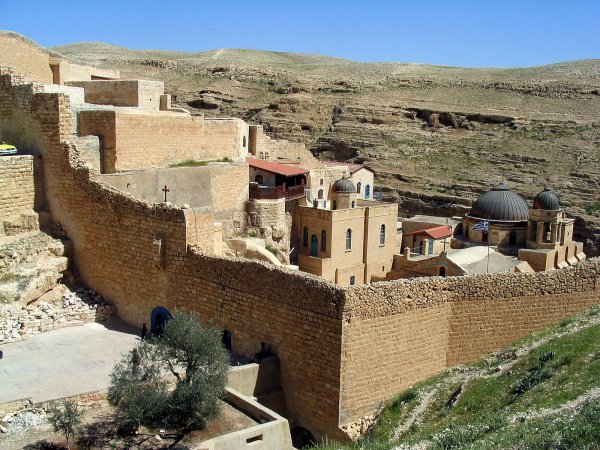
Mar Saba Monastery
Mar Saba Monastery: 1,500 Years of Monastic Life in the Wilderness East of Bethlehem
Mar Saba Monastery (Dayr Mar Saba), the Greek Orthodox Great Lavra of Saint Sabbas, clings to the cliffs of the Kidron Valley (Wadi al-Nar) near the town of al-Ubeidiya, in the desert east of Bethlehem. Founded in 483 CE by the monk Saint Sabbas, it is one of the oldest continuously inhabited monasteries in the world. Built tier upon tier into the rock, it holds the body of its founder and was home to Saint John of Damascus. It is famous for its ancient rules: women may not enter its main compound, its monks keep away from modern comforts, and, according to tradition, apples are not eaten there. This guide covers its history, architecture, traditions and situation today.
Quick Facts About Mar Saba Monastery
| Arabic name | دير مار سابا |
|---|---|
| Official name | The Great Lavra of Saint Sabbas the Sanctified |
| Location | Kidron Valley (Wadi al-Nar), near al-Ubeidiya, east of Bethlehem |
| Denomination | Greek Orthodox Patriarchate of Jerusalem |
| Founded | by Saint Sabbas |
| Founder's dates | Saint Sabbas, 439–532 CE |
| Relics | Body of Saint Sabbas, in a glass case in the main church |
| Notable resident | Saint John of Damascus (676–749) |
| Monks today | About 15 |
| Women | Not allowed in the main compound; may enter the Women's Tower |
Saint Sabbas: The Name Behind the Monastery
Saint Sabbas the Sanctified (Mar Saba in Arabic, "Mar" meaning "saint") was born in Cappadocia in 439 CE and came to Palestine as a young monk. After years as a hermit in the caves of the Kidron Valley, he gathered disciples around him and in 483 founded the Great Lavra, a community of monks living in cells and caves around a central church. He went on to found several other monasteries in the Judean wilderness and became one of the great figures of Eastern monasticism. He died in 532 CE.
Location
The monastery overlooks the Kidron Valley, known locally as Wadi al-Nar, in the desert lands of the town of al-Ubeidiya (Arab Ibn Ubeid), east of Bethlehem, about halfway between Bethlehem and the Dead Sea and some 15–20 km from the city centre. Reaching it means passing through al-Ubeidiya and driving several kilometres along winding roads through breathtaking views of desert hills and mountains.
History Through the Ages
- Foundation (483 CE): Saint Sabbas founded the Great Lavra on the eastern side of the gorge, and the community soon moved to the western side, where a church was built in 486 and consecrated in 491. At its height the monastic movement Sabbas led is said to have gathered thousands of monks in the Judean wilderness.
- Persian invasion (614): The Persians who conquered Palestine attacked the monastery, killing monks and causing destruction.
- Saint John of Damascus: The theologian and hymn-writer John of Damascus (676–749), a major and, in his time, controversial religious figure, lived and wrote at the monastery, defending the veneration of icons. His tomb lies in a cave beneath the monastery.
- Raids (8th–11th centuries): The monastery suffered several raids, including one in 797 in which twenty monks were killed.
- Crusader period: In the 12th century the Crusaders carried the body of Saint Sabbas to the West, where it remained in Italy for centuries.
- 1965: Pope Paul VI returned the saint's relics to the monastery, where they are kept, embalmed, in a glass case.
- Modern period: The monastery was rebuilt and restored several times, notably in the 19th century, and has remained continuously inhabited by Greek Orthodox monks.
Architecture: A Monastery Carved Into the Cliff
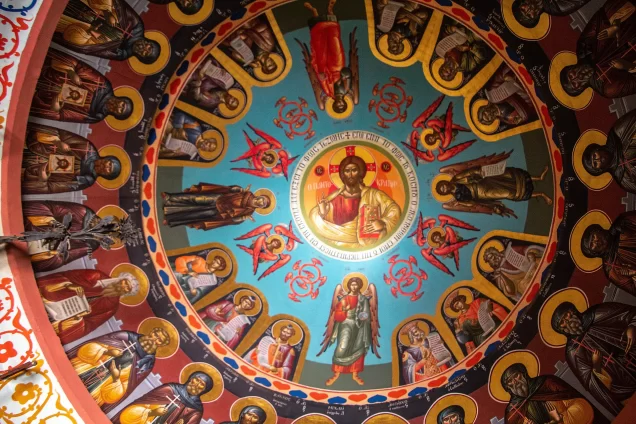
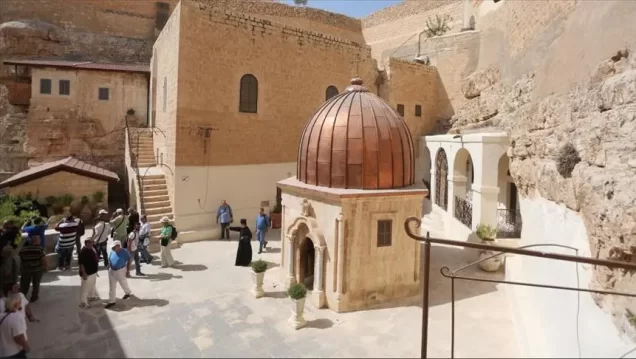
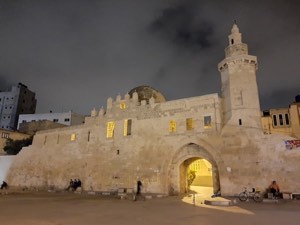
The monastery is built tier upon tier on the steep slope of a mountain belonging to the ranges that run through the southern West Bank, so that it almost seems carved into the rock. Its walls, domes, terraces and staircases descend the cliff face above the gorge, symbolising the hardship of the monastic life. The compound includes the main church, where the body of Saint Sabbas rests, the chapel of Saint Nicholas in a cave, the tomb of Saint Sabbas in the courtyard, monks' cells, a cemetery for the monks, a spring and two towers. One of these, the Women's Tower, stands outside the main walls near the entrance.
Rules and Traditions
No Entry for Women
The monastery keeps many of its ancient traditions, chief among them restrictions on women entering the main compound. Women can reach the entrance, stand at the door or look at it from outside, and receive water from its spring or some of its food as a blessing, but they may not go inside. Media reports have attributed the rule to a belief that an earthquake will strike the monastery if a woman enters it. The Women's Tower, near the main entrance, is the only building women may enter.
No Apples
According to Asharq Al-Awsat newspaper in 2010, one of the monastery's rules forbids eating apples. The reason, the story goes, is that Saint Sabbas once wished to eat an apple out of season, but saw this as gluttony and refrained.
No Electricity or Modern Communications
The monks have long refused to connect the monastery to electricity, water networks or modern means of communication, including the internet. "We do not want anything to disturb our connection with God. Electricity, television and the internet would take our time and distract our minds, and so our connection with God," one resident explained to the media in 2010.
Monastic Life Today
About fifteen Greek monks live in the monastery today. They serve it and withdraw from the trappings of modern life, using simple, traditional means to run their daily affairs, and their days are devoted to prayer, liturgy and work. Clergy come from all over the world to experience its austere monastic life, and many visitors come to see the site and enjoy the scenery, not only Christians coming to pray. The monastery is closed to visitors on Wednesdays and Fridays.
The Monastery in 2026
The monastery remains active and is regarded by Palestinians as part of their national heritage. Palestinian officials have visited it repeatedly in 2024 and 2025, pledging to work with state institutions to protect it, its property, its rights and its privacy, and to keep it a destination for pilgrims from around the world. But tourism to the Bethlehem area has collapsed since the genocide war on Gaza began in October 2023, with Israeli checkpoints and closures restricting movement across the West Bank, and the desert around the monastery, in an area largely under Israeli control, has seen rising settler activity against Palestinian Bedouin communities.
UNESCO and Legal Protection
When the Palestinian Ministry of Tourism and Antiquities prepared its tentative list of sites nominated for UNESCO World Heritage in 2016, Mar Saba Monastery headed the list of twenty sites. As part of occupied territory, it is protected by the Fourth Geneva Convention and the 1954 Hague Convention for the Protection of Cultural Property in the Event of Armed Conflict.
Frequently Asked Questions About Mar Saba Monastery
Where is Mar Saba Monastery?
In the Kidron Valley (Wadi al-Nar), near the town of al-Ubeidiya, in the desert east of Bethlehem, about halfway to the Dead Sea.
How old is Mar Saba Monastery?
Saint Sabbas founded it in 483 CE, more than 1,500 years ago, making it one of the oldest continuously inhabited monasteries in the world.
Can women visit Mar Saba Monastery?
Women may not enter the main compound, but they can come to the entrance and enter the Women's Tower nearby.
Why are apples forbidden at Mar Saba?
According to tradition, Saint Sabbas once wished to eat an apple out of season but refrained, seeing it as gluttony, and the monastery has kept the custom ever since.
How many monks live at Mar Saba today?
About fifteen Greek Orthodox monks, who live simply and keep away from modern technology.
Conclusion
For more than fifteen centuries, the bells of Mar Saba have rung over the silent gorge of the Kidron, where monks still pray as Saint Sabbas did. Carved into the cliff, guarded by its ancient rules and by the people of al-Ubeidiya around it, the monastery is one of the treasures of Palestine's Christian heritage and a living witness to the spiritual history of its wilderness.
Photo gallery





More from the archive
 Download Our Palestine App
The whole archive in the palm of your hand: depopulated villages, the Nakba, the massacres and Al-Aqsa — free, with no ads to erase the story.
Download Our Palestine App
The whole archive in the palm of your hand: depopulated villages, the Nakba, the massacres and Al-Aqsa — free, with no ads to erase the story.



Comments
No comments yet — be the first to write one.
Add your comment
Name and email are optional. Comments appear after review.