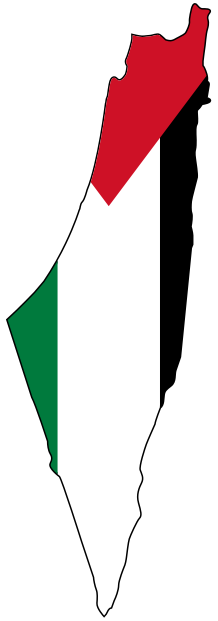
The Haifa Clock Tower:

The Haifa Clock Tower: The Ottoman Tower That Survived the Demolition of the Old City
The Haifa Clock Tower is a six-storey Ottoman tower of kurkar stone, built in 1901 at the heart of the Old City of Haifa. It stands in front of the historic al-Jarina Mosque, beside the railway station and the Saraya built by Zahir al-Umar. It was one of the clock towers the Ottomans raised in the cities of Palestine to mark the 25th anniversary of Sultan Abdul Hamid II's accession. After Haifa fell in April 1948 and some 95% of its Arab people were expelled, the Israeli authorities demolished most of the Old City, including the Saraya. The tower survived, one of the last architectural witnesses to Arab Haifa. This guide covers the tower's history, its surroundings and the story of its city.
Quick facts
| Arabic name | برج الساعة – حيفا |
|---|---|
| Location | Centre of Haifa's Old City, in front of the al-Jarina Mosque |
| Built | 1901 CE |
| Period | Ottoman, under Sultan Abdul Hamid II |
| Occasion | 25th anniversary of Sultan Abdul Hamid II's accession |
| Storeys | Six, in kurkar stone |
| Clocks | Four on the fourth floor; one modern clock remains |
| Top | A dome crowned with a crescent |
| Neighbours | Al-Jarina Mosque, the Saraya (demolished 1949), the railway station |
| Condition | Still standing |
Location: the heart of the Old City
The tower stands in the centre of the Old City of Haifa, near the old port, in front of the historic al-Jarina Mosque and beside the railway station and the Saraya. The square was the centre of government, trade and religious life in the city.
History and construction
- New Haifa: Zahir al-Umar al-Zaydani rebuilt Haifa around 1761 and built the Saraya as the seat of government. After his defeat in 1775 the Ottomans built the al-Jarina Mosque in the square opposite.
- 1901: the clock tower was built at the heart of the Old City, one of the clock towers the Ottomans raised in Palestine's cities, most of them for the 25th anniversary of Sultan Abdul Hamid II's accession.
- Early 20th century: the tower came as Haifa was rising, with the opening of the Hijaz Railway station there in 1904 and its growth into a major port and commercial city.
Architecture
The tower has six storeys built of kurkar, the coastal sandstone typical of Palestine's coastal cities. Its fourth floor held four clocks facing the four directions, of which only one, a modern clock fitted later, survives today. The tower is topped by a dome crowned with a crescent.
Around the tower: al-Jarina, the Saraya and the station
- Al-Jarina Mosque: built by the Ottomans around 1775 after their victory over Zahir al-Umar. It is also called the "Great Mosque" and the "Mosque of Victory", and its popular name "al-Jarina" comes from the word for a threshing floor or open square. The funeral prayer for Sheikh Izz al-Din al-Qassam was held there in 1935, after the British surrounded the Istiqlal Mosque. The mosque still stands and receives worshippers despite neglect and threats of demolition.
- The Saraya: built by Zahir al-Umar around 1761, with two floors above a basement. It housed the seat of government, customs, finance and the municipality, and its basement was the city jail. Ibrahim Pasha restored it in 1831, and the British used it as their seat of government after 1918. It was demolished in 1949, making Haifa's the only Saraya among those of Palestine's cities that no longer stands, and a government tower block now occupies its site.
- The railway station: opened by the Ottomans in 1904 on the Hijaz Railway line linking Haifa with Damascus and Medina.
Ottoman clock towers in Palestine
The Haifa tower was one of several Ottoman clock towers in the cities of Palestine. Others include the Jaffa tower in Clock Square, the Acre tower above Khan al-Umdan, the Nablus tower at Bab al-Saha, the Safad tower near the Saraya, and the Jerusalem tower above Bab al-Khalil, which the British Mandate removed in 1922. Most of these towers still stand, witnesses to a network of modern Palestinian cities at the start of the 20th century.
Haifa, the Nakba and the demolition of the Old City
In April 1948, as the British announced their withdrawal from the city on 21 April, Zionist militias began carrying out their plan to seize Haifa. The city fell about three weeks before the declaration of the State of Israel. Of some 75,000 Palestinians, only about 4,000 remained; more than 95% of its people were expelled. The city's historic centre was then almost entirely destroyed. The Saraya and most of the Old City were demolished in 1949 in the name of "development", and most of the Wadi al-Salib neighbourhood was razed. A Haifa historian says only 20% of the city's original houses still stand, and they are now being sold to property companies that demolish them or renovate them as luxury real estate for the Israeli market.
The tower today (2026)
Amid the modern buildings raised on the ruins of the Old City, the Clock Tower still stands opposite the al-Jarina Mosque, one of the most important surviving architectural landmarks in Haifa. Only the name of the street, which still bears its name, recalls the Saraya that once stood beside it. The tower and al-Jarina together are the last remnants of the heart of Arab Haifa, whose memory the city's Palestinians, some 9% of its population today, strive to preserve.
Frequently asked questions
Where is the Haifa Clock Tower?
In the centre of Haifa's Old City, in front of the al-Jarina Mosque, near the railway station and the site of the Saraya.
When was the Haifa Clock Tower built?
In 1901, under the Ottoman Sultan Abdul Hamid II.
How many storeys does the clock tower have?
Six storeys of kurkar stone. The fourth floor held four clocks, of which one remains, and the tower is topped by a dome and crescent.
Was the clock tower demolished with the Old City?
No. The Israeli authorities demolished most of the Old City and the Saraya in 1949, but the tower survived.
What stands next to the Haifa Clock Tower?
The al-Jarina Mosque, built around 1775, where the funeral prayer for Sheikh Izz al-Din al-Qassam was held, and the site of the Saraya built by Zahir al-Umar and demolished in 1949.
Conclusion
The Clock Tower escaped the bulldozers that wiped out Haifa's Old City and still stands opposite the al-Jarina Mosque, like a guardian of what remains of the city's memory. From the top of its six storeys it looks over a Haifa whose face has changed, a witness that it was, and remains in the memory of its people, a Palestinian city.
More from the archive


 Download Our Palestine App
The whole archive in the palm of your hand: depopulated villages, the Nakba, the massacres and Al-Aqsa — free, with no ads to erase the story.


Comments
No comments yet — be the first to write one.
Add your comment
Name and email are optional. Comments appear after review.