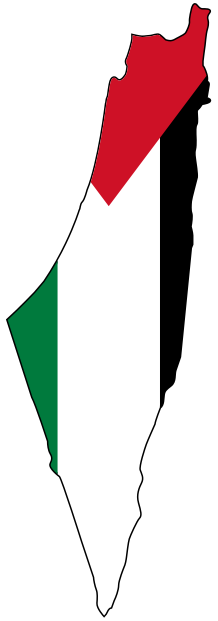
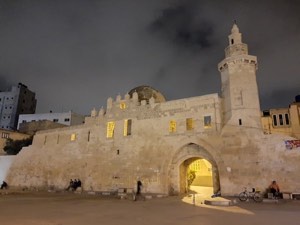
Al-Maghribi Mosque (al-Sawad Mosque) in Gaza

Al-Maghribi Mosque (al-Sawad Mosque) in Gaza: A Mamluk Zawiya in al-Daraj Under the Genocide War
Al-Maghribi Mosque, also known as the al-Sawad Mosque, is a small historic mosque in the al-Daraj neighbourhood of the old city of Gaza, in the Bani Amer quarter. It was founded in the 9th century AH (15th century CE) in the Mamluk period, with a roof of palm fronds, and the Gazan scholar Sheikh Muhammad ibn al-Maghribi made it his zawiya until it took his name; he was buried in a cave beneath its iwan after his death in 864 AH. The mosque stands at the heart of al-Daraj, one of Gaza's oldest neighbourhoods and one of the most heavily bombed during Israel's genocide war on the Strip since October 2023, which has destroyed hundreds of mosques and most of the city's archaeological sites. This guide covers the mosque's history, its sheikh, and what has befallen its neighbourhood.
Quick facts
| Arabic name | مسجد المغربي (مسجد السواد) – غزة |
|---|---|
| Other names | Al-Sawad Mosque |
| Location | Bani Amer quarter, al-Daraj, old city of Gaza |
| Founded | 9th century AH (15th century CE) |
| Period | Mamluk |
| Zawiya of | Sheikh Muhammad ibn al-Maghribi of Gaza |
| Sheikh's death | 864 AH (about 1460 CE) |
| Original roof | Palm fronds |
| Restorations | 13th century AH, and after the First World War |
| War | Stands in al-Daraj, much of which was destroyed in the genocide war |
The name
The mosque was known in the past as the "al-Sawad Mosque", and later became known as the "al-Maghribi Mosque" after Sheikh Muhammad ibn al-Maghribi made it his zawiya, where he taught and worshipped, until it became famous under his name.
Location
The mosque stands in the Bani Amer quarter of the al-Daraj neighbourhood in the heart of the old city of Gaza. Al-Daraj is one of the city's oldest neighbourhoods, named in the Ottoman period for its many steps (daraj) and sloping ground, and known in the past as Bani Amer and al-Burjaliyya; it is home to the Great Omari Mosque, Qasr al-Basha, the Sayyid Hashim Mosque and the Qaysariyya market.
Sheikh Muhammad ibn al-Maghribi
The zawiya's founder was Muhammad ibn Muhammad ibn Mas'ud al-Shamsi, Abu Abdullah ibn al-Zayn al-Ghazzi al-Hanafi, known as Ibn al-Maghribi. Born in Gaza around 1418 CE, he memorised the Qur'an, studied with the scholars of Gaza, and transmitted knowledge from scholars in Egypt, Bilad al-Sham and Yemen. He made the mosque his zawiya, and when he died in 864 AH he was buried in a large cave beneath the mosque's iwan; a memorial tomb inscribed with the date of his death was set up in the outer courtyard, and historians described him as "the righteous saint".
History
- 9th century AH (15th century CE): the mosque was founded in the Mamluk period and known as the al-Sawad Mosque.
- 864 AH (about 1460 CE): Sheikh Muhammad ibn al-Maghribi died and was buried beneath the mosque's iwan, and the mosque became known by his name.
- 1671 CE: a document issued by Emir Musa Pasha of the Radwan family, governor of Gaza, mentions the mosque and assigns a daily "Egyptian Ottoman" coin to its muezzin.
- 13th century AH: the mosque was renovated.
- After the First World War: major restoration work was carried out, according to Gaza's historian Uthman al-Tabba'.
Architecture
Al-Maghribi Mosque is notable for its simplicity and small size, like the Sufi zawiyas of Mamluk Gaza. Its roof was originally made of palm fronds, and it includes an iwan above a large cave where Sheikh Ibn al-Maghribi was buried, while in the outer courtyard stands a memorial tomb bearing the date of his death in 864 AH.
The mosque and al-Daraj in the genocide war
Since Israel's genocide war on the Gaza Strip began in October 2023, al-Daraj has been one of the most heavily bombed neighbourhoods of the city. In December 2023 the neighbouring Qasr al-Basha was bombed; in July 2024 fierce night-time airstrikes hit the neighbourhood after its residents were ordered to evacuate; on 10 August 2024 the al-Tabi'in school, sheltering thousands of displaced people, was bombed, killing at least 100 civilians, most of them children and women, some during the dawn prayer; and in May 2025 displaced people were burned in their sleep in another massacre in the neighbourhood. The destruction has reached the Great Omari Mosque, the Sayyid Hashim Mosque and dozens of landmarks in the old city.
Across the Strip, the occupation has destroyed 206 of 325 registered archaeological and heritage sites, with Gaza's old city the worst hit. According to the Ministry of Awqaf in Gaza, 738 mosques out of about 1,244 had been razed by early 2025, 189 partly damaged, and 255 scholars, imams and Awqaf staff killed, while the number of destroyed mosques rose to 835 by October 2025. The Institute for Palestine Studies has included al-Maghribi Mosque in its documentation of Gaza's cultural sector during the war.
The mosque today (2026)
Al-Maghribi Mosque stands today in a neighbourhood exhausted by the genocide war, among destroyed homes, mosques razed to the ground and schools turned into mass graves for the displaced. With its simple roof and its sheikh's tomb, the mosque has been a witness to Mamluk Gaza as a city of learning and Sufism, and saving, documenting and restoring it, together with the rest of the old city's landmarks, is part of the struggle to preserve the memory and identity of Gaza that the occupation is trying to erase.
Frequently asked questions
Where is al-Maghribi Mosque?
In the Bani Amer quarter of the al-Daraj neighbourhood, in the old city of Gaza.
When was al-Maghribi Mosque built?
In the 9th century AH (15th century CE), in the Mamluk period.
Why is it called al-Maghribi Mosque?
After Sheikh Muhammad ibn al-Maghribi of Gaza, who made it his zawiya; before that it was known as the al-Sawad Mosque.
Where was Sheikh Ibn al-Maghribi buried?
In a large cave beneath the mosque's iwan after his death in 864 AH, with a memorial tomb in the outer courtyard.
What happened to al-Daraj in the genocide war?
It was bombed relentlessly, destroying Qasr al-Basha, the Great Omari Mosque and many landmarks, and it saw massacres of displaced people, including at the al-Tabi'in school in August 2024.
Conclusion
More than five centuries ago, beneath a roof of palm fronds, Sheikh Ibn al-Maghribi taught and worshipped in his small zawiya in al-Daraj, and was then buried beneath its iwan. Today, as the genocide war erases Gaza's old neighbourhoods and mosques, al-Maghribi Mosque remains part of the memory of a city that has withstood invaders throughout history, and will endure.
More from the archive


 Download Our Palestine App
The whole archive in the palm of your hand: depopulated villages, the Nakba, the massacres and Al-Aqsa — free, with no ads to erase the story.
Comments
No comments yet — be the first to write one.
Add your comment
Name and email are optional. Comments appear after review.