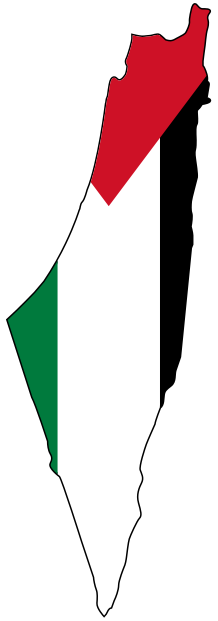
Katib al-Wilaya Mosque in Gaza

Katib al-Wilaya Mosque in Gaza: The Minaret Beside the Bell Tower of St Porphyrius
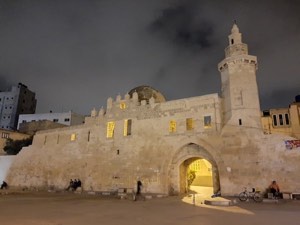
Katib al-Wilaya Mosque is a historic mosque in the al-Zaytun neighbourhood of the old city of Gaza. It shares a single wall with the Greek Orthodox Church of St Porphyrius, Gaza's oldest church, so that the mosque's minaret and the church tower rise side by side, a scene that has become a symbol of coexistence between Gaza's Muslims and Christians. Its oldest inscriptions date from the Mamluk period under Sultan al-Nasir Muhammad ibn Qalawun, and it was rebuilt in 995 AH (1587 CE) by Ahmad Bey, the Ottoman katib al-wilaya (provincial secretary), whose title it bears. In Israel's genocide war on Gaza it was hit by artillery fire on 17 October 2023, causing serious damage, days after the neighbouring church was bombed. This guide covers the mosque's history, architecture and what has befallen it.
Quick facts
| Arabic name | جامع كاتب الولاية – غزة |
|---|---|
| Location | Al-Zaytun neighbourhood, old city of Gaza |
| Area | About 337–377 square metres |
| Oldest inscription | Dhu al-Hijja 725 AH (1325 CE), reign of al-Nasir Muhammad ibn Qalawun |
| Rebuilt | Dhu al-Qa'da 995 AH (1587 CE), by Ahmad Bey, katib al-wilaya |
| Ottoman sultan | Murad III, son of Selim II |
| Minaret | Square base and octagonal shaft, raised after the First World War |
| Neighbour | Church of St Porphyrius, sharing one wall |
| Last restoration | 2016 |
| War | Artillery strike on 17 October 2023, serious damage |
The name
The mosque bears the title "katib al-wilaya", an Ottoman administrative office equivalent to chief secretary of the province, after Ahmad Bey, who held this post in Gaza and ordered the mosque rebuilt and renewed in 995 AH (1587 CE) after it had fallen into ruin.
Location
The mosque stands in the al-Zaytun neighbourhood in the south of the old city of Gaza, a quarter named after the olive trees (zaytun) for which it was known. It adjoins the Church of St Porphyrius, which dates to the 5th century CE and holds the tomb of St Porphyrius.
History
- Dhu al-Hijja 725 AH (1325 CE): an inscription on the minaret records that it was ordered built under the Mamluk sultan al-Nasir Muhammad ibn Qalawun, by the sultan's deputy in Gaza.
- 15th century CE: a foundation inscription beneath the minaret refers to 1432 CE, indicating building or renewal work in the late Mamluk period.
- Dhu al-Qa'da 995 AH (1587 CE): after the mosque had fallen into ruin, Ahmad Bey, the katib al-wilaya, ordered it rebuilt and renewed under the Ottoman sultan Murad III, son of Selim II; the date was inscribed on its door, and the mosque has borne his title ever since.
- After the First World War: the minaret was raised to a greater height.
- 2016: the last full restoration was carried out, reinforcing the minaret and fixing rainwater leaks.
Architecture
The main prayer hall rests on two marble columns with Corinthian-style capitals supporting six intersecting arches that divide the hall into two aisles. The minbar contains remnants of carved stones, most of whose decoration has been removed. The minaret rises from a square base to an octagonal shaft pierced by rectangular windows and small round openings, crowned by a railed balcony for the muezzin resting on stone corbels known as the jawsaq.
Mosque and church: one wall
Katib al-Wilaya Mosque shares a single wall with the Church of St Porphyrius, so that the mosque's minaret and the church tower rise together in the same spot, a unique sight reflecting the deep-rooted religious tolerance among Palestinians in Gaza. Muslims and Christians gather in the same courtyard on religious occasions without reported tension, and the place has become a symbol of the unity of Gaza's social fabric.
The mosque in the genocide war
When Israel's genocide war on the Gaza Strip broke out in October 2023, the shared site was hit repeatedly:
- 10 October 2023: the Church of St Porphyrius was directly targeted, causing major destruction.
- 17 October 2023: Israeli artillery fire hit Katib al-Wilaya Mosque, causing serious damage.
- 19 October 2023: occupation aircraft bombed the church, which was sheltering displaced Muslims and Christians; the church agents' building collapsed completely and more than 20 people were killed.
Archaeologists have described the damage to Katib al-Wilaya Mosque as one of the most significant losses of Gaza's heritage, alongside the Great Omari Mosque, stressing that every historic mosque in Gaza has been partly or completely destroyed. According to the Ministry of Awqaf in Gaza, 738 mosques out of about 1,244 had been razed by early 2025 and 3 churches completely destroyed, while the occupation destroyed 206 of the 325 registered archaeological and heritage sites in the Strip.
The mosque today (2026)
Katib al-Wilaya Mosque stands today scarred by the war beside the Church of St Porphyrius, which buried its martyrs from among the displaced. Despite the bombardment, the minaret and the bell tower remain witnesses to a Gaza that held its Muslims and Christians in one courtyard for centuries, and restoring them, along with the rest of the old city's landmarks, is part of the struggle to preserve Gaza's memory and identity.
Frequently asked questions
Where is Katib al-Wilaya Mosque?
In the al-Zaytun neighbourhood of the old city of Gaza, adjoining the Church of St Porphyrius.
Why is it called Katib al-Wilaya Mosque?
After Ahmad Bey, the Ottoman katib al-wilaya (provincial secretary) of Gaza, who ordered it rebuilt in 995 AH (1587 CE).
When was Katib al-Wilaya Mosque built?
Its oldest inscription dates to 725 AH (1325 CE) under the Mamluk sultan al-Nasir Muhammad ibn Qalawun, and it was rebuilt in the Ottoman period in 1587 CE.
What links the mosque to the Church of St Porphyrius?
They share one wall, and the mosque's minaret and the church tower rise side by side, a symbol of coexistence between Gaza's Muslims and Christians.
What happened to the mosque in the genocide war?
Israeli artillery fire hit it on 17 October 2023, causing serious damage, after the neighbouring church was bombed on 10 October.
Conclusion
For seven centuries the minaret of Katib al-Wilaya has stood beside the bell of St Porphyrius, on a single wall in al-Zaytun. The genocide war's bombardment struck them together, just as shelter brought Muslims and Christians together. The mosque and the church remain witnesses to one Gaza, where the occupier's fire makes no distinction between its mosque and its church.
More from the archive


 Download Our Palestine App
The whole archive in the palm of your hand: depopulated villages, the Nakba, the massacres and Al-Aqsa — free, with no ads to erase the story.

Comments
No comments yet — be the first to write one.
Add your comment
Name and email are optional. Comments appear after review.