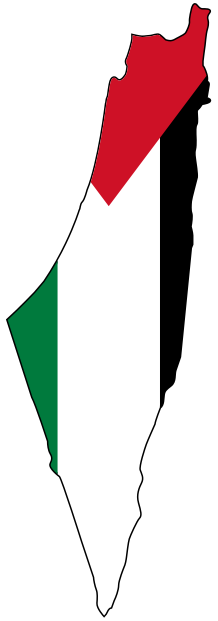
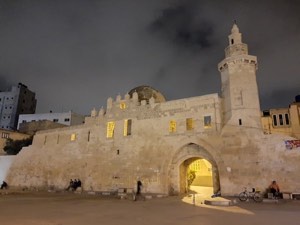
Ali ibn Marwan Mosque in Gaza

Ali ibn Marwan Mosque in Gaza: A Mamluk Mosque and a Maghrebi Scholar's Shrine Under the Genocide War
Ali ibn Marwan Mosque, or Ibn Marwan Mosque, is a historic mosque in Gaza City, east of the old city on Salah al-Din Street between the al-Tuffah and al-Shuja'iyya neighbourhoods. It dates from the Mamluk period and bears the name of Sheikh Ali ibn Marwan, a scholar of Andalusian-Maghrebi origin who came to Gaza at the start of the Mamluk era, died there in 715 AH and was buried in a domed chamber beside the mosque. The mosque is known for its roof of nine domes, its six marble columns and its broad minaret, and is surrounded by a cemetery bearing its name. During Israel's genocide war on Gaza, the mosque was damaged during an incursion by occupation forces and the adjoining cemetery was bulldozed. This guide covers the mosque's history, its sheikh and what has befallen it.
Quick facts
| Arabic name | جامع علي بن مروان – غزة |
|---|---|
| Other names | Ibn Marwan Mosque |
| Location | Salah al-Din Street, between al-Tuffah and al-Shuja'iyya, east of the old city |
| Area | About 320 square metres |
| Period | Mamluk |
| Shrine of | Sheikh Ali ibn Marwan, scholar of Andalusian-Maghrebi origin |
| Sheikh's death | 7 Dhu al-Qa'da 715 AH (1315 CE) |
| Minaret renewed | 725 AH (about 1325 CE) |
| Architecture | Nine domes, six marble columns, broad minaret |
| War | Damaged during an occupation incursion; adjoining cemetery bulldozed |
Location
The mosque stands in the north-east of Gaza City, outside the old city, on the historic Salah al-Din Street, in the area linking the al-Tuffah and al-Shuja'iyya neighbourhoods. The cemetery that bears its name extends to its south and west.
Sheikh Ali ibn Marwan
Sheikh Ali ibn Marwan was a scholar of Andalusian origin, of the Hasani family, who came to Gaza from the Maghreb at the start of the Mamluk period, part of a wide migration of scholars from the Maghreb to the East. He settled in Gaza until his death, and his tomb is inscribed: "He died on Monday, the seventh of the month of Dhu al-Qa'da, in the year fifteen", that is 715 AH (1315 CE). He was buried in a large domed chamber beside the mosque.
History
- Late 13th century CE: the mosque was probably built before 1297 CE, as an inscription on the minbar names Emir Safar al-Hajib, whose presence in Gaza is documented in that year.
- 715 AH (1315 CE): Sheikh Ali ibn Marwan died and was buried beside the mosque, which became known by his name.
- 725 AH (about 1325 CE): an inscription above the minaret door records the renewal of the minaret, iwan, minbar and mihrab, about ten years after the sheikh's death.
- Later periods: a small hall was added, and the mosque underwent many restorations and additions.
- Modern times: the mosque remained a centre of Qur'an memorisation, producing hundreds of memorisers each year from al-Shuja'iyya and other parts of Gaza.
Architecture
The mosque covers about 320 square metres. Its roof is crowned by nine round domes carried on six marble columns decorated with carved Islamic motifs, and it is topped by a broad minaret. Its courtyard, east of the minbar, features carved decoration and arches. Because the ground level around it has risen over the centuries, an internal staircase on the north side descends about three metres from the hall to the courtyard.
The shrine and the cemetery
The shrine of Sheikh Ali ibn Marwan occupies a large chamber west of the mosque, about five metres high and crowned by a dome. Around the mosque lies the Ibn Marwan Cemetery, with historic headstones, one of Gaza's old cemeteries where generations of the city's people were buried.
The mosque in the genocide war
Since Israel's genocide war on the Gaza Strip began in October 2023, al-Shuja'iyya and al-Tuffah have been among the areas most heavily bombed and invaded. Ibn Marwan Mosque was damaged during an incursion by occupation forces into al-Shuja'iyya, and the adjoining cemetery was bulldozed. In early 2024 the Government Media Office in Gaza announced that occupation forces had exhumed about 1,100 graves in the al-Tuffah cemetery and bulldozed it.
Across the Strip, the occupation had destroyed 208 of the 325 registered archaeological and heritage sites by October 2025, and rare artefacts were stolen, while 738 mosques out of about 1,244 had been razed by early 2025, a number that rose to 835 destroyed mosques by October 2025.
The mosque today (2026)
Ali ibn Marwan Mosque stands today amid neighbourhoods devastated by the genocide war, after the cemetery holding the remains of generations of Gazans was bulldozed. With its nine domes and the shrine of its Maghrebi sheikh, the mosque has been a witness to Mamluk Gaza as a city of learning that welcomed scholars from al-Andalus and the Maghreb, and documenting and restoring it is part of the struggle to preserve Gaza's memory and identity.
Frequently asked questions
Where is Ali ibn Marwan Mosque?
On Salah al-Din Street east of the old city of Gaza, between the al-Tuffah and al-Shuja'iyya neighbourhoods.
Who was Ali ibn Marwan?
A scholar of Andalusian origin from the Hasani family who came to Gaza from the Maghreb at the start of the Mamluk period and died there in 715 AH.
When was the mosque built?
Probably in the late 13th century CE; its minaret, minbar and mihrab were renewed in 725 AH (about 1325 CE).
What are its main architectural features?
A roof of nine round domes, six decorated marble columns, a broad minaret, and a domed shrine west of the mosque.
What happened to the mosque in the genocide war?
It was damaged during an incursion by occupation forces into al-Shuja'iyya, and the adjoining cemetery was bulldozed.
Conclusion
Seven centuries ago Sheikh Ali ibn Marwan came from the Maghreb to Gaza, taught there and was buried in its soil, and its mosque has borne his name ever since. Today, as the genocide war bulldozes Gaza's cemeteries and destroys its mosques, Ibn Marwan Mosque remains a witness to a city that embraced scholars and strangers, and to its people, who still memorise the Qur'an within its walls.
More from the archive


 Download Our Palestine App
The whole archive in the palm of your hand: depopulated villages, the Nakba, the massacres and Al-Aqsa — free, with no ads to erase the story.
Comments
No comments yet — be the first to write one.
Add your comment
Name and email are optional. Comments appear after review.