
Nabatieh Refugee Camp
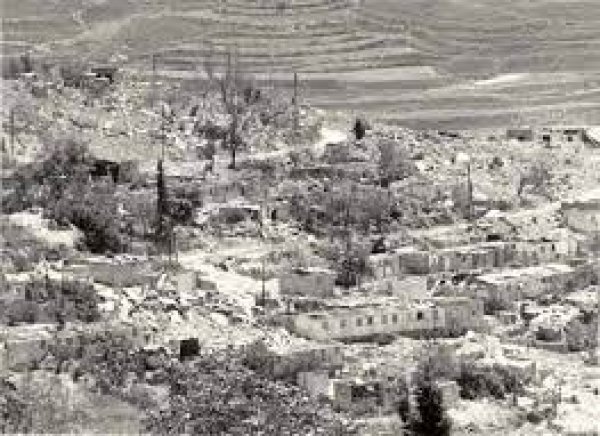
Nabatieh Refugee Camp in Lebanon: The Destroyed Camp – History, Villages of Origin and the Fate of Its People
Nabatieh Camp was a Palestinian refugee camp on a hilltop about 3 km west of the city of Nabatieh in South Lebanon. UNRWA established it in for about 5,000 refugees, most of them from the villages of the Hula Valley in the Safed district, among them al-Khalisa, al-Na'ima, al-Zuq, Qitiyya, Lazzaza and Hunin. After years of repeated shelling, Israeli warplanes destroyed the camp completely in May , killing dozens, and bulldozers levelled what remained. The camp was never rebuilt. Its people were scattered across Lebanon's other camps, especially Ein el-Hilweh, and beyond. This guide covers its history, its villages of origin, its destruction and the struggle of its people to return to it.
Quick Facts About Nabatieh Camp
| Arabic name | مخيم النبطية |
|---|---|
| Country | Lebanon |
| Location | A hilltop about 3 km west of the city of Nabatieh, South Lebanon |
| Year established | , by UNRWA |
| Area | About 13,455 m² (about 13.5 dunums), according to the Encyclopedia of Palestinian Camps |
| Population | About 5,000 at the time of its destruction |
| Origin of residents | Mainly villages of the Hula Valley in the Safed district |
| Destroyed | May 1974, by Israeli airstrikes; the ruins were bulldozed |
| Registered descendants | 7,434 (UNRWA, 2008) |
| Current status | Never rebuilt; its people are dispersed across Lebanon and abroad |
The Nakba: Why Nabatieh Camp Existed
Nabatieh Camp was born from the Nakba (Arabic for "catastrophe"): the mass expulsion of Palestinians during the occupation of Palestine in . Roughly 750,000 Palestinians were driven from their homes, and more than 500 villages and towns were emptied, most of them later destroyed.
In the far north of Palestine, the villages of the Hula Valley and the Upper Galilee, close to the Lebanese border, were emptied in the spring and autumn of 1948. Their people crossed into South Lebanon, only a few kilometres from their homes. Many stayed near the border, hoping to return soon, and eventually some of them were gathered in the camp built near Nabatieh.
For the people of Nabatieh Camp, the Nakba did not end in 1948. In 1974 they lost their homes a second time.
The Right of Return
The right of return is the central demand of Nabatieh's refugees and their descendants. It rests on several foundations in international law:
- UN General Assembly Resolution 194 (), paragraph 11, resolved that refugees wishing to return to their homes and live at peace with their neighbours should be permitted to do so at the earliest practicable date, and that compensation should be paid to those choosing not to return and for loss of or damage to property.
- The Universal Declaration of Human Rights (Article 13) affirms everyone's right to leave any country, including their own, and to return to it.
- UN General Assembly Resolution 3236 () reaffirmed the "inalienable right" of Palestinians to return to their homes and property.
For the families of Nabatieh, the demand is double: to return to the villages of the Hula Valley, and, until then, to have the camp they lost in 1974 rebuilt.
History of the Camp (1956–1974)
Founding (1956)
UNRWA established the camp in 1956 on a hilltop west of Nabatieh, to shelter refugees from the Galilee who had been living in scattered locations in South Lebanon since 1948. It was one of 15 official Palestinian refugee camps that UNRWA recognised in Lebanon before 1976.
A camp near the front line
As the Palestinian national movement grew in Lebanon from the late 1960s, the camps of the south, close to the border with occupied Palestine, came under increasing attack. Nabatieh Camp was hit by Israeli air and artillery strikes on several occasions before 1974, as Israel targeted Palestinian camps and Lebanese villages across the south.
The Destruction of 1974
On , the day after the Ma'alot attack in northern Israel, Israeli warplanes launched wide-scale raids on Palestinian camps and villages in southern Lebanon. Nabatieh Camp was among the hardest hit.
- Casualties: estimates range from 27 to about 50 people killed and between 100 and 184 wounded. Time magazine reported about 30 dead and at least 100 wounded.
- Destruction: the camp was destroyed completely. According to contemporary reports, bulldozers were later brought in to level what remained.
- Displacement: all of the camp's roughly 5,000 residents lost their homes, and none were able to return.
Nabatieh thus became one of the official camps in Lebanon to be wiped off the map entirely. Two years later, during the Lebanese civil war, the camps of Tel al-Zaatar and Jisr al-Basha in East Beirut met the same fate.
A Second Displacement: Where the People Went
After the destruction, the camp's families were scattered across Lebanon:
- Ein el-Hilweh in Saida, which received many of them; in 1993–1994, UNRWA built a housing complex there for displaced families, most of them from Nabatieh Camp.
- Tel al-Zaatar in East Beirut, where some families were displaced again when that camp was destroyed in 1976.
- Beddawi Camp in North Lebanon.
- Chhim in the Iqlim al-Kharroub area, Saida, and the town of Nabatieh itself.
Many families had to move several times as the security situation changed, and many young people emigrated to Germany, Denmark and other European countries.
Origin of the Name
The camp took its name from the nearby city of Nabatieh, the main city of the Nabatieh Governorate in South Lebanon. The Encyclopedia of Palestinian Camps also refers to it as a "removed camp" (مخيم مُزال), because it no longer exists.
Location and Geography
The camp stood on a high hill about 3 km west of the city of Nabatieh, in South Lebanon, only about 15 km from the border with occupied Palestine. For its refugees, the villages of the Hula Valley lay just across that border, a short distance away and yet out of reach.
Area
The Encyclopedia of Palestinian Camps puts the camp's area at about 13,000–13,455 m² (about 13.5 dunums). No official UNRWA figure for its area is readily available today.
Villages of Origin
Most of Nabatieh Camp's refugees came from the Hula Valley and the Upper Galilee in the Safed district, with some from the Acre district:
- Safed district (the Hula Valley): Al-Khalisa, Al-Na'ima, Al-Zuq al-Tahtani, Al-Zuq al-Fawqani, Qitiyya, Al-Zawiya, Lazzaza and Ayn al-Zaytun
- Safed district (the border villages): Salha and Hunin
- Acre district: Suhmata
Population and Demographics
| Year | Population | Source |
|---|---|---|
| 1956 | About 5,000 (estimate) | Encyclopedia of Palestinian Camps |
| 1974 | About 5,000 residents | Time magazine |
| After May 1974 | No residents: the camp was destroyed | UNRWA / news reports |
| 2008 | 7,434 registered refugees from the camp's families | UNRWA (via Encyclopedia of Palestinian Camps) |
Note: Registered refugees are not the same as residents. Since 1974 the camp has had no residents at all; the 2008 figure counts refugees whose families came from Nabatieh Camp and who now live in other camps and communities.
Life in the Camp Before Its Destruction
Like other camps in Lebanon in the 1950s and 1960s, Nabatieh Camp began with tents and simple shelters, gradually replaced by small houses with tin roofs. Its people lived from casual work in agriculture and construction in the surrounding Lebanese towns, under the same legal restrictions on work and movement faced by Palestinians across Lebanon. Families from the same village lived side by side, keeping the social life of the Hula Valley alive in exile. Detailed records of the camp's schools and clinics are scarce, as much of its documentation was lost with the camp itself.
The Campaign to Rebuild the Camp
The camp's displaced families have never given up their demand to rebuild it:
- 1994 and 2002: displaced families held sit-ins and set up tents outside UNRWA's offices in Beirut, one of them lasting more than 70 days, without achieving their goal.
- The Nabatieh Camp Families Association was founded to campaign for reconstruction, and held a solidarity festival in Saida on 16 May 2012, the anniversary of the destruction.
The demand has met opposition: a local Nabatieh group issued a statement rejecting reconstruction, and the Encyclopedia of Palestinian Camps concludes that rebuilding the camp is not possible under Lebanon's current conditions.
Memory, Film and Documentation
The destruction of Nabatieh Camp is documented in the 1974 film They Do Not Exist (ليس لهم وجود) by Palestinian filmmaker Mustafa Abu Ali, one of the founders of Palestinian revolutionary cinema. Its title answers the claim that the Palestinians "do not exist", and its footage of the camp before and after the raids remains a key record of what was lost. News agencies such as Reuters and British Pathé also filmed the aftermath in May 1974.
The Current Situation
Nothing of the camp remains on the hill west of Nabatieh. Its families live mainly in Ein el-Hilweh and other camps, where they share the hardships of Palestinians in Lebanon: no citizenship, restrictions on work and property, Lebanon's economic collapse since 2019 and cuts to UNRWA's services. The Nabatieh area itself was hit heavily again by Israeli strikes during the wars on Lebanon in 2024 and 2026, while Ein el-Hilweh, where many of the camp's families now live, was itself struck in November 2025 and again in 2026.
Frequently Asked Questions About Nabatieh Camp
Where was Nabatieh refugee camp?
On a hilltop about 3 km west of the city of Nabatieh in South Lebanon.
When was Nabatieh Camp destroyed?
Israeli warplanes destroyed it completely in May 1974, killing between about 27 and 50 people. Its ruins were later bulldozed, and it was never rebuilt.
Where did the people of Nabatieh Camp go?
They were scattered across Lebanon, especially to Ein el-Hilweh, as well as Tel al-Zaatar, Beddawi, Chhim, Saida and Nabatieh town. Many young people emigrated to Europe.
Where did the camp's refugees originally come from?
Mainly from the Hula Valley in the Safed district, including al-Khalisa, al-Na'ima, al-Zuq, Qitiyya, al-Zawiya, Lazzaza and Ayn al-Zaytun, as well as Salha, Hunin and Suhmata.
Will Nabatieh Camp be rebuilt?
Its families have campaigned for reconstruction since the 1990s, including long sit-ins at UNRWA's offices, but the camp has not been rebuilt and faces local opposition.
Conclusion
Nabatieh Camp sheltered the people of the Hula Valley for eighteen years, only a few kilometres from the villages they had been driven from. In 1974 it was erased from the map, and its people were made refugees for a second time. The camp exists today only in the memory of its families, in a film, and in their twin demand: to rebuild what was destroyed, and to return to the villages of Palestine.
More from the archive



 Download Our Palestine App
The whole archive in the palm of your hand: depopulated villages, the Nakba, the massacres and Al-Aqsa — free, with no ads to erase the story.
Download Our Palestine App
The whole archive in the palm of your hand: depopulated villages, the Nakba, the massacres and Al-Aqsa — free, with no ads to erase the story.



Comments
No comments yet — be the first to write one.
Add your comment
Name and email are optional. Comments appear after review.