
Baqa'a Refugee Camp

Baqa'a Refugee Camp
Baqa'a Refugee Camp in Jordan: History, Population, Villages of Origin and the Right of Return
Baqa'a Camp is the largest Palestinian refugee camp in Jordan, located about 20 km north of Amman in the Balqa Governorate. It was set up in as one of six "emergency" camps for Palestinians displaced by the occupation of the West Bank and Gaza Strip in 1967, many of whom were already refugees of 1948 and were uprooted for a second time. Founded with 5,000 tents for 26,000 people, it is today home to about 128,000 people on 1.4 km². This guide covers its history, origins, population, living conditions and its people's attachment to the right of return.
Quick Facts About Baqa'a Camp
| Arabic name | مخيم البقعة |
|---|---|
| Country / Region | Jordan, Balqa Governorate (Ain al-Basha district) |
| Location | About 20 km north of Amman, on the Amman–Jerash road |
| Year established | |
| Status | Official UNRWA camp, one of six "emergency" camps of 1968 |
| Area | About 1.4 km² (about 1,497 dunums according to the Department of Palestinian Affairs) |
| Population | About 128,586 people in 28,114 families (Department of Palestinian Affairs, 2020) |
| Housing units | About 11,500 |
| Origin of residents | Hebron and Beersheba districts, villages of the southern plain, and towns of the West Bank displaced in 1967 |
| Known for | The largest Palestinian refugee camp in Jordan |
The Nakba and the Naksa: Why Baqa'a Camp Exists
The story of Baqa'a begins with the Nakba (Arabic for "catastrophe"): the mass expulsion of Palestinians during the occupation of Palestine in . Families from villages such as Ajjur, al-Dawayima, al-Faluja and Bayt Mahsir, and from the Bedouin tribes of Beersheba, were driven from their land and found refuge in camps in the West Bank, especially around Jericho.
Then came the Naksa: the occupation of the West Bank and Gaza Strip in . About 250,000 Palestinians were displaced to Jordan, around half of them refugees of 1948 who now lost their homes for a second time in less than twenty years. They were joined by West Bank residents displaced for the first time, from towns such as Jericho, Tubas and Tulkarm.
The Right of Return
The right of return is central to the identity of Baqa'a. It rests on several foundations in international law:
- UN General Assembly Resolution 194 (), paragraph 11, resolved that refugees wishing to return to their homes and live at peace with their neighbours should be permitted to do so at the earliest practicable date, and that compensation should be paid to those choosing not to return and for loss of or damage to property.
- UN Security Council Resolution 237 () called on Israel to facilitate the return of those who had fled the areas occupied in 1967.
- UN General Assembly Resolution 3236 () reaffirmed the "inalienable right" of Palestinians to return to their homes and property.
In 2013, young people in the camp painted murals across their neighbourhood recalling historic Palestine, the names of refugee camps and the massacres of 1948, affirming that integration and citizenship do not replace the right to return.
History of the Camp
From the Jordan Valley to Baqa'a (1967–1968)
Between June 1967 and February 1968, the refugees and displaced people were housed in temporary tent camps in the Jordan Valley, especially around al-Karama. As military operations in the valley escalated in early 1968, they had to be moved inland. Baqa'a, first known as the "Ain al-Basha camp", received most of those who had sheltered in al-Karama. It was one of six emergency camps set up by the Jordanian government with UNRWA that year.
Tents and prefabricated shelters (1968–1971)
Baqa'a was a large camp from the start, with 5,000 tents for 26,000 refugees on 1.4 km². Between 1969 and 1971, UNRWA replaced the tents with 8,000 prefabricated shelters to protect people from Jordan's harsh winters. Over the decades, residents replaced these with concrete homes.
The 1970s to today
In the late 1960s, the Palestinian resistance factions were at the height of their influence in Jordan, and the camp was strongly linked to them. During the events of September 1970 and 1971, Baqa'a was not at the centre of the fighting but was affected by it. Since then, the camp has grown into a dense, city-like community with a busy market, and after 2011 it also received Palestinians fleeing the war in Syria, who rented homes near their relatives.
Origin of the Name
The camp takes its name from the Baqa'a valley (البقعة), a fertile plain lying between the heights of Abu Nseir and the Balqa mountains. In Arabic, "buq'a" refers to a distinct stretch or low-lying patch of land. The name is also spelled Baqaa, Baqa' or al-Baqa'a.
Location and Geography
Baqa'a Camp lies about 20 km north of Amman, in the Ain al-Basha district of the Balqa Governorate, along the main road linking Amman with Jerash and the north. The surrounding Baqa'a basin is irrigated farmland; in the 1980s it was Jordan's second most important agricultural area after the Jordan Valley, with about 5,000 greenhouses.
Area and Land
UNRWA gives the camp's area as 1.4 km², while the Department of Palestinian Affairs records about 1,497 dunums. The land belongs to local Jordanian tribes and was leased by the Jordanian government to UNRWA for the refugees. The cemetery, 16 schools and the market together take up a large share of this limited space.
Villages of Origin
Most of the camp's residents come from the Hebron and Beersheba districts, with others from many towns and villages across Palestine. Their main places of origin include:
- Hebron district: Ajjur, Al-Dawayima, Zikrin and Dayr Nakhkhas
- Gaza district: Al-Faluja, Summil and Al-Masmiyya
- Beersheba district: the Bedouin tribes of Beersheba
- Jaffa district: Al-'Abbasiyya
- Jerusalem district: Bayt Mahsir
- Haifa district: Al-Kafrin
- Displaced in 1967 from the West Bank: Jericho, al-Jiftlik, Tubas, Tammun, Tulkarm and al-Far'a
The camp itself is divided into five areas named after the places its people came from: al-Quds (Jerusalem), Nablus, al-Khalil (Hebron), al-Karama and the New Camp.
Population and Demographics
Population of Baqa'a Camp over time
- 196826,000UNRWA
- 197242,484UNRWA
- 198959,088UNRWA
- 199772,970UNRWA
- 200088,083 (77,517 refugees and 10,565 displaced persons)UNRWA
- 2010sMore than 104,000 registered refugeesUNRWA
- 2018About 119,000Middle East Eye
- 2020128,586 people in 28,114 familiesDepartment of Palestinian Affairs
Baqa'a has a very young population: more than 70 per cent of residents are under 30. Because estimates count different groups (registered refugees, residents, or people in the wider area), unofficial figures for the camp and its surroundings run as high as 130,000 to 150,000.
Housing and Infrastructure
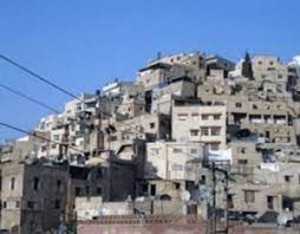
The camp is laid out in a grid, with a main street through the middle and narrow lanes between dense residential blocks. Homes are small and crowded, often shared by extended families. With no room to expand outward, families have built upward; the Department of Palestinian Affairs allows two additional floors on top of each unit. UNRWA estimated that about 46 per cent of refugee homes in the camps have three or more people per room.
Almost all homes are connected to the water network and about 95 per cent to the sewage network, but water often reaches homes only once a week, and residents struggle with rubbish and rodents. Since 2006, the Department of Palestinian Affairs has been rehabilitating homes in phases; by 2021, 1,087 housing units had been renovated.
Health Situation
UNRWA runs two health centres in the camp, offering general medicine, maternal and child health, dental care, eye care, laboratory services and physiotherapy. Charitable clinics and private doctors fill some of the gaps, and a government hospital was built near the camp with support from China. Baqa'a has the lowest rate of chronic illness among Jordan's camps, but in 2016 about 46 per cent of its refugees had no health insurance, reflecting how many work in the informal sector. Residents often complain of long waits and medicine shortages.
Economic Situation
Baqa'a has a busy market along the main highway, but poverty and unemployment are major challenges:
- It ranks third poorest of Jordan's ten official camps, with 32 per cent of refugees living below the national poverty line (Fafo, 2013).
- It has the second-highest unemployment of the ten camps, at 17 per cent (2023).
- Many families turn one room of their home into a shop or workshop to earn an income, while others find seasonal work on the surrounding farms.
Education
Education began in the camp in tents holding 35 pupils each. Today UNRWA runs 16 schools, eight for boys and eight for girls, teaching grades 1 to 10 on a double-shift system to more than 14,000 pupils, with classes of around 50. After grade 10, students move to four government secondary schools in the camp. Overcrowding and dropout remain concerns, and university costs put higher education out of reach for many families.
Frequently Asked Questions About Baqa'a Camp
Where is Baqa'a refugee camp located?
It lies about 20 km north of Amman, in the Ain al-Basha district of Jordan's Balqa Governorate.
Is Baqa'a the largest refugee camp in Jordan?
Yes. With about 128,586 residents according to the Department of Palestinian Affairs, it is the largest Palestinian refugee camp in Jordan.
When was Baqa'a Camp established?
In 1968, as one of six emergency camps for Palestinians displaced by the occupation of the West Bank and Gaza Strip in 1967.
Where do Baqa'a's refugees come from?
Mostly from the Hebron and Beersheba districts, including villages such as Ajjur, al-Dawayima, al-Faluja and Bayt Mahsir, as well as people displaced from Jericho, Tubas and Tulkarm in 1967.
Why were many Baqa'a refugees displaced twice?
Many were expelled from their villages in 1948 and lived in camps in the West Bank, then were displaced again to Jordan in 1967, first to the Jordan Valley and then to Baqa'a.
Conclusion
Baqa'a began as a field of 5,000 tents and has become a city of more than 120,000 people, the largest Palestinian camp in Jordan. Its families carry the memory of two expulsions, from their villages in 1948 and from the West Bank in 1967, and despite crowding, poverty and the passing of generations, they continue to hold onto the right to return.
More from the archive


 Download Our Palestine App
The whole archive in the palm of your hand: depopulated villages, the Nakba, the massacres and Al-Aqsa — free, with no ads to erase the story.
Download Our Palestine App
The whole archive in the palm of your hand: depopulated villages, the Nakba, the massacres and Al-Aqsa — free, with no ads to erase the story.



Comments
No comments yet — be the first to write one.
Add your comment
Name and email are optional. Comments appear after review.
Social Life and Institutions
Baqa'a has a strong sense of community and more than 46 community-based organisations. Families with roots in the same village keep their own associations and guest houses (دواوين), among them the al-Dawayima, al-Faluja, al-Masmiyya and Bayt Mahsir societies. Key institutions include: