Talbiya Camp

Talbiya Camp
Talbieh Camp (Zizia): History, Location, Population and Living Conditions
Talbieh Camp, also known locally as Zizia Camp, is a Palestine refugee camp in Jordan, about 30 kilometres south of Amman. It was set up in as one of six "emergency" camps for Palestinians displaced from the West Bank and Gaza Strip by the occupation of 1967, many of whom had already been made refugees once before, during the occupation of Palestine in 1948. It is the smallest of Jordan's ten official camps by population, and its residents are mostly of Bedouin origin. This guide covers the camp's history, the origin of its name, its location and size, its population, and its health, economic, social and educational situation.
Quick Facts About Talbieh Camp
| Other names | Zizia Camp, Talbiyeh, Talbiyah |
|---|---|
| Host country | Jordan |
| Location | Al-Jizah area, about 27–35 km south of Amman, Capital Governorate |
| Year established | |
| Type | One of six "emergency" camps set up after 1967 |
| Area | About 0.13 km² (about 133 dunums) |
| Population | About 10,345 people in 2,054 families (Jordan's Department of Palestinian Affairs) |
| Original population | About 5,000 people |
| Housing units | About 810 |
| Schools | UNRWA schools working on a double-shift system, plus one government school |
| Health facilities | 1 UNRWA health centre and 1 charitable medical centre |
| Origin of residents | Mostly Bedouin families originally from the Beersheba district, and displaced people from Gaza, Hebron, Ramallah, Jericho and other areas |
From the Nakba to the Naksa: Why Talbieh Camp Exists
Talbieh's story is one of repeated displacement. During the Nakba, the occupation of Palestine in , roughly 750,000 Palestinians were driven from their homes. Among them were Bedouin tribes of the Beersheba district in southern Palestine, who were pushed toward the Hebron hills, the Jericho area and the Gaza Strip.
Less than twenty years later, the occupation of the West Bank and Gaza Strip in , known to Palestinians as the Naksa ("setback"), uprooted around 300,000 Palestinians, many of them refugees from 1948 forced to flee for a second time. Many of them had been living in refugee camps in the Jordan Valley, especially around Jericho. They crossed the Jordan River and were first housed in temporary tent camps in the Jordan Valley on the eastern side, but when military operations escalated in the area in early 1968, these camps had to be evacuated. Six "emergency" camps were then set up further inland, and Talbieh was one of them.
As a result, many families in Talbieh have been displaced two or three times within a single generation.
The Right of Return
UNRWA classifies most of Talbieh's residents as "displaced persons" (people displaced in 1967), although many of them are also 1948 refugees. Both groups have a recognised right to return under international law:
- UN General Assembly Resolution 194 (), paragraph 11, resolved that refugees wishing to return to their homes and live at peace with their neighbours should be permitted to do so at the earliest practicable date, and that compensation should be paid to those choosing not to return.
- UN Security Council Resolution 237 () called for facilitating the return of the inhabitants who had fled the areas of military operations since the outbreak of hostilities in 1967.
- The Universal Declaration of Human Rights (Article 13) affirms everyone's right to return to their own country.
- UN General Assembly Resolution 3236 () reaffirmed the "inalienable right" of Palestinians to return to their homes and property.
For the families of Talbieh, return therefore has a double meaning: to the West Bank and Gaza towns and camps they fled in 1967, and to the lands of Beersheba and other places they lost in 1948.
Origin of the Name "Talbieh"
Two explanations are given for the camp's name:
- After Talbiyeh in Jerusalem: according to residents, the camp took the name of Talbiyeh, an affluent Arab neighbourhood of Jerusalem before the Nakba, because living conditions in the new camp were considered better than in other camps at the time.
- After Ali ibn Abi Talib: other sources say the name "Talbieh" was chosen in reference to Ali ibn Abi Talib, the fourth caliph of Islam.
The camp is also widely known as Zizia Camp (مخيم زيزيا), after the surrounding Zizia area near Al-Jizah. In Arabic its name is written مخيم الطالبية.
History and Establishment of the Camp
Emergency camp (1968)
Talbieh was established by UNRWA in for about 5,000 refugees and displaced persons. It was first set up a little south of its current site, but heavy winter rains and flooding forced it to move to a small rise above the surrounding watercourses and wadi.
From tents to concrete
The first tents were donated by the Iranian Red Lion and Sun Society, which later replaced them with concrete shelters. Talbieh is considered the first camp in Jordan to replace its tents with concrete rooms. Housing plots were distributed on a first-come, first-served basis, so families were not grouped by town or village of origin, unlike in many other camps.
Recent improvements
In 2009, a donation from the Royal Hashemite Court funded improvements to public buildings and services in the camp, and the quality of shelters has been gradually improving since 2015, although many homes are still in poor condition.
Location and Geography
Talbieh Camp lies in the Al-Jizah area of the Capital Governorate, south of Amman. Key features of its location:
- It is about 27–35 km south of Amman, depending on the reference point.
- It lies about 12 km south of Queen Alia International Airport.
- It sits immediately west of the Desert Highway, the main road from Amman to southern Jordan, which gives direct access to the camp's main entrance.
- It is surrounded by the rural villages of southern Amman, for which it serves as an economic centre.
The camp lies on the edge of the desert plateau, with cold winters and hot, dry summers, and is exposed to seasonal floods from nearby wadis.
Area and Land
The camp covers about 0.13 square kilometres (about 133 dunums). According to UNRWA, Talbieh is the largest camp in Jordan in terms of state land, as the land it stands on belongs to the Jordanian state. Its roughly 810 housing units were originally about 46 square metres each, and families have expanded them over the years.
Places of Origin
Most of Talbieh's residents are of Bedouin origin. Their roots lie mainly in:
- Beersheba (Bir al-Sabi') district, from which many Bedouin tribes were displaced in 1948
- Gaza
- Hebron
- Ramallah and Jericho
- Smaller numbers from Jerusalem, Nablus and Jenin
Many families had lived in West Bank refugee camps, especially in the Jordan Valley around Jericho, before being displaced again in 1967.
Population and Demographics
Talbieh is the smallest of Jordan's ten official camps by population. Jordan's Department of Palestinian Affairs estimates its population at about 10,345 people in 2,054 families.
Population of Talbieh Camp over time
- 1968About 5,000UNRWA
- Early 2010s7,583 registeredUNRWA
- 2015About 8,000 registeredUNRWA
- 20179,354 registered, in 1,870 familiesUNRWA records
- Recent estimateAbout 10,345, in 2,054 familiesDepartment of Palestinian Affairs (Jordan)
Population characteristics
- Bedouin heritage: most families are of Bedouin origin, and tribal ties and customs remain important.
- Average family size of about 5.3 people.
- Mixed neighbourhoods: because housing was allocated on a first-come basis, families from different places live side by side.
- Newcomers: some Egyptian migrant workers and Syrian refugees also live in the camp.
Housing and Infrastructure
- Poor shelters: many homes are in a bad state of repair, with zinc or asbestos sheet roofs, structural problems, and poor natural light and ventilation.
- Gradual improvement: shelter quality has been improving since 2015 through rehabilitation projects.
- Narrow alleys between the houses, full of everyday life.
- Services: the camp is connected to water and electricity networks, and UNRWA is responsible for removing waste from the camp.
- Flood risk from nearby wadis during heavy winter rains.
Health Situation
The camp has one UNRWA health centre providing primary health care, including maternal and child health, immunisations, dental care and treatment of chronic diseases. Its small team, including a doctor, a dentist, nurses and a midwife, sees around 95 patients a day. A charitable medical centre also operates in the camp, and a UNRWA community-based rehabilitation centre supports people with disabilities.
Key health challenges
- Lack of health insurance: about 37% of refugees in the camp are uninsured.
- Health risks from housing: asbestos roofing, damp and poor ventilation.
- Distance from hospitals: the nearest major hospitals are in Amman, about half an hour away.
- Pressure on a small medical team serving a growing population.
Economic Situation
Talbieh is the economic centre for the villages south of Amman, from the city's southern edge to Madaba. Shops, workshops and services line both sides of the Desert Highway around the camp, serving residents and travellers alike.
Even so, poverty remains significant: about 28% of refugees in the camp live below Jordan's national poverty line. Many residents work in small trade, transport, construction, agriculture in the surrounding area and daily-wage jobs, often without social protection. Cuts to UNRWA funding have further strained support for the poorest families.
Education
UNRWA runs schools in Talbieh that operate on a double-shift system because of overcrowding, and the camp also has a government school. UNRWA schools in the camp have around 1,750 pupils and about 67 teachers. Secondary students attend government schools in the area, and graduates continue to universities in Amman.
Educational challenges
- Double-shift schooling, which shortens the school day and limits activities
- Poverty pushing some young people into work early
- Distance from universities and higher-education institutions in Amman
Frequently Asked Questions About Talbieh Camp
Where is Talbieh camp located?
Talbieh Camp is in Jordan, in the Al-Jizah area about 27–35 km south of Amman, west of the Desert Highway and about 12 km south of Queen Alia International Airport.
When was Talbieh camp established?
It was established in 1968 as one of six emergency camps for Palestinians displaced by the occupation of the West Bank and Gaza Strip in 1967.
Why is it called Talbieh?
Residents say it was named after Talbiyeh, an affluent Arab neighbourhood of Jerusalem before 1948, because conditions in the camp were considered good at the time. Other sources say the name refers to Ali ibn Abi Talib. It is also known as Zizia Camp.
What is the population of Talbieh camp?
Jordan's Department of Palestinian Affairs estimates the population at about 10,345 people in 2,054 families. It is the smallest of Jordan's ten official camps by population.
Where do Talbieh's residents come from?
Most are of Bedouin origin, mainly from the Beersheba district, and many were displaced from Gaza, Hebron, Ramallah and Jericho in 1967, some after already being made refugees in 1948.
Are Talbieh's residents refugees or displaced persons?
UNRWA classifies most of them as "displaced persons" from 1967, but many are also 1948 refugees who were displaced a second time.
Conclusion
Talbieh Camp was born from a second exile. Its Bedouin families lost their lands in 1948, rebuilt their lives in the camps of the West Bank, and were uprooted again in 1967. Today it is a small but lively community that serves as the economic hub of the villages south of Amman, while still struggling with poverty, poor housing and limited access to health care. Through it all, its residents hold onto a double right of return: to the places they fled in 1967 and to the lands they lost in 1948.
Video clips
More from the archive
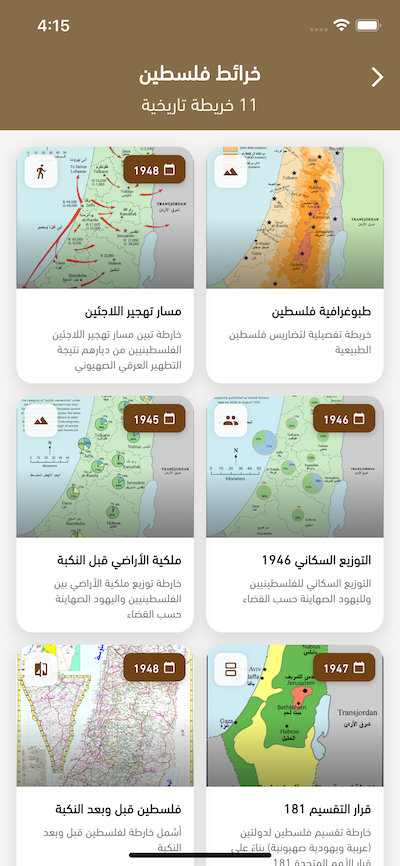
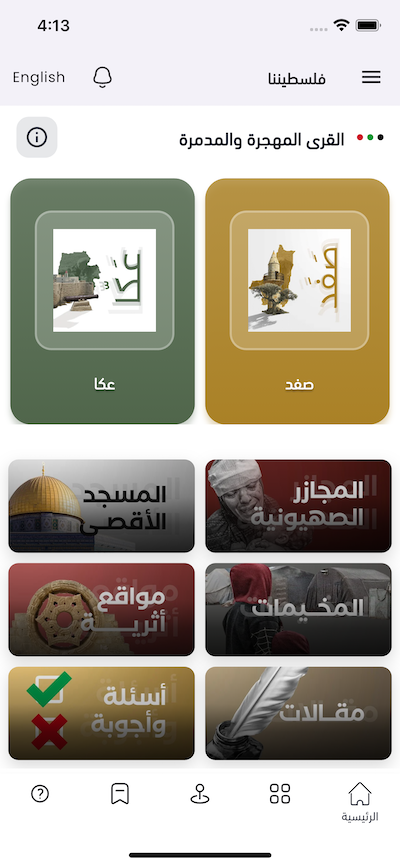
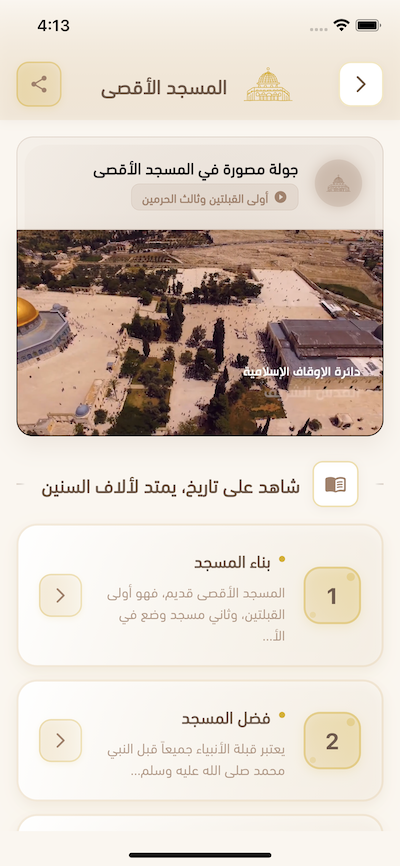
 Download Our Palestine App
The whole archive in the palm of your hand: depopulated villages, the Nakba, the massacres and Al-Aqsa — free, with no ads to erase the story.
Comments
No comments yet — be the first to write one.
Add your comment
Name and email are optional. Comments appear after review.
Social Situation and Community Life
Bedouin traditions of hospitality, solidarity and tribal ties shape social life in Talbieh. Organisations active in the camp include:
Social challenges