
Marka (Hittin) Refugee Camp

Marka (Hittin) Refugee Camp
Marka (Hittin) Refugee Camp in Jordan: History, Villages of Origin, Population and Life Today
Marka Camp, officially called Hittin Camp and known locally as Schneller, lies in Russeifa, about 10 km north-east of Amman. It was set up by UNRWA in as one of six emergency camps for Palestinians displaced in the 1967 war, many of them refugees of 1948 uprooted for a second time from Gaza and the West Bank. Its families come from Gaza, Ajjur, Beersheba, Jaffa, Haifa, al-Dawayima and dozens of other places. With more than 40,000 refugees, it is the second-largest Palestinian camp in Jordan. This guide covers its history, origins, population, services and its situation today.
Quick Facts About Marka Camp
| Arabic names | مخيم ماركا / مخيم حطين / مخيم شنلر |
|---|---|
| Country | Jordan |
| Location | Russeifa district, Zarqa Governorate, about 10 km north-east of Amman |
| Year established | |
| Area | About 0.92 km² (917 dunums) |
| Population at founding | More than 15,000 |
| Registered refugees | About 45,000–55,000 depending on the source and year |
| Origin of residents | Gaza, Ajjur, Beersheba, Jaffa, Jenin, Haifa, al-Dawayima and others |
| Rank | Second-largest Palestinian refugee camp in Jordan |
| Status | Official UNRWA emergency camp |
From the Nakba to the Naksa: Why Marka Camp Exists
Most of Marka's families were first uprooted in the Nakba (Arabic for "catastrophe"): the mass expulsion of Palestinians during the occupation of Palestine in , when roughly 750,000 Palestinians were driven from their homes. Jaffa and Haifa fell in the spring; in October 1948 the villages of the western Hebron hills, among them Ajjur, Dayr al-Dubban and al-Dawayima, were emptied, the last of them after the al-Dawayima massacre of 29 October 1948. Many of these families found refuge in the Gaza Strip and the West Bank.
In June , the occupation of the West Bank and Gaza displaced them again in what Palestinians call the Naksa. Many crossed into Jordan and sheltered first in tent camps at Ghor Kibid and Ghor Nimrein in the Jordan Valley. In 1968 Israeli air raids on the valley forced more than 15,000 of them to move again, to a hillside near Russeifa, where UNRWA set up Marka as one of six emergency camps.
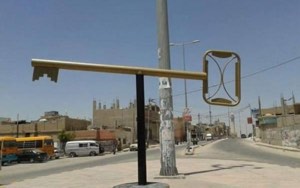
The Right of Return
Displaced twice and sometimes three times, Marka's families hold firmly to the right of return. The camp's official name, Hittin, recalls a battle of liberation in Palestine. The right rests on several foundations in international law:
- UN General Assembly Resolution 194 (), paragraph 11, resolved that refugees wishing to return to their homes and live at peace with their neighbours should be permitted to do so at the earliest practicable date, and that compensation should be paid to those choosing not to return and for loss of or damage to property.
- UN Security Council Resolution 237 () called on Israel to facilitate the return of those who had fled since the outbreak of hostilities, a call that applies directly to Marka's displaced of 1967.
- The Universal Declaration of Human Rights (Article 13) affirms everyone's right to leave any country, including their own, and to return to it.
- UN General Assembly Resolution 3236 () reaffirmed the "inalienable right" of Palestinians to return to their homes and property.
History of the Camp (1968–1988)
Tents, asbestos and the Zarqa River
The camp was built partly on state land and partly on land rented from a private owner. UNRWA gave each family a plot of 12 by 9 metres and a tent, later replaced by asbestos units of 3 by 4 metres; asbestos was phased out in the late 1980s because of the health risks. Latrines were shared and water came from public taps along the main roads; when supply failed, women fetched water from the Zarqa River, about 500 metres away. For four years, the neighbouring Schneller school supplied the camp with water.
Building a community
In the early 1970s residents organised their own electricity through a shareholding cooperative, and public water and electricity networks reached the camp in the mid-1980s. Within months of its founding, shops, a barber and a teahouse opened, forming the core of a market so lively that nearby Bedouin called the camp "al-souq", the market. In the late 1970s the cheaper al-Ghazazwa market opened to serve poorer residents, especially those from Gaza. Until 1988 the camp consisted of one-storey, self-built homes.
Growth and Change (1988–2022)
In 1988 Jordan's Department of Palestinian Affairs (DPA) took over the camp's physical administration and later allowed homes to rise: an additional storey was permitted in 1997 after a socio-economic assessment. The camp was connected to the public sewage network in the early 1990s. The DPA set up a Camp Improvement Committee of residents to act as a link between the community and the government.
Gulf remittances transformed the camp. From the 1970s, UNRWA's vocational training helped many young people find work as engineers, teachers and doctors in the Gulf, and their earnings paid for new rooms and floors. Land around the camp was sold to residents, pushing its boundaries outward in almost every direction. Factories opened nearby in Russeifa, and the Amman–Zarqa highway was built alongside. Today the camp also hosts migrant workers and Syrian refugees.
The Current Situation (2025–2026)
Marka's main challenges today are overcrowding, ageing infrastructure, and environmental hazards such as sewage overflowing in winter. Its schools are crowded and run on double shifts. The camp's Services Committee works with the Zarqa water authority to maintain service sites in Russeifa, and a project to rehabilitate housing in the camp has been launched.
The financial crisis of UNRWA weighs especially heavily on Marka, whose ten schools and health centre are all run by the agency. In 2026, UNRWA announced cuts of about 20% to service hours and school time across its fields, including Jordan, a blow felt most by families who depend on it for education and health care. For the camp's "ex-Gazans", who hold no Jordanian citizenship, UNRWA's services are often the only safety net.
Three Names: Marka, Hittin and Schneller
- Marka: UNRWA's name, after the nearby district of Marka and its civil airport.
- Hittin: the official name used by Jordan's Department of Palestinian Affairs, recalling the Battle of Hattin of 1187 in Palestine. According to the Encyclopedia of Palestinian Camps, it was chosen by agreement among the camp's residents and elders.
- Schneller: the name most residents use, after the German Schneller orphanage and school, a rehabilitation centre that stood in the area before the camp was established.
Location and Geography
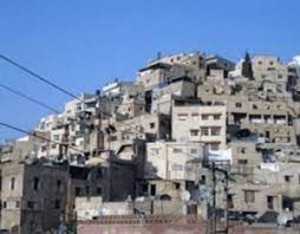
The camp lies in the Russeifa district of Zarqa Governorate, south-west of the city of Zarqa beside Jabal al-Amir Faisal, about 10 km north-east of Amman. It sits in the basin of the Zarqa River, close to the Amman–Zarqa highway, and the centre of Russeifa has grown up around it.
Area and Layout
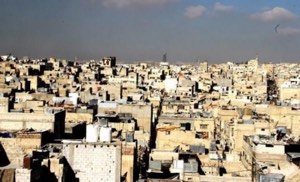
Marka covers about 0.92 km² (917 dunums), about 16% of the total area of Palestinian camps in Jordan. UNRWA records about 2,824 housing units, each of around 100 m². The original 12-by-9-metre family plots have long since filled with multi-room homes, and the camp's edges have spread into surrounding land bought by residents.
Villages of Origin
Marka's families come from many places, reflecting their journey through Gaza and the West Bank before 1967. According to the Interactive Encyclopedia of the Palestine Question:
| Place of origin | District | Share of residents |
|---|---|---|
| Gaza | Gaza | About 21% |
| Ajjur | Hebron | About 13% |
| Beersheba | Beersheba | About 9% |
| Jaffa | Jaffa | About 8% |
| Jenin | Jenin | About 7.5% |
| Haifa | Haifa | About 7% |
| al-Dawayima | Hebron | About 6% |
| Kafr Ni'ma | Ramallah | About 5.5% |
| Dayr al-Dubban | Hebron | About 5% |
| Jericho | Jericho | About 5% |
| Burayr | Gaza | About 2% |
| Yasur | Gaza | About 1% |
Smaller groups come from about ten other localities.
Population and Legal Status
UNRWA counts registered refugees, which is not the same as the number of people living in the camp, which today also hosts migrant workers and Syrian refugees.
Population of Marka Camp over time
- 1968More than 15,000UNRWA / Interactive Encyclopedia of the Palestine Question
- 2010About 45,550UNRWA, via WAFA Info
- Recent UNRWA recordsAbout 54,876 in 12,053 familiesEncyclopedia of Palestinian Camps
- 2022More than 40,000 refugeesInteractive Encyclopedia of the Palestine Question
Most residents hold Jordanian citizenship, but those who came from the Gaza Strip, which was under Egyptian administration before 1967, were not granted it. Known as "ex-Gazans", they live with temporary documents and restricted access to public employment, property and services. All of the camp's refugees keep their refugee status and their right of return.
Housing and Infrastructure
Residents hold their homes under use rights rather than ownership. Better-off families first added brick rooms with zinc roofs, spreading horizontally, and since 1997 homes have been allowed a second storey. The camp is connected to the public water, electricity and sewage networks, but the infrastructure is ageing and sewage overflows are a recurring winter hazard.
Economic Life
Because residents hold use rights rather than ownership, the camp long fell outside national tax rules, making it an economic zone with minimal business fees. This helps explain its many busy markets, from the main market that grew from the first shops to al-Ghazazwa market. Many residents worked in the factories of Russeifa, while others built careers in the Gulf, whose remittances funded the camp's growth.
Health Situation
UNRWA runs one health centre in Marka, providing primary health care to the camp's refugees, and its installations also serve refugees in the surrounding area. A medical centre in the camp also serves residents. The UNRWA centre serves tens of thousands of people, and the agency's funding cuts are putting pressure on its services.
Education
Schooling began in 1968 with two schools, one for boys and one for girls. Today UNRWA runs ten double-shift schools in the camp, six for girls and four for boys, with about 10,000 pupils, alongside two government secondary schools, 15 kindergartens and two nurseries. Classrooms are crowded and dropout is concentrated in girls' schools, linked to early marriage. About 2,000 students from the camp attend university, 55% of them women, mostly in education, health, engineering and agriculture. Illiteracy is low, at about 2%, and largely limited to the elderly.
Frequently Asked Questions About Marka Camp
Where is Marka refugee camp located?
In the Russeifa district of Zarqa Governorate, about 10 km north-east of Amman, Jordan.
Why does Marka camp have three names?
UNRWA calls it Marka after the nearby district; Jordan's Department of Palestinian Affairs calls it Hittin after the Battle of Hattin; and residents call it Schneller after a German orphanage and school nearby.
When was Marka camp established?
In 1968, as one of six UNRWA emergency camps for Palestinians displaced in the 1967 war, after Israeli air raids forced them out of temporary camps in the Jordan Valley.
How many refugees live in Marka camp?
Between about 40,000 and 55,000 registered refugees depending on the source and year, making it the second-largest Palestinian camp in Jordan.
Where do Marka camp's refugees come from?
Mainly from Gaza (about 21%), Ajjur, Beersheba, Jaffa, Jenin, Haifa, al-Dawayima, Kafr Ni'ma, Dayr al-Dubban and Jericho.
Conclusion
Marka is a camp of the second exile: families from Ajjur, al-Dawayima, Jaffa and Gaza who lost their homes in 1948, then their refuge in 1967, then their tents in the Jordan Valley to air raids. On a hillside by the Zarqa River they built a city of markets, schools and graduates, carrying three names but one cause. Today they face overcrowding and shrinking services, and many still live without citizenship, but the camp they named Hittin still looks towards Palestine and the return they demand.
More from the archive
 Download Our Palestine App
The whole archive in the palm of your hand: depopulated villages, the Nakba, the massacres and Al-Aqsa — free, with no ads to erase the story.
Download Our Palestine App
The whole archive in the palm of your hand: depopulated villages, the Nakba, the massacres and Al-Aqsa — free, with no ads to erase the story.



Comments
No comments yet — be the first to write one.
Add your comment
Name and email are optional. Comments appear after review.