
Daraa Refugee Camp
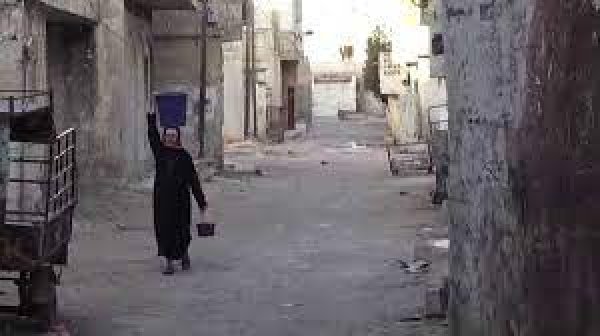
Daraa Refugee Camp in Syria: History, Villages of Origin, War, Destruction and Return
Daraa Camp lies on the edge of the city of Daraa in southern Syria, close to the Jordanian border. Its old section was established in for refugees from the villages of Mount Carmel and the Tiberias district, among them Ijzim, Jaba', Ayn Ghazal, Samakh and al-Shajara, and in 1967 a new section, known as the emergency camp, received about 4,200 people displaced from Quneitra in the occupied Golan. Before 2011 it was home to more than 10,000 refugees. During the Syrian war, about 70–80% of its buildings were destroyed and nearly 90% of its people fled; since 2018 families have slowly returned. In 2026, residents protest the suspension of UNRWA's cash and food aid. This guide covers the camp's history, origins, population, the war years and its situation today.
Quick Facts About Daraa Camp
| Arabic name | مخيم درعا |
|---|---|
| Country | Syria |
| Location | Edge of Daraa city, southern Syria, near the Jordanian border |
| Year established | Old camp ; new (emergency) camp 1967 |
| Area | Old camp about 0.04 km²; whole camp about 1.3 km² (UNRWA) |
| Pre-war population | About 10,500 registered refugees (UNRWA); about 13,000 (GAPAR) |
| War damage | About 70–80% of buildings destroyed; about 60% of infrastructure |
| Current population | About 11,500 (local estimates, 2026) |
| Origin of residents | Haifa, Tiberias, Nazareth and Safed districts; Quneitra (1967) |
| Sections | Old camp, emergency camp and northern camp |
The Nakba: Why Daraa Camp Exists
Daraa Camp was born from the Nakba (Arabic for "catastrophe"): the mass expulsion of Palestinians during the occupation of Palestine in . Roughly 750,000 Palestinians were driven from their homes. Among them were the people of Ijzim, Jaba' and Ayn Ghazal, the "Little Triangle" south of Haifa, whose villages held out until they were overrun in July 1948, and the people of Samakh and the villages around Lake Tiberias. Many crossed the Jordan and the Yarmouk into southern Syria, where they settled beside the city of Daraa.
In June 1967, with the occupation of the Golan Heights, a second wave arrived: about 4,200 people, many of them refugees from 1948 who had settled in Quneitra and the Golan, were displaced once more and settled in a new section beside the old camp.
The Right of Return
The right of return is the central demand of Daraa's refugees. It rests on several foundations in international law:
- UN General Assembly Resolution 194 (), paragraph 11, resolved that refugees wishing to return to their homes and live at peace with their neighbours should be permitted to do so at the earliest practicable date, and that compensation should be paid to those choosing not to return and for loss of or damage to property.
- The Universal Declaration of Human Rights (Article 13) affirms everyone's right to leave any country, including their own, and to return to it.
- UN General Assembly Resolution 3236 () reaffirmed the "inalienable right" of Palestinians to return to their homes and property.
History of the Camp (1950–2011)
The old camp (1950–1951)
The old camp was set up in 1950–1951 on about 0.04 km² of farmland beside Daraa city, for refugees from the north and east of Palestine. Its houses were built close together, with narrow alleys, and some later rose to five storeys.
The new camp (1967)
After the June 1967 war, a new section was built beside the old one for about 4,200 people displaced from Quneitra Governorate. Over time the camp came to be divided locally into three parts: the old camp, the emergency camp and the northern camp, together covering about 1.3 km².
Before the war
By 2011, the camp was home to more than 10,000 registered refugees, with thousands more in nearby villages such as al-Muzayrib and Jillin. Syria's General Authority for Palestine Arab Refugees (GAPAR) maintained the streets, lighting, water, electricity, sewage and telephone networks, while UNRWA provided schools, health care, relief and rubbish collection. Several Palestinian factions were active in the camp.
The War Years (2011–2021)
Daraa, where the Syrian uprising began in March 2011, quickly became a battlefield, and the camp, lying between areas held by the former regime and opposition factions, was caught in the fighting for years:
- Shelling and air strikes destroyed an estimated 70–80% of the camp's buildings and about 60% of its infrastructure, including water lines, power pylons and the UNRWA health centre.
- Nearly 90% of residents fled, to other parts of Daraa, to Damascus, to Jordan and further abroad. At one point only a few hundred families remained.
- All UNRWA schools in the camp were damaged or destroyed, some used as field hospitals or a prison, and children went without formal schooling for more than five years.
- Residents went without piped water for about two years, relying on contaminated tanker water that spread diarrhoea and jaundice.
- July 2018: the former regime regained control of the area under a settlement agreement.
- Summer 2021: forces of the former regime besieged the camp together with Daraa al-Balad and Tariq al-Sadd for about two and a half months, cutting off food, water, electricity and medicine and threatening residents with forced displacement to the north.
Return and Repair (2018 onward)
- 2018 onward: about 700 Palestinian families returned after the settlement; a 2020 UNRWA survey counted about 3,700 returnees in 770 families.
- 2019: the northern water main was repaired, allowing pumping two days a week, and three transformer stations restored electricity. UNRWA, with support from Japan and UN-Habitat, rebuilt the Ein Karem and Safsaf schools and rehabilitated a building housing the Tiberias and Taytaba schools.
- 2020–2021: UNRWA repaired about 60 homes, out of hundreds in need.
- May 2022: the UNRWA health centre was rehabilitated.
- April 2023: UNRWA signed contracts to repair 110 more homes, but residents criticised delays and the exclusion of badly damaged buildings.
- August 2023: UNRWA opened a community-based centre.
- Early 2024: work began on a new southern water line, partly funded by private donors, ending reliance on expensive tanker water twice a week.
The Current Situation (2025–2026)
After the fall of the former regime in December 2024, the camp's families faced a new phase alongside Syria's deep economic crisis. Local estimates in April 2026 put the population at about 11,500 refugees. Residents say UNRWA's cash and food aid, about 30 US dollars per person every three months, has been suspended for more than a year and a half, leaving most households food-insecure. UNRWA's Syria director said the agency had secured only about 10% of the funding needed for its humanitarian programmes in Syria, after the halt of US funding that had covered more than 40% of its operating budget.
Medicines are scarce and surgery is beyond many families' means, rubbish piles up in the streets, the sewage network still overflows, and electricity remains short. Residents have protested outside UNRWA's office in Daraa, including against the payment of repair grants in Syrian pounds. Women who have lost their providers, many of them widows, are among the hardest hit.
Origin of the Name
The camp takes its name from the neighbouring city of Daraa, the capital of the Daraa Governorate in the Hauran region of southern Syria.
Location and Geography
Daraa Camp lies on the edge of Daraa city, close to the Jordanian border. It is bordered by the wholesale vegetable market, the Daraa National Museum, al-Basel Park, an industrial area, the al-Zaidi valley, government buildings and a central market, and adjoins the Tariq al-Sadd neighbourhood. Other Palestinian communities in the governorate live in al-Muzayrib and Jillin.
Area and Layout
The old camp covers about 0.04 km² (about 40 dunums). Together with the emergency and northern sections, the camp covers about 1.3 km², according to UNRWA. The new sections lie on fertile land, and housing throughout was built without planning.
Villages of Origin
The camp's two sections reflect two waves of displacement:
- Old camp (1948 refugees):
- Haifa district: Ijzim, Jaba', Ayn Ghazal and Balad al-Shaykh
- Tiberias district: Samakh and Al-Shajara
- Nazareth district: Tur'an and the Bedouin of Arab al-Suwaytat
- New camp (displaced from the Golan in 1967):
- Tiberias district: Samakh, Al-Nuqayb, al-Hamma and al-Mawasi
- Safed district: Al-Mallaha and Al-Zanghariyya
- Clans: al-Talawiyya and al-Masarweh
The names of the camp's UNRWA schools, such as Ein Karem, Tiberias, Kafr Kanna, Safsaf and Taytaba, keep Palestinian places alive.
Population and Demographics
| Year | Population | Source |
|---|---|---|
| 1967 | About 4,200 added from Quneitra | UNRWA |
| Before 2011 | About 10,500 registered refugees (about 4,500 families); about 13,000 per GAPAR | UNRWA / GAPAR |
| During the war | A few hundred families remained | Encyclopedia of Palestinian Camps |
| 2020 | About 3,700 returnees (770 families) | UNRWA survey |
| 2026 | About 11,500 (local estimates) | Al Jazeera |
Note: Registered refugees are not the same as residents. Many families registered in Daraa Camp have emigrated or remain displaced elsewhere, while more than 17,000 Palestinian refugees live in villages around Daraa.
Housing and Infrastructure
Even before the war, broken cement sewage pipes let water seep under houses and damage shelters, and UNRWA described improving environmental conditions as one of the camp's most urgent needs. The war destroyed much of the housing and networks. Today many families live in partly repaired homes; rubble has been cleared in many streets, but the sewage network still overflows, rubbish collection is irregular, and electricity is in short supply.
Economic Situation
Most residents work as farm labourers on Syrian-owned land around Daraa, or as day labourers; others are government employees or UNRWA staff. The war, Syria's economic collapse and the suspension of UNRWA's cash aid have left most families in deep poverty, and women-headed households call for small home-based income projects such as sewing and cooking.
Health Situation
UNRWA's health centre, badly damaged in the war, was rehabilitated in May 2022 and provides primary care. There is no hospital in the camp, medicines are scarce, and many families cannot afford surgery, which UNRWA covers only partly and with long delays. Contaminated water and piled-up rubbish have caused outbreaks of diarrhoea and jaundice in the past, and smoke from burning waste affects people with asthma.
Education
Before the war, UNRWA ran several boys' and girls' schools in the camp on double shifts, including Ein Karem, Tiberias, Kafr Kanna and Safsaf; secondary students attended schools in Daraa city. All were damaged or destroyed during the war, and enrolment fell from 95% to below 75% by 2015. Since 2019, UNRWA has rebuilt the Ein Karem and Safsaf schools and rehabilitated the building of the Tiberias and Taytaba schools.
Frequently Asked Questions About Daraa Camp
Where is Daraa camp located?
On the edge of the city of Daraa in southern Syria, close to the border with Jordan.
When was Daraa camp established?
The old camp was established in 1950–1951 for 1948 refugees, and a new section was added in 1967 for about 4,200 people displaced from Quneitra in the Golan.
How much of Daraa camp was destroyed in the war?
An estimated 70–80% of its buildings and about 60% of its infrastructure were destroyed, and nearly 90% of its residents fled.
Where do Daraa camp's refugees come from?
The old camp's refugees come mainly from Ijzim, Jaba', Ayn Ghazal and Balad al-Shaykh near Haifa and from Samakh and al-Shajara near Tiberias; the new camp's from the Tiberias and Safed districts, displaced again from the Golan in 1967.
What is the situation in Daraa camp in 2026?
About 11,500 people live in the camp. UNRWA's cash and food aid has been suspended for over a year and a half, medicines are scarce, and residents have protested over the cuts.
Conclusion
Daraa Camp gathered the people of the Little Triangle and Lake Tiberias in 1950, and the displaced of the Golan in 1967. War then destroyed most of it and scattered its families again. Those who have returned are rebuilding with little help, as aid dries up. Yet they hold onto the memory of Ijzim, Ayn Ghazal and Samakh, and the right to return to them.
More from the archive



 Download Our Palestine App
The whole archive in the palm of your hand: depopulated villages, the Nakba, the massacres and Al-Aqsa — free, with no ads to erase the story.
Download Our Palestine App
The whole archive in the palm of your hand: depopulated villages, the Nakba, the massacres and Al-Aqsa — free, with no ads to erase the story.



Comments
No comments yet — be the first to write one.
Add your comment
Name and email are optional. Comments appear after review.