The Death of Izz al-Din al-Qassam in Battle with British Forces in Palestine
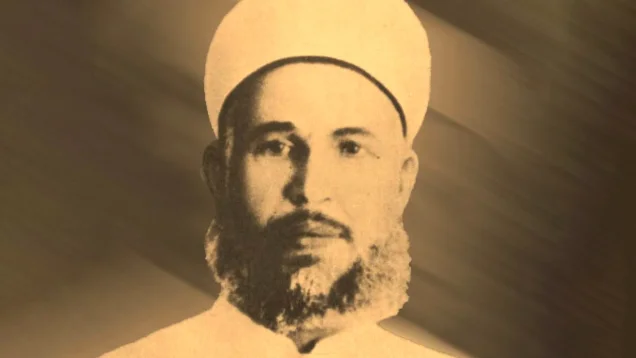
Izz al-Din al-Qassam was one of the most influential figures of armed anti-colonial resistance in Mandatory Palestine. Through preaching, education, social organizing, recruitment, and the creation of clandestine armed cells, he built a movement that opposed British colonial rule and the expanding Zionist project in Palestine.
His death in a battle with British forces near Ya'bad in November 1935 had a profound impact on Palestinian society. His funeral drew thousands of mourners, and his example became an important source of inspiration for the activists and fighters who participated in the Great Palestinian Revolt of 1936–1939.
In Palestinian collective memory, al-Qassam came to be remembered as a symbol of resistance and sacrifice against colonial rule and the loss of Palestinian land.
Birth and Early Life
Muhammad Izz al-Din ibn Abd al-Qadir al-Qassam was born in 1882 in the town of Jabla, south of Latakia in present-day Syria, then part of the Ottoman Empire.
He received his early education at the local school run by his father before traveling to Cairo as a young man to study at al-Azhar. There, he was exposed to currents of Islamic reform, anti-colonial thought, and calls for social and political renewal.
After completing his studies, he returned to Jabla in 1903, where he worked as a teacher, preacher, and religious leader.
Political Thought and Opposition to Colonial Rule
Al-Qassam's political outlook was shaped by the expansion of European colonial power across the Arab world.
In Palestine, he came to regard British colonial rule as the principal political power enabling the Zionist project. He closely followed the growth of Zionist immigration and settlement under the British Mandate and warned his followers that British support for the “Jewish National Home” threatened the political future of Palestine's Arab population.
Al-Qassam repeatedly called for unity and criticized political factionalism. He emphasized organization, secrecy, discipline, social solidarity, and preparation.
Unlike much of the established Palestinian leadership of the period, which relied heavily on petitions, delegations, conferences, demonstrations, and negotiations with the British authorities, al-Qassam became convinced that armed revolt against British rule was necessary to stop the political transformation taking place in Palestine.
Armed struggle was therefore not simply a spontaneous reaction in his political thinking. He saw it as something that required careful preparation, popular support, disciplined organization, and the recruitment of committed individuals.
Support for the Libyan Resistance
Al-Qassam's anti-colonial activism began years before his arrival in Palestine.
Following Italy's invasion of Ottoman Libya in 1911, he organized demonstrations, collected donations, and called on people in Syria to support the Libyan resistance.
He also recruited volunteers who hoped to travel to Libya to fight against the Italian invasion. The group traveled to the port of Alexandretta in expectation of transportation to the Libyan front, but the expedition did not proceed as planned and the volunteers did not reach Libya as an organized force.
These activities reflected an anti-colonial outlook that extended beyond local politics. For al-Qassam, European occupation in Libya, Syria, and later Palestine formed part of a wider struggle over foreign domination of Arab and Muslim lands.
Resistance to French Rule in Syria
After the First World War, al-Qassam became actively involved in resistance to French expansion in Syria.
He participated in armed opposition to French forces in the coastal and mountainous areas around Latakia. French authorities eventually regarded him as a threat and sentenced him to death.
As French control expanded, al-Qassam was forced to leave Syria. He eventually sought refuge in Palestine with members of his family and several companions.
A New Beginning in Haifa
Al-Qassam arrived in Haifa in late 1920, at a time when British control over Palestine was being consolidated and Zionist immigration and settlement were expanding under British protection.
Haifa was rapidly developing into one of Palestine's most important industrial and commercial centers. It was also home to a growing population of workers, rural migrants, and impoverished Palestinians, including peasants who had lost access to land transferred into Jewish ownership.
These communities became central to al-Qassam's social and political work.
Education and Social Activism
Al-Qassam initially worked as a teacher at the Burj School established by the Muslim Society in Haifa.
He also organized educational activities for workers and adults, including literacy classes. His work among poor laborers and rural migrants helped him build a broad social network beyond Haifa's established political elite.
Al-Qassam believed that resistance required more than weapons. Education, social reform, discipline, and political awareness were essential elements of his program.
Preaching at the Istiqlal Mosque
Religious preaching became another central part of his work.
Al-Qassam delivered lessons and sermons at the Istiqlal Mosque in Haifa and later became its imam and preacher. His sermons attracted workers, peasants, and residents from across the city and surrounding villages.
He used religious discourse to address contemporary political and social questions, including poverty, colonialism, Palestinian unity, Zionist immigration, and the defense of the land.
In this way, the mosque became not only a place of worship but also an important center of political education and popular mobilization.
The Young Men's Muslim Association
Al-Qassam also participated in establishing the Haifa branch of the Young Men's Muslim Association.
In July 1928, he was elected president of the branch, which played an important role in organizing young people and promoting political and national awareness.
In 1930, he was appointed a ma'dhun, a religious official attached to the Islamic Sharia court in Haifa. This position required him to travel frequently through the villages of northern Palestine, allowing him to establish close connections with rural communities throughout the Galilee and the Jenin area.
The Secret Qassamite Organization
During the late 1920s and early 1930s, al-Qassam gradually built a clandestine network of supporters committed to armed resistance.
The organization operated through small secret cells. Members were carefully selected, and secrecy was considered essential because the movement was being watched by the British authorities.
Al-Qassam recruited particularly among workers, poor peasants, rural migrants, and people who felt directly affected by the social and economic changes taking place under the Mandate.
His movement rejected factional rivalries among established Palestinian political families and attempted instead to build a disciplined grassroots organization.
By the early 1930s, British surveillance of al-Qassam and his associates had intensified.
Growing Crisis in Palestine
The political situation in Palestine deteriorated sharply during the early 1930s.
Jewish immigration increased significantly, particularly following the rise of Nazism and antisemitic persecution in Europe. At the same time, Palestinian fears grew over land transfers, unemployment, Zionist institution-building, and Britain's continuing commitment to the Jewish national home.
Al-Qassam believed that waiting indefinitely for political negotiations would allow these changes to become irreversible.
British surveillance of his network was also increasing, and he feared that the authorities would dismantle the organization before it could act.
The Decision to Take Up Arms
Accounts of al-Qassam's final sermons differ in some details, and later narratives have sometimes reconstructed them in dramatic form.
Palestinian accounts nevertheless consistently remember his final public appearances in Haifa as explicit calls for struggle against colonial rule.
One widely transmitted version of his final sermon recalls him telling his congregation that after teaching them matters of religion and homeland, the time had come for jihad—the term he used for armed struggle against British colonial rule.
In November 1935, al-Qassam left Haifa and moved with a small group of followers into the countryside of the Jenin district.
According to Palestinian historical sources, he formally declared jihad on the night of November 12, 1935 and headed with eleven companions toward the wooded hills around Ya'bad.
The Final Battle near Ya'bad
British forces launched an extensive search operation after identifying the presence of al-Qassam's group in the Jenin countryside.
On November 20, 1935, British police and security forces surrounded al-Qassam and his followers near the village of Ya'bad.
The British force greatly outnumbered the small Qassamite group.
Al-Qassam refused to surrender, and a firefight followed that lasted for approximately six hours.
By the end of the confrontation, Izz al-Din al-Qassam and four of his followers had been killed. The remaining members of the group were wounded or captured.
British authorities presented the confrontation as a successful operation against an armed underground group. Among Palestinians, however, al-Qassam's death was widely interpreted as the death of a leader who had chosen direct confrontation with colonial rule rather than surrender.
The Funeral in Haifa
News of al-Qassam's death spread rapidly through Palestine.
On November 21, 1935, Haifa observed a general strike. Shops, restaurants, and businesses closed, and thousands of Palestinians joined the funeral procession for al-Qassam and his fallen companions.
Contemporary Palestinian accounts described it as one of the largest funeral processions the city had ever witnessed.
Al-Qassam was buried in the cemetery of Balad al-Shaykh, near Haifa.
His funeral transformed his death into a national political event. Calls spread across Palestine to continue the struggle against British rule and Zionist settlement.
From al-Qassam's Death to the Great Palestinian Revolt
Al-Qassam's death did not by itself cause the Great Palestinian Revolt, which erupted several months later. Palestinian society was already experiencing profound tensions resulting from British colonial policy, expanding Zionist immigration, land transfers, unemployment, political frustration, and growing demands for national independence.
His death nevertheless became one of the most important events contributing to the atmosphere of mobilization that preceded the uprising.
Many of his surviving followers remained active, and the example of his armed organization influenced later rebel groups.
In April 1936, a series of killings and retaliatory attacks was followed by demonstrations and a nationwide general strike. The confrontation developed into the Great Palestinian Revolt of 1936–1939, one of the largest anti-colonial uprisings in the history of Mandatory Palestine.
The revolt challenged both British rule and the expanding Zionist project, demanding an end to Jewish immigration, restrictions on land transfers, and Palestinian national independence.
Al-Qassam in Palestinian Historical Memory
Izz al-Din al-Qassam occupies a distinctive place in Palestinian historical memory.
His importance rests not simply on the final battle in which he was killed, but on the years of organization that preceded it. He combined religious preaching, popular education, social work, political mobilization, and clandestine military organization, focusing much of his activity on workers, peasants, and marginalized communities.
His strategy also represented a significant departure from the methods favored by much of the established Palestinian political leadership. While political elites continued to pursue petitions and negotiations, al-Qassam advocated organized armed revolt against British colonial rule and the Zionist project.
Palestinian historians have therefore frequently regarded his movement as an important precursor to the Great Revolt of 1936–1939.
His death near Ya'bad became a powerful symbol in Palestinian collective memory: the image of a religious teacher and community organizer who left the mosque and the classroom to confront the colonial power militarily, and whose death helped intensify a wider popular movement against British rule and Zionist expansion.
Photo gallery


More from the archive
 Download Our Palestine App
The whole archive in the palm of your hand: depopulated villages, the Nakba, the massacres and Al-Aqsa — free, with no ads to erase the story.
Download Our Palestine App
The whole archive in the palm of your hand: depopulated villages, the Nakba, the massacres and Al-Aqsa — free, with no ads to erase the story.
Comments
No comments yet — be the first to write one.
Add your comment
Name and email are optional. Comments appear after review.