
Palestinian Prisoners in Winter: Cold and Deprivation in Israeli Prisons
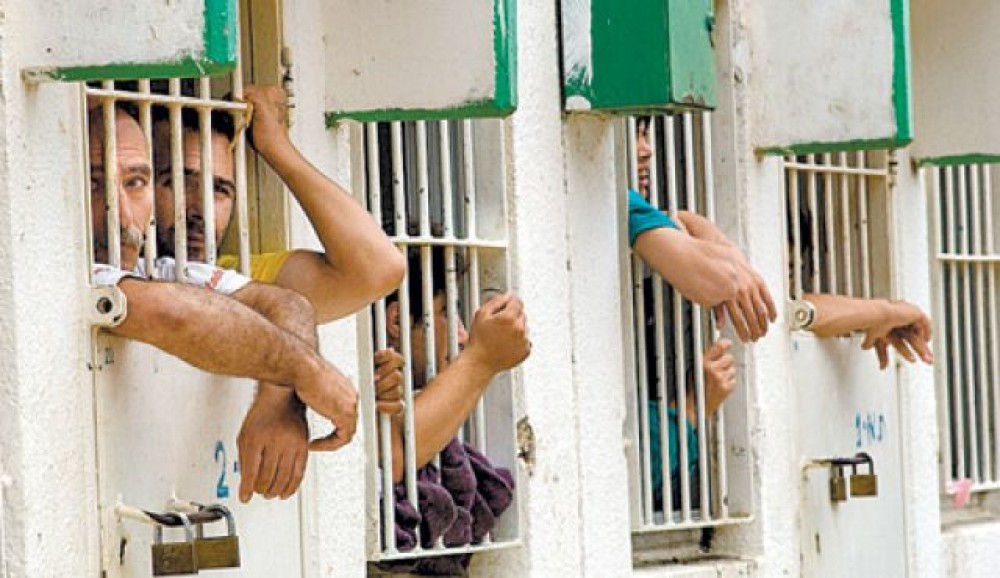
Palestinian Prisoners in Winter: Cold and Deprivation in Israeli Prisons, in the Words of Released Detainees
Every winter, the suffering of Palestinian prisoners in Israeli prisons returns: confiscated clothing, a single thin blanket, mattresses taken away, windows removed, cold water for showers, and overcrowded cells where detainees sleep on the floor. This report brings together testimonies from released detainees and documentation by Palestinian and Israeli human rights organisations on winter conditions behind bars since October 2023. It sets out what international law requires of the detaining authority, and the urgent demands ahead of the coming winter.
Key Facts About Palestinian Prisoners in Israeli Prisons
| Prisoners before the war | 4,935 (end of September 2023, according to B'Tselem) |
|---|---|
| Peak detention | About 10,863 (end of September 2025, according to B'Tselem) |
| Prisoners today | About 9,400 (October 2026, according to the Palestinian Prisoners' Society) |
| Deaths in custody since October 2023 | 84 identified prisoners by the end of 2025 (B'Tselem); Physicians for Human Rights Israel counted at least 94 by the end of August 2025 |
| Scabies cases | 1,437 across the prisons (November 2025), likely an undercount |
| Red Cross and family visits | Banned since October 2023 |
| Prisons named in winter testimonies | Naqab (Ketziot), Ofer, Nafha, Ramon, Ramla (Rakefet wing) |
When Cold Becomes a Punishment
Rain and cold are natural, but what happens to them behind bars is not. A detainee does not choose their clothes, bedding or place of sleep. They cannot close a window, switch on a heater or ask for hot water. All of that is in the hands of the detaining authority. So when a prisoner shivers all night under a thin blanket, this is not "a harsh winter"; it is the result of decisions taken by the prison administration, which bears responsibility for them.
Since October 2023, the number of Palestinian prisoners has nearly doubled. Cells are packed beyond capacity, the Israel Prison Service has confiscated most of the prisoners' belongings, and detainees have been cut off from the outside world. In this reality, a blanket and a dry piece of clothing have become conditions for survival with dignity, and depriving prisoners of them has become another tool of humiliation and torture.
From Open-Sided Detention to Sleeping on the Floor
A Palestinian nurse from Beit Lahia, who worked in the operating theatre at al-Awda Hospital in the north of the Gaza Strip, had nothing to shelter him from the rain. In testimony given to B'Tselem on 9 October 2025, after his release in February that year, he described being held with about 150 people in a roofed facility with open sides, where the rain soaked the detainees and they suffered from the cold. After some time he was given a thin blanket. He summed up those days in one sentence: "It was winter, and I was very cold."
According to his testimony, the exposure to cold began during his arrest and transfer, when he and other detainees were left in their underwear and asked for something to cover and protect their bodies. His ordeal did not end with his transfer to Naqab prison, where he was held in a room with twelve detainees and only four beds, forcing most of them to sleep on the floor.
His testimony brings together three forms of suffering that recur in many accounts: a lack of clothing, no protection from the weather, and no proper place to sleep.
Midnight Showers and Cold Water
The testimony of another released detainee from Beit Lahia, given to B'Tselem on 31 October 2025, reveals another side of winter inside Ofer prison. He said detainees were taken to shower five at a time and ordered out after one minute, given dish soap instead of proper toiletries. "In winter," he added, "the soldiers sometimes woke us up to shower in the middle of the night."
In the same testimony he described the spread of scabies and skin infections, and said those affected did not receive the treatment they asked for. The problem goes beyond the timing of a shower: inadequate hygiene, spreading disease, and a detainee with no say over when and how to care for his own body.
In Nafha and Ramon prisons, released prisoners told the newspaper Al-Quds Al-Arabi in January 2026 that hot water in the rooms was cut off at the start of winter, leaving only cold water for every use, including showers that were severely limited in time and frequency. One described prisoners being sprayed with cold water from a high-pressure hose as punishment.
Confiscated Clothes and a Single Blanket
The testimonies of released prisoners converge on one picture: prisoners facing winter with almost nothing to protect them from the cold. According to three former prisoners quoted by Al-Quds Al-Arabi:
- Clothing: the prison administration confiscated most of the prisoners' clothes, leaving many with only a thin prison uniform. One said prisoners had lost about 90% of their clothing as it was gradually taken away.
- Winter jackets: there were fewer jackets than prisoners in a room, and in one winter three prisoners had to share a single jacket.
- Blankets: one blanket per prisoner, sometimes light or spring-weight, with guards constantly counting blankets and confiscating any extra.
- Mattresses: withdrawn as collective punishment for periods of 10 to 48 hours, forcing prisoners to sleep on cold metal in the depth of winter.
- Windows: removed before winter on security grounds; later prisoners were allowed to fix a sheet of plastic on one side only, and cold air seeped in all night.
- Heating: all electrical appliances were confiscated, leaving no means of keeping warm.
- Collective punishment: raids on rooms, and prisoners forced to stay out in the yard in the cold for hours.
In Naqab prison, the Palestinian Commission of Detainees' and Ex-Detainees' Affairs said on 26 October 2025 that prisoners were short of clothing and had not yet been given winter clothes, even as night-time temperatures fell, and called for suitable clothing and blankets to be brought in quickly.
"Rakefet": Cells Below Ground
Among the harshest conditions documented in the winter of 2025–2026 were those in the Rakefet wing of Ramla prison. According to a statement by the Prisoners' Media Office on 19 January 2026, the wing lies below ground level and is plagued by damp and mould. It holds detainees whom Israel classifies as "unlawful combatants", held without charge. The statement described:
- A complete absence of winter clothing: prisoners have only a thin prison uniform, underwear and socks.
- Mattresses and blankets confiscated throughout the day and returned for only a few hours at night.
- A daily half-hour in a yard that sunlight never reaches.
- The spread of scabies and skin diseases, with some rooms placed under quarantine without adequate treatment.
Scabies, Colds and Medical Neglect
Cold, damp, overcrowding and poor hygiene combine to create ideal conditions for disease. Reports in October 2024 said about a quarter of prisoners had been diagnosed with scabies, and in November 2025 there were 1,437 scabies cases across the prisons, a figure B'Tselem believes is an undercount.
In a statement on 10 December 2025, the Commission of Detainees' and Ex-Detainees' Affairs described the cold spell as "the worst cold wave to hit the detainees in years". It spoke of concrete walls soaking up moisture, cold metal beds and freezing air seeping in all night, and of infections, severe colds, worsening joint pain and sick prisoners shivering through the night without medicine or blankets. It warned of an "imminent collective health deterioration". These are warnings issued by the Commission rather than independent medical statistics, but they are consistent with the accounts of released prisoners.
Medical neglect makes the danger worse. B'Tselem says that "denying medical treatment to prisoners and detainees remains a method of torture in itself", and Physicians for Human Rights Israel documented the denial of treatment in 6 of 10 deaths in which autopsies were carried out. In winter, an untreated cold or skin infection can become life-threatening, especially for elderly and chronically ill prisoners.
What Human Rights Documentation Shows
A single testimony cannot describe every prison, but when the same details recur across many testimonies and reports, they carry wider weight. B'Tselem's report "Living Hell", published in January 2026, draws on 21 testimonies from Palestinians released in October 2025 and the months before, and describes the Israeli prison system as "a network of torture camps". The report documents:
- "Inhumane overcrowding in the cells" after prisoner numbers doubled.
- Many prisoners sleeping on cell floors "even in winter, and in many cases without mattresses or blankets".
- Prisoners who did not change their clothes for more than two months, and others who washed their clothes and wore them wet in the winter cold.
- Rare showers, sometimes lasting no more than two minutes.
- The deaths of 84 identified Palestinian prisoners in custody between October 2023 and the end of 2025, including one minor, with Israel holding the bodies of 80 of them.
The report attributes this to a deliberate policy coming "from the very top", overseen by Israel's National Security Minister, who is responsible for the Prison Service and has publicly boasted of harsher conditions for Palestinian prisoners.
Total Isolation: No Red Cross, No Family Visits
Since October 2023, family visits to Palestinian prisoners have been cancelled entirely, and representatives of the International Committee of the Red Cross have been barred from the prisons, even though monitoring conditions of detention is at the core of their mandate. This isolation makes winter even harsher: families can no longer bring in winter clothing as they once did, no independent body can check whether blankets and heating are provided, and lawyers, when they are allowed to visit, are almost the only window into what happens inside.
What Does International Law Say About Protection From Cold?
Protecting detainees from the cold is not a favour; it is an explicit legal obligation on the detaining authority:
- The Fourth Geneva Convention (1949): Article 85 requires the occupying power to house internees in buildings that offer every guarantee of hygiene and health, provide efficient protection against dampness, and are adequately heated and lighted, with sufficient bedding and blankets. Article 90 requires that internees be provided with clothing, footwear and changes of underwear suited to the climate.
- The UN Standard Minimum Rules for the Treatment of Prisoners (the Nelson Mandela Rules): Rule 13 requires that accommodation take due account of climatic conditions, heating and ventilation; Rule 19 requires clothing suitable for the climate; and Rule 21 requires a separate bed with sufficient, clean bedding for every prisoner.
- The UN Convention against Torture: it absolutely prohibits torture and all forms of cruel, inhuman or degrading treatment, and deliberately exposing detainees to cold falls within this prohibition.
Depriving prisoners of winter clothing, blankets and heating, removing windows or confiscating mattresses as punishment is therefore not a "difficult circumstance" but a violation that demands accountability.
Urgent Demands Before Next Winter
As the winter of 2026–2027 approaches, the call for winter clothing and dry bedding should not become an emergency appeal repeated with every storm. The testimonies point to practical demands whose implementation can be verified:
- Provide sufficient winter clothing and blankets for every prisoner, and allow families to bring them in.
- Restore windows and ensure sleeping quarters that protect from rain, cold and damp, with heating and hot water.
- End the confiscation of mattresses and blankets as collective punishment.
- Address overcrowding and guarantee a bed for every detainee.
- Ensure personal hygiene and medical care, and tackle scabies and skin diseases.
- Restore Red Cross and family visits, and allow independent human rights bodies to inspect conditions and interview detainees.
- Open independent investigations into the incidents described by released prisoners, and hold those responsible to account.
Frequently Asked Questions About Palestinian Prisoners in Winter
What are winter conditions like for Palestinian prisoners in Israeli prisons?
According to released prisoners and human rights organisations, many face winter in a thin prison uniform with a single blanket, in overcrowded cells where some sleep on the floor, with clothing and electrical appliances confiscated, windows removed in some prisons and hot water cut off.
How many Palestinian prisoners are in Israeli prisons?
About 9,400 in October 2026, according to the Palestinian Prisoners' Society, compared with about 4,935 before October 2023.
What illnesses does the cold cause among prisoners?
The Commission of Detainees' and Ex-Detainees' Affairs reports infections, severe colds and worsening joint pain, while scabies and skin diseases spread due to overcrowding and poor hygiene, and many sick prisoners are denied treatment.
Is the Red Cross allowed to visit Palestinian prisoners?
No. Since October 2023, representatives of the International Committee of the Red Cross have been barred from the prisons, and family visits have been cancelled entirely.
What does international law say about protecting detainees from the cold?
The Fourth Geneva Convention (Articles 85 and 90) and the Nelson Mandela Rules (Rules 13, 19 and 21) require the detaining authority to provide heated quarters protected from damp, clothing suited to the climate, and sufficient bedding and blankets for every detainee.
Conclusion
The testimony of the nurse soaked by rain under an open-sided roof, the detainee woken to shower in the middle of the night, and the prisoners who shared one jacket and slept on cold metal are not passing details about "a harsh winter". They are evidence of a policy that can be named, and whose authors can be held to account: who decided to confiscate the clothing? Who ordered the windows removed and the mattresses taken away? And how will prisoners be protected from the same treatment next winter?
That is the issue that must stay in view: the right of every Palestinian detainee to have their body protected from cold and disease, to have their testimony heard, and to see the occupation authorities bear full responsibility for the conditions of their detention, until they regain their freedom.
 Download Our Palestine App
The whole archive in the palm of your hand: depopulated villages, the Nakba, the massacres and Al-Aqsa — free, with no ads to erase the story.
Download Our Palestine App
The whole archive in the palm of your hand: depopulated villages, the Nakba, the massacres and Al-Aqsa — free, with no ads to erase the story.



Comments
No comments yet — be the first to write one.
Add your comment
Name and email are optional. Comments appear after review.