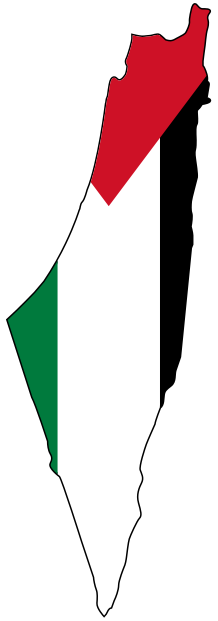
The Palestinian Village Before the Nakba: Home, Harvest and Peasant Life
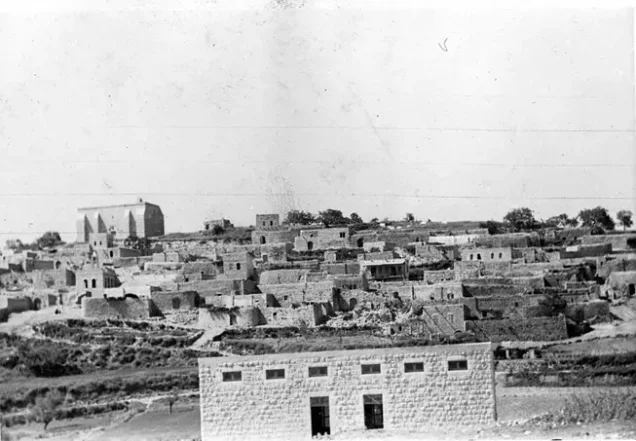
Most Palestinians before the Nakba were peasants: about three-quarters of the population lived in villages, and farming was their main livelihood. In 1948 hundreds of Palestinian villages were depopulated: 418 villages according to Walid Khalidi, and 531 towns, villages and communities according to broader lists that include the Beersheba tribes. [1] [2]
This article tells how the Palestinian village lived before 1948: how the peasant built his house, how he sowed, harvested and threshed on the threshing floor, how neighbors helped one another through the ouneh, who governed the village and settled its disputes, and what weighed on the peasant. Each depopulated village has its own page in our depopulated Palestinian villages section.
The Palestinian Village Before the Nakba in Numbers
| Item | Figure |
|---|---|
| Share of Palestinians living in rural areas | About three-quarters [2] |
| Depopulated villages (Walid Khalidi) | 418 villages [1] |
| Depopulated towns, villages and communities (expanded list) | 531 [1] |
| Government boys' schools in villages (1945/1946) | 377 schools [6] |
| Government girls' schools in villages (1945/1946) | Only 55 schools [6] |
| Village donations to their schools (1941–1945) | About 325,120 Palestinian pounds [6] |
Mountain, Plain and Coastal Villages
Palestinian villages were not all alike. In the mountains of Galilee, Nablus, Jerusalem and Hebron, villages were built of stone on hilltops and slopes; the sloping land was farmed on stone terraces (sanasil) that held the soil, and olive, fig and grape orchards spread across them. On the coastal plain and in Marj Ibn Amer, houses were built of mudbrick, fields of wheat, barley, maize and sesame stretched out, and on the coast there were orange groves. [3] [2] In the Naqab, the Beersheba tribes lived between the tent, rain-fed farming and herding, and the expanded list of depopulated villages counts them among them. [1]
Size varied too: from small villages of a few hundred people to large ones like Lifta, which had about 2,550 residents in 1945, or Deir Aban, whose lands covered 21,578 dunams in 1944. [8] [12]
The Peasant House
The peasant built his house from what was at hand: stone in the mountains of Jerusalem, Nablus and Hebron, and sun-dried mudbrick on the coastal plain. The mortar was lime-based, and walls were whitewashed with lime and indigo. The roof was made of mud mixed with straw over layers of wood and brushwood; it needed repairs every winter, and rainwater from it was collected in a cistern. In the north, roofs were flat on wooden beams; in the south, where straight timber was scarce, vaulted roofs were more common. [3]
The house usually had one story, sometimes with an upper room ('ulliya) reached by a staircase. Windows were few, and small vents near the roof let in air and let out cooking smoke. In front of the house was a courtyard with a shaded bench (mastaba) under a tree or trellis, a chicken coop, a shelter for the animals, a straw store, a hearth and an oven. [3]
Building was a collective effort: the family built with the help of neighbors and relatives, a sheep was slaughtered when the foundation was laid, and meals were shared after each stage. Blue beads or a blue "hand" were hung above the door against the evil eye, and an olive branch and a white cloth were placed on the roof for blessing. [3]

Bread and Provisions: The Taboun and the Khabiya
Bread was the heart of the village kitchen. It was baked in the taboun, a clay oven partly sunk into the ground, with a narrow opening at the top and a clay lid, and small smooth pebbles on its floor on which the dough was placed. The fire was not lit inside it but around and over it, with dung cakes, dung and straw, so that the heat seeped inward. The taboun usually stood in a separate shelter outside the house, and several families sometimes shared it in turn. Alongside it was the saj, a metal dome for thin bread over an open fire. [9]
Wheat was stored in the khabiya, called kuwara in the north: a large container that women made from clay mixed with straw, coated with lime and set on a bench inside the house, with a wide opening at the top for filling and a small one at the bottom, plugged with a cloth, for taking out grain. The khabiya was often part of a bride's dowry. Surplus grain was hidden in the matmura, an underground pit lined with straw and covered with earth. Women ground the grain at home with a stone hand mill. [9]
The year's provisions (mouneh) were prepared in summer and autumn: oil and olives, bulgur and freekeh, dried figs and raisins, and za'atar. Read about Palestinian winter dishes.
The Farming Year: From Plowing to the Threshing Floor
The village was nearly self-sufficient. In Tal al-Safi, for example, farmers grew wheat, barley, maize, sesame, tomatoes and okra, and planted olive, apple, fig and almond trees. In Lifta they grew zucchini, cauliflower, tomatoes, wheat, barley, lentils and maize. Surplus was sold in the city to buy what the village did not produce. [2]
Plowing began with the first rain, and harvest came in early summer. Harvesting was collective work done with the sickle; the crop was then carried to the threshing floor (baydar), the open ground where wheat was threshed. Threshing was done with a threshing sledge (lawh al-dras) pulled by oxen over the stalks to separate grain from straw, then came winnowing with a pitchfork in the wind, and the grain was cleaned with sieves. [4]
The threshing floor was more than a workplace: in summer it was the village square, where people gathered, stayed up late and sang harvest songs. Read about folk festivals in Palestine before the Nakba.
The Olive Season
In autumn came the olive harvest, one of the village's most important seasons, when whole families went out to the groves and neighbors helped one another. [4] The oil was then pressed in the village presses and stored for the whole year, and some of it went to the soap factories of Nablus. Read: Nabulsi soap and Palestinian Industries Before the Nakba.
Ouneh: The Village as One Hand
Ouneh was voluntary mutual help among villagers. Neighbors worked together at plowing, olive picking, harvesting wheat, barley, maize, chickpeas and lentils, and building houses. Helpers were not paid; the landowner fed them. [4] Families worked the fields together: men, women and children. [2]
Crafts and Animals
The village made much of what it needed. The blacksmith made stonemasons' tools, sickles and plowshares [3]; women made clay storage jars and ovens [9]; and the carpenter made doors and threshing sledges. Animals were the peasant's partners: oxen pulled the plow and the threshing sledge [4], donkeys and camels carried the crops, and goats and sheep grazed the hills, giving milk, yogurt, cheese and wool. Even in the house, animals had their shelter in the courtyard and chickens their coop. [3] Read about the larger crafts of the cities: Palestinian Industries Before the Nakba.
The Spring and the Well
The spring or well was the heart of the village. In Lifta, the Lifta spring in Wadi al-Shami was one of the village's main landmarks and water sources [8]; in Tal al-Safi, a well at the edge of the village had its water raised by animals into storage tanks. [2] Women filled their jars at the spring, which became a meeting place for the village women and their news.

Village Women and the Embroidered Thobe
The village woman was not only a homemaker. She worked in the fields alongside men at harvest and olive picking [2], made clay storage jars, ground wheat with the hand mill, baked in the taboun and filled the jars at the spring. [9]
The embroidered thobe was the identity of a woman and her village. Girls learned embroidery from their mothers and grandmothers and spent months embroidering their wedding thobe, handkerchiefs and pillow covers. Each region had its own style: orange motifs around Haifa, red and blue flowers and leaves in Galilee, grapes and olives in Hebron, stars in Beersheba, gold and silver thread in Bethlehem; and Gaza, Majdal and Nazareth were early centers of weaving. [10]
Colors told a woman's status: a girl wore blue, a married woman red, and a widow covered the red with blue. The colors came from nature: yellow from saffron, brown from tree bark, and blue from indigo. [10] Read: The Palestinian Wedding.
The Mukhtar and the Madafa
The mukhtar was the village's link to the government. The post was usually inherited by large landowning families from Ottoman times, and the mukhtar dealt with the district offices on village matters such as registering births and deaths and obtaining building permits. [7]
The madafa, or diwan, was the village's open house: there guests and travelers were received, men gathered in the evening to hear the news, village affairs were discussed, and mediation delegations (jaha) and reconciliations (sulha) between quarreling parties took place.
The Mosque and the Maqam
Almost every village had a mosque and a maqam, the shrine of a saint, prophet or holy figure. In the West Bank, Gaza and Jerusalem alone there are about 395 maqams, according to the Palestinian Ministry of Tourism and Antiquities. A maqam was usually a small building of four walls carrying a dome, with a mihrab facing the qibla and niches for oil lamps. [11]
The maqam's role was not only religious: people visited it for blessing and prayer and to fulfill vows, swore oaths there and settled disputes there. Celebrations such as circumcisions were held there in fulfillment of vows. [11] Read about Palestinian folk festivals, including the saints' seasons.
The Kuttab and the Village School
The kuttab was the first school a village child knew, teaching Quran, Arabic and arithmetic. In al-Walaja, for example, boys studied at the teacher's house for a small fee, and the kuttab lasted there until 1938. [12] Government schools spread under the Mandate, but they remained few: in 1945/1946 villages had 377 boys' schools and only 55 girls' schools. Where the government fell short, villagers built schools themselves, donating about 325,120 Palestinian pounds to their village schools between 1941 and 1945. [6] Read: Education in Palestine Before the Nakba.

The Village and the City
The village was not cut off from the city. Peasants sold their surplus crops in city markets to buy what the village did not produce [2], and villages supplied the cities with vegetables, wheat, oil and firewood. Under the Mandate, many peasants left the land to work in Haifa and Jaffa, at the port, on the railway and in army camps. [2] Read: Jaffa Before the Nakba.
The Land: Musha', Taxes and Debt
The lands of many villages were musha', held collectively and periodically redistributed among village families by lot every year or two. The British saw musha' as an obstacle to "development" and encouraged individual ownership; in 1928 they began surveying land and settling title, a process that lasted two decades and covered only about 20% of Palestine. [5]
The peasant paid the tithe ('ushr) on his crop and the werko tax on top of it, and borrowed every season to sow and harvest. Moneylenders charged peasants interest as high as 23%, as Najib Nassar wrote in the newspaper al-Karmil, and much land passed to merchants through debt. [5]
The pressure grew under the Mandate: taxes weighed on the peasants, and British policies undercut their prices. In the village of Maskeh, surplus wheat went unsold because the government imported cheaper Australian wheat, and many left the land to work in Haifa and Jaffa. [2]
Marj Ibn Amer: The First Uprooted Villages
The uprooting of Palestinian peasants began a quarter of a century before the Nakba. Many peasants in Marj Ibn Amer farmed land they did not own, because it was registered to absentee families in Beirut and Damascus, above all the Lebanese Sursock family. From the early 1920s these families sold the land to Zionist institutions, and 22 villages in the Marj were then uprooted, among them al-Fula, al-Afula, Nuris, Janjar and Kafr Tab. [13]
The peasants of the Marj were scattered, and many ended up as refugees in Jenin and Haifa, where marginalized neighborhoods formed. Evictions in other villages, such as Qira and Qamun, continued into the mid-1940s. [13]
The Peasants and the 1936 Revolt
Peasants were the backbone of the Great Palestinian Revolt of 1936–1939 and made up a large share of its fighters. [2] The villages paid the price: in Bayt Nabala, British artillery shelled the village after its people fired on a convoy, killing several children, as Fatima Nakhla recalls. [2] Sheikh Izz al-Din al-Qassam had made the peasants of the north and the workers of Haifa the core of his movement before he was killed in 1935. Read: Haifa Before the Nakba.
One Village: Lifta
Lifta, northwest of Jerusalem, is an example of the Palestinian village before the Nakba. In 1945 it had about 2,550 residents, and its lands covered 8,743 dunams, 89% of them Palestinian-owned. In the first weeks of January 1948 its people were driven out, months before the end of the Mandate. [8] Its stone houses still stand on the valley slope today. See the Lifta village page.

The Nakba: Villages Wiped Out
In 1948 the people of hundreds of Palestinian villages were driven out. The number depends on how they are counted: Walid Khalidi counted 418 villages in All That Remains, excluding towns and places without permanent houses. The expanded list compiled by Salman Abu Sitta includes 531 towns, villages and communities, among them 78 tribes in the Beersheba district. [1]

Most of these villages were destroyed, settlements and forests were planted on their lands, and Israel seized them under the "Absentees' Property" law. [5] Their memory lives on in house keys and in the names of villages that refugees' children still carry.
Browse our depopulated Palestinian villages section to learn about each village: its location, population, lands, the date of its depopulation and its photos. Villages of the Jerusalem district include Lifta, Ein Karem, al-Qastal and Deir Yassin.
Read also: The Palestinian Wedding, Palestinian Folk Games and Palestinian Folk Tales.
Conclusion
The Palestinian village was a complete world: a house of stone and mud, land farmed together, a threshing floor that brought people together, a spring that watered them and a guest house that settled their disputes. The Palestinian peasant was rooted in his land until he was uprooted from it in 1948. That is why the depopulated village remains more than a place in Palestinian memory: it is the life that was, and the right to return to it.
Frequently Asked Questions About the Palestinian Village Before the Nakba
How many Palestinian villages were depopulated in 1948?
Walid Khalidi counted 418 depopulated villages, while Salman Abu Sitta's expanded list includes 531 towns, villages and communities, among them the Beersheba tribes.
What is the baydar?
The baydar is the open threshing floor where the village threshed its crops after harvest, using a threshing sledge pulled by oxen, before winnowing them in the wind to separate grain from straw.
What is ouneh?
Ouneh is voluntary mutual help among villagers in plowing, harvesting, olive picking and building houses, without pay; the landowner feeds the helpers.
What is musha' land?
Land held collectively by the village and periodically redistributed among families by lot every year or two. The British encouraged turning it into individual ownership.
What was the role of the mukhtar in the Palestinian village?
The mukhtar was the village's link to the government, dealing with official offices on village matters such as registering births and deaths. The post was usually held by large landowning families.
How did the Palestinian peasant build his house?
He built it of stone in the mountains and mudbrick on the plain, with lime mortar and a roof of mud and straw over wood, with the help of family and neighbors.
What is a khabiya?
A large container of clay mixed with straw that women made to store wheat at home. In northern Palestine it was called a kuwara, and it was often part of a bride's dowry.
What happened to the villages of Marj Ibn Amer?
After the Lebanese Sursock family and other absentee families sold the lands of the Marj to Zionist institutions from the early 1920s, 22 villages were uprooted, including al-Fula and al-Afula, about a quarter of a century before the Nakba.
Sources and References
Arabic-language sources are listed with translated titles.
- "Compilation of the Depopulated Villages List," Palestine Land Society, from Salman Abu Sitta, Palestinian Right of Return: Sacred, Legal and Possible.
- Fareed Taamallah, "The Lost Land: Nakba Survivors Recall the Rural Struggle Under British Rule in Palestine," Noon Post, May 15, 2020 (Arabic).
- Mohammed Hussein al-Sheikh, "Before the Ruin: How the Palestinian Peasant Built His House," Noon Post, June 8, 2025, drawing on Tawfiq Canaan's study The Palestinian Arab House (Arabic).
- Palestine Wildlife Society, "Cultural Heritage Brochure" (Arabic).
- Munir Fakher Eldin (Birzeit University), "From Taxation to Dispossession: Land Governance and the Colonization of Palestine," Almuntaqa, no. 19, Arab Center for Research and Policy Studies (originally in Arabic in Ostour, no. 22, February 2025).
- Palestinian National Information Center (WAFA), "Education Under the British Mandate" (Arabic).
- Faisal Salim al-Talawi, "The Mukhtar," Diwan al-Arab, February 10, 2015 (Arabic).
- "Lifta," Depopulated Palestinian Villages section, Palestinina (Arabic).
- Mohammed Hussein al-Sheikh, "Rituals and Stories: Palestinian Bread From the Clay Jar to the Wood-Fired Oven," Noon Post, April 30, 2025 (Arabic).
- Aya Mamdouh, "How the Palestinian Thobe Became a Symbol of Resistance," Midan, Al Jazeera Net, November 13, 2023 (Arabic).
- "Maqams in Palestine: Facts, Rituals, Superstitions and Strange Customs," Al Jazeera Net, March 24, 2019 (Arabic).
- Rochelle Davis, "Peasant Narratives: Memorial Books as Sources for the History of Jerusalem Villages," Institute for Palestine Studies (Arabic).
- Ali Habib Allah, "Population Transfer and Exchange: An Overlooked Model of the Nakba," Noon Post, June 7, 2024 (Arabic).
More from the archive
 Download Our Palestine App
The whole archive in the palm of your hand: depopulated villages, the Nakba, the massacres and Al-Aqsa — free, with no ads to erase the story.
Comments
No comments yet — be the first to write one.
Add your comment
Name and email are optional. Comments appear after review.