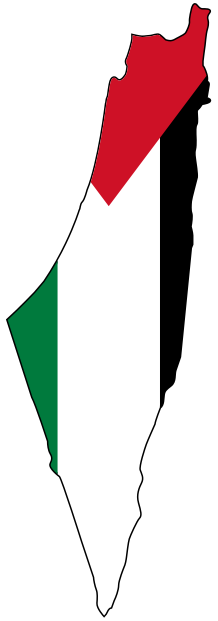
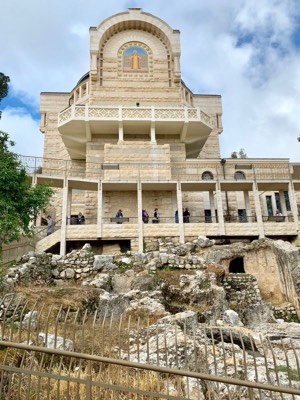
Monastery of the Temptation (Deir Qarantal),

Monastery of the Temptation (Deir Qarantal), Jericho: The Mount of Forty
The Monastery of the Temptation, known in Arabic as Deir Qarantal, is a Greek Orthodox monastery built into the cliffs of the Mount of Temptation, about 3 km north-west of Jericho, overlooking the city and the Jordan Valley. It stands over the cave where Christian tradition says Jesus fasted for forty days and nights and was tempted by the devil after his baptism in the Jordan. The present building dates from 1895, on a site occupied by ancient fortresses, Byzantine hermits and Crusader churches. Today the world's lowest cable car carries visitors up to it. This guide covers its name, history, architecture and situation today.
Quick facts
| Arabic name | دير قرنطل / دير التجربة |
|---|---|
| Greek name | Μοναστήρι του Πειρασμού |
| Location | Mount of Temptation (Mount Qarantal), about 3 km north-west of Jericho |
| Height | About 350 m above Jericho and the Jordan Valley; upper cable-car station about 50 m below sea level |
| Church | Greek Orthodox Patriarchate of Jerusalem |
| Tradition | Cave where Jesus fasted 40 days and was tempted |
| First monastery | Byzantine, 6th century (hermits in the caves earlier) |
| Present building | Land bought 1874; monastery built 1895 |
| Cable car | From Tell es-Sultan, 1,328 m long, opened 1999; world's lowest |
| Jurisdiction | Within the Jericho area under the Palestinian Authority |
The name: Qarantal and the Mount of Forty
Early Christians called the mountain the "Mount of Forty", after the forty days of Jesus' fast. The Crusaders named it Mons Quarantana, from the Latin word for forty (quadraginta, Italian quaranta), and the Arabic name Qarantal comes from that. In English it is known as the Mount of Temptation, after the Gospel account of the devil's temptation of Jesus.
Location
The monastery clings to a steep cliff on the eastern face of the mountain, about 3 km north-west of Jericho, near Tell es-Sultan (ancient Jericho) and Ein al-Sultan spring. It sits about 350 metres above the city and the Jordan Valley, which lie around 250 metres below sea level. From its terraces visitors see Jericho, the Jordan Valley, the Dead Sea and the mountains of Jordan. Some 30 to 40 caves dot the mountain's eastern slope, once home to hermits.
History through the ages
- Antiquity: thanks to its commanding position over Jericho and the Jordan Valley, the summit was fortified from before the Common Era.
- Early Christianity: hermits settled in the caves of the slope. According to tradition, Empress Helena identified the mountain as a holy place during her pilgrimage in 326.
- Byzantine period: the first monastery was built in the 6th century over the cave traditionally linked to Jesus' fast.
- Early Islamic period: Palestine, including Jericho, came under Muslim rule in the 630s, during the caliphate of Omar ibn al-Khattab.
- Crusader period: after 1099 the Crusaders built two churches on the site, one in a cave halfway up the cliff and the other on the summit, and called the mountain Mons Quarantana. The site was later abandoned.
- Late Ottoman period: the Greek Orthodox Patriarchate bought the land in 1874 and in 1895 built the present monastery around the cave chapel. An attempt to build a church on the summit failed, and its unfinished walls still stand on the slope above the monastery.
- Palestinian Authority: since 1994 the Jericho area has been under the Palestinian Authority. In the early 2000s only a few monks lived in the monastery.
Architecture and the Cave of the Temptation
The monastery is built into the rock face, its walls and balconies seeming to hang from the cliff. A narrow path and stairway lead up to its gate. Inside, the heart of the monastery is the cave chapel, which holds the stone on which, according to tradition, Jesus sat during his fast. The chapels are decorated with Orthodox icons, and the monks' cells and terraces look out over the valley.
Religious significance
According to the Gospels (Matthew 4:1–11, Luke 4:1–13), after his baptism in the Jordan, Jesus went into the wilderness, fasted for forty days and nights and rejected the devil's three temptations. Tradition places this at the Mount of Temptation, which also gave its name to the forty days of Lent. The monastery is a station on pilgrims' routes linking the baptism site on the Jordan, Jericho and Jerusalem.
The Jericho cable car
An Austrian–Swiss company built a cable car in 1998 from Tell es-Sultan up to the level of the monastery, as an attraction for the 2000 millennium celebrations, and it opened to the public in 1999. It is 1,328 metres long, and Guinness World Records lists it as the world's lowest aerial cable-car route, with its upper station about 50 metres below sea level. A restaurant, café and souvenir shop stand at the upper station near the monastery entrance.
The monastery today (2026)
The monastery is still run by the Greek Orthodox Patriarchate of Jerusalem and opens to visitors. But Jericho's tourism, the backbone of its economy, has been badly hit since the genocide war on Gaza began in October 2023. Foreign pilgrims have largely stopped coming, and Israeli forces have expanded iron gates and checkpoints at the entrances of West Bank cities, cutting Jericho off from the rest of the West Bank and from Jerusalem. Settlement outposts have also multiplied in the Jericho and Jordan Valley area.
Heritage and legal protection
The Palestinian Ministry of Tourism and Antiquities has placed the desert monasteries of Palestine on its tentative list for UNESCO World Heritage, and the nearby Tell es-Sultan was inscribed as a World Heritage Site in September 2023. As a religious and historic site in occupied territory, the monastery is protected by the 1954 Hague Convention for the Protection of Cultural Property and the Fourth Geneva Convention.
Frequently asked questions
Where is the Monastery of the Temptation?
On the cliffs of the Mount of Temptation, about 3 km north-west of Jericho, overlooking the city and the Jordan Valley.
What does "Qarantal" mean?
It comes from the Crusader name Mons Quarantana, from the Latin word for forty, recalling the forty days Jesus fasted on the mountain according to tradition.
When was the Monastery of the Temptation built?
The first monastery dates from the Byzantine 6th century. The present Greek Orthodox monastery was built in 1895 on land bought in 1874.
How do you get to the monastery?
By the Jericho cable car from Tell es-Sultan, the world's lowest at 1,328 metres long, or on foot by a steep path.
Who runs the Monastery of the Temptation?
The Greek Orthodox Patriarchate of Jerusalem owns and runs it, within the Jericho area under the Palestinian Authority.
Conclusion
Suspended between earth and sky above the oldest city in the world, the Monastery of the Temptation keeps the memory of forty days of fasting in the wilderness. From the ancient fortresses to the hermits' caves and the cable car, the mountain tells Jericho's long history, and today it waits for the pilgrims that war and closures have kept away.
More from the archive


 Download Our Palestine App
The whole archive in the palm of your hand: depopulated villages, the Nakba, the massacres and Al-Aqsa — free, with no ads to erase the story.

Comments
No comments yet — be the first to write one.
Add your comment
Name and email are optional. Comments appear after review.