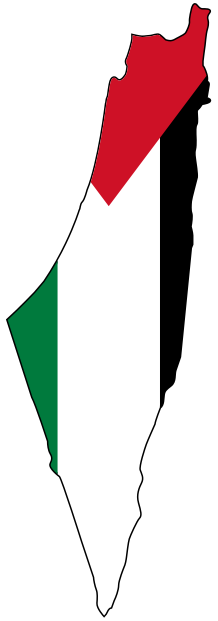
The Jaffa–Jerusalem Railway

The Jaffa–Jerusalem Railway
The Jaffa–Jerusalem Railway: The First Train in Palestine and the Arab East
The Jaffa–Jerusalem Railway was the first railway line in Palestine and in the Ottoman provinces of the Arab East. It opened on 26 September 1892 after more than two years of work, linking the Mediterranean port of Jaffa with the city of Jerusalem via Lydda, Ramla and the villages of al-Sajad, Deir Aban and Battir. A French company built it under an Ottoman concession to serve European pilgrims and European trade; Palestinians resisted it during the 1936 revolt, and the Nakba cut it in 1948, when Jaffa fell and the villages along its route were occupied and their people expelled. This guide covers the line's history, its stations and the fate of the line and the villages around it.
Quick facts
| Arabic name | خط سكة حديد يافا – القدس |
|---|---|
| Construction began | 31 March 1890 |
| Opened | 26 September 1892 |
| Concession | 1888, by Ottoman firman |
| Operating company | Ottoman Jaffa–Jerusalem Railway Company, under French management |
| Length | About 87 km |
| Stations | Jaffa, Lydda, Ramla, al-Sajad, Deir Aban, Battir, al-Walaja (never completed), Jerusalem |
| Journey time | 3 hours 40 minutes to 3 hours 45 minutes |
| Resistance | Attacks on the line during the 1936 revolt |
| Nakba | Line cut in 1948 and villages on its route occupied |
Route and stations
The line set out from the station in Jaffa near the port and ran east across the coastal plain to Lydda and Ramla, then to the village of al-Sajad, before beginning its climb into the Jerusalem hills through Wadi al-Sarar to Deir Aban, winding through Wadi Ismail and Wadi al-Sarar to Battir, then the never-completed al-Walaja station, and finally the station of Jerusalem, south-west of the Old City. The mountain section was the hardest, requiring explosives to cut its path.
Concession and construction
Contrary to popular belief, the Ottoman state did not build the line. Its concession was granted in 1888 to a Jewish businessman from Jerusalem who could not find funding for the project, so France took it over and the "Ottoman Jaffa–Jerusalem Railway Company" was founded under French management. Work began on 31 March 1890, advancing quickly on the coastal plain and slowly in the mountains, until the line opened on 26 September 1892. Palestinian historians describe it as "a European colonial railway in Palestine", since its declared aims were religious, to ease European Christian pilgrims' journey to Jerusalem, and commercial, to expand European trade.
The train in the Ottoman period
The train made one trip a day in each direction: it left Jerusalem at 7:15 a.m. and reached Jaffa at 11:00, and left Jaffa at 2:20 p.m. and reached Jerusalem at 6:00 p.m. A first-class ticket cost four dollars and a second-class ticket 33 cents. The train shortened a journey that had taken a day or more by animal or carriage, on a road notorious for bandits. During the First World War the Ottoman army used the line for military purposes, and the British rebuilt it after occupying Palestine.
The British Mandate and the 1936 revolt
Under the British Mandate the line became part of Palestine Railways and a means of transporting British military supplies. During the 1936 revolt Palestinian rebels targeted it with mines and attacks on locomotives, especially those carrying military supplies, and the British responded by placing Palestinians in the leading locomotive and making its driver one of them to deter attacks.
The Nakba and the severing of the line
In 1948 the Nakba cut the line: Jaffa fell in May 1948 and most of its people were expelled; Lydda and Ramla were occupied in July 1948 and their people driven out in one of the largest expulsions; and the villages of al-Sajad, Deir Aban, al-Walaja and others along the route were occupied and their people expelled. Most of the neighbourhoods and houses along the line were placed under what Israel calls the "Custodian of Absentee Property". The Jaffa station stopped operating, and Israel later reopened the line to serve its new towns, while old Palestinian stations and houses along it remain as witnesses to their expelled owners.
Battir: the village that guarded its land beside the tracks
Battir, a village south-west of Jerusalem, was one of the line's stations, and its fate became bound up with it after the Nakba: the 1949 armistice line ran alongside the tracks, and Battir's people were able to stay in their village and keep their farmland on the other side of the line in exchange for a commitment not to interfere with train traffic. On 20 June 2014 UNESCO inscribed "Palestine: Land of Olives and Vines – Cultural Landscape of Southern Jerusalem, Battir" on the World Heritage List, with its agricultural terraces and the ancient Roman irrigation system at the foot of which the railway runs.
The line today (2026)
Trains stopped running on the line in 1998 for maintenance, and it reopened in 2005 without the last original section in Jerusalem, which the occupation municipality turned into a walking and cycling path, while the original Jaffa and Jerusalem stations remain as historic buildings used for tourism and commerce. Most Palestinians in the West Bank and Gaza cannot use the line or reach Jaffa and Jerusalem because of occupation policies. With its stations and old Palestinian houses, the line remains a witness to Jaffa and Jerusalem before the Nakba, and to the villages the train passed through before their people were uprooted.
Frequently asked questions
When did the Jaffa–Jerusalem Railway open?
On 26 September 1892, after work began on 31 March 1890.
Did the Ottoman state build the line?
No. Its concession was granted in 1888 by Ottoman firman, and a French company built and ran it; Palestinian historians describe it as a European colonial railway.
What were the line's stations?
Jaffa, Lydda, Ramla, al-Sajad, Deir Aban, Battir, al-Walaja (never completed) and Jerusalem.
How long did the journey between Jaffa and Jerusalem take?
About three hours and forty minutes, with one trip a day in each direction.
What happened to the line in 1948?
The Nakba cut it: Jaffa, Lydda and Ramla fell, the villages along its route were occupied and their people expelled, and the houses around it were placed under the "Custodian of Absentee Property".
Conclusion
From the port of Jaffa to the walls of Jerusalem, the first train in the Arab East cut its way across the plains and hills of Palestine in 1892. More than a century later its tracks still pass villages whose people were expelled and stations that lost their cities, while Battir alone still guards its land on both sides, a witness that the memory of this line is Palestinian above all.
More from the archive
 Download Our Palestine App
The whole archive in the palm of your hand: depopulated villages, the Nakba, the massacres and Al-Aqsa — free, with no ads to erase the story.

Comments
No comments yet — be the first to write one.
Add your comment
Name and email are optional. Comments appear after review.