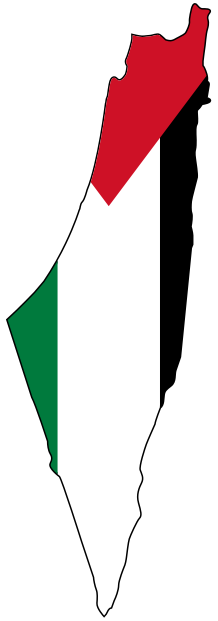
The Seven Mills (al-Jarisha)

The Seven Mills (al-Jarisha), Jaffa: Water Mills on the Awja River
The Seven Mills (al-Sab' Tawahin) was the name by which the Palestinian village of al-Jarisha in the Jaffa district was known, after the water mills its people built on the banks of the Awja River to grind grain, about 7 km north-east of Jaffa. The small village, home to 190 people in 1945, was a place farmers from the villages of Jaffa and the coast came to grind their wheat and barley, surrounded by citrus and banana groves. In May 1948, shortly before the end of the British Mandate, Zionist forces occupied it and its people were expelled; the village was then completely obliterated, and nothing remains of its mills but ruins amid the roads, neighbourhoods and parks built on its land. This guide covers the story of the village, its mills and its Nakba.
Quick facts
| Arabic name | السبع طواحين (الجريشة) – يافا |
|---|---|
| District | Jaffa |
| Distance from Jaffa | About 7 km north-east of the city |
| River | Awja River |
| Best known for | Water mills for grinding grain |
| Population 1596 | 121 |
| Population 1931 / 1945 | 183 / 190 |
| Land area (1945) | 555 dunams |
| Occupied | May 1948 (between 1 and 15 May, according to sources) |
| Refugees (1998) | About 1,354 |
The name
The village was popularly known as "the Seven Mills" for the many water mills built on the river there. Its name al-Jarisha probably derives from jarsh, the grinding of grain, because it lay beside the grain mills, so its name was tied from early on to its people's work.
Location and the Awja River
The village stood on the southern bank of the Awja River, about 7 km north-east of Jaffa, on the Palestinian coastal plain. The Awja is the second-largest river in Palestine after the Jordan; it rises at Ras al-Ain and flows into the Mediterranean north of Jaffa, and its perennial waters turned the mills and irrigated the area's groves. A bridge known as the Awja Bridge linked the two banks at the village.
The mills
The people of al-Jarisha built water mills on the river that used the flow of the Awja to turn millstones, grinding wheat, barley and maize for the village and neighbouring villages of the Jaffa district. Photographs from 1917, 1918 and 1930 show the village mill, its water mills and the bridge over the river, and sources record that in the late 19th century the village had a private well and a mill. The mills were among the landmarks of the Jaffa countryside, a destination for farmers who carried their harvests on animals to be ground.
History of the village
- 1596: al-Jarisha was a village in the nahiya of Bani Sa'b in the Ottoman liwa of Nablus, with 121 inhabitants.
- Late 19th century: the village had a private well and a mill on the river.
- 1917–1930: photographs document the water mills and the Awja Bridge at the village.
- 1931: its population reached 183.
- 1945: its population reached 190, all Muslims.
- May 1948: the village was occupied and its people expelled.
Life and economy
Besides the mills, al-Jarisha's people worked in farming irrigated by the Awja: in 1944/45, 302 dunams of its land were planted with citrus and bananas and 89 dunams were irrigated or used as orchards. Its land covered 555 dunams, of which Palestinians owned 397 and 65 were public land, while 93 were in Jewish hands. The colony of Ramat Gan, founded in 1921, lay close by and encroached on its land.
The Nakba and the expulsion
In late March 1948 the Irgun kidnapped five notables of the neighbouring village of al-Sheikh Muwannis despite a truce, spreading fear through the surrounding villages, which probably led al-Jarisha's people to flee. The village was occupied in May 1948, shortly before the end of the British Mandate; some sources date its fall to 1 May, others to 15 May. All its people were expelled, and its refugees and their descendants were estimated at about 1,354 in 1998, many of them living in refugee camps and the diaspora.
The site today (2026)
Al-Jarisha was completely obliterated, and its land has been covered by highways, residential neighbourhoods and public parks along the Awja; nothing remains of its mills but ruins presented to visitors without mention of the people who built and worked them. The village's sons and daughters and their descendants in the diaspora still carry the memory of the "Seven Mills" and demand their right to return to their land on the Awja River.
Frequently asked questions
Where are the Seven Mills?
On the Awja River, at the site of the depopulated village of al-Jarisha, about 7 km north-east of Jaffa.
Why was it called the Seven Mills?
For the many water mills the people of al-Jarisha built on the Awja River to grind grain.
What does the name al-Jarisha mean?
It probably derives from jarsh, the grinding of grain, because the village lay beside the grain mills.
When were al-Jarisha's people expelled?
In May 1948, shortly before the end of the British Mandate, between 1 and 15 May according to sources.
What remains of the village today?
The village was completely obliterated, its land covered by roads, neighbourhoods and parks, and only ruins of its mills remain.
Conclusion
On the banks of the Awja, al-Jarisha's mills turned for centuries with the river's water, grinding the wheat of the farmers of Jaffa and its villages. Today the mills are silent and the village is gone, but the name "the Seven Mills" lives on in the memory of its expelled people, a witness to a Palestinian village that lived on the river and awaits the return of its children.
More from the archive


 Download Our Palestine App
The whole archive in the palm of your hand: depopulated villages, the Nakba, the massacres and Al-Aqsa — free, with no ads to erase the story.
Comments
No comments yet — be the first to write one.
Add your comment
Name and email are optional. Comments appear after review.