Khan al-Basha in Nazareth
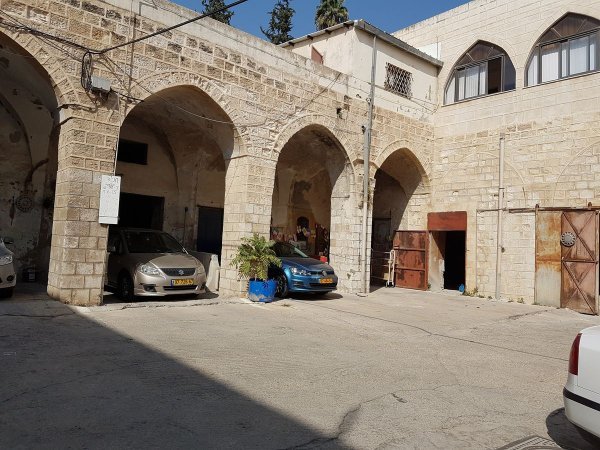
Khan al-Basha in Nazareth: The City's Oldest Khan at Its Historic Entrance
Khan al-Basha is the oldest, largest and grandest of Nazareth's five khans, standing at the city's historic entrance opposite the Basilica of the Annunciation, on the street that bears its name and leads to the old market. Its construction date is hard to establish because sources are scarce, but it most likely dates from the early Ottoman period or earlier; it was restored in 1814 under the governor of Acre Suleiman Pasha, whose title it bears. It served as a lodging for travellers and merchants, a warehouse for their goods and a hub for exchanging news, became a hotel called "al-Hijaz" in the late 19th century, and today belongs to the waqf of the White Mosque. This guide covers the khan's history, architecture and role in Nazareth's life.
Quick facts
| Arabic name | خان الباشا – الناصرة |
|---|---|
| Location | Nazareth's historic entrance, opposite the Basilica of the Annunciation |
| Status | Oldest and largest of Nazareth's five khans |
| Built | Date uncertain, most likely early Ottoman period or earlier |
| Restoration | 1814, under Suleiman Pasha |
| Name | After Suleiman Pasha, governor of Acre |
| Historic painting | The most prominent building in David Roberts' view of Nazareth (1839) |
| "Al-Hijaz" hotel | Ten rooms added in the late 19th century |
| Ownership | Waqf of the White Mosque |
| Current use | Offices, including the Nazareth Association for Culture and Tourism |
The name
The khan bears the title "al-Basha" (the Pasha) after the governor of Acre Suleiman Pasha, who oversaw its restoration in 1814, the same governor under whom the White Mosque in Nazareth was completed. Some sources say Abdullah Pasha, Suleiman Pasha's successor, also renovated it.
Location
The khan stands at Nazareth's historic entrance, opposite the Basilica of the Annunciation and less than a hundred metres south of it, on Khan al-Basha Street leading to the old market, making it the first stop for anyone arriving in the city and the last for anyone leaving. Nearby are the White Mosque and the Saraya of Zahir al-Umar.
History
- Early Ottoman period or earlier: the khan was built; its exact date is hard to establish because sources are scarce, and it is considered the oldest of Nazareth's five khans.
- 1814: it was restored under the governor of Acre, Suleiman Pasha, whose title it bears.
- 1839: the English artist David Roberts painted it as the most prominent building in his view of Nazareth.
- Late 19th century: a second floor of ten guest rooms was added, operating as a modern hotel called "al-Hijaz".
- End of the Ottoman period: it remained a lodging for travellers and a warehouse for goods until the end of Ottoman rule.
- 1970s: an office floor was built above it.
Architecture
The khan is a square building whose rooms surround a large open courtyard, with vaulted rooms along three sides and a vaulted structure on the fourth. The courtyard held stables for the merchants' horses, camels and donkeys. Two staircases near the gate led up to the roof, which was used for sleeping in summer. The khan was originally a single storey, and a second floor was added in the late 19th century.
The khan in Nazareth's life
Khan al-Basha was an important commercial centre for the city, where merchants and travellers arriving in Nazareth lodged and stored their goods. Because it was the first stop for arrivals and the last for departures, it became a hub for exchanging news between Nazareth's people and visitors from nearby towns and villages. A local tale relates that two sons of Saladin's sister were wounded at the Battle of Hattin, brought to Nazareth where they died, and buried on either side of the khan.
The White Mosque waqf
Khan al-Basha belongs to the waqf of the White Mosque in Nazareth and is managed as part of its endowment, with the rent from its offices funding the waqf's and the mosque's expenses. Over time the khan has shrunk, and parts of it have been converted into workshops, warehouses and offices.
The khan today (2026)
Today the khan is used as a complex of offices and shops, including the offices of the Nazareth Association for Culture and Tourism, and parts of it are undergoing rehabilitation, renovation and conservation work. Nazareth's people see it as a public building of historic importance awaiting a restoration worthy of its status, so that it can once again tell the story of Ottoman Nazareth, the Arab city that kept its identity despite the Nakba.
Frequently asked questions
Where is Khan al-Basha in Nazareth?
At Nazareth's historic entrance, opposite the Basilica of the Annunciation, on Khan al-Basha Street leading to the old market.
Why is it called Khan al-Basha?
After the governor of Acre, Suleiman Pasha, who oversaw its restoration in 1814.
When was Khan al-Basha built?
Its exact date is unknown because sources are scarce, but it most likely dates from the early Ottoman period or earlier, and it is Nazareth's oldest khan.
What was the "al-Hijaz" hotel?
A modern hotel of ten rooms added as a second floor to the khan in the late 19th century.
Who owns Khan al-Basha today?
It belongs to the waqf of the White Mosque in Nazareth, and the rent from its offices funds the waqf.
Conclusion
At the entrance to Nazareth, where travellers once unloaded their burdens and news passed from mouth to mouth, Khan al-Basha has stood for centuries as a witness to commercial Ottoman Nazareth. Today, as a waqf of the White Mosque, it remains part of the city's memory and Arab identity, awaiting a restoration that will restore its standing.
More from the archive
 Download Our Palestine App
The whole archive in the palm of your hand: depopulated villages, the Nakba, the massacres and Al-Aqsa — free, with no ads to erase the story.
Comments
No comments yet — be the first to write one.
Add your comment
Name and email are optional. Comments appear after review.