
The Basilica of the Annunciation
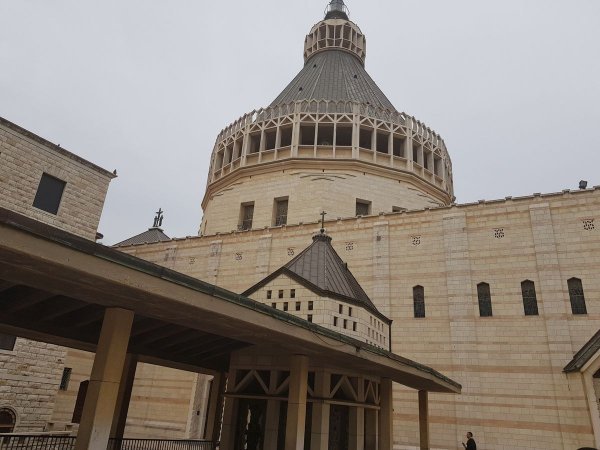
The Basilica of the Annunciation
The Basilica of the Annunciation in Nazareth: History, Architecture and the Grotto of Mary
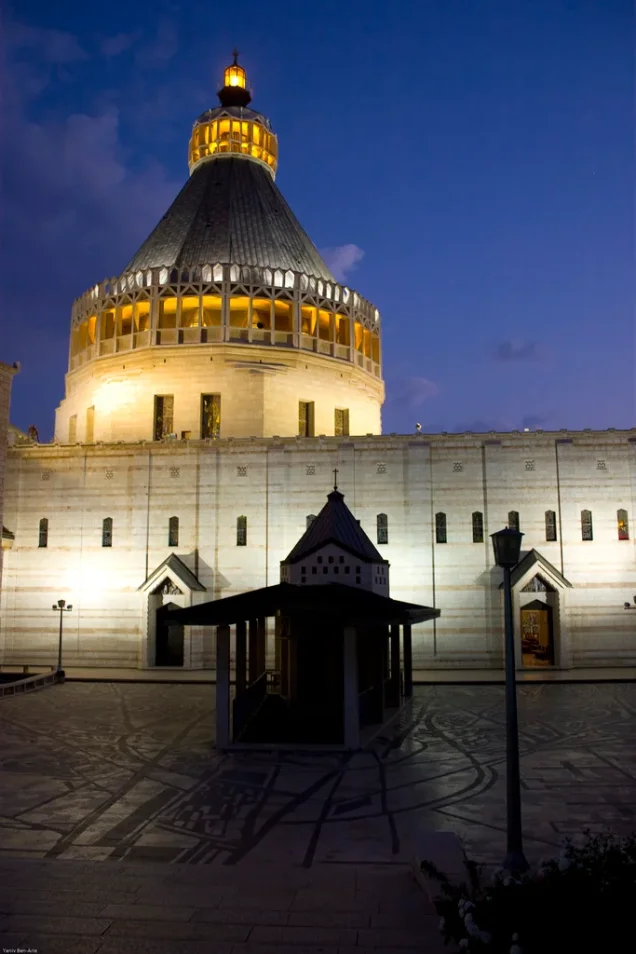
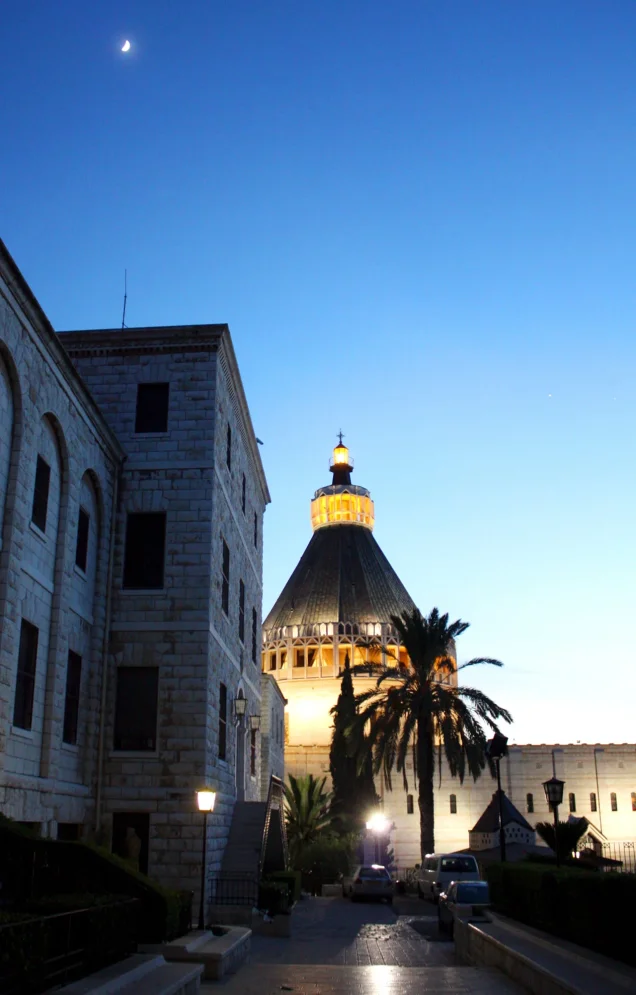
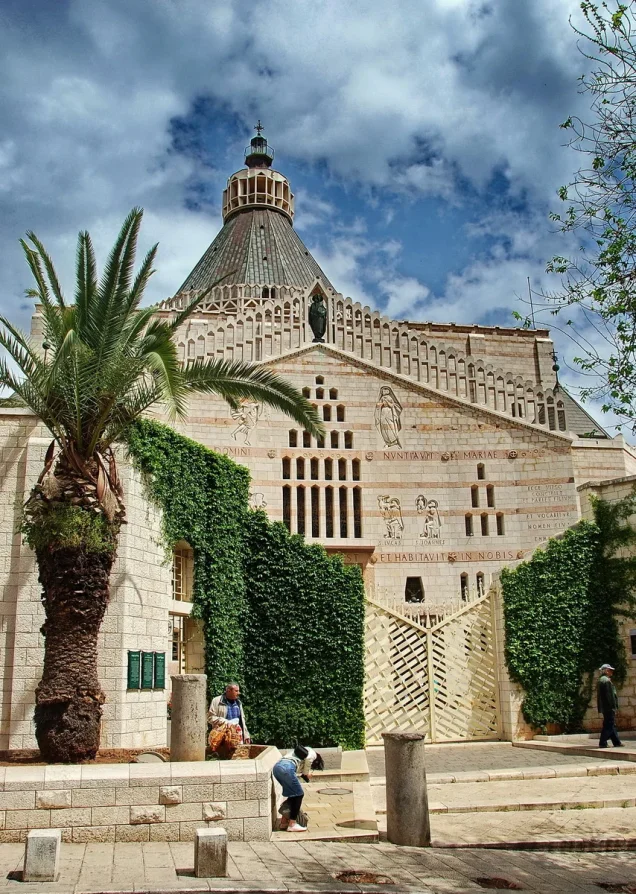
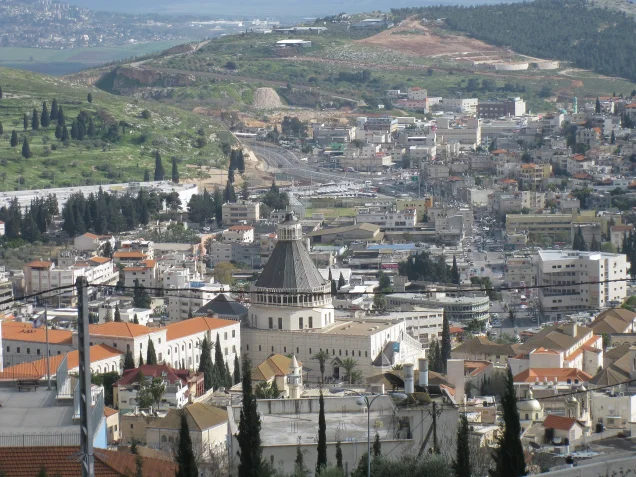
The Basilica of the Annunciation, in the heart of Nazareth (al-Nasira), is one of the most important Christian landmarks in Palestine and among the holiest churches in the Christian world. Catholic tradition holds that it stands over the home of the Virgin Mary, where the angel Gabriel announced that she would bear Jesus. Churches have stood here since the Byzantine era, destroyed and rebuilt many times, and the present basilica, consecrated in 1969, preserves the remains of its predecessors and is the largest church in the Middle East. With its 55-metre dome, it has become the symbol of Nazareth, the largest Palestinian Arab city inside the 1948 lines. This guide covers its history, architecture, religious significance and situation today.
Quick Facts About the Basilica of the Annunciation
| Arabic name | كنيسة البشارة / بازيليكا البشارة |
|---|---|
| Location | Old City of Nazareth (al-Nasira), Galilee, Palestine |
| Denomination | Roman Catholic, under the Franciscan Custody of the Holy Land |
| First church | Byzantine period (5th century by some accounts; documented around 570 CE) |
| Current building | Built 1960–1969; consecrated |
| Architect | Giovanni Muzio (Italy) |
| Dome height | About 55 m |
| Levels | Lower church with the Grotto of the Annunciation; upper church |
| Status | Minor basilica; the largest church in the Middle East |
| Feast | Feast of the Annunciation, 25 March |
Origin of the Name
The church takes its name from the Annunciation (al-Bishara), the announcement by the angel Gabriel to Mary that she would conceive and bear Jesus. It is also known as the Basilica of the Annunciation, "basilica" being an honorary title the Catholic Church gives to churches of special importance.
Location
The basilica stands in the Old City of Nazareth in the Galilee, near the old market, and its dome dominates the city's skyline. Nearby are the Church of Saint Joseph, built over what tradition holds was Joseph's workshop, and, at Mary's Well, the Greek Orthodox Church of the Annunciation (Saint Gabriel), which Orthodox tradition regards as the site of the Annunciation.
History Through the Ages
- Byzantine period: Tradition links the first shrine to Emperor Constantine and his mother Helena. Some sources date the first church to 427 CE, and a church is documented at the site around 570 CE.
- Crusader period: After the Crusaders took Nazareth in 1102, they built a large church over the Byzantine ruins. Its expansion in the 1170s was never completed.
- Ayyubid and Mamluk periods: After Saladin's victory at Hattin in 1187, the Franciscans were allowed to stay. The Mamluk sultan Baybars destroyed the church in the 1260s.
- Ottoman period: In 1620 Emir Fakhr al-Din allowed the Franciscans to return and build a small shrine over the grotto. In 1730 Zahir al-Umar, ruler of the Galilee, permitted a new church, which was enlarged in 1877.
- The modern basilica: The 18th-century church was demolished in the mid-1950s, and the present basilica, designed by the Italian architect Giovanni Muzio, was built between 1960 and 1969 and consecrated in 1969. During construction, archaeologists uncovered remains of the Byzantine and Crusader churches, which were incorporated into the new building.
Architecture: Two Churches in One
The basilica is one of the most distinctive buildings in Nazareth, and for decades it has been the city's best-known symbol. It is built on two large levels, entirely different in character and light:
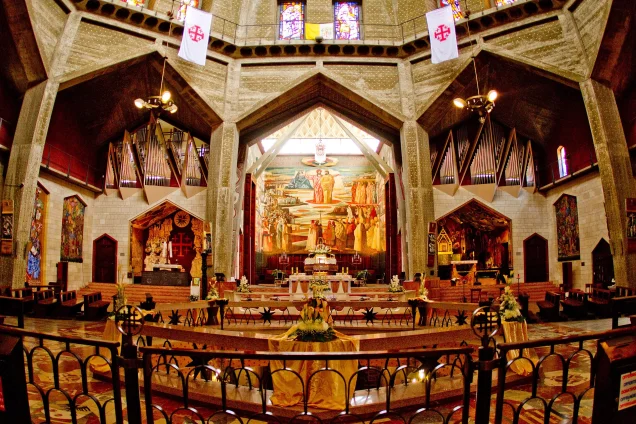
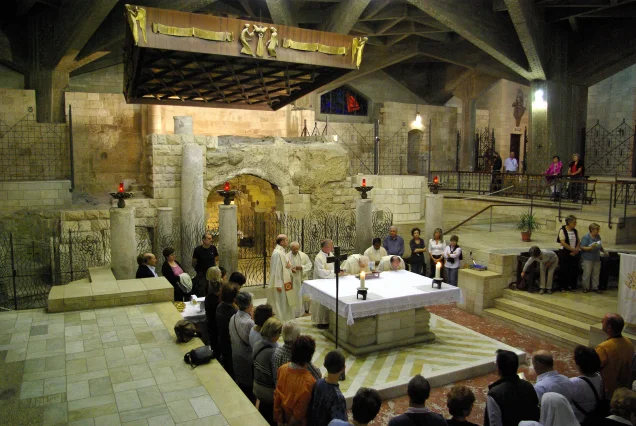
- The lower church: A dim, contemplative space that preserves the Grotto of the Annunciation, believed by many to be part of Mary's home, together with the remains of the Byzantine and Crusader churches.
- The upper church: A bright, modern hall used for parish worship, beneath the great dome, about 55 metres high, shaped like an inverted lily, a symbol of Mary's purity. An opening in the floor connects it to the grotto below.
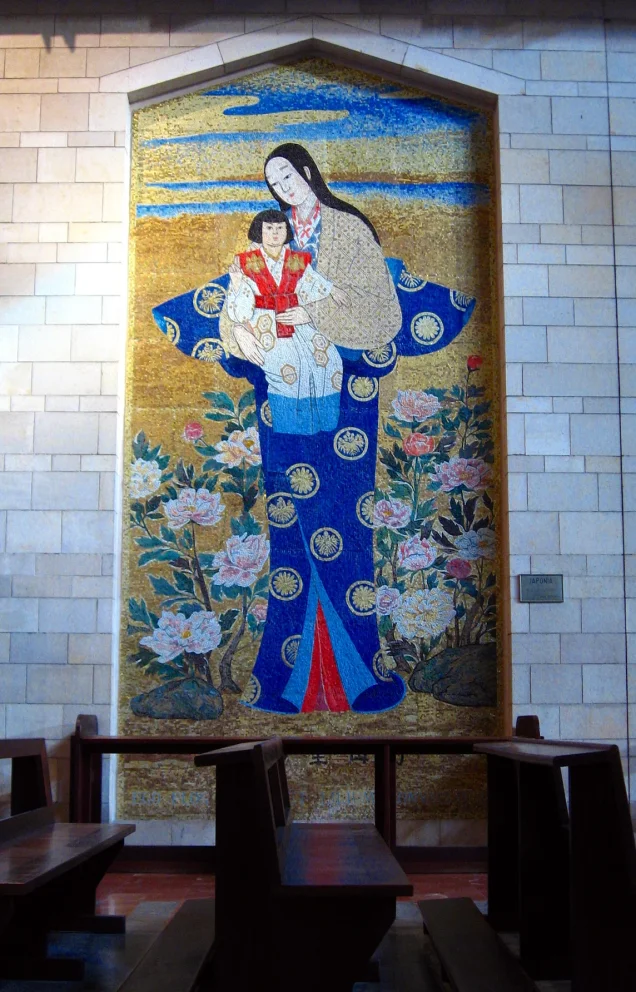
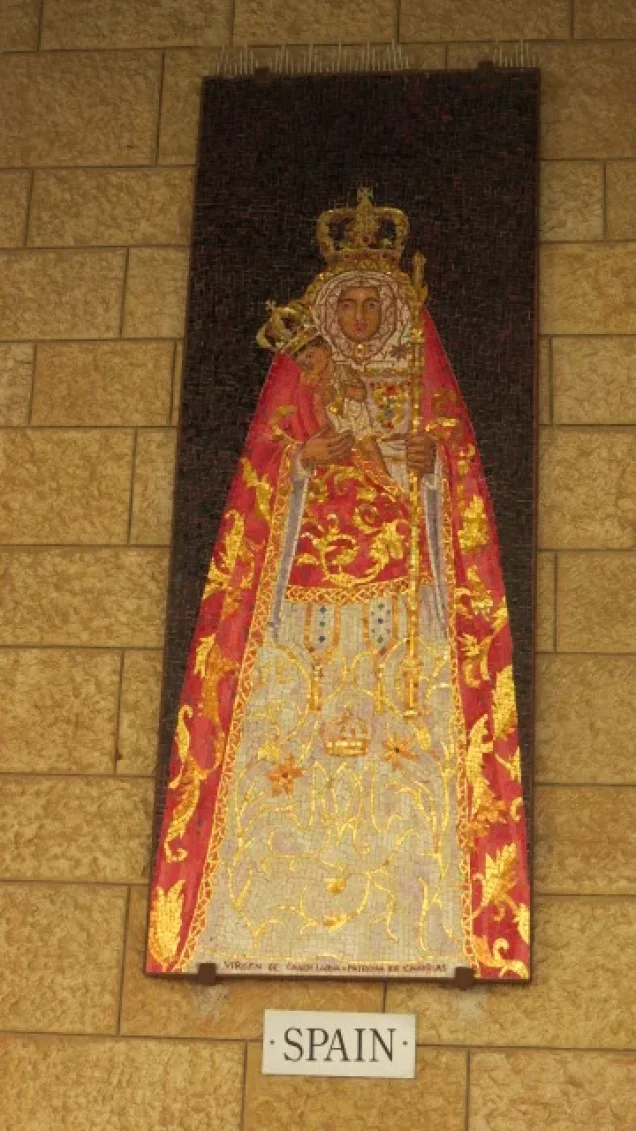
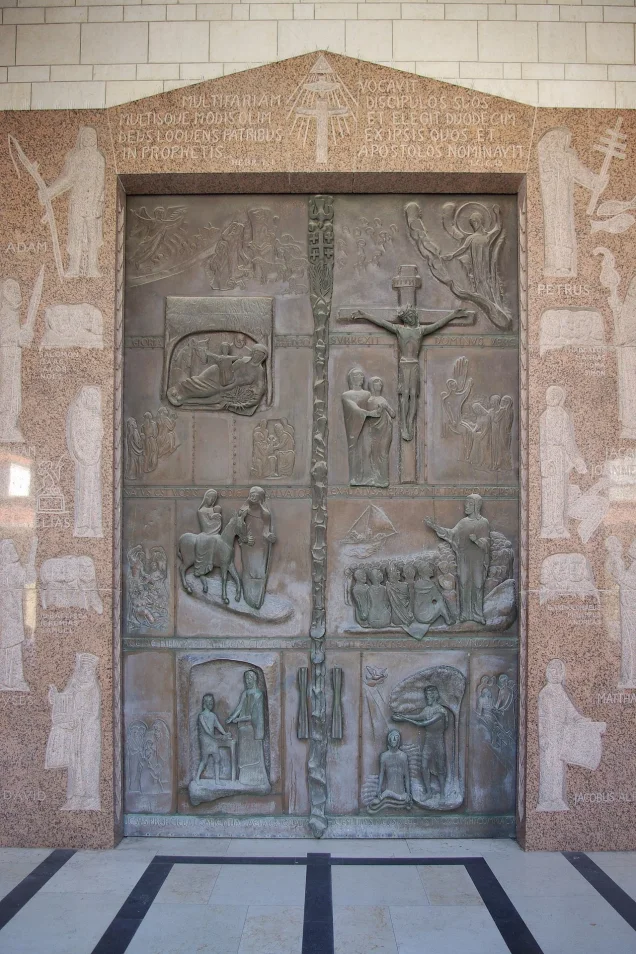
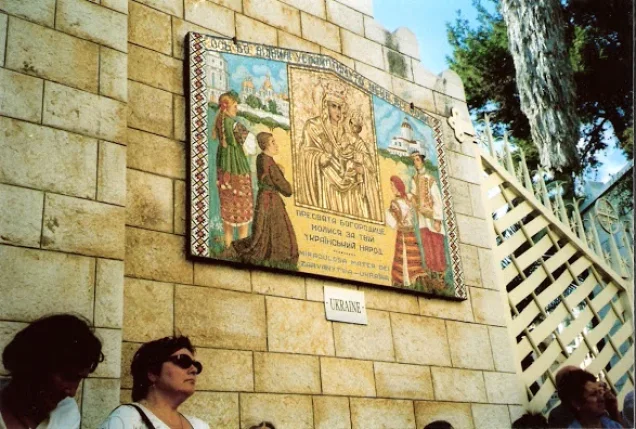
The walls of the upper church and of the courtyard gallery are lined with mosaics and ceramic icons of the Virgin Mary donated by Catholic communities from around the world, each depicting her in the style of its own country. The façade carries reliefs of the Annunciation, and bronze doors depict scenes from the life of Christ. The building is often described as an example of modern Italian architecture.
Religious Significance
For Christians, Nazareth is the town where Jesus grew up, and the Annunciation marks the beginning of the story of the Incarnation. The basilica is one of the most important pilgrimage sites in the Holy Land, alongside the Church of the Nativity in Bethlehem and the Church of the Holy Sepulchre in Jerusalem. The Annunciation is also honoured in Islam: the Qur'an tells of the angel bringing Mary (Maryam) the news of the birth of Jesus (Isa), in the surah named after her. Popes Paul VI (1964), John Paul II (2000) and Benedict XVI (2009) have celebrated Mass in Nazareth.
The Basilica and Nazareth Since 1948
Nazareth was occupied in July 1948, but unlike most Palestinian towns its people were not expelled, and it became the largest Arab city inside the 1948 lines, receiving thousands of refugees from the surrounding villages such as Saffuriyya and Ma'lul. Its Christian and Muslim communities have long lived side by side around the basilica. Between 1997 and 2003 a dispute over plans to build a mosque on the square beside the basilica divided the city; the Israeli government halted the project and demolished its foundations in 2003. Nazareth's Palestinian citizens continue to face discrimination in land, planning and budgets.
The Basilica Today (2026)
The basilica remains an active church, with daily Masses in Arabic and other languages for Nazareth's Catholic community and visiting pilgrims, and major celebrations on the Feast of the Annunciation on 25 March. Since the genocide war on Gaza began in October 2023, and with the regional wars that followed, pilgrim numbers have fallen sharply, hitting Nazareth's tourism-dependent economy, its hotels, restaurants and market.
Legal Protection
The basilica is administered by the Franciscan Custody of the Holy Land on behalf of the Catholic Church. As a religious and cultural site of universal importance, it is covered by the principles of international law on the protection of holy places and cultural property, including the 1954 Hague Convention.
Frequently Asked Questions About the Basilica of the Annunciation
Where is the Basilica of the Annunciation?
In the Old City of Nazareth in the Galilee, northern Palestine.
Why is the Basilica of the Annunciation important?
Catholic tradition holds that it stands over the home of the Virgin Mary, where the angel Gabriel announced that she would bear Jesus. It is one of the holiest churches in Christianity.
When was the current basilica built?
It was built between 1960 and 1969 to designs by the Italian architect Giovanni Muzio, over the remains of Byzantine and Crusader churches, and consecrated in 1969.
What is inside the Basilica of the Annunciation?
A lower church with the Grotto of the Annunciation and the remains of earlier churches, and an upper church beneath a 55-metre dome, decorated with mosaics of Mary from around the world.
Is the Basilica of the Annunciation the largest church in the Middle East?
Yes, it is widely described as the largest church in the Middle East.
Conclusion
For some sixteen centuries, churches have risen and fallen over the grotto of Nazareth where Christian tradition places the Annunciation. Today's basilica gathers them all, Byzantine stones, Crusader walls and modern mosaics from every continent, under a dome that has become the emblem of a Palestinian city that held on to its people in 1948. It remains a place where faith, history and the life of Nazareth meet.
Photo gallery
More from the archive
 Download Our Palestine App
The whole archive in the palm of your hand: depopulated villages, the Nakba, the massacres and Al-Aqsa — free, with no ads to erase the story.
Download Our Palestine App
The whole archive in the palm of your hand: depopulated villages, the Nakba, the massacres and Al-Aqsa — free, with no ads to erase the story.



Comments
No comments yet — be the first to write one.
Add your comment
Name and email are optional. Comments appear after review.