The Christian Quarter of Jerusalem
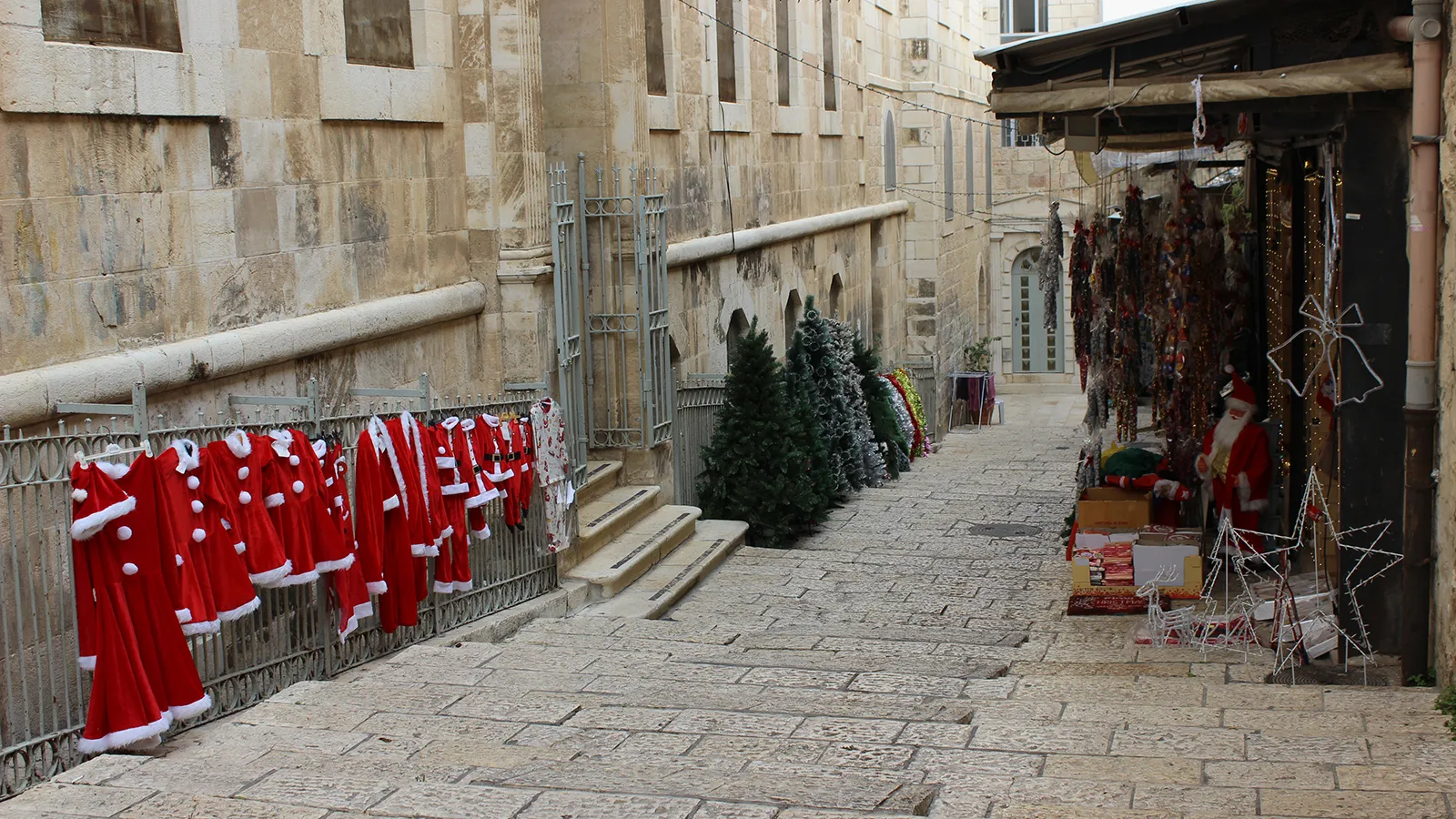
The Christian Quarter of Jerusalem: The Holy Sepulchre, the Patriarchates and the Mosque of Umar
The Christian Quarter (Harat al-Nasara) occupies the north-western corner of the Old City of Jerusalem, covering about 237 dunams. It holds the Church of the Holy Sepulchre, the holiest church in the Christian world, and the seats of four patriarchates, Greek Orthodox, Latin, Greek Catholic and Coptic, along with dozens of convents and churches. At its heart stands the Mosque of Umar ibn al-Khattab, overlooking the Holy Sepulchre where Caliph Umar prayed outside the church so that Muslims would not take it as a mosque, while two Muslim families have kept the church's keys since the time of Salah al-Din. Some 4,000 people live in the quarter, facing the emigration of their young people, cramped housing and the seizure of church property at Jaffa Gate by settler associations. This guide covers the quarter's history, landmarks and present state.
Quick facts
| Arabic name | حارة النصارى – القدس |
|---|---|
| Other names | Al-Hayy al-Masihi |
| Location | North-west of the Old City |
| Area | About 237 dunams |
| Population | About 4,000 |
| Main landmarks | Church of the Holy Sepulchre, Mosque of Umar ibn al-Khattab |
| Patriarchates | Greek Orthodox, Latin, Greek Catholic, Coptic |
| Oldest building | Church of St John the Baptist, 5th century CE |
| Markets | Christian Quarter Road (218 shops), Aftimos Market |
| World Heritage | Part of the Old City and its Walls, inscribed 1981 on Jordan's nomination |
Location and gates
The Christian Quarter lies in the north-western corner of the Old City of Jerusalem, bounded by the wall to the north and west, the Armenian Quarter to the south and the Muslim Quarter to the east. It is entered through Jaffa Gate (Bab al-Khalil) in the west and New Gate (al-Bab al-Jadid) in the north-west. The Christian Quarter Road market divides it into eastern and western halves.
The Church of the Holy Sepulchre
At the heart of the quarter stands the Church of the Holy Sepulchre (Kanisat al-Qiyama), built by Empress Helena, mother of Emperor Constantine, in 335 CE over Golgotha, the rock on which Christians believe Jesus was crucified, and enclosing the tomb in which they believe he was buried and rose again. Its present form dates from the 12th century. Eastern and Western denominations share prayer and worship there: the Greek Orthodox, Latins and Armenians each have a convent inside, while the Copts have the church and monastery of St Anthony outside it. A great fire in 1808 destroyed many of its treasures, and the earthquakes of 1834 and 1927 damaged its foundations.
The Mosque of Umar and the Covenant of Umar
When Caliph Umar ibn al-Khattab entered Jerusalem in 15 AH (636 CE), he prayed on his cloak opposite the Church of the Holy Sepulchre, refusing to pray inside it so that Muslims after him would not take it as a mosque. On the spot where he prayed, the Mosque of Umar was built in its present form in the Ayyubid period, under al-Malik al-Afdal, son of Salah al-Din, in 589 AH (about 1193 CE). The mosque overlooks the Holy Sepulchre from the south; its minaret, about 15 metres tall, was built in 1465 and restored under the Ottoman sultan Abdulmejid I, and the mosque preserves the text of the Covenant of Umar (al-Uhda al-Umariyya), in which Umar guaranteed the safety of the people of Aelia, their lives and their churches.
The Holy Sepulchre's keys in Muslim hands
After Salah al-Din liberated Jerusalem in 1187, he preserved the Church of the Holy Sepulchre and, to settle the dispute among the Christian denominations over who should hold its key, entrusted it to a Muslim family. Two Muslim Jerusalem families still share the task today: the Nusseibeh family, who open and close the church morning and evening, and the Joudeh al-Husseini family, who keep the keys, a tradition that has become a symbol of coexistence in Jerusalem.
Patriarchates and markets
- The patriarchates: the quarter holds the seats of the Greek Orthodox, Latin, Greek Catholic and Coptic patriarchates; the Greek Orthodox own most of its property, while the Latins are the largest community in number.
- Church of St John the Baptist: Greek Orthodox, dating to the 5th century CE, the oldest building in the quarter.
- Convents and churches: dozens of convents and churches, whose monks and nuns are seen in the quarter's lanes around the clock; most of its buildings date from the Mamluk and Ottoman periods.
- Christian Quarter Road market: 218 shops, dividing the quarter in two.
- Aftimos Market: built in 1908 near the Holy Sepulchre.
The quarter under occupation
- Dwindling Christians: Jerusalem had about 27,000 Christians in 1948; today no more than 4,000 remain, and the quarter is nicknamed "the ageing quarter" because so many of its young people aged 18 to 35 have emigrated.
- Cramped housing: most homes are small, under 50 square metres, and in need of repair, so many families have moved outside the walls or abroad.
- Seizure of church property: a settler association took over the St John's convent with its 36 rooms, and claims ownership of the Petra and Imperial hotels at Jaffa Gate, which belong to the Greek Orthodox Patriarchate, which disputes the validity of the documents. In March 2022 settlers stormed the Petra Hotel and seized part of it in the presence of Israeli police, sparking widespread protests.
- Taxes: on 25 February 2018 the Christian denominations closed the Church of the Holy Sepulchre in protest at the occupation municipality's decision to tax church property, the second closure in its history after that of 27 April 1990.
- Attacks: clergy and nuns face repeated harassment by extremist settlers.
The quarter today (2026)
The Christian Quarter still welcomes pilgrims from around the world at Christmas, Easter and Holy Saturday, and the Nusseibeh and Joudeh families still open the door of the Holy Sepulchre every morning. But the quarter is losing people to emigration and faces mounting pressure on church property at its entrances. The Mosque of Umar facing the Holy Sepulchre, and the church's keys in Muslim hands, remain a witness to the Arab Jerusalem in which Muslims and Christians shared the city and its holy places for many centuries.
Frequently asked questions
Where is the Christian Quarter in Jerusalem?
In the north-western corner of the Old City, entered through Jaffa Gate and New Gate.
What are the main landmarks of the Christian Quarter?
The Church of the Holy Sepulchre, the Mosque of Umar ibn al-Khattab, the seats of four patriarchates, and the 5th-century Church of St John the Baptist.
Why was the Mosque of Umar built near the Holy Sepulchre?
Because Caliph Umar prayed on this spot outside the church so that Muslims would not take it as a mosque; the mosque was built in its present form around 1193.
Who holds the keys of the Holy Sepulchre?
Two Muslim families since the time of Salah al-Din: the Joudeh al-Husseini family, who keep the keys, and the Nusseibeh family, who open and close the church.
How many Christians live in Jerusalem today?
No more than 4,000, down from about 27,000 in 1948, because of emigration and the pressures of occupation.
Conclusion
In the Christian Quarter the Holy Sepulchre and the Mosque of Umar stand side by side, and every morning for eight centuries a Muslim has opened the door of Christianity's holiest church. This is the image of Arab Jerusalem that the occupation is trying to erase through settlement and the displacement of its people, yet Jerusalem's Christians, with their Muslim neighbours, still hold on to their quarter, their holy places and their right to their city.
More from the archive


 Download Our Palestine App
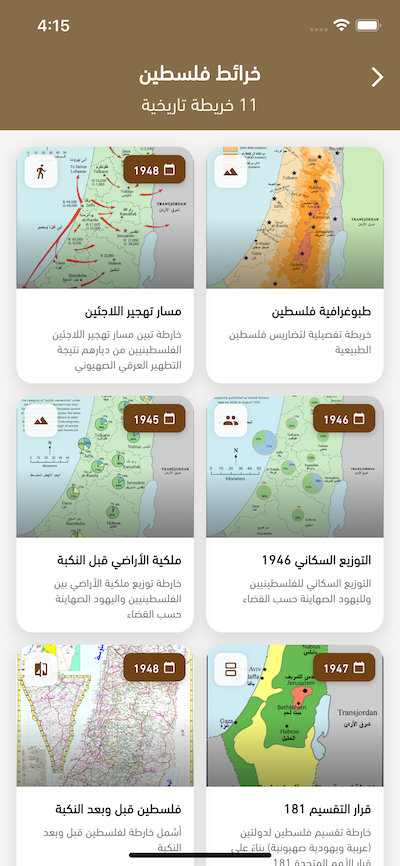
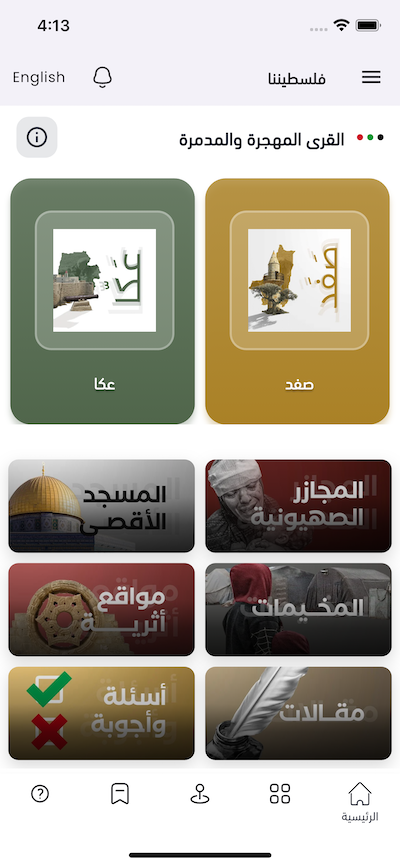
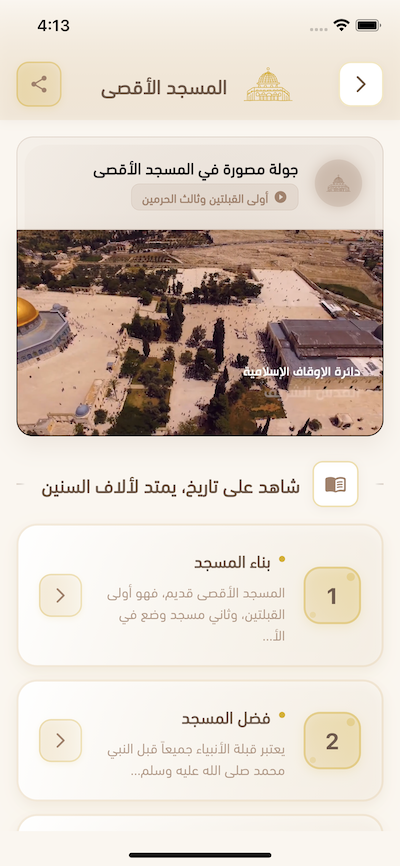
The whole archive in the palm of your hand: depopulated villages, the Nakba, the massacres and Al-Aqsa — free, with no ads to erase the story.
Comments
No comments yet — be the first to write one.
Add your comment
Name and email are optional. Comments appear after review.