Jaffa Gate (Bab al-Khalil) in Jerusalem
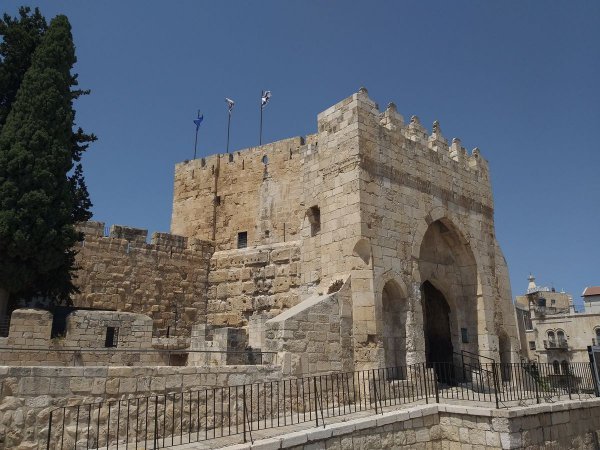
Jaffa Gate (Bab al-Khalil) in Jerusalem: The Western Gate of Suleiman's Walls
Bab al-Khalil ("Hebron Gate"), known to Europeans as Jaffa Gate, is the main gate in the western wall of the Old City of Jerusalem, from which roads ran south to Hebron and west to Jaffa and the coast. It opened in its present form in 1538 as part of the walls rebuilt by the Ottoman sultan Suleiman the Magnificent, and is distinguished by its L-shaped entrance. Beside it stands the Citadel of Jerusalem, in front of it lies Omar ibn al-Khattab Square, and to its left are two tombs that popular tradition says belong to the architects of the wall. A breach was opened in the wall beside it in 1898 to receive the German emperor Wilhelm II. Today its surroundings face the seizure of church property by settler associations. This guide covers the gate's history, architecture and present state.
Quick facts
| Arabic name | باب الخليل (باب يافا) – القدس |
|---|---|
| Other names | Bab al-Khalil, Hebron Gate |
| Location | Western wall of the Old City |
| Opened | 1538 CE |
| Builder | Ottoman sultan Suleiman the Magnificent |
| Shape | L-shaped bent entrance |
| The breach | 1898, to receive Emperor Wilhelm II |
| Clock tower | 1907–1908, removed by the British in 1922 |
| Next to it | Citadel of Jerusalem, Omar ibn al-Khattab Square |
| World Heritage | Part of the Old City and its Walls, inscribed 1981 on Jordan's nomination |
The name
Jerusalemites call it "Bab al-Khalil" because it opens onto the road to the city of Hebron (al-Khalil), named after Khalil al-Rahman, the Prophet Ibrahim (Abraham), while Europeans called it "Jaffa Gate" because the road to the port of Jaffa, where pilgrims and visitors landed, started here.
Location
The gate stands in the middle of the western wall of the Old City of Jerusalem, between the Christian Quarter to the north and the Armenian Quarter to the south, with the Citadel of Jerusalem beside it. It is one of the seven open gates among the eleven gates in the city walls, and the busiest, since it links the Old City with the western neighbourhoods of the city.
History
- 1538 CE: the gate opened in its present form as part of Sultan Suleiman the Magnificent's project to rebuild the walls of Jerusalem, which gave the city the walls standing today and most of its gates in use.
- 1898: the Ottoman authorities opened a breach in the wall beside the gate so that the carriage of the German emperor Wilhelm II could enter the city during his visit.
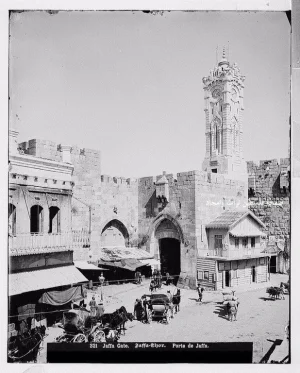
- 1907–1908: a clock was placed on top of the gate, and then an ornate clock tower was built above it under Sultan Abdul Hamid II.
- December 1917: the British general Allenby entered the Old City through Jaffa Gate on foot, marking the start of the British occupation of Jerusalem.
- 1922: the British demolished the Ottoman clock tower above the gate.
Architecture
The gate was built as a defensive gate tower with an L-shaped bent entrance, protected by heavy doors at its northern and eastern ends. This design slowed attackers and prevented them from storming the city in one rush. The wide breach opened beside it in 1898 is today the main vehicle entrance into the Old City.
The architects' tombs
Behind an iron grille on the left as one enters the gate lie two tombs that popular tradition links to two architects who built the walls of Jerusalem. The story goes that Sultan Suleiman the Magnificent ordered their execution, then ordered them buried by the gate in recognition of their work.
Omar ibn al-Khattab Square and the Citadel
Inside, the gate opens onto Omar ibn al-Khattab Square, one of the liveliest squares in the Old City, lined with shops and historic hotels, from which roads lead east to Souq Bab al-Silsila and al-Aqsa Mosque and into the Christian and Armenian quarters. To its south stands the Citadel of Jerusalem with its towers and walls.
Bab al-Khalil under occupation
- The Petra and Imperial hotels: at the gate stand the Petra and Imperial hotels, owned by the Greek Orthodox Patriarchate; a settler association claims to have bought them, while the Patriarchate disputes the validity of the documents.
- March 2022: settlers stormed the Petra Hotel, run by a Palestinian family for decades, and seized part of it in the presence of Israeli police, sparking widespread protests; the Patriarch described the incursion as "an assault on the property of others".
- The most targeted gate: as the main entrance from the west of the city, the gate and its surroundings have become a target of projects to change the character of the Old City's historic entrance.
The gate today (2026)
Bab al-Khalil remains the busiest of Jerusalem's gates, crossed by tourists, pilgrims and Jerusalemites heading to the markets, churches and al-Aqsa Mosque of the Old City. But its surroundings are the scene of a struggle over identity: church hotels targeted by settler associations and Palestinian shops struggling to survive. With its Ottoman stones and the tombs of its architects, the gate remains a witness to the Arab and Islamic Jerusalem that Suleiman the Magnificent fortified nearly five centuries ago.
Frequently asked questions
Why is it called Bab al-Khalil?
Because it opens onto the road to Hebron (al-Khalil); Europeans called it Jaffa Gate because it led to the road to the port of Jaffa.
When was Jaffa Gate built?
It opened in its present form in 1538 as part of Sultan Suleiman the Magnificent's rebuilding of the walls of Jerusalem.
Why is there a breach beside the gate?
The Ottoman authorities opened it in 1898 so that the carriage of the German emperor Wilhelm II could enter during his visit to Jerusalem.
What is the story of the two tombs at Jaffa Gate?
Popular tradition says they belong to two architects who built the wall, whom Suleiman ordered executed and then buried by the gate in recognition of their work.
What do the gate's surroundings face today?
The seizure of church property by settler associations, including the Petra and Imperial hotels owned by the Greek Orthodox Patriarchate.
Conclusion
For nearly five centuries Bab al-Khalil has welcomed those arriving in Jerusalem from Hebron, Jaffa and the coast, and it has seen emperors and generals pass through, yet above all it has remained a gate for the city's people. Today, as it faces attempts to change what surrounds it, this bent Ottoman gate remains the threshold of Arab Jerusalem and its best-known entrance.
More from the archive
 Download Our Palestine App
The whole archive in the palm of your hand: depopulated villages, the Nakba, the massacres and Al-Aqsa — free, with no ads to erase the story.
Comments
No comments yet — be the first to write one.
Add your comment
Name and email are optional. Comments appear after review.