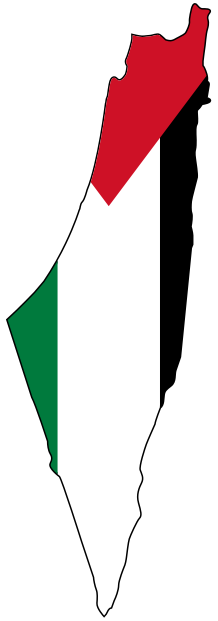
Homs Refugee Camp (al-Aideen)

Homs Refugee Camp (al-Aideen) in Syria: History, Galilee Villages, Population and Life Today
Homs Camp, known as al-Aideen ("the Returnees") and once called "the Barracks Camp", is one of the ten official Palestinian refugee camps in Syria, in the heart of Homs about 160 km north of Damascus. It was founded in 1949 in former French military barracks for refugees from Haifa, Acre, Safed, Tiberias, Nazareth and Jaffa and dozens of Galilee villages, among them al-Shajara, Ayn al-Zaytun, Tarshiha and Saffuriyya. The camp escaped the destruction that hit much of Homs after 2011, but lost many of its young people to emigration, arrests and economic collapse. This guide covers its history, villages of origin, population, services and situation today.
Quick Facts About Homs Camp
| Arabic name | مخيم حمص / مخيم العائدين |
|---|---|
| Former name | "The Barracks Camp" (until the mid-1970s) |
| Country | Syria |
| Location | Central Homs, near al-Baath University, about 160 km north of Damascus |
| Established | |
| Area | About 0.15 km² |
| Refugees in the camp (UNRWA) | About 20,000 before 2011; about 12,000 today |
| Origin of residents | The Galilee and the coastal cities: Haifa, Acre, Safed, Tiberias, Nazareth, Jaffa |
| UNRWA facilities | 3 schools, 1 health centre, 1 community centre, 1 vocational training centre |
| Status | Official UNRWA camp |
The Nakba: Why Homs Camp Exists
Homs Camp was born from the Nakba (Arabic for "catastrophe"): the mass expulsion of Palestinians during the occupation of Palestine in , when roughly 750,000 Palestinians were driven from their homes. The people of the Galilee and the northern coast fled north into Lebanon. The village of al-Shajara, whose name later went to one of the camp's schools, fell on 6 May 1948, and many of its people stayed nearby until Nazareth fell in July 1948 before crossing the border.
From Lebanon, many refugees were taken by train to Syria and spread among the villages of the Homs countryside, mosques and city neighbourhoods, and later the area around Homs Citadel. In 1949 they were gathered at a former French Mandate military barracks south of the city, on the road to Damascus. About 3,500 refugees lived there at first, and UNRWA approved the site in 1950.
The Right of Return
The camp chose the name al-Aideen, "the Returnees", and its streets are named after Acre, Jaffa, Haifa, Nazareth, Jerusalem, Safed and the Galilee. The right of return rests on several foundations in international law:
- UN General Assembly Resolution 194 (), paragraph 11, resolved that refugees wishing to return to their homes and live at peace with their neighbours should be permitted to do so at the earliest practicable date, and that compensation should be paid to those choosing not to return and for loss of or damage to property.
- The Universal Declaration of Human Rights (Article 13) affirms everyone's right to leave any country, including their own, and to return to it.
- UN General Assembly Resolution 3236 () reaffirmed the "inalienable right" of Palestinians to return to their homes and property.
History of the Camp (1949–2010)
The first refugees lived in concrete huts, reed shelters and the horse stables of the old French army. Around 1952 they began building homes of cinder block with tin roofs, and after reinforced concrete arrived in 1967, buildings rose to as many as four storeys. A concrete wall replaced the camp's barbed wire in 1968. In the 1970s the camp grew south and west, and as Homs expanded it ended up in the middle of the city; the municipality now treats it as one of its neighbourhoods.
Refugees helped build Homs's oil refinery, sugar factory and fertiliser plant, and many became teachers. About a decade after the camp was founded, a wave of emigration for work in the Gulf and Libya began. The camp gave 112 martyrs to the Palestinian revolution, according to the Mokhayyam encyclopedia, and its main square is named after the first, Ahmad Husni Shreih.
The Camp During the Syrian War (2011–2024)
Homs was one of the cities hit hardest by the war after 2011, and whole neighbourhoods around the camp were destroyed. The camp itself suffered no major physical damage, according to UNRWA, but it lived under heavy security pressure. The Palestinian Refugees Portal reported in 2016 intermittent mortar fire, more than 200 residents arrested since 2011, and 62 residents killed. The former regime also built a metal barrier along the Damascus road with no crossings, forcing residents to take a long detour to reach schools, jobs, the UNRWA clinic and Bisan Hospital.
The camp's population fell from about 20,000 to about 9,000 as families fled and young men emigrated, many escaping long compulsory military service. It then took in displaced families from other parts of Homs and about 640 families from the Yarmouk, Handarat (Ein el-Tal) and Neirab camps. On 1 May 2020, shrapnel from an explosion at an ammunition depot outside the camp destroyed a classroom in an UNRWA school, without injuries.
The Current Situation (2025–2026)
After the fall of the former regime in December 2024, a security delegation and the governor of Homs visited the camp, and a temporary committee was formed under the governorate's supervision, with a new mukhtar elected. In January 2025 volunteers from the Palestinian Red Crescent and local groups cleaned all of the camp's streets over three days, and the Homs electricity company repaired the main transformers and replaced cables in several streets. Residents still want the sewage and power networks rehabilitated, sustainable waste collection and better relief, and local activists say UNRWA has been largely absent from its service role. In December 2025 the camp's development committee called for direct gas supplies. Poverty, unemployment, inflation, child labour, early marriage and drug use remain the main problems, made worse by UNRWA's funding crisis.
Origin of the Name
Until the mid-1970s the camp was called "the Barracks Camp" (مخيم الثكنة), after the neighbouring Khalid ibn al-Walid military barracks. It was then renamed al-Aideen, "the Returnees", a name that affirms the right of return. The same name is used by the Hama and Latakia camps.
Location and Geography
The camp lies in central Homs, next to al-Baath University and about 160 km north of Damascus. Until the early 1970s it was bounded by the Damascus road to the east, orchards and the railway to the west, the barracks to the north, and a tank depot, firing range and orchards to the south. Today it is surrounded by city neighbourhoods.
Area and Layout
UNRWA puts the camp's area at 0.15 km² (150,000 m²). Some sources give 15,000 or 15,300 m², which may refer only to the built-up area or be a typing error. The camp began with three main streets and three squares. In 2003 its eight streets were named after Palestinian places, including Acre, Jaffa, Haifa, Nazareth, Jerusalem, Safed, the Galilee and Palestine, and Jerusalem Street has become the main commercial street.
Villages and Cities of Origin
Most families come from the Upper Galilee and the cities of Haifa, Acre, Safed, Tiberias, Nazareth and Jaffa. Among the villages named in the sources:
- Acre district: Tarshiha, al-Kabri, al-Zeeb, Mi'ar, Amqa, al-Nahr, and Deir al-Asad (a town still inhabited)
- Tiberias district: al-Shajara and Lubya
- Safed district: Ayn al-Zaytun, Safsaf, Sa'sa', Meron, al-Farradiyya, al-Zahiriyya, and al-Jish (a town still inhabited)
- Haifa district: al-Tira
- Nazareth district: Saffuriyya
Safsaf was the scene of one of the massacres of 1948: the Safsaf massacre.
Population and Demographics
Figures differ between registered refugees living inside the camp, those registered to it but living elsewhere in Homs, and the Syrians who now also live there.
Population of Homs Camp over time
- 1949About 3,500 refugeesWAFA Info; Palestinian Encyclopedia (PalQuest)
- 200213,825UNRWA, via Wikipedia
- Before 201117,458 (UNRWA); about 20,000 in 3,400 familiesZochrot (UNRWA data); UNRWA
- November 201015,236 in the camp + 8,066 elsewhere in Homs = 23,302GAPAR records, via Mokhayyam
- 2011About 22,000 registered (16,000 inside, 6,000 outside)WAFA Info; Palestinian Refugees Portal
- After 2011Fell to about 9,000UNRWA
- TodayAbout 12,000 in the camp, 2,000 nearby, plus several thousand SyriansUNRWA
Housing and Infrastructure
Homes range from 30 to 96 m² per family, with an average household of six to eight people before the war. Electricity and water reached the camp in 1965; the water network was laid in 1969 and replaced in 1998, and the sewage network was replaced in 2009. The Syrian government, through the General Authority for Palestine Arab Refugees (GAPAR), is responsible for infrastructure, while UNRWA handles sanitation and has an environmental health office in the camp. Poor environmental health, crowded buildings and piled-up waste remain problems.
Economic Life
Most workers are day labourers in construction and crafts, local civil servants or street vendors, and shops now line the camp's streets. In Syria, Palestinian refugees have long had the same right to work as Syrians, but war, inflation and the collapse of the currency have pushed most families into poverty. UNRWA counted 2,387 special hardship cases in 2001 and 2,216 in 2005, and the Palestinian Charitable Society, founded in 1963, gives monthly aid to about 250 families.
Health Services
UNRWA opened its clinic in 1952, and it still runs one health centre in the camp. The Palestinian Red Crescent opened a clinic in 1971 and in 1982 opened Bisan Hospital in the centre of the camp, open around the clock. A rehabilitation centre for people with disabilities followed in the 1990s, with Italian and European support, and in 1996 UNRWA built a new health centre with US funding. UNRWA refers surgical cases to contracted private hospitals, and refugees receive free treatment in government hospitals.
Education and Community
The first UNRWA schools, al-Shajara for boys and al-Ramla for girls, opened in 1952. Today UNRWA runs three schools in three buildings, one on double shifts, teaching up to grade nine; secondary and university students go to government schools and universities, and UNRWA runs a vocational training centre in Homs. Female education rates have been among the highest in the region since the 1960s. Community groups include the Women's Centre, Jafra, Nour for Relief and Development, a scout group founded in 1958 and the al-Jarmaq sports club. The camp produced the poet Ahmad Dahbour, the folk poet Abu Arab and the translator Saleh Almani.
Frequently Asked Questions About Homs Camp
Where is Homs camp located?
In central Homs, Syria, next to al-Baath University and about 160 km north of Damascus.
Why is Homs camp called al-Aideen?
Al-Aideen means "the Returnees", a name chosen in the mid-1970s to affirm the right of return. Before that it was called "the Barracks Camp" after the neighbouring military barracks.
Where do Homs camp's refugees come from?
Mainly from the Galilee and the cities of Haifa, Acre, Safed, Tiberias, Nazareth and Jaffa, and villages such as al-Shajara, Ayn al-Zaytun, Tarshiha, Saffuriyya and Lubya.
How many people live in Homs camp?
UNRWA estimates about 12,000 Palestinian refugees in the camp and 2,000 in surrounding areas, plus several thousand Syrians. Before 2011 the camp had about 20,000 refugees.
Was Homs camp destroyed in the Syrian war?
No. Unlike much of Homs, the camp suffered no major physical damage, but it saw arrests, deaths, mass emigration of young people and deep economic hardship.
Conclusion
Homs Camp began in the stables of a foreign army and grew into a neighbourhood of the city, yet it kept the name al-Aideen, "the Returnees". Its families from al-Shajara, Tarshiha and Saffuriyya built Homs's factories, survived the war that destroyed the neighbourhoods around them, and watched their children leave for distant countries. Today, after the fall of the former regime, they ask for the basics, services, work and dignity, while keeping the names of Acre, Jaffa and Haifa on their streets.
More from the archive
 Download Our Palestine App
The whole archive in the palm of your hand: depopulated villages, the Nakba, the massacres and Al-Aqsa — free, with no ads to erase the story.
Comments
No comments yet — be the first to write one.
Add your comment
Name and email are optional. Comments appear after review.