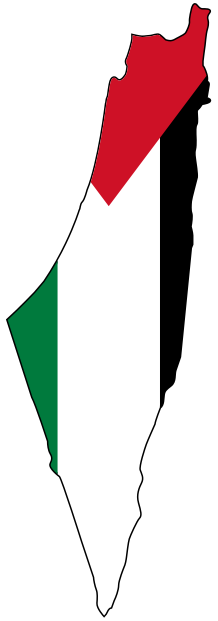
Jaramana Refugee Camp

Jaramana Refugee Camp in Syria: History, Hula Villages, Demolitions and Life Today
Jaramana Camp lies on the airport road south-east of Damascus, the closest Palestinian camp to the city centre. Refugees from the Hula Valley, the Upper Galilee and the villages of Tiberias began gathering there in , and it grew into an official camp. Since 1985, road and bridge projects have demolished large parts of it and moved thousands of its people, many of them to Husseiniyeh. Home to more than 18,500 registered refugees and many displaced families from Yarmouk, it is today one of the poorest Palestinian camps in Syria. This guide covers its history, origins, population, services and its situation today.
Quick Facts About Jaramana Camp
| Arabic name | مخيم جرمانا |
|---|---|
| Country | Syria |
| Location | On the Damascus International Airport road, south-east of Damascus, Rif Dimashq Governorate |
| Established | Refugees gathered from ; recognised as a camp later (1948 per UNRWA, 1967 per other sources) |
| Area | About 0.03 km² at founding |
| Registered refugees | More than 18,500 (UNRWA) |
| Refugees relocated by demolitions | More than 8,910 (1985–2009) |
| Origin of residents | Safed district, the Hula Valley and the villages of Tiberias |
| UNRWA status | Official UNRWA camp |
The Nakba: Why Jaramana Camp Exists
Jaramana Camp was born from the Nakba (Arabic for "catastrophe"): the mass expulsion of Palestinians during the occupation of Palestine in , when roughly 750,000 Palestinians were driven from their homes. In the spring of 1948, the villages and Bedouin encampments of the Hula Valley and the Upper Galilee, on Syria's doorstep, were emptied one after another, and their people crossed into Syria.
From , families from the Hula, Safed and the villages of Tiberias gathered on open land on the south-eastern edge of Damascus, beside the town of Jaramana. After the occupation of the Golan Heights in June , Palestinians who had settled there after 1948 were displaced again, and some joined them, along with Syrians from the Golan. The new quarter they built became known as "al-Nazihin", the quarter of the displaced.
The Right of Return
Many of Jaramana's lanes carry the names of the Palestinian villages their residents were driven from, and the camp's committees for the right of return, cultural forums and the Shatat cultural centre keep that memory alive. The right of return rests on several foundations in international law:
- UN General Assembly Resolution 194 (), paragraph 11, resolved that refugees wishing to return to their homes and live at peace with their neighbours should be permitted to do so at the earliest practicable date, and that compensation should be paid to those choosing not to return and for loss of or damage to property.
- The Universal Declaration of Human Rights (Article 13) affirms everyone's right to leave any country, including their own, and to return to it.
- UN General Assembly Resolution 3236 () reaffirmed the "inalienable right" of Palestinians to return to their homes and property.
History of the Camp (1949–1985)
The first refugees lived in tents, which gave way to mud houses with wooden roofs and later to homes of concrete and steel, rising no more than two storeys. The camp was established on about 30,000 m² and counted 2,414 dwellings at its founding. Its old lanes were named "al-Wataniyya", its newer quarter "al-Nazihin", and others after the villages of the Hula. In 1975 its residents founded al-Jalil (Galilee) Sports Club, and the camp developed an active cultural and political life. By 1985 it was home to about 24,000 people.
The Airport Road Demolitions (1985–2009)
Jaramana's location became its misfortune. The camp sits on the road to Damascus International Airport, at a key junction crossed by the Southern Ring Road. From 1985 onward, large parts of the camp were demolished to widen roads, build bridges and divert traffic, and its families were moved away in successive waves:
- 1985–1986: 311 families were moved to the newly founded area of Husseiniyeh, followed by 411 more families to the Husseiniyeh housing project.
- 1985–1994: about 5,000 people were relocated in total.
- 1998–2005: further groups of families were moved, from 12 to 132 families at a time.
- 2005–2009: about 7,300 people were moved in instalments.
In all, more than 8,910 refugees were moved out of Jaramana, and they formed the core of the new Husseiniyeh camp. Families were given apartments of about 70 m² in place of their homes, but these were not free: residents were asked to pay the price difference in instalments and could be evicted if they fell behind, and disputes over the sums persisted. The demolitions broke up the camp's social fabric and weakened its sporting and social life, and the population fell to 8,879 by 1999.
Husseiniyeh, about 13 km south-east of Damascus, has since become one of the largest Palestinian communities in Syria, built largely by families uprooted from Jaramana.
The War Years (2011–2024)
Before the Syrian war, about 18,000 people lived in the camp. During the war, it was spared the destruction that befell Yarmouk, Sbeineh and Husseiniyeh, and instead took in large numbers of Palestinians displaced from other areas, especially Yarmouk. By 2019 its population was estimated at about 49,000, crowding even further a camp already shrunk by demolitions. The camp also struggled with poverty, unemployment and drug use among young people.
The Current Situation (2025–2026)
Since the fall of the former regime in December 2024, Jaramana's residents have pressed for better services. In October 2025, the camp's development committee met the mayor of Jaramana to discuss cleaning, infrastructure and services. The camp, described as one of the poorest Palestinian camps in Syria, suffers from severely worn-out electricity, water and sewage networks, and residents rely on community initiatives to repair recurring faults.
Those initiatives continue: in February 2026, volunteers from the Bustan Abdo neighbourhood built a staircase linking it directly to the ring road, replacing a steep dirt path that turned to mud every winter. In June 2026, UNRWA's deputy director in Syria met community representatives in the camp. He described the agency's financial crisis as unprecedented: working hours and salaries had been cut by a further 20%, some services reduced, and food and cash assistance stopped. Residents complained of reduced coverage of treatment at UNRWA-contracted hospitals, and UNRWA proposed a project to rehabilitate the camp's sewage network, conditional on funding.
Origin of the Name
The camp is named after the neighbouring town of Jaramana, an ancient settlement whose name dates back to Roman times. According to tradition, the army of Abu Ubayda ibn al-Jarrah camped there before the conquest of Damascus.
Location and Geography
Jaramana Camp lies south-east of Damascus, on the road to Damascus International Airport, and is the closest Palestinian camp to the centre of the capital. It is bordered by Abu Nouri and al-Tabbaleh to the north, the town of Jaramana in the Eastern Ghouta to the south, al-Duwayla'a to the east and the airport motorway to the west. The Southern Ring Road passes through it.
Area and Layout
The camp was founded on about 30,000 m² (0.03 km²), but much of that area has been lost to demolitions and road works. It has become a neighbourhood of Jaramana, with lanes named after Palestinian villages and neighbourhoods such as Bustan Abdo, separated in places from the rest of the camp by the ring road.
Villages of Origin
Most of the camp's families come from the Safed district, the Hula Valley and Tiberias. According to the Encyclopedia of Palestinian Camps:
- Main villages of Safed and the Hula: al-Dawwara, al-Salihiyya, al-Abisiyya, Qaytiyya, al-Khisas, al-Khalisa, al-Mansura, al-Muftakhira, Jahula, al-Zanghariyya, al-Wayziyya, al-Buwayziyya, al-Butayha, Abil al-Qamh, al-Manshiyya and al-Zawiya
- Smaller groups: al-Zuq al-Tahtani, al-Zuq al-Fawqani, al-Mallaha, Khiyam al-Walid, al-Na'ima and al-Shawka al-Tahta
- Clans and families: al-Wuhayb, al-Hib, al-Nawa'ima, al-Talawiya and al-Waysiyya, as well as the Kurdish families of al-Baqqara, al-Khayt and al-Ghannama from the Hula
Population and Demographics
Jaramana's population has risen and fallen with demolitions and war. UNRWA counts registered refugees, while other figures describe residents, including displaced people and unregistered families in neighbouring Abu Nouri, so the numbers are not directly comparable.
Population of Jaramana Camp over time
- 1985About 24,000Encyclopedia of Palestinian Camps
- 1995About 16,850 in 965 familiesEncyclopedia of Palestinian Camps
- 19998,879 (after relocations)Encyclopedia of Palestinian Camps
- 20083,721 registered, plus unregistered residents in Abu NouriEncyclopedia of Palestinian Camps
- Before 2011About 18,000UNRWA, via Wikipedia
- 2019About 49,000, including displaced peopleWikipedia
- CurrentMore than 18,500 registered refugeesUNRWA
According to field research, Palestinian refugees make up about 95% of residents, Syrians from the Golan about 4% and Syrians from nearby governorates about 1%.
Housing and Infrastructure
Homes are built of concrete and rise no more than two storeys. The camp has a sewage network and paved lanes, but the networks are badly worn. Water from the tanks is not fit to drink, so residents buy drinking water from tankers. There is no public street lighting; families hang lamps outside their homes. UNRWA handles cleaning with a contractor, and Syria's General Authority for Palestine Arab Refugees (GAPAR) is responsible for other services.
Economic Life
Unemployment and poverty are high. Many women work in factories or cleaning homes, and some refugees collect plastic from rubbish to sell. The camp has no large shops or market that meets all its residents' needs. Residents also complain of the lack of affordable loans, poor housing, declining UNRWA services and the absence of compensation for those whose homes were demolished.
Health Situation
UNRWA runs a health centre for registered refugees, and a clinic of the Palestine Liberation Army offers paediatric, internal medicine and dental care for nominal fees. There are also private clinics, a laboratory and pharmacies, but no government clinic inside the camp, so residents rely on centres in Jaramana and al-Duwayla'a. Sickle cell anaemia, thalassaemia, diabetes and high blood pressure are common.
Education, Sport and Culture
UNRWA runs six schools in the camp, four elementary and two preparatory, with more than 2,000 pupils; two schools closed as the population shrank after the demolitions. Secondary students study outside the camp, in al-Duwayla'a and Jaramana. Al-Jalil Sports Club, founded in 1975, offers football, karate, wrestling, table tennis and chess despite a lack of funds. The camp is known for its cultural life, with the Palestine Cultural Forum, the Palestinian Cultural Gathering, the Shatat cultural centre and committees for the right of return. Families preserve their village ties and customs, and the rural Palestinian dialect of the Galilee is still widely spoken.
Frequently Asked Questions About Jaramana Camp
Where is Jaramana refugee camp located?
On the Damascus International Airport road, south-east of Damascus, beside the town of Jaramana. It is the closest Palestinian camp to the centre of the capital.
When was Jaramana camp established?
Refugees from the Hula Valley, the Upper Galilee and Tiberias began gathering there in 1949, and the site later became an official UNRWA camp.
Why were parts of Jaramana camp demolished?
From 1985 to 2009, large parts of the camp were demolished for the airport road, bridges and the Southern Ring Road, and more than 8,910 refugees were moved, many of them to Husseiniyeh.
How many people live in Jaramana camp?
UNRWA counts more than 18,500 registered refugees; the camp's population swelled to about 49,000 in 2019 with families displaced from Yarmouk and elsewhere.
Where do Jaramana's refugees come from?
Mainly from the Safed district and the Hula Valley, including al-Dawwara, al-Salihiyya, al-Abisiyya, Qaytiyya, al-Khisas, al-Khalisa, al-Mansura and al-Zanghariyya, and from the villages of Tiberias.
Conclusion
Jaramana is a camp that has been made smaller again and again. Its families fled the Hula in 1948 and built their homes on the edge of Damascus, only to see bulldozers clear the way for highways and bridges, scattering thousands to Husseiniyeh. During the war it opened its narrow lanes to the displaced of Yarmouk. Today, among the poorest camps in Syria, its people build their own stairs and repair their own wires, and still name their streets after al-Khalisa, al-Khisas and al-Zanghariyya, the villages they mean to return to.
More from the archive
 Download Our Palestine App
The whole archive in the palm of your hand: depopulated villages, the Nakba, the massacres and Al-Aqsa — free, with no ads to erase the story.
Comments
No comments yet — be the first to write one.
Add your comment
Name and email are optional. Comments appear after review.