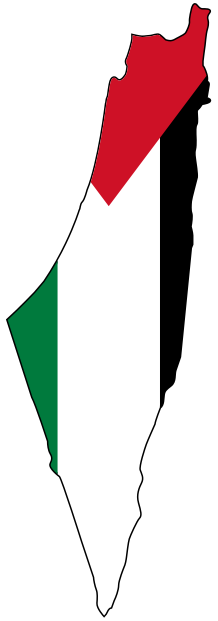
Aqabat Jabr Refugee Camp

Aqabat Jabr Refugee Camp
Aqabat Jabr Refugee Camp in Jericho: History, Villages of Origin, Population and the Raids of 2023
Aqabat Jabr Camp (also spelled Aqabat Jaber) lies about 3 km south-west of Jericho in the Jordan Valley, in the occupied West Bank. Established in , it was once the largest refugee camp in the West Bank, home to about 30,000 refugees, until most of them were displaced again across the Jordan River in 1967. Today about 6,400 registered refugees and thousands of other residents live there, with families from 22 villages of the Jaffa, Hebron and Gaza districts, among them Ajjur, Bayt Jibrin, al-Abbasiyya and Yazur. In 2023 the camp faced a siege and deadly raids. This guide covers its history, origins, population, services and its situation today.
Quick Facts About Aqabat Jabr Camp
| Arabic name | مخيم عقبة جبر |
|---|---|
| Other spellings | Aqabat Jaber, Aqbat Jabr |
| Location | About 3 km south-west of Jericho, Jordan Valley, occupied West Bank |
| Year established | |
| Area | About 1,688 dunums (other sources: up to 2,800 dunums) |
| Population before 1967 | About 30,000 registered refugees, the largest camp in the West Bank |
| Registered refugees today (UNRWA) | More than 6,400 |
| Residents (2017 census) | 8,960, including non-refugees |
| Origin of residents | 22 villages of the Jaffa, Hebron and Gaza districts |
| Oslo classification | Area A (Palestinian Authority control) |
The Nakba: Why Aqabat Jabr Camp Exists
Aqabat Jabr was born from the Nakba (Arabic for "catastrophe"): the mass expulsion of Palestinians during the occupation of Palestine in , when roughly 750,000 Palestinians were driven from their homes. From the spring to the autumn of that year, the villages of the Jaffa coast, the Ramla plain, the western Hebron hills and the north of the Gaza district were emptied one after another. Tens of thousands of their people walked east, over the hills and down into the Jordan Valley.
On the arid plain south-west of Jericho, UNRWA set up one of the largest refugee camps of the time on land leased from the Jordanian government. By the mid-1960s about 30,000 registered refugees lived there, making Aqabat Jabr the largest camp in the West Bank.
The Right of Return
Twice displaced, the people of Aqabat Jabr hold firmly to the right of return. It rests on several foundations in international law:
- UN General Assembly Resolution 194 (), paragraph 11, resolved that refugees wishing to return to their homes and live at peace with their neighbours should be permitted to do so at the earliest practicable date, and that compensation should be paid to those choosing not to return and for loss of or damage to property.
- UN Security Council Resolution 237 () called on Israel to facilitate the return of those who had fled since the outbreak of hostilities, a call that applies directly to the thousands who left Aqabat Jabr in 1967.
- The Universal Declaration of Human Rights (Article 13) affirms everyone's right to leave any country, including their own, and to return to it.
- UN General Assembly Resolution 3236 () reaffirmed the "inalienable right" of Palestinians to return to their homes and property.
History of the Camp (1948–2022)
The largest camp in the West Bank
In its first two decades, Aqabat Jabr was a vast camp on the desert plain near the Dead Sea. Its refugees came from a very wide range of places: UNRWA says its original residents came from some 300 villages, from the Haifa area to the Gaza and Hebron regions.
The second displacement of 1967
During the June war and the occupation of the West Bank, most of the camp's refugees fled across the Jordan River to Jordan, becoming refugees for a second time. According to the Encyclopedia of Palestinian Camps, only about 1,619 people remained. In November 1985, under an agreement with UNRWA, the Israeli authorities began demolishing unused houses in the camp.
After Oslo
Under the Gaza–Jericho Agreement of 1994, Jericho and its camps came under the control of the Palestinian Authority, and the camp lies today in Area A. Its population has grown again since then, and some non-refugees have moved onto camp land and built homes without permits. The camp remains surrounded by Israeli settlements in the Jordan Valley.
The Siege and Raids of 2023
Long seen as one of the quieter camps, Aqabat Jabr became a focus of Israeli military operations in 2023, after a new armed group emerged in the camp.
- Late January – February 2023: after a shooting attack at a restaurant at the Almog junction, between Jericho and the Dead Sea, Israeli forces besieged Jericho and the camp for about ten days, paralysing the city, and raided the camp repeatedly.
- : in a dawn raid on the camp, Israeli forces killed five young Palestinian men and seriously wounded two others.
- : a 17-year-old was shot in the head and killed and six others were wounded during a raid, after more than a week of movement restrictions on Jericho.
- : six Palestinians were wounded in a dawn raid and house searches.
- : Israeli forces killed two Palestinians in the camp, one of them a 16-year-old boy. WAFA counted 11 Palestinians killed in the camp since the start of the year.
- : days after the start of the war on Gaza, a young man was shot dead near a mosque in the camp during a raid, and six residents were arrested.
The Current Situation (2024–2026)
While Israel waged its genocide war on Gaza, raids on Aqabat Jabr continued. In November 2024, soldiers stormed a home in the camp, ransacked it and beat members of the family, and arrests of young men from the camp were still being reported in April 2026.
Settler pressure is also closing in. On , settlers installed an iron gate and closed the Wadi al-Qelt road west of Jericho, just north of the camp. Across the Jordan Valley, settler outposts and military closures have tightened their grip on Palestinian land and movement. At the same time, UNRWA, which runs the camp's schools and health centre, faces Israeli laws restricting its work and a deep funding crisis.
Origin of the Name
The camp takes its name from the area where it was built, known as Aqabat Jabr or Aqabat Jaber. In Arabic, عقبة (aqaba) means a steep ascent or mountain pass, fitting a site at the foot of the hills that rise west of Jericho. The available sources do not explain the origin of "Jabr".
Location and Geography
Aqabat Jabr lies about 3 km south-west of Jericho, in the Jordan Valley below sea level. Jericho borders it to the east and north, and the area of al-Nabi Musa lies to the south. Its desert climate brings very hot summers and severe water shortages, and heavy winter rains flood its streets.
Area and Land
Sources differ on the camp's size: about 1,688 dunums according to some, and up to 2,800 dunums according to the Encyclopedia of Palestinian Camps. Either way, it is one of the largest camps by area in the West Bank, a legacy of its size before 1967. Like other West Bank camps, it was built on land that UNRWA leased from the Jordanian government; the land itself is privately owned.
Villages of Origin
The refugees who remained after 1967 come from 22 villages. Among those named by UNRWA and the Encyclopedia of Palestinian Camps:
- Hebron district: Ajjur, Bayt Jibrin, Tall al-Safi and Dayr al-Dubban
- Jaffa district: al-Abbasiyya, Bayt Dajan, Yazur and Kafr Ana
- Gaza district: al-Masmiyya
Population and Demographics
UNRWA counts registered refugees, while the Palestinian Central Bureau of Statistics (PCBS) counts all residents, including non-refugees who have moved into the camp. The two figures are therefore not the same.
Population of Aqabat Jabr Camp over time
- Before 1967About 30,000Registered refugees (UNRWA)
- After 1967About 1,619Residents (Encyclopedia of Palestinian Camps)
- 20055,566Registered refugees (UNRWA)
- 20077,084Residents (PCBS)
- 20128,146Residents (PCBS)
- 20178,960Residents (PCBS census)
- 2023About 11,000Residents (press estimate, Al Jazeera)
- CurrentMore than 6,400Registered refugees (UNRWA)
Housing and Infrastructure
Homes are connected to the public electricity and water networks, and UNRWA has built shelter units for the poorest families, including one-room units for the elderly. Water is the camp's most pressing problem: the Israeli company Mekorot is the main supplier, UNRWA pumps small amounts from nearby springs, and shortages are severe in summer. There is no stormwater drainage, so heavy rain floods homes in winter.
Economic Life
Most working residents are employed in agriculture in the Jordan Valley or as labourers in nearby Israeli settlements. UNRWA puts unemployment at about 28%, driven by the lack of access to the Israeli labour market. Since October 2023, movement restrictions and the closure of work inside the Green Line to most West Bank labourers have made life harder still.
Health Situation
UNRWA runs a health centre in the camp, and two other health centres also serve its residents. Hospital care is in Jericho, which has been cut off repeatedly by Israeli military closures, as during the siege of early 2023.
Education and Community Services
UNRWA runs two schools in the camp, one for boys and one for girls, teaching the elementary and preparatory grades; students complete secondary school in Jericho. The camp also has a UNRWA food distribution centre, a community-based rehabilitation centre, a children's centre and a women's programme centre, along with local associations, including a YMCA branch.
Frequently Asked Questions About Aqabat Jabr Camp
Where is Aqabat Jabr refugee camp?
About 3 km south-west of Jericho, in the Jordan Valley in the occupied West Bank.
When was Aqabat Jabr camp established?
In 1948, for Palestinians expelled during the Nakba. Before 1967 it was the largest camp in the West Bank, with about 30,000 refugees.
What happened to Aqabat Jabr in 1967?
During the June 1967 war, most of its refugees fled across the Jordan River to Jordan, and only about 1,600 people remained.
How many people live in Aqabat Jabr camp?
UNRWA counts more than 6,400 registered refugees, while the 2017 Palestinian census counted 8,960 residents, including non-refugees.
Where do Aqabat Jabr's refugees come from?
From 22 villages of the Jaffa, Hebron and Gaza districts, including Ajjur, Bayt Jibrin, Tall al-Safi, Dayr al-Dubban, al-Abbasiyya, Bayt Dajan, Yazur, Kafr Ana and al-Masmiyya.
Conclusion
Aqabat Jabr was once a city of refugees on the desert plain below Jericho, until 1967 scattered most of its people again across the Jordan. Those who stayed rebuilt their lives amid empty ruins, heat and scarce water, and in 2023 they buried their young in siege and raids. Today the camp carries the memory of two displacements, and its families still look west, towards Ajjur, Bayt Jibrin and Yazur, and the return they still demand.
More from the archive
 Download Our Palestine App
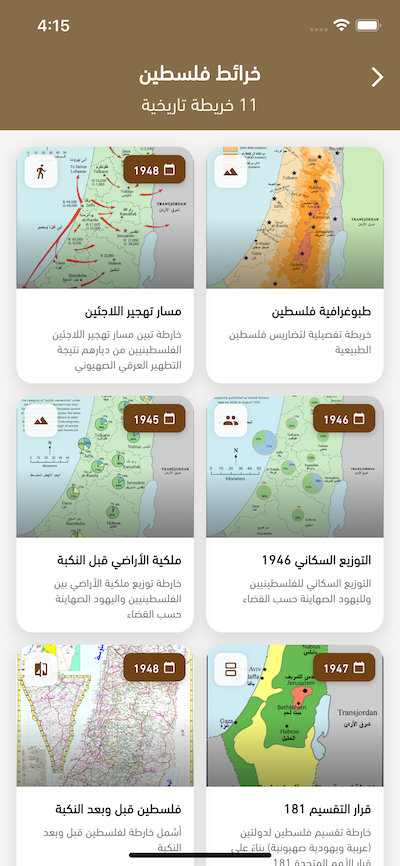
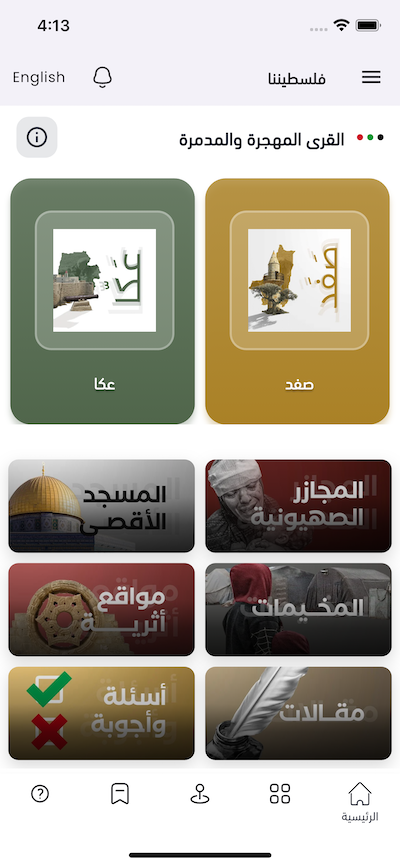
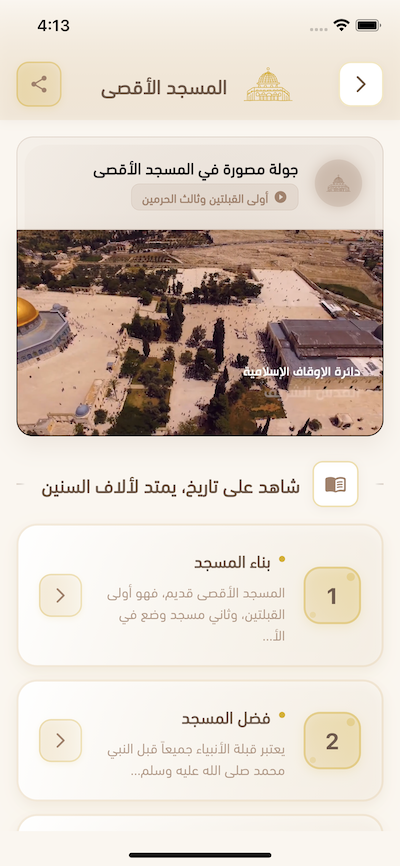
The whole archive in the palm of your hand: depopulated villages, the Nakba, the massacres and Al-Aqsa — free, with no ads to erase the story.
Comments
No comments yet — be the first to write one.
Add your comment
Name and email are optional. Comments appear after review.