
Camp No. 1 (Ein Beit al-Ma)
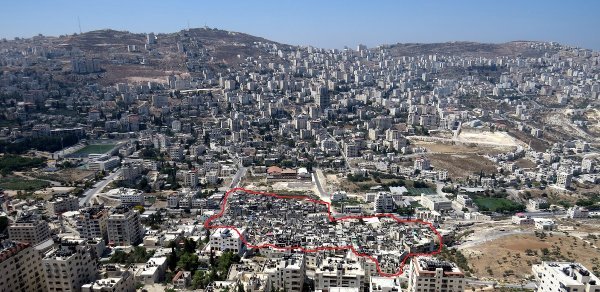
Camp No. 1 (Ein Beit al-Ma)
Camp No. 1 (Ein Beit al-Ma) in Nablus: History, Villages of Origin, Population and the Current Situation
Camp No. 1, also known as al-Ein or Ein Beit al-Ma, lies on the western edge of Nablus, on the main road towards Tulkarm and Jenin. Established in on just 45 dunums, it was the first refugee camp in the Nablus area, hence its name. Its people come from Jaffa, Lydda, Haifa and Acre, among them the villages of Yazur, al-Jammasin al-Gharbi, Salama, al-Khayriyya and al-Birwa. With about 7,800 registered refugees, it is the most densely populated camp in the West Bank. In September 2026, Israeli forces stormed it with armoured vehicles and turned a home into a military post.
Quick Facts About Camp No. 1
| Arabic name | مخيم رقم واحد (العين) / مخيم عين بيت الماء |
|---|---|
| Country / Region | Palestine, northern West Bank |
| Governorate | Nablus, on the western edge of the city |
| Year established | |
| Area | About 0.045 km² (45 dunums) |
| Registered refugees | About 7,806 (UNRWA) |
| Residents | 3,588 (Palestinian census, 2017) |
| Population density | About 166,000 people per km² (UNRWA): the highest of any West Bank camp |
| Origin of residents | Jaffa, Lydda, Haifa and Acre districts |
| Oslo classification | Area A |
The Nakba: Why the Camp Exists
Camp No. 1 was born from the Nakba (Arabic for "catastrophe"): the mass expulsion of Palestinians during the occupation of Palestine in . Roughly 750,000 Palestinians were driven from their homes. The villages around Jaffa and Lydda on the coastal plain, and those of the Acre and Haifa districts in the north, were emptied of their people, many of whom fled into the hills of Nablus.
The Right of Return
The right of return is the central demand of the camp's refugees. It rests on several foundations in international law:
- UN General Assembly Resolution 194 (), paragraph 11, resolved that refugees wishing to return to their homes and live at peace with their neighbours should be permitted to do so at the earliest practicable date, and that compensation should be paid to those choosing not to return and for loss of or damage to property.
- The Universal Declaration of Human Rights (Article 13) affirms everyone's right to leave any country, including their own, and to return to it.
- UN General Assembly Resolution 3236 () reaffirmed the "inalienable right" of Palestinians to return to their homes and property.
History of the Camp
Founding (1950)
The camp was established in 1950 on about 45 dunums of land leased in the west of Nablus. The plot included a cemetery, a mosque, a health clinic and UNRWA's administration. About 1,000 refugees lived there at first.
Under occupation (1967–1995)
By 1967 the camp had about 2,500 residents. With the occupation of the West Bank in , it came under Israeli military rule, and its people took part in the First Intifada. Following Israel's redeployment in 1995, the camp became part of Area A, under Palestinian Authority control.
The Second Intifada
In April 2002, during the invasion of West Bank cities, a large number of Israeli soldiers and armoured vehicles entered the camp and ordered all residents to leave their homes. In September 2007, a further operation placed the camp's entire population of about 6,900 people under curfew; the UNRWA clinic was closed, and the water, electricity and sewage networks were damaged.
The Current Situation (2025–2026)
Because the camp lies on a main road out of Nablus, Israeli forces enter it frequently. Raids have intensified since 2025:
- 2025: A wide-scale raid in which armoured vehicles spread through the camp and its surroundings, and families were forced out of their homes at gunpoint.
- January–July 2026: Repeated dawn raids, on 3 January, 11 April, 29 May, 11 June and 8 July, with homes searched, residents interrogated in the field and arrests, including of a woman.
- 17 September 2026: Israeli forces stormed the camp with armoured vehicles, closed its entrances, spread through its neighbourhoods and turned a home into a military post. Through loudspeakers, they ordered residents of al-Sikka Street near the camp to leave their homes.
- 10 and 14 October 2026: Further raids on the camp, together with Askar camp, with homes searched and residents arrested.
These raids come as the camps of Jenin, Tulkarm and Nur Shams have been emptied of their residents since January 2025.
Origin of the Name
The camp has two names:
- Ein Beit al-Ma (عين بيت الماء, "Spring of the House of Water"), or simply al-Ein ("the spring"), after a spring to the west of the camp that supplied its refugees with water in its early years. Today, the spring belongs to Nablus municipality and supplies the camp and five nearby neighbourhoods with drinking water.
- Camp No. 1, because it was the first camp established in the Nablus area.
Location and Geography
The camp lies within the municipal boundaries of Nablus, on its western edge, beside the main road leading from Nablus towards Tulkarm and Jenin. Nablus is also home to Balata and Askar camps.
Area
The camp covers only about 45 dunums (0.045 km²), making it one of the smallest camps in the West Bank. Its area has never changed since 1950, while its registered population has grown more than sevenfold.
Villages of Origin
Most of the camp's refugees were displaced from the Acre, Haifa, Jaffa and Lydda districts. Those from Yazur, Jaffa, al-Jammasin al-Gharbi, al-Birwa, Salama, Sha'b, al-Khayriyya, Majdal Yaba, Rantiya and Burayka make up about two-thirds of the camp:
- Jaffa district: the city of Jaffa, Yazur, Al-Jammasin al-Gharbi, Salama, Al-Khayriyya and Rantiya
- Acre district: Al-Birwa and Sha'b
- Haifa district: Burayka
- Ramla district: Majdal Yaba
Population and Demographics
Population of Camp No. 1 over time
- 1948–1950About 1,000Our Palestine
- 1967About 2,500Our Palestine
- 2007About 6,900 (camp population under curfew)UN OCHA
- 2015About 7,500 registered refugeesUNRWA
- 20173,588 residentsPalestinian Central Bureau of Statistics
- LatestAbout 7,806 registered refugeesUNRWA
Note: Registered refugees are not the same as residents. Many refugees registered in the camp now live in Nablus and its neighbourhoods, so the census, which counts only those inside the camp, records fewer people.
Housing and Living Conditions
With about 166,000 people per km², Camp No. 1 is the most densely populated camp in the West Bank. Overcrowding has left almost no living or recreational space, which harms residents' mental and physical health. Raids frequently damage homes and infrastructure.
Education, Health and Community
UNRWA runs two schools near the camp, built in 1997 with funding from Saudi Arabia and Sweden on land donated by Nablus municipality. Secondary students attend schools in Nablus, and many graduates continue to An-Najah National University. The camp has an UNRWA health clinic inside its boundaries, and residents rely on Nablus hospitals for advanced care. The camp also has a very active civil society with numerous community organisations, and a popular services committee.
Frequently Asked Questions About Camp No. 1
Why is it called Camp No. 1?
Because it was the first refugee camp established in the Nablus area. It is also called al-Ein or Ein Beit al-Ma after a nearby spring that supplied its water.
Where is Camp No. 1 located?
On the western edge of Nablus, within its municipal boundaries, beside the main road towards Tulkarm and Jenin.
Is Camp No. 1 the most crowded camp in the West Bank?
Yes. With about 7,800 registered refugees on only 45 dunums, it has a density of about 166,000 people per km², the highest of any West Bank camp.
Where do the camp's refugees come from?
Mainly from the Jaffa, Lydda, Haifa and Acre districts, including Yazur, Jaffa, al-Jammasin al-Gharbi, al-Birwa, Salama, al-Khayriyya and Rantiya.
What is happening in Camp No. 1 now?
The camp faces frequent raids. On 17 September 2026, Israeli forces stormed it with armoured vehicles, closed its entrances and turned a home into a military post.
Conclusion
Camp No. 1 was the first camp in Nablus, built on 45 dunums beside a spring for a thousand refugees from the coast and the Galilee. Today it is the most crowded camp in the West Bank, facing repeated raids. Through all of this, its people keep alive the memory of Yazur, al-Birwa and the villages of Jaffa, and their right to return.
More from the archive

 Download Our Palestine App
The whole archive in the palm of your hand: depopulated villages, the Nakba, the massacres and Al-Aqsa — free, with no ads to erase the story.
Download Our Palestine App
The whole archive in the palm of your hand: depopulated villages, the Nakba, the massacres and Al-Aqsa — free, with no ads to erase the story.



Comments
No comments yet — be the first to write one.
Add your comment
Name and email are optional. Comments appear after review.