
Nur Shams Refugee Camp
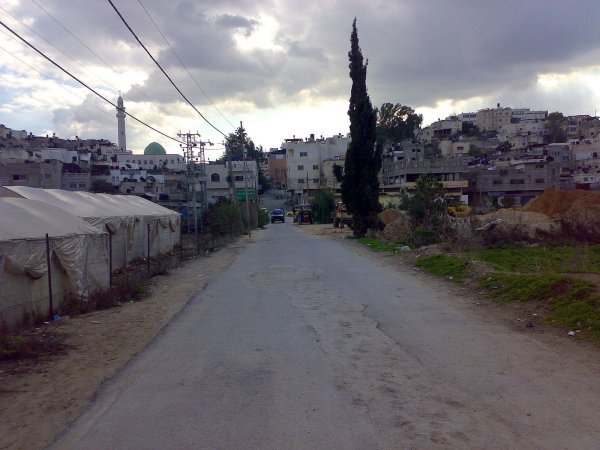
Nur Shams Refugee Camp
Nur Shams Refugee Camp in Tulkarm: History, Villages of Origin and Forced Displacement (2025–2026)
Nur Shams Camp lies about 3 km east of Tulkarm in the northern West Bank. It was established in for refugees from the villages of the Haifa district, among them al-Kafrayn, Sabbarin, Umm al-Zinat, Ijzim and Ayn Ghazal. Its name comes from a British prison built nearby in 1919. Since February 2025, the camp has been emptied of all its residents by the Israeli military operation known as "Iron Wall". Nearly half its buildings have been destroyed or damaged, and more than 20 months later its people are still prevented from returning. This guide covers its history, origins, population and current situation.
Quick Facts About Nur Shams Camp
| Arabic name | مخيم نور شمس |
|---|---|
| Country / Region | Palestine, northern West Bank |
| Governorate | Tulkarm, about 3 km east of the city |
| Year established | |
| Area | About 0.21 km² (210–226 dunums) |
| Registered refugees | 13,519 (UNRWA, 2022) |
| Residents before displacement | About 15,000 |
| Origin of residents | Mainly villages of the Haifa district |
| Current status | Emptied of its residents since February 2025; about 48% of buildings destroyed or damaged |
The Nakba: Why Nur Shams Camp Exists
Nur Shams Camp was born from the Nakba (Arabic for "catastrophe"): the mass expulsion of Palestinians during the occupation of Palestine in . Roughly 750,000 Palestinians were driven from their homes. The villages of Mount Carmel and the Bilad al-Ruha area south-east of Haifa were emptied in the spring and summer of 1948, and their people fled east, many of them towards Tulkarm.
Today, the camp's people are living through a second displacement: in 2025, they were driven from the camp that had sheltered them for more than seventy years.
The Right of Return
The right of return is the central demand of Nur Shams's refugees, now doubly so: the right to return to their villages near Haifa, and to the camp itself. It rests on several foundations in international law:
- UN General Assembly Resolution 194 (), paragraph 11, resolved that refugees wishing to return to their homes and live at peace with their neighbours should be permitted to do so at the earliest practicable date, and that compensation should be paid to those choosing not to return and for loss of or damage to property.
- The Universal Declaration of Human Rights (Article 13) affirms everyone's right to leave any country, including their own, and to return to it.
- UN General Assembly Resolution 3236 () reaffirmed the "inalienable right" of Palestinians to return to their homes and property.
History of the Camp
Before 1948
Before the Nakba, Nur Shams was a small area near Tulkarm. In 1919, the British Mandate authorities built a prison there, used for those sentenced to death or life imprisonment, and later to detain Palestinian rebels who took part in the revolts of 1929 and 1936. In May 1936, a battle known as the Battle of Nur Shams took place near the prison between Palestinian fighters and British forces.
Founding (1952)
Refugees from the villages of the Haifa district took shelter in the area after 1948, and in 1952 the camp was established there, taking the name of the area. It is divided into a northern and a southern section.
Under occupation (1967 onward)
The camp came under Israeli military rule with the occupation of the West Bank in , and its people took part in both Intifadas. From 2023 onward, Israeli forces carried out repeated large-scale raids on the camp, with airstrikes, house demolitions and the bulldozing of streets and infrastructure.
Forced Displacement and Destruction (2025–2026)
The "Iron Wall" operation
On , the Israeli military operation known as "Iron Wall", launched in Jenin on 21 January, reached Nur Shams. Soldiers moved through the camp, stormed homes and forced all families out. A woman eight months pregnant was shot dead as she tried to drive away from the camp. On , Israel's Defence Minister ordered the army to remain in the camps of Jenin, Tulkarm and Nur Shams and announced that displaced residents would not be allowed to return.
Systematic demolition
- March 2025: Israeli forces demolished 11 houses, then began demolishing more than 16 buildings, as part of what UNRWA called an alarming new pattern.
- May 2025: New demolition orders targeted 106 houses across the Tulkarm and Nur Shams camps.
- October 2025: About 48% of the camp's buildings had been destroyed or damaged.
- December 2025: A new order targeted about 25 residential buildings. Israel's Supreme Court rejected a petition to stop it on 24 December, residents were allowed in briefly to collect their belongings, and demolition began on 31 December, displacing about 100 families that day alone.
According to official Palestinian estimates, by mid-2026 about 600 homes had been fully destroyed and 2,573 partially damaged in the two Tulkarm camps, with about 25,000 people displaced from them.
2026: a brief visit, then continued exile
- June 2026: After about 18 months, some residents were allowed, through prior coordination with the army, to enter for a few hours. About 65 families from the two Tulkarm camps retrieved belongings. Many found their homes destroyed, burned or emptied of furniture, and the camp's streets and landmarks bulldozed beyond recognition.
- 31 July 2026: The army renewed military closure orders on the Tulkarm and Nur Shams camps.
- 4 September 2026: A report by the UN Human Rights Office concluded that Israeli forces had forcibly displaced the entire population of the three camps and continued to prevent their return, in serious violation of international law, raising concerns of forcible transfer and collective punishment.
- October 2026: Israel's Supreme Court ordered the army to set out a plan and timeline for residents' return. Israel's Prime Minister and Defence Minister rejected the ruling, insisting the army would remain in the camps.
UNRWA reports that about 33,362 people remain displaced from the three camps. Nur Shams's displaced families live in rented homes, with relatives, or in schools, mosques and makeshift tin shacks, struggling with unpaid salaries and rising living costs.
Origin of the Name
The camp takes its name from the Nur Shams prison, built by the British in 1919, and from the area that carried that name. In Arabic, Nur Shams means "sunlight".
Location and Geography
Nur Shams Camp lies in the Tulkarm Governorate in the north-western West Bank, about 3 km east of Tulkarm city, on the road between Tulkarm and Nablus. Tulkarm is also home to Tulkarm Camp, which has likewise been emptied of its residents.
Area
The camp covers about 0.21 km², with sources giving between 210 and 226 dunums.
Villages of Origin
The vast majority of Nur Shams's refugees come from the Haifa district, from villages including:
- Haifa district: Al-Kafrayn, Qannir, Sabbarin, Umm al-Zinat, Ijzim, Ayn Ghazal, Umm al-Shawf, and al-Ghubayya (al-Fawqa and al-Tahta)
- Jenin district: al-Lajjun
- Families from Ar'ara and Umm al-Fahm in the Wadi Ara area
Population and Demographics
| Year | Population | Source |
|---|---|---|
| 2010 | About 10,000 | Our Palestine |
| 2020s | About 10,602 refugees in the camp | Our Palestine |
| 2022 | 13,519 registered refugees | UNRWA |
| Before February 2025 | About 15,000 residents | Camp Popular Services Committee |
| 2025–2026 | All residents displaced | UNRWA / UN Human Rights Office |
Note: Registered refugees are not the same as residents. Since February 2025, the camp has had no residents at all, as its entire population has been forcibly displaced.
Living Conditions Before and After Displacement
Before 2025, Nur Shams faced overcrowding, high unemployment and poverty, and repeated raids that damaged homes, roads and water and sewage networks. Today, the camp's infrastructure has been bulldozed, hundreds of homes destroyed, burned or looted, and roads cut through its neighbourhoods. Even if return were allowed, the scale of destruction would make life in the camp extremely difficult. Displaced families face severe financial hardship, and the aid they receive falls far short of their needs.
Education and Services
Before the displacement, UNRWA ran two schools in the camp, one for boys and one for girls, each with a library and computer and science labs, serving more than 1,500 pupils, as well as a health centre. These services have stopped inside the camp since 2025. Israeli laws banning UNRWA's activity, in force since 30 January 2025, have further limited the agency's ability to support displaced refugees.
Frequently Asked Questions About Nur Shams Camp
Where is Nur Shams Camp located?
About 3 km east of Tulkarm in the northern West Bank, on the road between Tulkarm and Nablus.
Why is it called Nur Shams?
It takes its name from the Nur Shams prison built by the British in 1919 and the area that carried that name. In Arabic, the name means "sunlight".
Is anyone living in Nur Shams Camp now?
No. Since February 2025, the camp's entire population has been forcibly displaced during the Israeli "Iron Wall" operation, and residents are still prevented from returning.
How much of the camp has been destroyed?
By October 2025, about 48% of the camp's buildings had been destroyed or damaged, and demolitions continued into 2026.
Where do Nur Shams's refugees come from?
Mainly from villages of the Haifa district, including al-Kafrayn, Qannir, Sabbarin, Umm al-Zinat, Ijzim, Ayn Ghazal, al-Ghubayya and Umm al-Shawf.
Conclusion
Nur Shams was built in 1952 for refugees from the villages of Mount Carmel and the Bilad al-Ruha area. For more than seventy years it sheltered them; in 2025 they were driven out again, and nearly half their camp was destroyed. Despite court rulings and a UN report confirming their forcible displacement, they are still kept from their homes. Today, the people of Nur Shams demand two returns: to their camp, and to the villages near Haifa from which they were expelled in 1948.
More from the archive


 Download Our Palestine App
The whole archive in the palm of your hand: depopulated villages, the Nakba, the massacres and Al-Aqsa — free, with no ads to erase the story.
Download Our Palestine App
The whole archive in the palm of your hand: depopulated villages, the Nakba, the massacres and Al-Aqsa — free, with no ads to erase the story.



Comments
No comments yet — be the first to write one.
Add your comment
Name and email are optional. Comments appear after review.