
The Palestinian Thobe by City: Jerusalem, Bethlehem, Hebron, Jaffa, Gaza and Beersheba
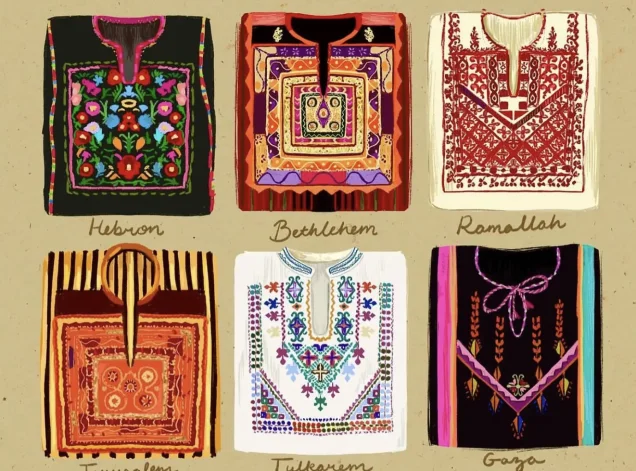
The Palestinian thobe is an embroidered identity card. From its colours, motifs and fabric, you can tell where the woman who wore it came from: Jerusalem, Bethlehem, Hebron, Jaffa or Gaza. While Palestinian heritage faces falsification and theft, the thobe has remained a witness to Palestinians' roots in their land, handed down from generation to generation.
This article introduces the Palestinian thobe, how it differs from city to city, and why it became a symbol of identity and resistance.
Palestinian Embroidery at UNESCO
In December 2021, UNESCO inscribed "The art of embroidery in Palestine: practices, skills, knowledge and rituals" on the Representative List of the Intangible Cultural Heritage of Humanity. The inscription affirms the Palestinian people's roots in their land and protects an art that has faced attempts at appropriation.
The Thobe as a Symbol of Identity and Resistance
Palestinian embroidery is not only an aesthetic heritage. It is a symbol of national identity and a craft that has provided a living for thousands of Palestinian women for generations. Rural women were the most skilled embroiderers, learning the craft from their mothers and grandmothers and using it to express their origins and their village.
After the Nakba, the thobe became a symbol of the struggle against occupation. During the First Intifada, when raising the Palestinian flag was banned, wearing the thobe was sometimes a substitute for raising the flag.
How the Palestinian Thobe Varies
Each region of Palestine had its own style of fabric colour, embroidery thread, and motifs with their own meanings. The differences were not only between cities:
- By marital status: an unmarried girl's thobe differed from that of a bride-to-be, and from that of a married woman.
- By occasion and wealth: a village woman's everyday work dress was simple and lightly embroidered, while a wedding thobe was often made of silk, with dense embroidery on the chest panel and wide embroidered sleeves.
Motifs changed over time. In the 19th and early 20th centuries, geometric patterns dominated. After the First Intifada, new designs appeared symbolising revolution and liberation, such as the map of Palestine, the flag, the key, the olive tree and the keffiyeh, and the thobe became a language for expressing Palestinian identity.
The Palestinian Thobe by City
Today Palestinian women wear the embroidered thobe at weddings and celebrations. Each region's thobe can be recognised by colours and motifs that reflect its landscape of trees, mountains and sea.
Jerusalem

The Jerusalem thobe reflects the civilisations that passed through the city. Some heritage enthusiasts see in its motifs traces of Canaanite civilisation on the chest panel and of the Crusader period on the sides, alongside embroidered crescents and designs inspired by Arabic calligraphy after Jerusalem's return to Arab Islamic rule.
Bethlehem

The Bethlehem thobe is one of the most luxurious Palestinian dresses, and its wedding dress is known as the "royal dress" (thob malak). Its best-known stitch is couching, called tahriri or qasab, and also known as "Talhamiyeh", in which silk and gold and silver threads are laid on the fabric to create curving designs. Its most striking feature is the tall embroidered bridal headdress known as the shatweh, studded with gold and silver coins and coral.
Hebron

The villages of Hebron were famous for thobes with dense, multicoloured embroidery and rich designs. The village thobe was woven by hand on the loom and dyed with indigo, and villagers came to Hebron city to buy fabric at the Friday market.
Jaffa
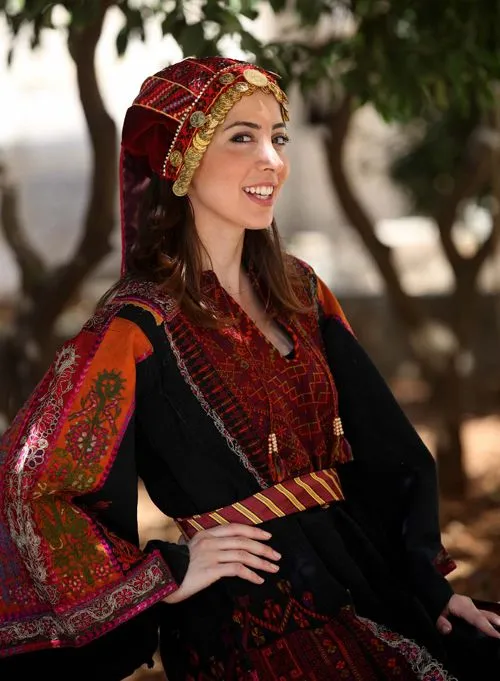
Jaffa thobes are known for their many fine, elegant stitches, full of branches, roses and cypress trees, reflecting Jaffa's green landscape and orange groves.
Gaza and al-Majdal

The Gaza thobe is known for large geometric units linked to the social life and nature of its people. The town of al-Majdal was a weaving centre that supplied the villages of Palestine with its striped "Majdalawi" fabric until the Nakba of 1948.
Nablus
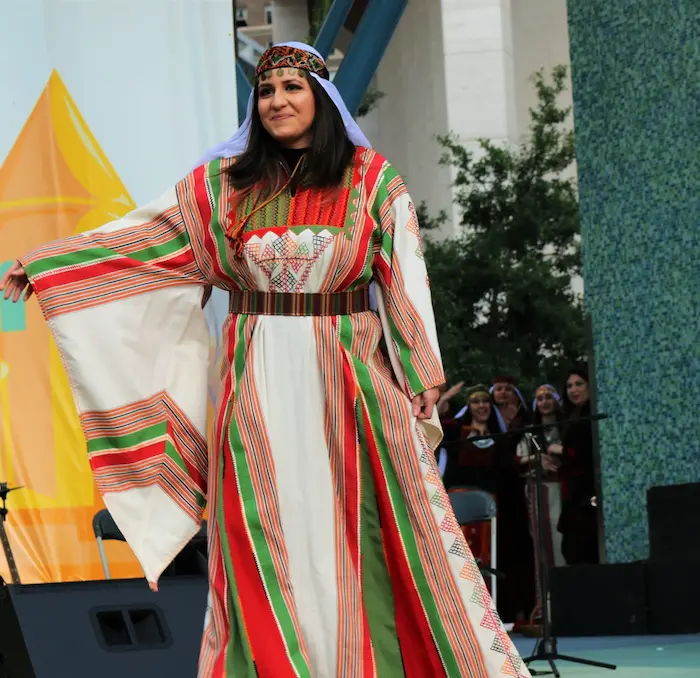
The dress of the Nablus countryside was close to Damascene dress, because of the close trade ties between the two cities, which may be one reason Nablus was called "Little Damascus". It is known for its red and green stripes and its embroidery in linen and silk thread.
Jenin

Jenin is known for its white thobe with multicoloured vertical stripes. Because Jenin's women worked in agriculture, its thobe represents rural women and farming life in Palestine.
Jericho
The Jericho thobe is remarkably long, sometimes more than eight cubits, folded in several layers and lifted with a belt, and embroidered along its length. The headdress is a red keffiyeh or a patterned scarf tied as a headband.
Beersheba

In Beersheba and the Naqab, the dresses of brides and married women were dominated by red embroidery, and widows' dresses by blue. A woman marrying for the second time embroidered her dress in red with flowers and some figures. Beersheba women also wore a burqa embroidered with gold and silver coins, both as adornment and as protection from the desert sun and sandstorms.
Frequently Asked Questions About the Palestinian Thobe
What makes the Palestinian thobe distinctive?
Hand embroidery, mostly in cross-stitch, on the chest panel, sleeves and sides, with colours and motifs that differ from region to region.
What is the most luxurious Palestinian thobe?
The Bethlehem "royal dress", embroidered with couching and gold and silver threads.
What is a shatweh?
The Bethlehem bridal headdress: tall, embroidered, and studded with gold and silver coins and coral.
When was Palestinian embroidery added to UNESCO's list?
In December 2021, on the Representative List of the Intangible Cultural Heritage of Humanity.
What do the colours of the Beersheba thobe mean?
Red embroidery for brides and married women, and blue for widows.
Read more:
Photo gallery

More from the archive
 Download Our Palestine App
The whole archive in the palm of your hand: depopulated villages, the Nakba, the massacres and Al-Aqsa — free, with no ads to erase the story.
Download Our Palestine App
The whole archive in the palm of your hand: depopulated villages, the Nakba, the massacres and Al-Aqsa — free, with no ads to erase the story.



Comments
No comments yet — be the first to write one.
Add your comment
Name and email are optional. Comments appear after review.