
Abdel Wahab al-Kayyali: Historian of Modern Palestine, Killed 1981
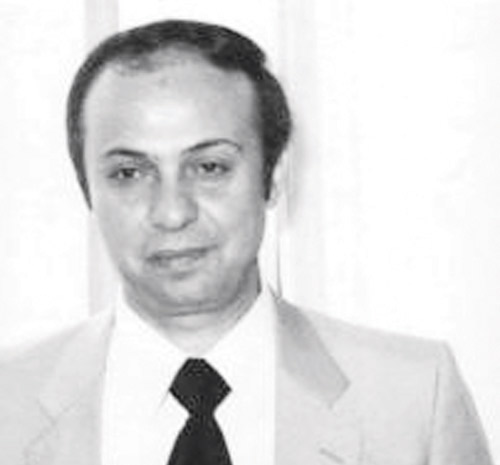
Abdel Wahab al-Kayyali (1939–1981) was a Palestinian historian, thinker and activist from Jaffa, author of A History of Modern Palestine, founder of the Arab Institute for Research and Publishing in Beirut and a member of the PLO Executive Committee. He was assassinated in the Sakiyet al-Janzir district of Beirut on 7 December 1981 and buried in Amman. [1] [2] [3]
This article is part of the series “Assassinated leaders of the Palestinian revolution,” alongside the articles on Ghassan Kanafani, Majed Abu Sharar and Abu Jihad.
Who was Abdel Wahab al-Kayyali?
Abdel Wahab al-Kayyali was a man of letters, writer, historian, political thinker and fighter, in the words of his comrade Gen. Arabi Kaloub, one who “fought with the rifle, with his thought and with his free, honest pen” [2] [1]. He combined academic research, national struggle and publishing: he wrote the history of Palestinian resistance to colonialism and Zionism, founded one of the leading Arab publishing houses and held leadership posts in the PLO [1] [3] [4].
Abdel Wahab al-Kayyali at a glance
| Item | Details |
|---|---|
| Name | Abdel Wahab Said al-Kayyali [2] |
| Born | 1939, Jaffa [1] [2] |
| Education | BA in political science, American University of Beirut (1961); MA (1965); PhD, University of London (1970) [1] [5] |
| Best-known work | A History of Modern Palestine [1] [2] |
| Institutions founded | Arab Institute for Research and Publishing (1969), Arab Centre for Strategic Studies, Third World Centre for Research and Publishing in London (1979) [3] [1] |
| Roles | Palestine National Council member (1968), Secretary-General of the Arab Liberation Front (1972), PLO Executive Committee member and head of its Education and Culture Department (1974–1977) [1] [5] |
| Assassinated | 7 December 1981, Sakiyet al-Janzir, Beirut [1] [2] [3] |
| Buried | Amman [1] [5] |
Timeline
| Year | Event |
|---|---|
| 1939 | Born in Jaffa [1] |
| 1948 | The Nakba; the family takes refuge in Amman [1] [2] |
| 1958 | Joins the Ba’ath Party [1] [5] |
| 1960 | Expelled from AUB over protests backing the Algerian revolution, then readmitted after a student strike [1] [5] |
| 1961 | Graduates in political science; co-founds the General Union of Palestinian Students [1] [2] |
| 1968 | Joins the Palestine National Council; launches Free Palestine in London [1] [5] |
| 1969 | Founds the Arab Institute for Research and Publishing in Beirut [3] |
| 1970 | PhD from the University of London [1] [5] |
| 1972 | Chairs the Arab Liberation Front’s first congress and is elected its secretary-general [1] [5] |
| 1974–1977 | PLO Executive Committee member and head of the Education and Culture Department [1] [5] |
| 1979 | Founds the Third World Centre for Research and Publishing in London [1] [5] |
| 1981 | Assassinated in Beirut on 7 December; buried in Amman [1] [2] |
From Jaffa to Beirut: a son of the Nakba
Abdel Wahab al-Kayyali was born in Jaffa in 1939 to a patriotic family of activists [1] [2]. He went to primary school there until the Nakba of 1948, when Jaffa fell to the Zionist militias and most of its people were driven out; his family took refuge in Amman [1] [5]. He finished secondary school in Amman and Beirut [1] [5].
The student activist
Al-Kayyali enrolled at the American University of Beirut, and in 1960 he and several classmates were expelled over protests supporting the Algerian revolution, then readmitted under the pressure of a general student strike [1] [5]. He graduated in 1961 with a BA in political science and helped found the General Union of Palestinian Students [1] [2].
He joined the Arab Socialist Ba’ath Party in 1958 and in 1961 became secretary of its Palestine branch in Lebanon [1] [5]. He then worked at Kuwait’s Ministry of Guidance and Information and as managing editor of the magazine Al-Ra’id al-Arabi, before returning to Beirut in 1963 to head the studies and opinion page of the newspaper Al-Ahrar [1] [2].
In the leadership of the national movement
In 1968 al-Kayyali was elected to the Palestine National Council and launched in London the magazine Free Palestine, the Palestinian resistance’s first foreign-language magazine, serving as its first editor-in-chief [1] [5].
He was in the leadership of the Arab Liberation Front from its founding, chaired its first congress in 1972 and was elected its secretary-general [1] [5]. From 1974 to 1977 he was a member of the PLO Executive Committee and head of its Education and Culture Department, and a member of the Higher Political Committee for Palestinian Affairs in Lebanon [1] [5].
The historian: writing the history of modern Palestine
Al-Kayyali earned an MA in 1965 and a PhD from the University of London in 1970, with a thesis on Arab Palestinian resistance to colonialism and Zionism in the twentieth century [1] [5]. From this research came his most important book, A History of Modern Palestine [1] [2].
He wrote in Arabic and English; his works include Zionist Expansionist Ambitions, The Kibbutz: Collective Farms in Israel, Palestinian Resistance and the Arab Struggle, Palestinian Studies and Readings and The Arabs, Imperialism and Racism [1] [5]. In these works he dissected the Zionist colonial project and its expansionist ambitions, and chronicled the Palestinian people’s resistance to it.
Akhbar Al Khaleej describes him as the historian who preserved Palestinian memory through his encyclopedic works [4].
The publisher: the Arab Institute for Research and Publishing
In 1969 al-Kayyali founded in Beirut the Arab Institute for Research and Publishing, specialising in works of thought on the Arab world and above all Palestine; it opened branches in Cairo, Baghdad and London and pioneered encyclopedias of politics, military affairs and philosophy [3]. He was editor-in-chief of the Encyclopedia of Politics, founded the Arab Centre for Strategic Studies, which published the Military Encyclopedia, and edited the journal Qadaya Arabiya from its first issue in 1974 [1] [5]. In 1979 he founded the Third World Centre for Research and Publishing in London [1] [5].
The institute kept working through Lebanon’s civil war and still publishes about 150 titles a year from its offices in Beirut and Amman [3].
The assassination of Abdel Wahab al-Kayyali: Beirut, 7 December 1981
On 7 December 1981 Abdel Wahab al-Kayyali was assassinated in the Sakiyet al-Janzir district of Beirut [1] [2]. The LEILA project says he was killed in his Beirut office by “unidentified gunmen” [3]. His comrade Arabi Kaloub calls it “a cowardly assassination” [1] [2].
The available sources do not identify who carried out the killing [1] [2] [3]. It came in a Beirut that had become a stage for the assassination of Palestinian thinkers and leaders, from Ghassan Kanafani in 1972 to Majed Abu Sharar, killed in Rome in October of that same year, 1981.
Al-Kayyali’s funeral was held in Beirut, where Abu Jihad gave a speech [6]. His body was taken the next day to Amman, where he was buried [1] [5]. His killing caused deep grief among the Palestinian resistance and nationalist forces [5].
Testimonies
Gen. Arabi Kaloub: “Dr. Abdel Wahab al-Kayyali fell a martyr at the height of his intellectual, cultural and militant giving,” and “he was a man of letters, a writer, a historian, a political thinker and a fighter” [1].
Legacy
Al-Kayyali left a full library of books and encyclopedias, and a publishing house still alive more than four decades after his assassination [3] [1]. His A History of Modern Palestine remains a reference for students of the Palestinian cause [4] [1]. His comrades recall him each year on the anniversary of his killing, as in Arabi Kaloub’s articles of 2014 and 2019 [2] [1].
Video
The Reuters film archive holds footage of Abdel Wahab al-Kayyali’s funeral in Beirut and Abu Jihad’s speech [6].
Conclusion
From Jaffa, from which he was uprooted as a child, to the halls of the University of London and the publishing house that carried Palestine onto the shelves of Arab bookshops, Abdel Wahab al-Kayyali wrote his people’s history while helping to make it. Assassins silenced his voice in Beirut, but his books remain.
Also in this series: Ghassan Kanafani, Majed Abu Sharar, Abu Jihad.
Frequently asked questions about Abdel Wahab al-Kayyali
Who was Abdel Wahab al-Kayyali?
A Palestinian historian, thinker and activist from Jaffa, author of A History of Modern Palestine, founder of the Arab Institute for Research and Publishing and a former member of the PLO Executive Committee.
What are Abdel Wahab al-Kayyali’s best-known books?
A History of Modern Palestine, along with Zionist Expansionist Ambitions, The Kibbutz and Palestinian Resistance and the Arab Struggle.
When was Abdel Wahab al-Kayyali assassinated?
On 7 December 1981.
Where was Abdel Wahab al-Kayyali assassinated?
In the Sakiyet al-Janzir district of Beirut.
Who killed Abdel Wahab al-Kayyali?
The available sources do not identify the perpetrators; they say he was killed in his office by unidentified gunmen.
Where is Abdel Wahab al-Kayyali buried?
In Amman, where his body was taken the day after his assassination.
What is the Arab Institute for Research and Publishing?
A publishing house al-Kayyali founded in Beirut in 1969, specialising in thought, the Palestinian cause and encyclopedias; it still operates from Beirut and Amman.
Sources and references
Arabic-language sources are listed with translated titles.
- Brig. Gen. Arabi Kaloub, “The Martyr Dr. Abdel Wahab al-Kayyali,” Thakirat Watan, 31 May 2019.
- Maj. Gen. Arabi Kaloub, “The Martyr Dr. Abdel Wahab Said al-Kayyali,” Donia al-Watan, 8 December 2014.
- “Arab Institute for Research & Publishing,” LEILA – Promoting Arabic Literature in Europe, 2022.
- “Abdel Wahab al-Kayyali: The Fighter and Palestinian Historian Who Preserved Palestinian Memory Through His Encyclopedic Works,” Akhbar Al Khaleej, 12 January 2024.
- “Abdel Wahab al-Kayyali,” Mokhayyam.
- “Lebanon: Funeral of Assassinated Palestinian Leader Al-Kayyali and Speech by Fatah Member Abu Jihad,” Reuters film archive, 1981.
More from the archive
 Article
The Ma'alot–Tarshiha Operation 1974 | DFLP Fedayeen on the Nakba Anniversary on Tarshiha's Depopulated Land
 Article
Operation Dispelled Illusion 2006: The Kerem Shalom Tunnel and Shalit's Capture to the Wafa al-Ahrar Exchange
 Article
The Zuqaq al-Mawt Operation 2002: The al-Quds Brigades' Ambush in Wadi al-Nasara, Hebron
 Download Our Palestine App
The whole archive in the palm of your hand: depopulated villages, the Nakba, the massacres and Al-Aqsa — free, with no ads to erase the story.



Comments
No comments yet — be the first to write one.
Add your comment
Name and email are optional. Comments appear after review.